London’s West End Packs Four Centuries of British Culture
London's West End is the capital's entertainment quarter, a compact stretch running from Trafalgar Square in the east to Piccadilly in the west, taking in theatres, galleries, eateries, and some of the country's best shopping experiences in between. Its continued success as Central London's cultural hub is indisputable, with West End theatres selling a whopping 17.64 million tickets in 2025 alone, a record for the district. Even if you're not here to spend money, several of the West End's best-known landmarks cost nothing at all to enter. Pack a picnic and head to one of the district's parks or pleasant public squares, and you've got the makings of a perfect day out in the UK capital. I recently spent a day exploring this exciting part of London, and here's what I discovered along the way.
Trafalgar Square and the National Gallery

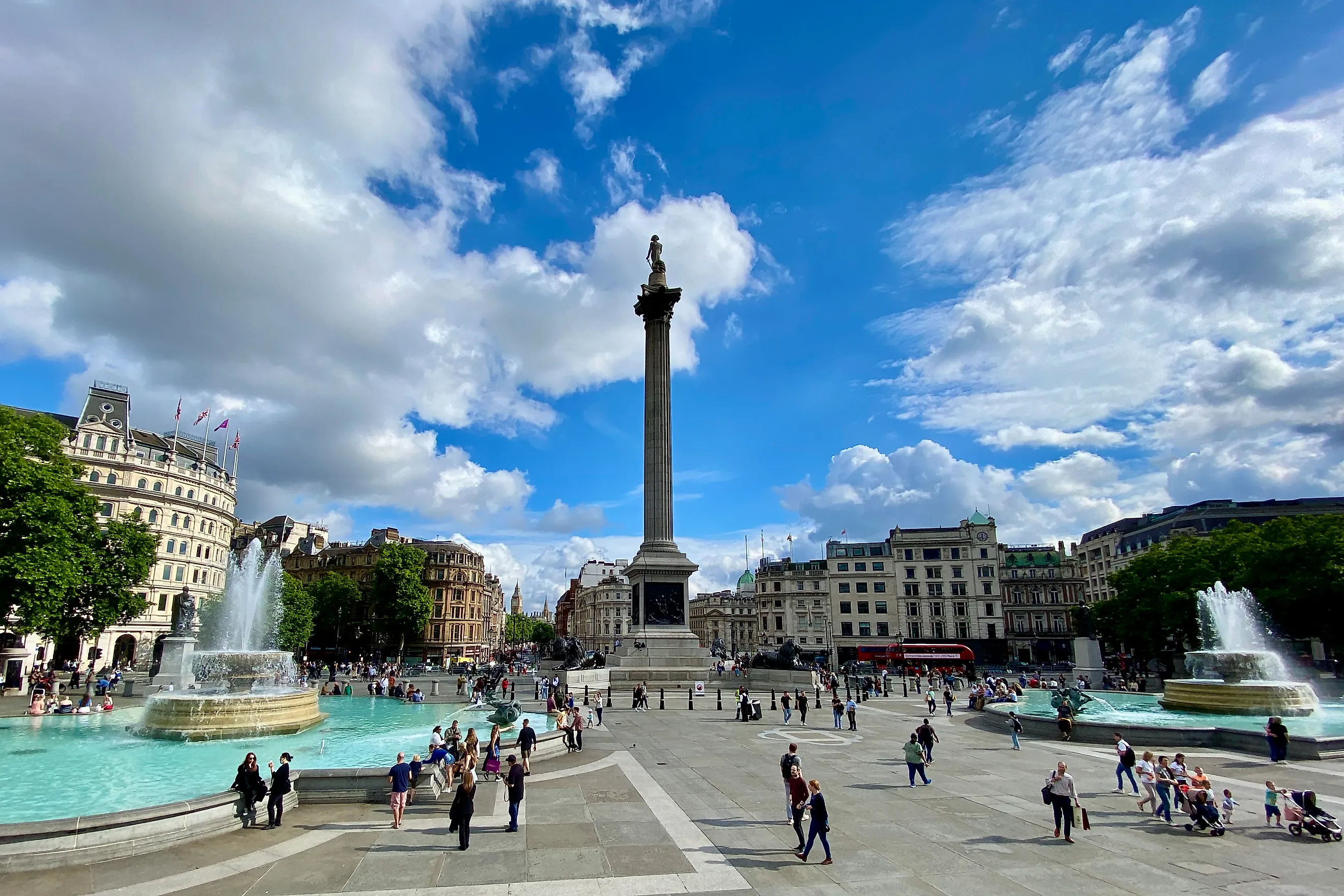
Most walks through the West End of London begin at Trafalgar Square, and for good reason. It's here the district meets Whitehall and the Strand, and it has its own Underground stop at Charing Cross, and it costs nothing. The square occupies the former site of the King's Mews, the royal stables serving Whitehall Palace from the 14th to the 17th century. Redevelopment of the area started in 1812, and in 1830 the square was named after the Battle of Trafalgar, Admiral Lord Nelson's 1805 naval victory off southwest Spain.
Standing over the square is Nelson's Column, completed in 1843 and 169 feet tall, 18 feet of which is the sandstone figure of Nelson at the top. Four bronze reliefs added a few years later show his naval victories and were cast from melted-down cannons. The four lions guarding the base were added in 1867.

The northwest corner of the square is home to the Fourth Plinth, empty since 1840 and now used for rotating contemporary art commissions. Every December, a Norwegian spruce goes up here, an annual gift from the city of Oslo in thanks for Britain's support during the Second World War. Although I missed it, June sees the square host West End LIVE, a free showcase of upcoming theatrical productions in the city's Theatre District.
The National Gallery occupies the entire north side of Trafalgar Square and has been free to visit since it opened in this location in 1838. It boasts a collection of more than 2,300 paintings covering the mid-13th century to 1900, assembled through purchases and gifts rather than state funding. Pop in to catch a glimpse of Vincent van Gogh's Sunflowers, J.M.W. Turner's The Fighting Temeraire, and John Constable's The Hay Wain.
St Martin-in-the-Fields

Adjacent to the northeast corner of the square stands St Martin-in-the-Fields, an attractive church built in 1726 on a spot that has been consecrated ground since 1222. Americans who visit are drawn to the site for its familiar pairing of a classical portico with an integrated steeple, a combination copied widely in colonial America.
St Martin-in-the-Fields was the scene of the first-ever religious service to be broadcast on radio, which took place in 1924. It was instigated by vicar Dick Sheppard, who also famously opened the crypt to people sleeping rough, in the process earning the place its nickname, The Church of the Ever Open Door. The Academy of St Martin in the Fields chamber orchestra was founded here and named after the church.

Most visitors, however, head straight downstairs. Here, the Café in the Crypt fills the vaulted brick space beneath the church and is one of the few places within a minute of Trafalgar Square where I can usually find a table (and handy, clean washrooms).
Sharing the crypt is the London Brass Rubbing Centre, which keeps more than 100 replica brasses copied from churches across the UK, along with the paper and metallic waxes needed to make your own. Free lunchtime concerts run on Mondays, Tuesdays, and Fridays, and the evening program takes in candlelit concerts upstairs and jazz in the crypt.
Covent Garden

Covent Garden is just a 10-minute walk northeast of Trafalgar Square and is the oldest planned part of the West End. It's a walk I always enjoy as it takes you past one of the best pubs in London, the Harp, which has been around since 1785. It's quaint, cozy, and authentically English.
Named after the garden of Westminster Abbey and its convent, Covent Garden was laid out in 1630 as the country's first public square, modeled on the Place des Vosges in Paris. Much of what you see here today is far more recent, with the Market Building in the middle of the Piazza opened in 1830 and its cast-iron and glass roof added in 1875. The Apple Market inside sells handmade crafts and jewelry from Tuesday to Sunday, switching to antiques every Monday.

I always enjoy watching the street performers here, all of whom must audition for a spot. St. Paul's Church, completed in 1633, is another place I'll always visit when in Covent Garden. Known as the actors' church for its proximity to London's Theatre District, its literary heritage includes Samuel Pepys, who wrote about seeing a Punch and Judy show here in 1662, and George Bernard Shaw, who set the opening scene of Pygmalion under its portico.
The London Transport Museum is also to be found in Covent Garden. Set in the old Flower Market building (1871), its old buses and Underground carriages are fun to explore. Close by on Bow Street, the Royal Opera House opened in 1732, and several of Handel's operas premiered here.
London's Theatre District

Parts of London's famous Theatre District overlap with Covent Garden, making it the natural next stop on a tour of the West End. The Theatre Royal Drury Lane is just a few minutes from the Piazza and has been around since 1663. Around the corner, the Lyceum Theatre is where Dracula author Bram Stoker worked as business manager. Disney's The Lion King has played there since September 1999.
A few streets west, on St Martin's Lane, is the London Coliseum, the largest theatre in the West End with 2,359 seats. Opened in December 1904 as a variety house fitted with England's first triple revolving stage, it has been staging opera sung in English alongside musicals and ballet ever since (guided tours are available).

Next up is Leicester Square, the hub of the British film industry. Major UK premieres are held at the cinemas here, and the "Scenes in the Square trail" marked the square's 350th anniversary with a series of bronze film characters around the gardens and even on rooftops.
You'll find Paddington Bear on a bench with his marmalade sandwich, while Batman peers down from the Odeon. For cheap show tickets, head to TKTS, run by the Society of London Theatre and selling same-day seats at reduced prices.
Piccadilly Circus

Keep heading west through Soho, and you'll wind up in Piccadilly Circus, where five major streets converge. The name goes back to the early 17th-century home of a tailor who sold stiff collars known as piccadills. Look up, and you'll spot the junction's most famous resident, the winged figure on the Shaftesbury Memorial Fountain. Although everyone calls it Eros, it is in fact Anteros, the Greek god of selfless love, and it was the world's first sculpture to be cast in aluminum when unveiled in 1893.
As in New York City's Times Square, the huge advertising signs in Piccadilly Circus are all part of the fun. Though they've evolved from static images to moving marvels of modern technology, they've been a part of the junction since 1908, when a Perrier sign became the first to be illuminated.
The Royal Academy of Arts

A five-minute walk west and you'll wind up at the Royal Academy of Arts (RA). Founded in 1768 under the patronage of George III, it's led by artists and architects, and has occupied the elegant Burlington House since 1867. A highlight for art lovers is the RA's Summer Exhibition, staged every year without interruption since 1769. Adding to the experience is the fact that nearly everything you'll see on the walls of the Summer Exhibition is up for sale, with proceeds helping fund the RA Schools, the oldest art school in Britain.
The most valuable thing in the building, though, is one of the easiest to miss, and yes, someone had to point it out for me. The Taddei Tondo, a circular marble relief of the Virgin and Child with the infant St. John, was carved by Michelangelo between 1504 and 1505 and is the only marble sculpture by him in a UK collection. Left deliberately unfinished, it was bought by a collector in 1822 and reached the Academy in 1830. Constable sketched it within days and called it one of the most beautiful works in existence.

Behind the galleries, though, is a part of the Academy most visitors never get to see, unless they become RA members. A friend and I were lucky enough to get a peek inside the Keeper's House, reserved for members and their guests. Built in 1874, this classy space now houses a superb restaurant overseen by Spanish chef José Pizarro.
The Dining Room serves Pizarro's signature dishes, the Shenkman Bar beside it does tapas-style plates, and the Academicians' Room, a club room hung with work by (you guessed it) Royal Academicians, offers small plates and sharing boards. There's even a walled garden, one of the quieter corners of Mayfair. Access is limited to Friends, Members, and Patrons, each of whom may bring up to three guests. Having rounded off my exploration of London's West End with a meal at the Keeper's House, I can safely say membership makes a lot of sense if you intend to visit the city's cultural and entertainment district at least a few times a year.
Walking the West End
The full route I took from Trafalgar Square to the RA via Covent Garden covers two miles and takes in many of London's most popular landmarks. So, while you could do it quickly, don't. Instead, take your time, and make a day of it as I did. Trafalgar Square, the National Gallery, St. Martin-in-the-Fields, and the Covent Garden Piazza are all free, as are some areas of the Royal Academy of Arts, though it is worth checking their website for paid exhibitions you may want to include. And if taking in a show is on the cards, book tickets ahead where you can, or take your chances at the TKTS booth.