6 Most Beautiful Gothic Churches In Vermont
Given the New England state’s colonial roots, it’s no surprise that many of Vermont's churches mimic European architectural designs, such as the Gothic style, which was popular in Europe and England throughout the Middle Ages. Pioneers from the old world were looking to recreate the familiar in the new, especially in their churches, which were crucial meeting places and focal points for newly established settlements.
Gothic churches share features such as large, colorful stained-glass windows, pointed arches, stone towers, high ceilings, and intricate decorative elements. One of the most famous examples is the Cathedral of Notre Dame in Paris. You won't find a Notre Dame in Vermont, but you’ll see aspects of its striking style in the state’s Gothic churches, which stand as landmarks of its diverse heritage.
Georgia Plain Baptist Church, Georgia

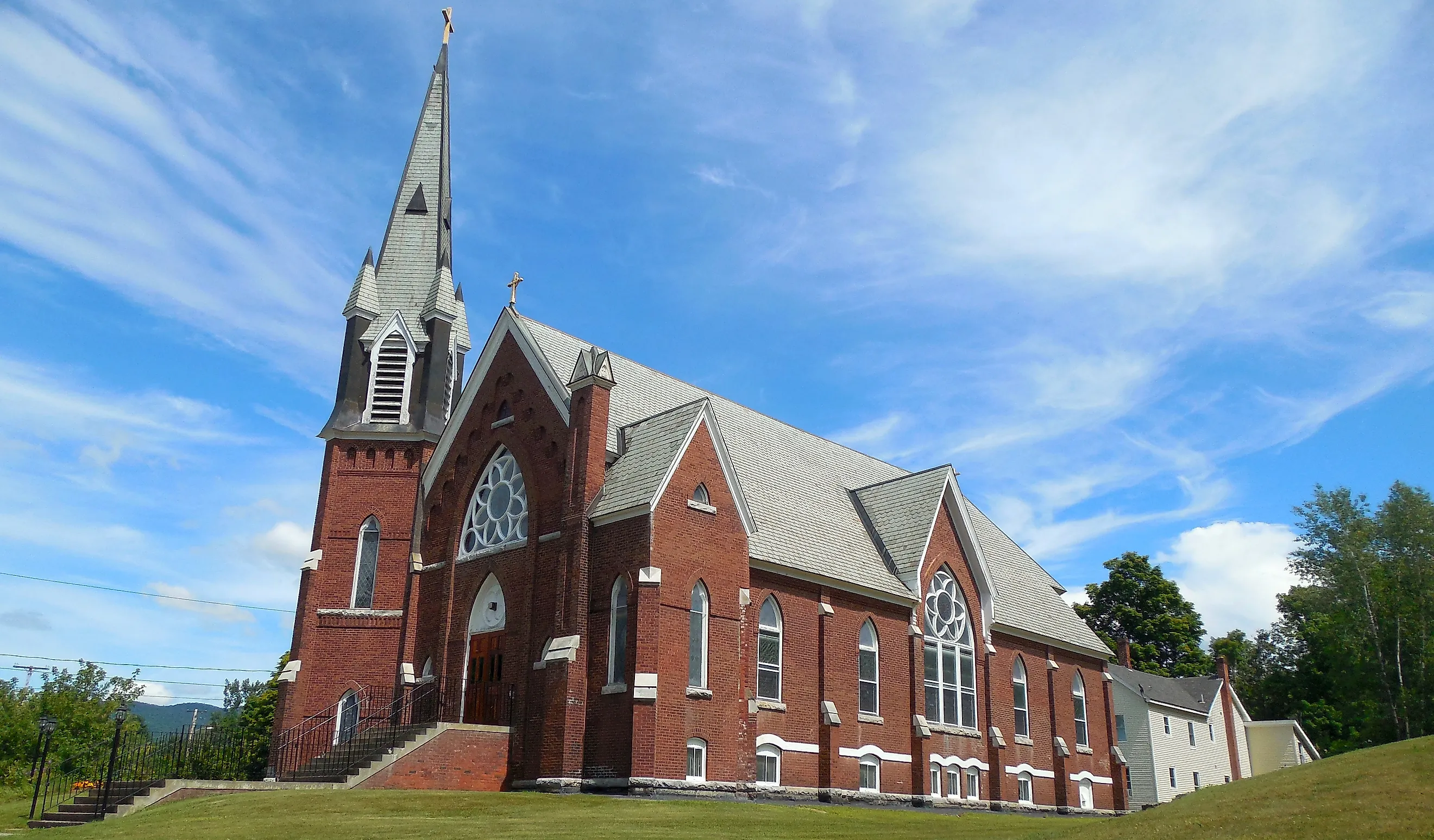
Located in rural northwestern Vermont, Georgia Plain Baptist Church is surrounded by history. To one side of the church is a 1796 home, and on the other are several 19th-century barns. The church itself dominates the landscape with a tall, narrow steeple. It reflects the High Victorian Gothic style.
Listed on the National Register of Historic Places, the church was built in 1877 and constructed from red brick laid in English bond with a slate roof. Inside, the church has several striking arched stained windows, one of which is dedicated to a former pastor, Alvah Sabin, who was also a U.S. Congressional Representative for Vermont in the mid-1800s. Other notable features inside the church include glass and wood lanterns, a pressed-tin ceiling intersected by wooden beams, and decorative designs on the two-tone wooden pews.
The Mission of the Church of Our Saviour, Killington

A centuries-old stone church sits among the foliage and peaks of the Green Mountains in central Vermont. This historic property is a Gothic Episcopalian church and farmstead dating to the 1890s.
Founded by Elizabeth Wood Clement on the site of her family homestead, the Church of Our Saviour sits on a 180-acre property that contains a guesthouse, kitchen, event space, and walking trails. Known as the Mission Farm and listed on the National Register of Historic Places, the space hosts concerts, community meetings, retreats, and other events, as well as regular Sunday services.
The Mission’s gable-roofed stone chapel, built in 1895 in the Gothic style, features a square entrance tower with decorative stonework. The building is made of sturdy white granite transported from Plymouth. There is a bell and belfry in the chapel; the former is inscribed with a dedication to the Wood family from Elizabeth Wood Clement. Hanging over the chapel is a large cross made from timber oak harvested on the farm. A small cemetery at the back of the chapel holds the graves of two Episcopal priests and their families, and dates back to the late 1800s.
St. Thomas Catholic Church, Underhill

The centerpiece of Underhill village for over a century, St. Thomas is a rural Gothic Revival church known for its stained-glass windows. The church was built in 1891 by well-known Vermont church architect George Guernsey, whose signature flourishes were asymmetrical buildings and quirky motifs within the Gothic Revival framework. This is why St Thomas’ tower sits at a diagonal to the main building, giving it a unique facade.
There are more unique details in St Thomas’ windows, which contain glass crafted in New York City and depict Biblical scenes. The colorful rose windows, named for their circular shape and petal-like panels, are typical of the Gothic style. One of the most intriguing is the ‘Eye of God’ window, which sits above the sanctuary and simply shows a single eye overlooking the interior of the church.
First Congregational Church and Meetinghouse, Townshend

Also known as Townshend Church, the First Congregational Church and Meetinghouse has a history as long as its name. The church was built in 1790 on the village common and is still one of Townshend’s most important and most photographed landmarks. It’s listed on the National Register of Historic Places in recognition of its architectural and historic significance.
Originally constructed in a plain, wooden Federal-style, the building was refurbished around 1840 in the Gothic and Greek Revival styles. It’s a classic-looking country church with white clapboard walls, a front gable, and a tower with a bell, a belfry, and a narrow 30ft steeple. During its refurbishment, the building was extended, the steeple was built, and more windows were added. It was also divided into two storeys, possibly to separate church business from government business, as the church was a busy meeting house as well as a place of worship. The property, which includes an 1837 parsonage, served as the village’s town hall until 1910.
Winooski United Methodist Church, Winooski

Located in a historic mill town in western Vermont, the Winooski United Methodist Church is an example of early-1900s Carpenter Gothic architecture. Built in 1918, the church replaced a former chapel that burned to the ground a year earlier and is listed on the National Register of Historic Places.
Approaching the church, one of the first striking features is its seven-section stained glass window, which sits between the two entryways. The classic Gothic arched windows also adorn the side walls and a bell tower that rises from the northwest corner. Inside, Gothic arches can also be seen on the pews' side panels. The church’s interior is modest and simple, with a bare altar behind which are the original organ pipes. The pipe organ was created specifically for the church by the Hall Organ Company in Connecticut. Made around 1920, it features 700 pipes and its original blower.
St Peter’s Episcopal Church, Lyndonville

Built by one of the fathers of the Vermont Gothic Revival movement, St Peter’s in Lyndonville has a unique history and look. Tucked away in a quiet residential neighborhood, the church was designed by English architect Henry Vaughan, who came to New England in 1881 and quickly became one of the most sought-after church architects of his time, building some of the most inspiring Gothic churches in the country.
The cornerstone of St Peter’s was laid in 1898, and, unlike the High Gothic tradition, the little brick church’s stripped-down Gothic Revival design is surprisingly simple. The red brick facade features a large arched window, and a simple cross adorns the roof.
Vermont’s Gothic Legacy
When we think of Gothic, we tend to think of grandiose, stately cathedrals that dominate the skyline. In Vermont, you’ll find a more understated form of the imposing architecture as New England designers sought to make the style their own, using local materials and catering to small 19th-century congregations. As Gothic travelled across the Atlantic to the Americas, it took on new forms, including Carpenter Gothic, Neo-Gothic, and Gothic Revival. This evolution left Vermont’s small towns with a range of Gothic churches that reflect changing architectural traditions in the state.