The 11 Can't-Miss Towns In The Rockies
The Rockies are a long spine of high basins, steep valleys, and abrupt weather shifts, where towns cluster in the few places the land gives them room: river bends, canyon mouths, and passes.
In these pockets, towns have a single commercial strip running parallel to a river and side streets that dead-end into trailheads, ski access roads, or park boundaries. Banff, for example, keeps its peaks framed at the end of Banff Avenue, with Bow Falls minutes away on foot. Jackson sits on open valley floor, with the National Elk Refuge starting near town and the square anchoring everything walkable. The 11 towns below are the ones where the Rockies feel immediate: fast access to big scenery and named places worth planning around!
Banff, Alberta

Banff is one of the only towns in the world located inside a national park, and it exists because of a hot spring. When Canadian Pacific Railway workers stumbled across thermal waters in 1883, the discovery led to the creation of Banff National Park, Canada’s first. Today, Banff remains a functional mountain town wrapped in parkland, where elk and tourists routinely cross the same streets. The town’s main thoroughfare, Banff Avenue, leads straight toward glacier-capped peaks, a view that stays fixed as you walk past bookstores, bakeries, and heritage hotel.
The Banff Gondola climbs to the summit of Sulphur Mountain, where boardwalks connect historic weather stations with views of six mountain ranges. Bow Falls, just beyond the Fairmont Banff Springs Hotel, is a wide, foaming chute of water where the Bow River narrows. On the edge of town, the Cave and Basin National Historic Site marks the location of the original hot spring, preserved with period-style bathhouses and interpretive trails. For a quiet breakfast or espresso, Whitebark Café inside the Banff Aspen Lodge on Banff Avenue sources single-origin beans and pours them in a compact space just north of the busiest downtown blocks.
Jasper, Alberta

Another Alberta gem, Jasper, the largest town within the largest national park in the Canadian Rockies, was built around the Canadian National Railway and still bisected by active tracks. Jasper remains a working rail town where locomotives pass within earshot of restaurants and trailheads. The dark skies above are protected by a designated preserve, making it one of the best places in North America for stargazing.
The Jasper SkyTram lifts visitors above the Athabasca Valley to a tundra plateau on Whistlers Mountain, where short trails lead past weather stations and open views. Inside town, the Jasper Park Information Centre, a 1914 stone-and-timber building, serves as a historical landmark and orientation point. Maligne Lake, a 45-minute drive southeast, offers boat cruises to Spirit Island and shoreline hikes beneath limestone ridges. Athabasca Falls, located just off Highway 93, forces a wide river through a narrow gorge and is accessible year-round. For coffee and lunch, SnowDome Coffee Bar operates inside a coin laundry and serves espresso alongside house-made cinnamon rolls.
Canmore, Alberta

Our last Alberta entry, Canmore, began as a coal town and stayed that way for nearly a century before the last mine closed in 1979. What followed was a transformation that left the mountains intact but rewrote the economy. Canmore became a training base for Olympic athletes in 1988 and later attracted climbers, filmmakers, and chefs. Despite its growth, the town still feels defined by what surrounds it: the Three Sisters peaks, the Bow River, and a maze of former mining roads turned into trails.
Grassi Lakes Trail climbs through limestone slabs and overlooks the town from above two green pools that sit beneath a climbing crag. The Canmore Nordic Centre, built for the Calgary Olympics, maintains singletrack in summer and Nordic trails in winter and still serves as a training hub. For coffee and pantry goods, Eclipse Coffee Roasters on 8 Street offers house-roasted beans and a small patio facing Policeman’s Creek. The Canmore Engine Bridge, a truss structure left over from the railway era, spans the Bow River just west of downtown and links the Riverside Trail with a network of unpaved paths.
Jackson, Wyoming

Jackson sits on a glacial plain that once served as a seasonal meeting ground for trappers and tribes. Today, it manages a balance between conservation and commerce, with a town square framed by elk antler arches and storefronts regulated to keep their Western facades. The National Elk Refuge begins just beyond the edge of town and holds one of the largest migratory herds in North America, visible from the road in winter or from sleighs that cross the refuge floor.
The National Museum of Wildlife Art, built into a butte north of town, overlooks the refuge and houses work by Carl Rungius, Georgia O’Keeffe, and Robert Bateman. Jackson Hole Mountain Resort, in nearby Teton Village, offers some of the steepest in-bounds ski terrain in the country and runs an aerial tram in both winter and summer seasons to the summit of Rendezvous Mountain. The Snake River Grill on Cache Street has been open since 1993 and serves elk tenderloin and buttermilk-soaked fried chicken in a log-walled dining room. Cowboy Coffee Co. on Town Square roasts beans in-house and serves them beside a wall of regional trail maps.
Whitefish, Montana

Whitefish began as a railroad town built around timber and ore, and the Great Northern Railway still runs through the center. The 1927 Whitefish Depot, restored with its original red tile and stucco, remains in use for Amtrak’s Empire Builder line and doubles as a museum. The town sits below Big Mountain and at the foot of Whitefish Lake, where the shoreline transitions directly into residential streets.
Whitefish Mountain Resort, six miles from town, operates chairlifts year-round and offers ridge hiking along the Danny On Trail. At the south end of Whitefish Lake, City Beach provides dock access, boat rentals, and a lifeguarded swim zone. The Whitefish Trail, with over 40 miles of multi-use paths, begins just beyond downtown and connects to surrounding forests and lakes. Loula’s Café, inside a former Masonic temple on Second Street, serves lemon-stuffed French toast and rotates regional art through the upstairs dining room.
Park City, Utah

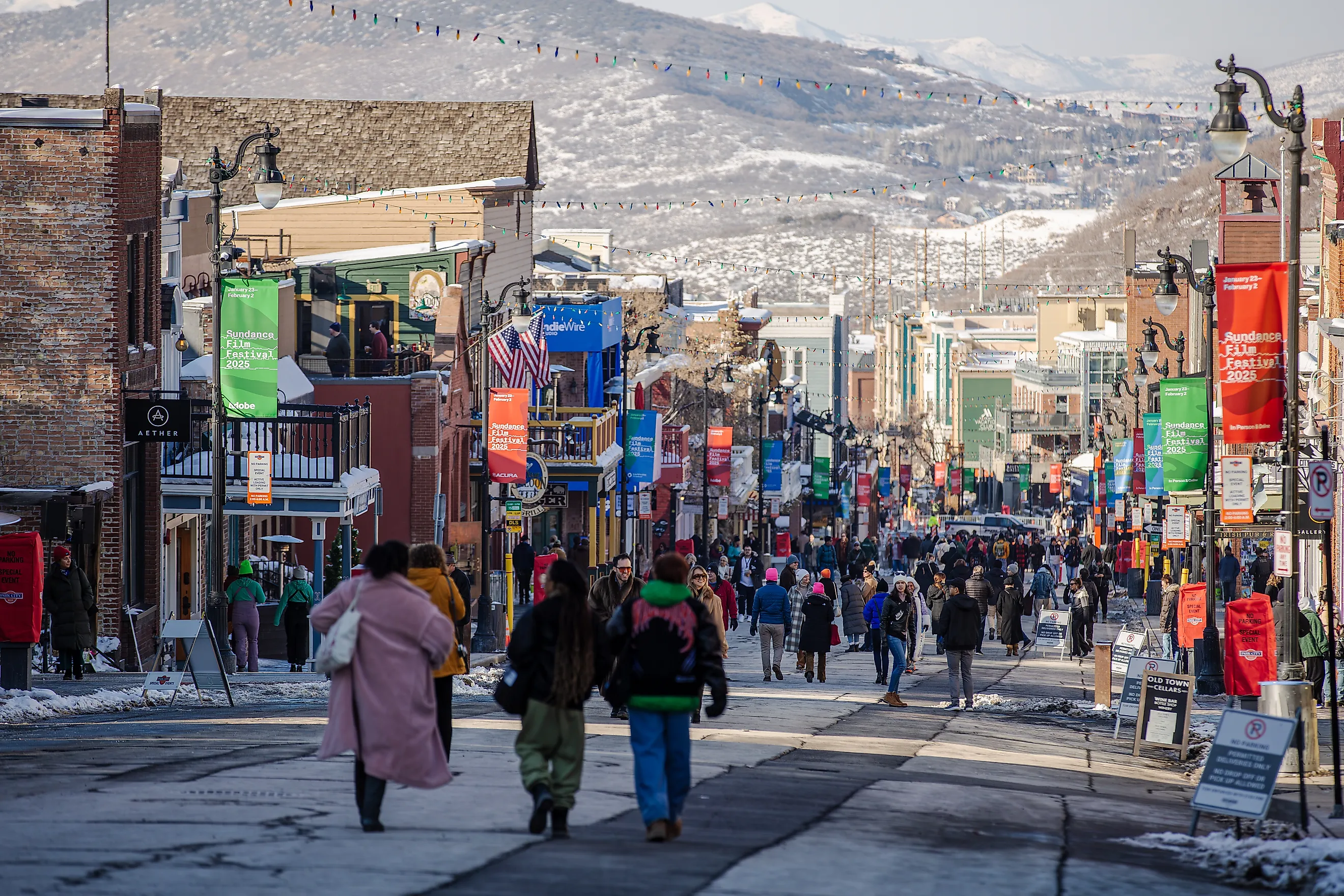
Park City was once one of the richest silver mining camps in the West, and the original shaft houses and ore bins still stand above town. After the mines closed in the 1950s, the mountains were repurposed for skiing. Park City is now home to the largest ski resort in the United States, and the town’s layout still follows the contours of its mining past. Its elevation, just above 7,000 feet, and dry air made it an ideal venue for the 2002 Winter Olympics, with several competition venues still in operation.
Park City Mountain operates lifts from within walking distance of Main Street and maintains alpine trails during summer. Nearby Deer Valley Resort is ski-only and manages its own lodge, terrain, and trail system. The Utah Olympic Park, built for Nordic and sliding sports, includes a museum and active training facilities, with public access to ski jumps and bobsled runs. Atticus Coffee & Teahouse on Main Street sells rare book editions alongside espresso and house chai. The Kimball Art Center, now housed in a contemporary space on Kearns Boulevard, curates rotating exhibitions and holds workshops on clay, printmaking, and photography.
Estes Park, Colorado

Estes Park marks the eastern gateway to Rocky Mountain National Park and sits at the confluence of two canyons shaped by retreating ice. It became known nationally after F.O. Stanley, co-inventor of the Stanley Steamer automobile, built the Stanley Hotel in 1909. The hotel still operates on its original hilltop and is listed on the National Register of Historic Places. Elk walk through town year-round, gathering on golf courses and in parking lots during the fall rut. The town center follows the Big Thompson River and rises gradually toward the park entrance.
The Riverwalk, built along a diverted channel of the Big Thompson, passes behind restaurants and galleries between Elkhorn and East Riverside Drives. The Tregent Park stage and performance lawn mark its midpoint. Trail Ridge Road, one of the highest paved roads in North America, begins at the park’s eastern entrance and climbs past treeline to over 12,000 feet. The Stanley Hotel hosts daily historical tours and seasonal events inside its concert hall and original lodge. Kind Coffee on East Elkhorn Avenue roasts beans on-site and maintains a riverside patio beside the town’s flood memorial.
Telluride, Colorado

Telluride is built in a box canyon so narrow and steep that planes can’t fly directly in. The town was once the site of Butch Cassidy’s first bank robbery, and remnants of its mining era remain intact in its grid of 19th-century buildings. The canyon walls rise fast on all sides, limiting expansion and preserving the original footprint. A free gondola, the only public transportation system of its kind in North America, links the town to Mountain Village, crossing tree lines and ski runs in 13 minutes.
Bridal Veil Falls, the tallest free-falling waterfall in Colorado, drops 365 feet at the head of the canyon and can be reached by foot, bike, or 4WD road. The Sheridan Opera House, built in 1913, still operates with a full schedule of concerts, film events, and community performances. The Coffee Cowboy, a long-running coffee cart and café near the base of the gondola, serves espresso drinks, smoothies, and breakfast burritos from its green trailer and compact shop space. The Telluride Historical Museum, located in a former miners’ hospital, documents the town’s role in the region’s hydroelectric development and labor history.
Durango, Colorado

Durango was built in 1880 by the Denver & Rio Grande Railroad to serve nearby silver mines, and the tracks still cut through the center of town. The Durango & Silverton Narrow Gauge Railroad, operating vintage steam locomotives, runs daily excursions into the San Juan Mountains and remains one of the last active narrow-gauge lines in the U.S. The train yard, roundhouse, and depot remain in operation and house a working museum. Durango sits below a sandstone ridge and along the Animas River, which bends through town and shapes both its layout and recreation.
Main Avenue follows the original rail corridor and holds restored brick hotels, taverns, and shops from the town’s founding decades. The Animas River Trail runs for over seven miles along the riverbank and passes under bridges and through city parks. Bread, a bakery with a downtown café on East 8th Street, mills grain in-house and serves sourdough and seeded rye alongside espresso and local preserves. The Powerhouse, a science center in a converted steam plant, holds rotating exhibits and maintains the original brick stack and turbine room.
Leadville, Colorado

Leadville sits at 10,152 feet, making it the highest incorporated city in the United States. It once rivaled Denver in population and influence, built on silver extraction and the fortunes of figures like Horace Tabor and Baby Doe. The town’s grid still reflects its boomtown origins, with wide avenues laid out to accommodate freight wagons and mule trains. Mining claims surround the town in all directions, and headframes and shaft houses remain visible above the tree line.
The National Mining Hall of Fame and Museum, located in a former school building, documents the geology, labor, and engineering that shaped the region. The Leadville Historic District includes over 50 blocks of preserved 19th-century architecture, including the Tabor Opera House and Healy House Museum. Turquoise Lake, just west of town, offers a ring road and shoreline trail with views of Mount Massive. City on a Hill Coffee & Espresso, housed in a former saloon on Harrison Avenue, roasts beans on-site and sells pastries baked in the back kitchen.
Taos, New Mexico

No Rockies list is ever complete without Taos. Taos holds one of the longest records of continuous human settlement in North America. Taos Pueblo, located just north of town, has been inhabited for over a thousand years and remains active, with multistory adobe structures still in use. The town itself developed at the edge of the high desert, where the Sangre de Cristo Mountains rise abruptly from the sagebrush flats. The elevation, light quality, and open space drew artists in the early 20th century and established Taos as a center of Southwestern painting and craft.
The Harwood Museum of Art, housed in a 1930s adobe building, maintains collections from the Taos Society of Artists and holds rotating contemporary shows. The Rio Grande Gorge Bridge, eleven miles west, spans a 650-foot drop and includes pedestrian walkways with access to rim trails. Taos Plaza anchors the old town center and hosts galleries, jewelry studios, and long-running businesses like Michael’s Kitchen, known for house-made bread and red chile breakfast plates. North of town, Taos Ski Valley operates under a special-use permit in Carson National Forest and runs lifts for winter skiing as well as summer hiking and biking access.