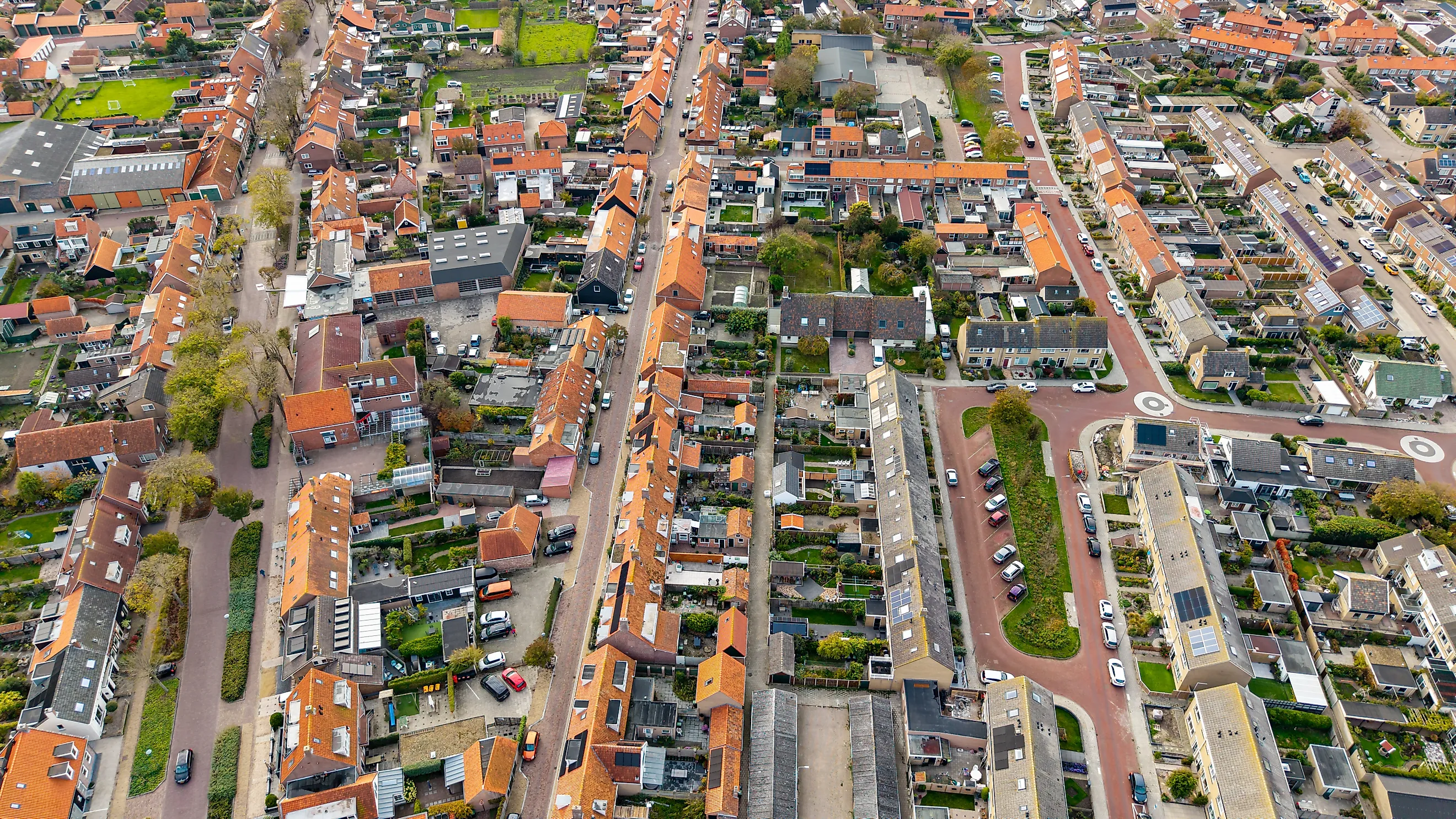
8 Offbeat Towns to Visit in Netherlands
The Netherlands is a small, highly connected country where towns developed around water control, trade routes, and regional industries rather than grand landmarks. Efficient rail lines, ferries, and cycling infrastructure make it possible to move quickly between places that once functioned as independent economic centers. Some towns grew around gin distilleries and wind-powered industry, others around shipbuilding, fishing, or royal administration. Coastal settlements adapted to life behind sea defenses, while inland towns relied on canals to move goods long before modern roads existed.
Ameland

The West Frisian Islands form a chain of barrier islands separating the Wadden Sea from the North Sea. Ameland, located off the coast of Friesland, is less developed than neighboring islands such as Texel and Terschelling, with much of its landscape protected as dunes, beaches, salt marshes, and woodland, including Nesserbos. The island lies along a major migratory bird route and supports hundreds of bird species throughout the year.
Hollum is Ameland’s largest village and home to the Bornrif Lighthouse and Bunkermuseum Ameland, which preserves World War II bunkers and exhibits. The island is primarily accessed by ferry from Holwerd to Nes, where the secondary school and Natuurcentrum Ameland are located. A small airport near Ballum serves light aircraft. Guided mudflat walking at low tide offers a direct way to experience the Wadden Sea’s tidal landscape.
Brielle

Brielle is a fortified town in South Holland known for its dense concentration of preserved historic structures. The town developed as a strategic stronghold in the 16th and 17th centuries, and its defensive layout remains visible today through surviving bastions, canals, and gates. Roughly 400 protected monuments are recorded within the town, including a mix of national and municipal listings, making Brielle one of the more monument-rich small towns in the Netherlands.
At the center stands the Grote Sint-Catharinakerk, a Gothic church that played a notable role in Dutch history. In 1575, William of Orange married Charlotte de Bourbon here. Just three years earlier, on April 1, 1572, Brielle became the site of the Capture of Brielle, when the Watergeuzen seized the town from Spanish forces, an event that helped shift momentum during the Dutch Revolt.
Many of Brielle’s former civic buildings now serve new functions, including the former city hall, which operates as a local history museum. Walking routes along the canals connect surviving bastions, the Langepoort city gate, and former military structures such as the Asyl voor Oude en Gebrekkige Zeelieden. Located about 35 kilometers west of Rotterdam, Brielle remains compact and easily explored on foot, with its fortifications and monuments providing a clear view of how a Dutch defensive town once functioned.
Bronkhorst

Bronkhorst is a small historic settlement in eastern Gelderland, often cited as the Netherlands’ smallest city due to its preserved medieval town rights and population of fewer than 100 residents. The village developed near the IJssel floodplain and retains a compact core of brick houses, narrow lanes, and listed monuments.
Bronkhorst includes several small art spaces and galleries, along with an information center, a historic chapel known as the Kapel van Bronkhorst, and the Voormalig kasteel-heuvel Bronkhorst, which marks the site of a former medieval castle. Many of the village’s buildings date from the 17th and 18th centuries, contributing to its designation as a protected townscape.
The settlement is easily explored on foot, with short walking routes connecting galleries, former civic buildings, and canal-side paths. Just outside the village, Kunstruimte Veer sits along the Groote Beek canal, while the surrounding countryside is shaped by farmland and wooded estates. Within a short drive are several historic country houses, including Kasteel Hackfort and Kasteel Vorden, both part of the Achterhoek region’s network of estates and walking routes.
Delft

Delft is a charming historic city in South Holland, famous for its rich ties to art, science, and Dutch history. It’s the birthplace and home of Johannes Vermeer, whose masterpieces continue to be a proud part of the city’s cultural identity. Today, Delft is perfectly situated between The Hague and Rotterdam, making it a delightful destination that’s easily accessible by bike, train, or car for enjoyable day trips.
The city developed in the 11th century around a canal called the Delft, which later supported trade and expansion. During the Eighty Years' War, William of Orange made Delft his residence beginning in 1572, and the city functioned as the political center of the revolt following the Act of Abjuration in 1581. William of Orange was assassinated in Delft in 1584.
Delft’s historic core includes the Oude Kerk and the Nieuwe Kerk, the latter serving as the burial place of members of the Dutch royal family. Other preserved landmarks include the Prinsenhof, now a museum, and the Oostpoort, the city’s remaining medieval gate. Delft is also known for its long tradition of tin-glazed pottery, commonly called Delft Blue, which is interpreted today at Royal Delft and related collections.
As a university city anchored by Delft University of Technology, Delft blends its historic center with a large student population. Green spaces such as Delftse Hout provide walking and cycling paths, while canals and nearby lakes offer seasonal recreation. Together, these elements reflect a city shaped by centuries of political importance, craftsmanship, and education rather than tourism alone.
Giethoorn

Giethoorn is a charming canal village nestled in the Dutch province of Overijssel, surrounded by the beautiful Weerribben-Wieden National Park, one of the largest wetlands in northwestern Europe. The village has grown around a quaint network of narrow canals, crafted over centuries of peat extraction that helped shape the nearby lakes, reed beds, and lush lowland fens. Visitors often enjoy exploring by boat, which is a popular way to see the sights, but you’ll also find lovely footpaths, cycling routes, and tiny wooden bridges that make wandering through this enchanting village a delight.
Many of the village’s historic farmhouses sit directly along the canals and are characterized by thatched roofs and long, narrow plots of land. Giethoorn’s name is traditionally linked to “Geitenhoorns,” referring to goat horns reportedly found in the soil, though the origin remains uncertain. Today, the canals that once served peat workers are used primarily for small electric boats and traditional punts.
The surrounding De Wieden landscape includes open water, peat bogs, and marshland, with large lakes such as Beulakerwijde located south of the village. The area supports diverse birdlife and is managed as a protected nature reserve with designated walking routes and observation points.
Giethoorn is typically reached by train to Steenwijk followed by a short bus or taxi ride, making it accessible as a day trip from Amsterdam or other major Dutch cities. Despite its popularity, the village’s layout and surroundings remain closely tied to the water management and peat-harvesting practices that originally defined the region.
Schiedam

Schiedam was founded in the 13th century after a dam was built on the Schie River, enabling the settlement to regulate water flow and develop into an independent trading town. Today, it is part of the Rotterdam-The Hague metropolitan area while retaining its historic center and identity. Schiedam is best known for its long association with jenever production, supported by distilleries, malt houses, and river access that once made it one of the Netherlands’ most important spirits-producing cities. The brand Ketel One traces its origins to Schiedam, reflecting the city’s distilling heritage, though it is now known primarily as a vodka producer.
The city’s skyline is defined by its historic windmills, which are among the tallest traditional windmills in the world. Mills such as De Noord, De Walvisch, and De Drie Koornbloemen were built to grind grain for the distilling industry and remain prominent landmarks today.
Westkapelle

Westkapelle is a charming coastal town situated on the western edge of Walcheren, a lovely area that was once an island in the beautiful province of Zeeland. Its close proximity to the North Sea has played a significant role in shaping its rich history and scenic landscape. Westkapelle is especially remembered for the tragic events of World War II, when Allied forces bombed the sea dike in October 1944 during the Battle of the Scheldt. This devastating bombing caused widespread flooding, damaging much of the town and tragically resulting in the loss of about 180 residents, leaving an enduring and heartfelt impact on the community.
Today, Westkapelle has a population of just over 2,600 and is fully connected to the rest of Zeeland by modern infrastructure built after the war and reinforced through the Delta Works. Several memorials and historic sites reflect the town’s wartime experience, including the Landingsmonument along the sea dike, which stands near a pier that is regularly exposed to heavy surf during storms.
The town sits directly behind a broad coastal dike that doubles as a sea defense and promenade, with wide beaches stretching along the North Sea. The red-and-white Noorderhoofd Lighthouse, housed in a former church tower, is one of Westkapelle’s most recognizable landmarks. Inland, the Westkapelsche Kreek marks part of the area flooded during the war and now forms a natural and historical feature of the landscape.
Westkapelle’s surroundings include dunes, coastal nature reserves, and access to other parts of Walcheren, including Oostkapelle and Veere. Together, its exposed coastline, layered war history, and long-standing relationship with the sea distinguish Westkapelle from other Dutch coastal towns.
Zaanse Schans

Zaanse Schans is a historic industrial area in North Holland, located just north of Amsterdam and easily reached by train and foot from Zaandijk Zaanse Schans station. The site preserves a collection of historic windmills, wooden houses, workshops, and warehouses that reflect the Zaan region’s role as one of the world’s earliest industrial zones during the 17th and 18th centuries.
Several working windmills remain in operation, including Het Jonge Schaap, a functioning sawmill, and De Kat, a paint mill originally built in 1646 and later reconstructed, which still produces pigments using traditional methods. These mills illustrate how wind power supported industries such as shipbuilding, timber processing, and paint production.
The Zaans Museum, located right next to the site, offers an inviting look into the region's history with exhibits on local industry, daily life, and technological advancements. You can see scale models and watch mechanical demonstrations that bring the past to life. Just nearby, charming preserved merchant houses and warehouses line the river, showcasing the prosperity brought by milling and trade, creating a delightful glimpse into the area's rich heritage.
Across the Zaan River in nearby Zaandam, additional historic mills such as De Bleeke Dood and De Gekroonde Poelenburg highlight how industrial activity extended beyond Zaanse Schans itself. Together, the area offers a concentrated view of the Netherlands’ early industrial landscape rather than a traditional village setting.
Rotterdam, The Hague, and Utrecht often define the Netherlands for first-time visitors, but the country’s story is clearer beyond its largest cities. Smaller places such as Brielle, Delft, Ameland, and Giethoorn reveal how water management, industry, defense, and geography shaped daily life over centuries. These towns were built around canals, rivers, coastlines, and peatlands, not for spectacle, but for survival and trade.
With short travel distances and a dense transport network, reaching them requires little effort once you arrive in the Netherlands. Exploring these communities offers a grounded view of the country, one rooted in working landscapes, preserved town centers, and regional identity rather than metropolitan scale. Together, they show how the Netherlands developed not as a collection of isolated cities, but as a network of towns connected by water, movement, and shared history.