7 Quietly Charming Towns In Virginia
Virginia’s countryside holds treasures that many travelers overlook. Beyond the urban corridors, towns like Floyd draw visitors into the mountains for live bluegrass in old-timey country stores and a meal at the state's oldest winery, while others like Cape Charles and Chincoteague stand out for their rich coastal heritage and fresh seafood. Time spent in these places reveals an authenticity that feels connected to the beauty and the history around it. These seven quietly charming towns in Virginia continue to draw travelers to their doorstep and are well worth a closer look.
Abingdon

Southwest Virginia's mountain country frames Abingdon, near where the North and Middle Forks of the Holston River converge. This small town began in the 1770s as Black's Fort and quickly became the cultural and commercial hub of Washington County. The Abingdon Historic District encompasses 159 acres of preserved structures from the late 18th through mid-20th centuries, creating one of Virginia's finest collections of period architecture.
Barter Theatre opened in 1933 during the Great Depression when founder Robert Porterfield accepted produce and livestock as payment for performances (hence the name). Now known as The State Theater of Virginia, it has launched the careers of numerous actors and continues to draw performers from across the country. Attending a performance here means experiencing live theater in an intimate venue where brick walls and original woodwork create an atmosphere rarely found in modern theaters. The Martha Washington Inn & Spa, built in 1832 as a private residence, later operated as a women's college and even served as a makeshift hospital during the Civil War before becoming one of Virginia's most distinctive inns. Its columned portico still commands the town's historic main street.
For a bit of leisurely outdoor recreation, the Virginia Creeper Trail stretches 34 miles from Abingdon to the North Carolina border, following an old railroad bed through hardwood forests and open farmland. Cyclists can shuttle to Whitetop Station at 3,500 feet and coast downhill past weathered barns and through tunnels cut into the mountainside.
Cape Charles

Founded in 1884 as a railroad terminus on Virginia's Eastern Shore, Cape Charles has preserved its origins better than most. Pastel Victorian homes line wide avenues named for Virginia statesmen, while fruit-named streets angle toward the Chesapeake Bay. Cape Charles Beach stretches for half a mile along the bay, with free access and few crowds. Unlike oceanside beaches with their crashing waves, the bay here offers shallow, gentle waters perfect for wading.
The Cape Charles Historic District preserves more than 500 buildings dating to the late 1800s. Walking these streets feels like stepping onto a movie set, except this is real life, maintained by residents who take pride in their architectural heritage. Bay Creek golf courses, designed by Arnold Palmer and Jack Nicklaus, draw golfers from across the country, while at Oyster Farm Seafood Eatery, the day's catch comes from waters visible through the dining room windows. Blue crabs, local oysters, and rockfish appear on plates within hours of being pulled from the bay, ensuring some of the freshest seafood anywhere along the Atlantic Coast.
Middleburg

Middleburg is in Loudoun County's horse country, with a historic district that includes more than 160 buildings listed on the National Register of Historic Places. Established in 1787, the town earned its title as the Nation's Horse and Hunt Capital through centuries of equestrian tradition that continues to frame the pace of life today.
The Red Fox Inn & Tavern has been serving travelers since 1728, making it one of America's oldest continuously operating inns. Today, its dining room serves upscale pub fare in rooms where Revolutionary War soldiers once rested. The National Sporting Library & Museum houses one of the world's premier collections of equestrian and field sports art, literature, and artifacts, examining how humans and horses have shaped each other throughout history.
Wine country surrounds the town. Greenhill Winery & Vineyards produces award-winning wines with a French influence, and offers vineyard tours and tastings that highlight the region's microclimate, where loamy limestone soil and the Blue Ridge foothills create ideal growing conditions. The Middleburg Film Festival, held each October, transforms the community into a showcase for independent cinema, drawing filmmakers and celebrities to this otherwise understated community.
Occoquan

Occoquan was an early industrial town where the nearby Occoquan River powered grist mills and tobacco warehouses at the turn of the 19th century. Today, the Occoquan River continues to define this community, drawing numerous outdoor adventure seekers. Kayakers can launch from several access points to paddle along forested banks, while anglers work the quiet eddies for bass and catfish.
Occoquan has also grown into a vibrant arts destination, with nearly 100 galleries, antique shops, and craft stores filling historic buildings. The Artists' Undertaking Gallery is the oldest art gallery in town, exhibiting the creative works of local member artists, while the Mill House Museum documents the area's industrial heritage with its fantastic exhibits on tobacco processing and grist mill operations. Madigan's Waterfront sits right on the river's edge, offering American cuisine with views of passing boats. The menu changes seasonally, but seafood features prominently. Tables on the deck fill early on summer evenings as travelers and locals claim spots for romantic meals by the water.
Chincoteague

On a barrier island along Virginia’s Atlantic shoreline, Chincoteague has shaped its identity around wild ponies, undisturbed beaches, and a long-standing seafood tradition. The Chincoteague National Wildlife Refuge protects much of the surrounding region, with more than 14,000 acres of beach, dune, marsh, and maritime forest. The island’s wild ponies roam freely here, descendants of horses that adapted over centuries to life along the coast. Each July, the town hosts the Annual Pony Swim, when local “Saltwater Cowboys” guide the ponies across the channel from nearby Assateague Island. The community fundraiser draws visitors from across the country to witness the spectacle.
Downtown Chincoteague reflects its roots in the fishing industry. Don’s Seafood Restaurant has served fresh oysters, crab, and fish since 1973, while the Museum of Chincoteague Island documents shipwrecks, maritime history, and daily life on the coast. Nearby, Assateague Island National Seashore offers miles of undeveloped beach where surf fishing, birding, and beachcombing enhance the quiet charm of this small, untouched town.
Lexington

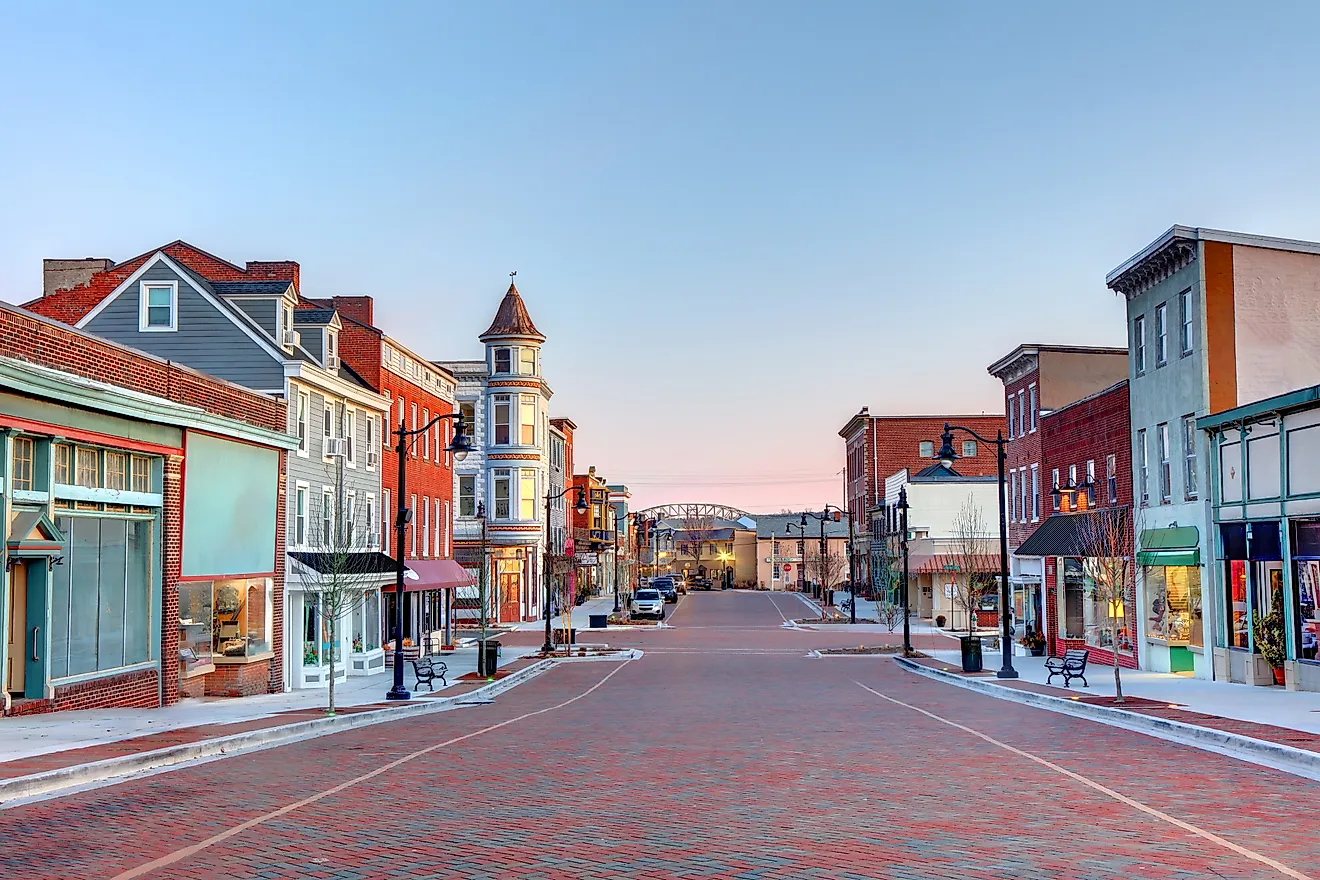
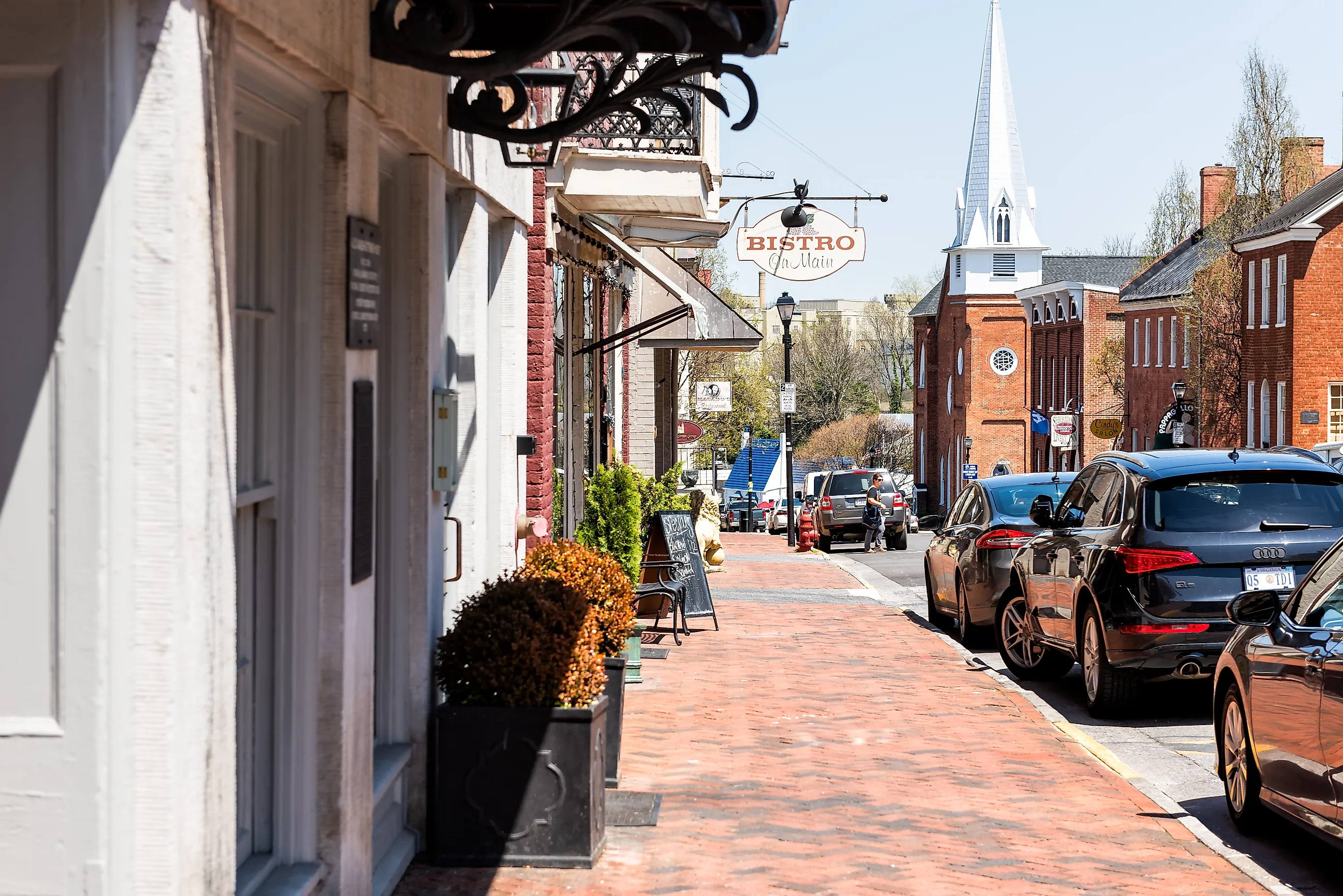
Brick sidewalks and gas-lamp streetlights define downtown Lexington as history and higher education shape the character of this community in the Shenandoah Valley. First settled in 1778, the town takes its name from Lexington, Massachusetts, where colonial militia fired the first shots of the American Revolution. Today, the Virginia Military Institute and Washington and Lee University anchor a historic district filled with well-preserved 18th- and 19th-century architecture.
The Jackson House Museum occupies the home where Confederate General Thomas "Stonewall" Jackson once lived, and documents daily life in antebellum Virginia through period furnishings and personal artifacts. No visit to Lexington is complete without experiencing Hull's Drive-In Theatre, which has operated since 1950, screening films under the stars from April through October.
Goshen Pass lies 10 miles north of town, where the Maury River cuts through the mountains offering swimming holes, rock formations, and hiking trails that follow the water through dense forest. In autumn, the pass becomes one of Virginia's premier leaf-peeping destinations, with maples and oaks creating a canopy of red and gold above the river.
Floyd

Floyd's nearly 500 residents have turned their Blue Ridge Mountain town into a destination for live music and outdoor recreation. The town sits along The Crooked Road, Virginia's Heritage Music Trail, where bluegrass and old-time music shape daily life as much as the surrounding peaks.
Every Friday night, the Floyd Country Store hosts its legendary Friday Night Jamboree. Musicians crowd the stage inside while impromptu jam sessions spill onto South Locust Street, where banjos and fiddles compete for attention. Dogtown Roadhouse is another popular spot for wood-fired pizzas and craft beers, with live performances Thursday through Saturday, while Chateau Morrisette Winery on the Blue Ridge Parkway is the oldest winery in Virginia, with a tasting room and restaurant featuring farm-to-table meals.
To fully appreciate the town's natural setting, Buffalo Mountain Natural Area Preserve offers a two-mile trail to a treeless summit with 360-degree views of the Blue Ridge Mountains. The high-elevation, wind-exposed peak shelters rare plant species found nowhere else in Virginia. Hikers climb through hardwood forests before emerging onto rocky openings where the entire mountain range spreads out in every direction.
Visit These 7 Quietly Charming Virginia Small Towns
Virginia’s quieter towns show how much character can exist beyond the state’s best-known destinations. In places like these, history remains visible, landscapes shape daily routines, and local traditions continue without being staged for visitors. Whether shaped by coastal waters, mountain settings, or long-established main streets, each town offers a distinct sense of place that rewards a slower approach. Together, they reflect a side of Virginia defined not by spectacle, but by continuity, care, and communities that know who they are.