7 Classic Americana Downtowns In Ohio
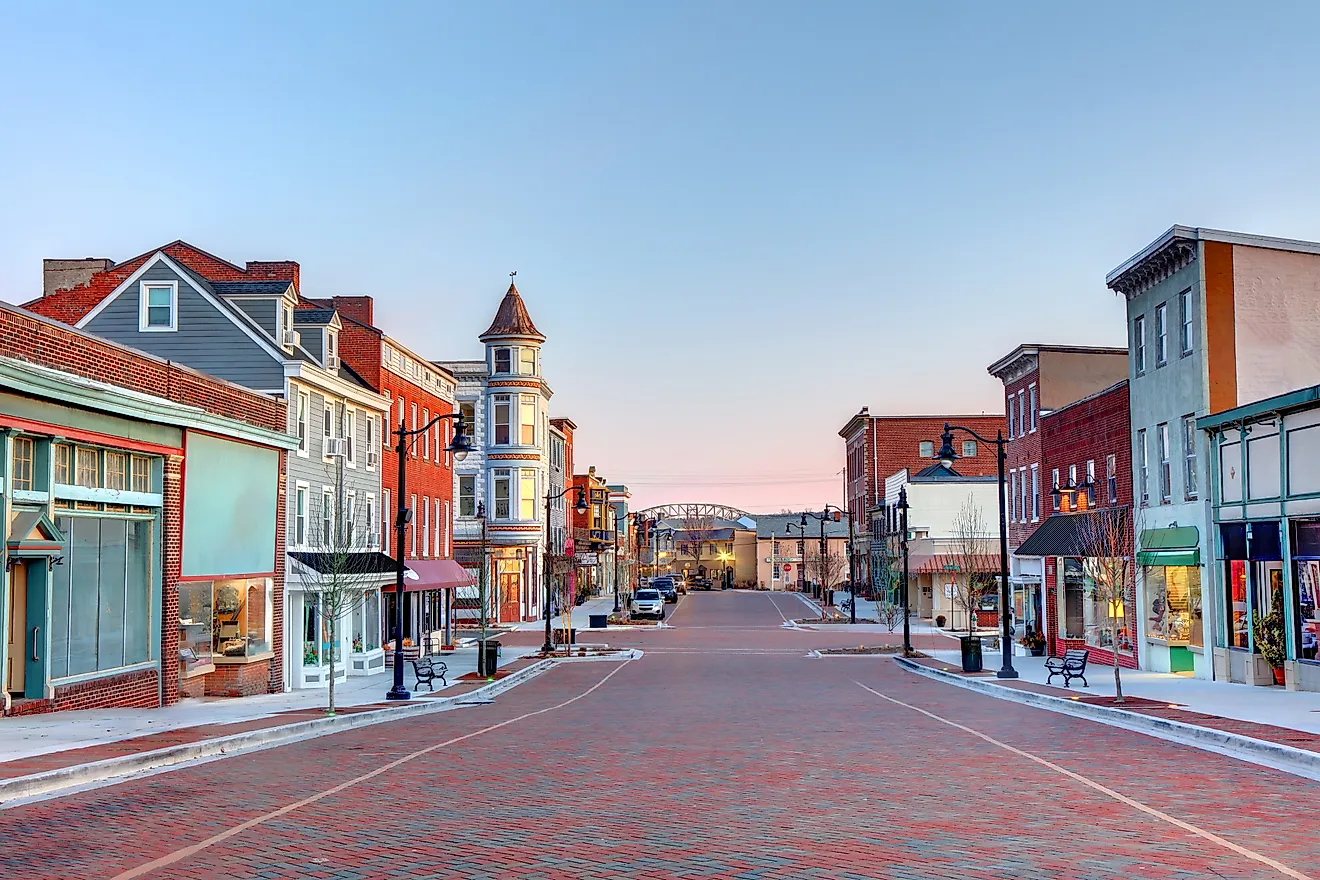
Away from Columbus and Cleveland, a parallel Ohio sits in county seats and canal towns where 19th-century brick blocks still handle everyday business: court dates, school concerts, Friday-night pizza. Places like Bellefontaine and Greenville didn't rebuild their downtowns into lifestyle districts; they simply kept using them, which quietly preserved original street grids, courthouses, and commercial blocks that other states demolished. The same centers that once served railroad passengers and early motorists now house pizza ovens and county museums with deep local archives.
This is small-town America without staging, still functional, still local, and still written in brick.
Tipp City

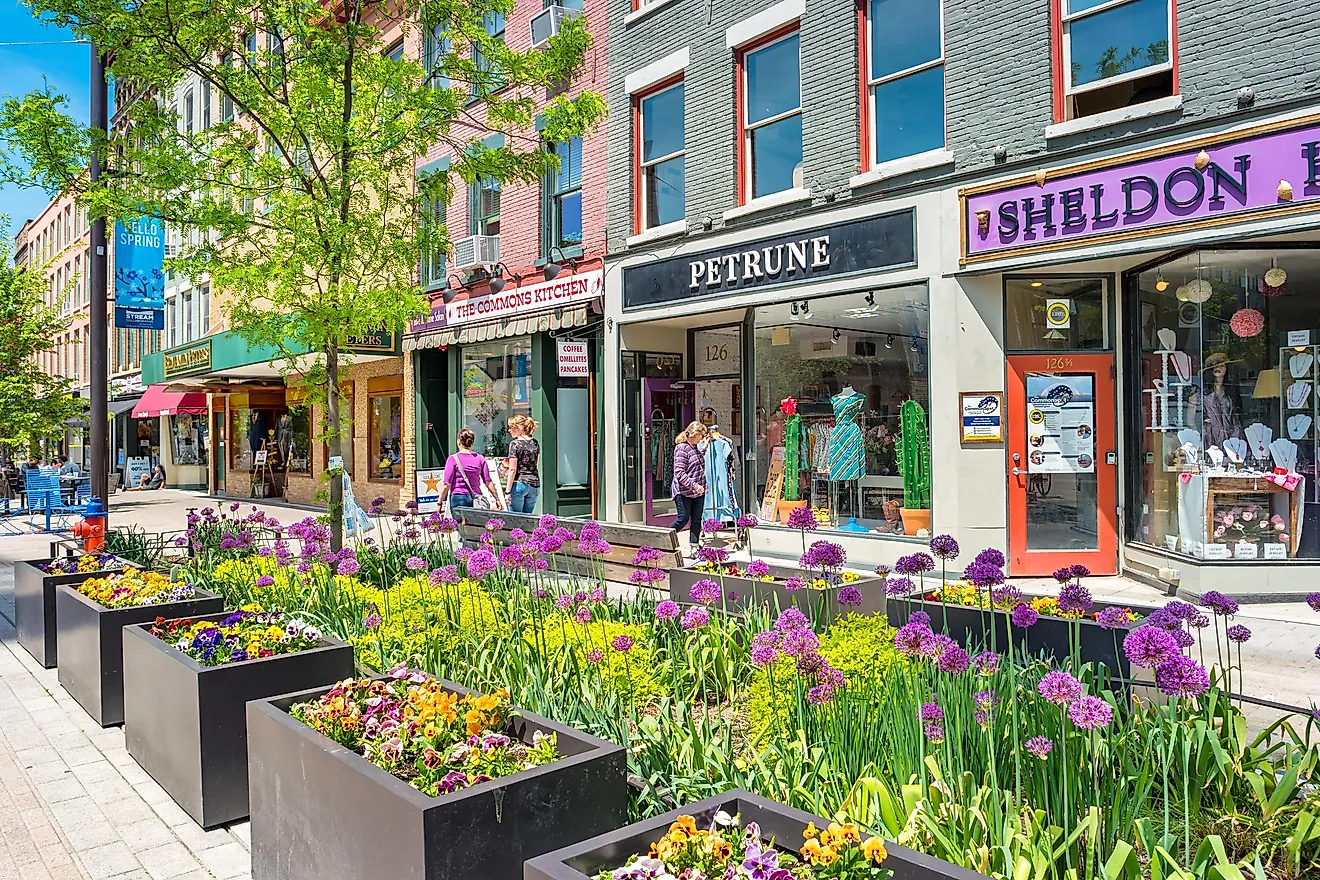
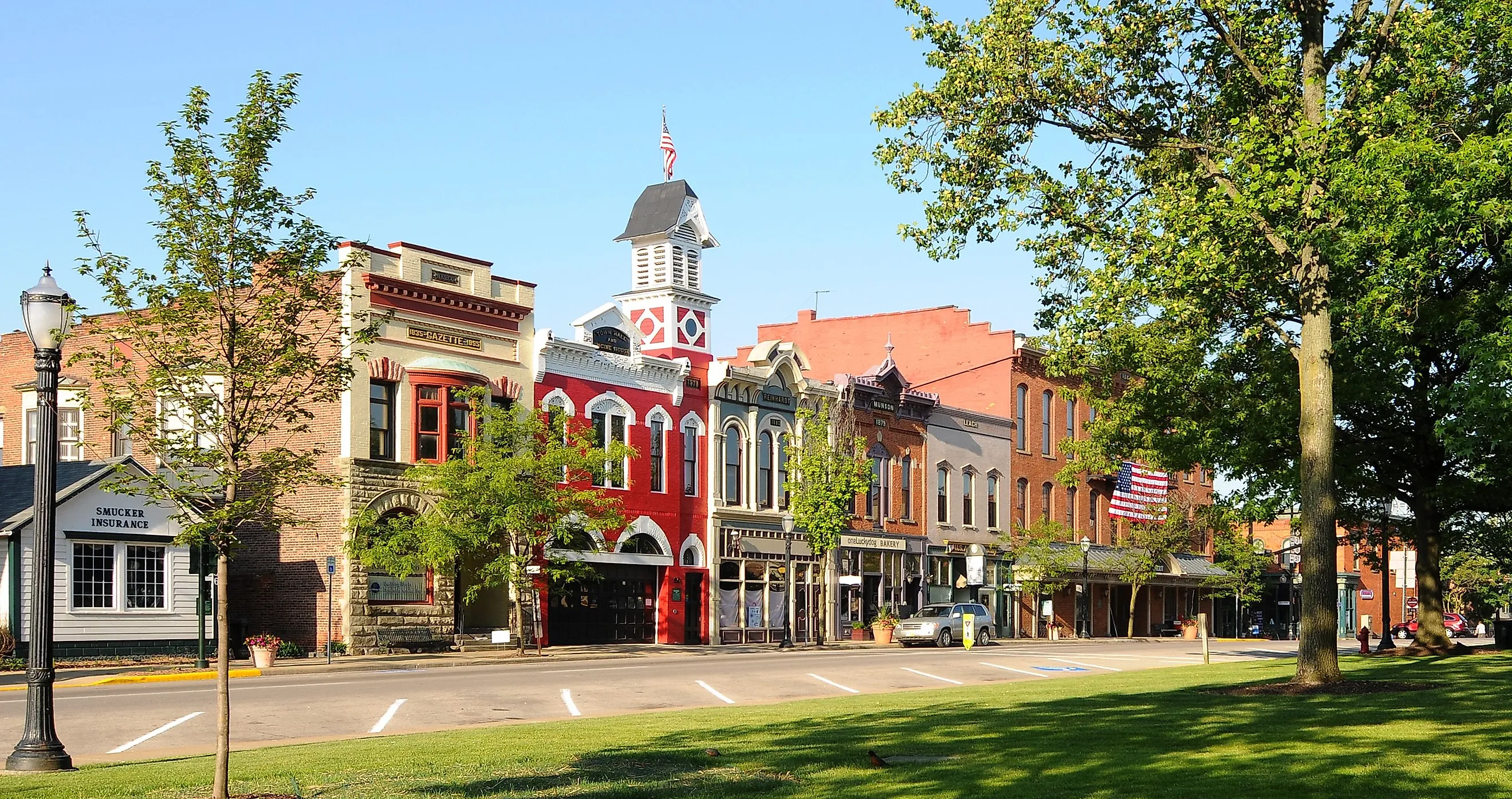
Tipp City was built along the Miami and Erie Canal, and its original canal-era street grid still shapes the downtown, long, straight blocks lined with 19th-century brick storefronts that were never replaced, only reused. The town avoided the glass-and-metal updates that flattened many other small-town centers. Its business district remains walkable, linear, and intact, anchored by buildings that once served canal merchants and now house independent shops, cafes, and bookstores without a corporate sign in sight.

Browse Awhile Books, open since 1980, takes up a narrow storefront and packs it floor-to-ceiling with used and rare books, some housed in a mezzanine above the main floor. Across the street, Coldwater Cafe, built inside a former bank, still uses the original vault as part of the dining space and offers a rotating menu with regional sourcing. Aecha, a small café on East Main Street, serves coffee, teas, and house-made desserts inside a restored brick storefront with a few tables lined up along the front windows. The Canal Lock Park near the southern end of Main Street preserves a section of the original canal lock system, still visible and accessible, and connects to the bike trail that runs parallel to the old towpath. Downtown Tipp City hasn't been recreated. It never left.
Medina

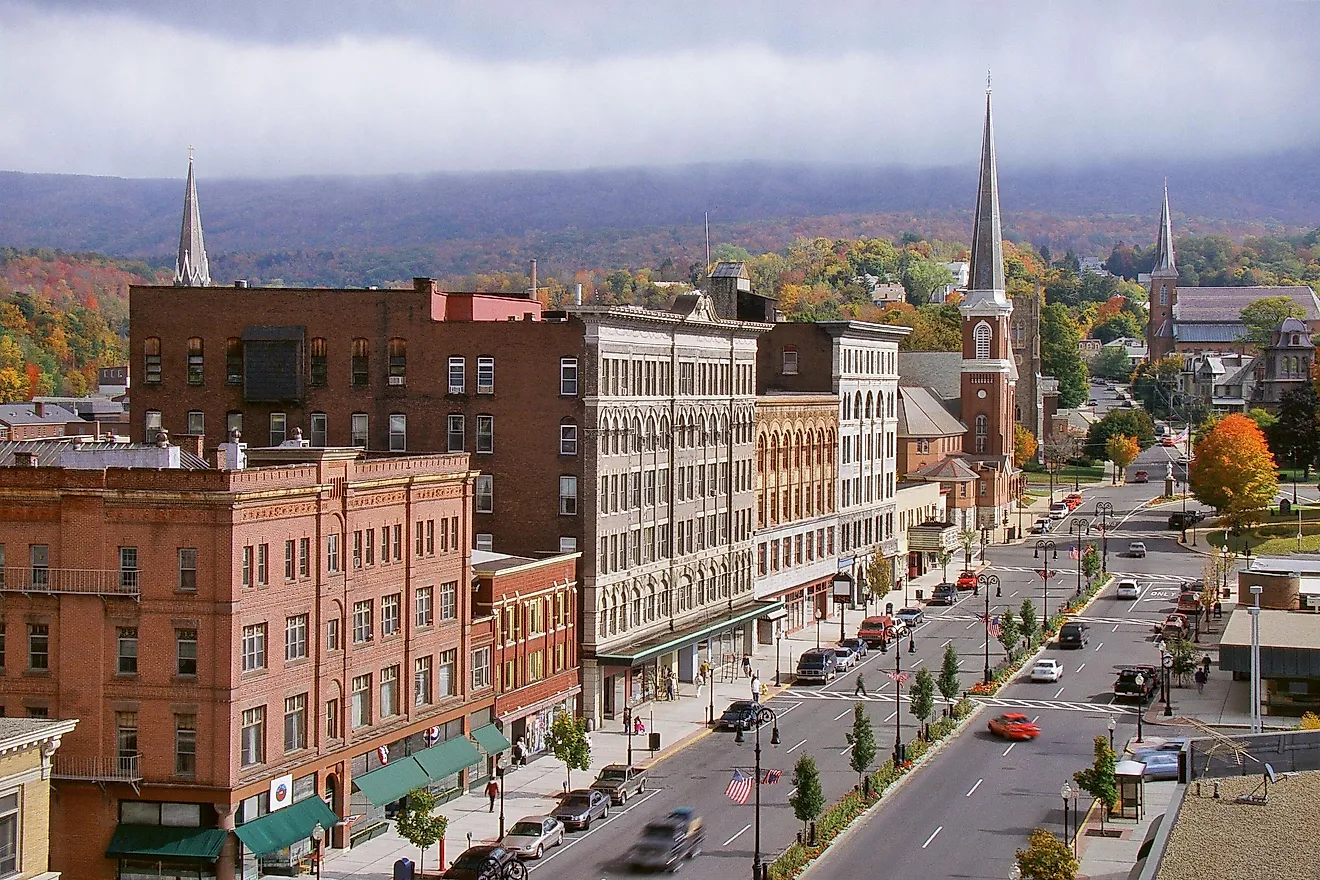
Medina's downtown was built around a New England-style square rather than a traditional Midwestern main street, and that layout, brick commercial buildings framing a central green, still defines the city's civic identity. The 1870s courthouse rises above the square, flanked by uninterrupted blocks of Second Empire and Italianate facades. Medina has hosted a county fair since 1845 and is still the headquarters of Root Candles, a business started by a beekeeper-turned-candle-maker in 1869 whose legacy continues in a factory store just outside downtown.

On the square, Cool Beans Café operates inside an 1880s storefront with pressed-tin ceilings and wood floors, serving coffee, sandwiches, and live music. Miss Molly's Tea Room, housed in a former dry goods store, offers full tea service in a multi-room space connected to an adjacent gift shop. The Medina Toy & Train Museum, located upstairs in a 19th-century block on Liberty Street, maintains a collection of pre-World War II toys and model trains donated by local collectors. Public Square Park in the center of the district includes benches, gardens, and a Victorian-style gazebo, used for concerts and city events. Medina's downtown didn't need reinvention. It functions exactly as it was laid out more than 150 years ago.
Lebanon

Lebanon's downtown is organized around the Golden Lamb, Ohio's oldest continuously operating inn, opened in 1803 and host to 12 U.S. presidents. The building anchors Broadway in a district lined with early Federal and Victorian architecture, much of it built before the Civil War. Lebanon is also home to one of the oldest public libraries in the state, and a stretch of the Cincinnati, Lebanon & Northern Railway still runs seasonal trains directly from the downtown depot.

The Village Ice Cream Parlor, opened in 1969, occupies a former drugstore and has retained its marble countertops, tin ceiling, and soda fountain menu. Green Country Market, located just off Main Street, stocks locally made goods and Amish bulk products inside a 19th-century warehouse. Picture This, a photography and framing studio now located on West Main Street, doubles as a gallery and community art space with regular exhibits by local artists. Harmon Museum and Art Gallery holds Shaker artifacts, regional painting, and a small archaeology collection inside a 1901 Classical Revival building that once housed city hall. Lebanon maintains a fully active downtown where historic preservation is not a theme but the baseline. Nearly every building still does what it was originally built to do, with few alterations and no nostalgia.
Wapakoneta

Wapakoneta is the birthplace of Neil Armstrong, and that fact isn't handled lightly. The Armstrong Air & Space Museum, built into a low concrete dome at the edge of town, contains the Gemini VIII capsule and moon mission artifacts, but its real context comes from the downtown where Armstrong once worked at a pharmacy. The historic core follows West Auglaize Street, with Italianate and Classical Revival commercial blocks intact. The Auglaize County Courthouse, completed in 1894, still dominates the square with sandstone carvings and a four-faced clock tower.
Independent businesses occupy nearly every downtown storefront. J. Marie's Wood-Fired Kitchen & Drinks offers brick-oven entrees inside a two-story brick building with exposed rafters and ironwork detail. Across the street, Casa Chic fills a multi-floor space with antiques, vintage goods, and locally made home décor. The Riverside Art Center, inside a former hardware store, hosts exhibits, art classes, and a gallery shop featuring regional artists. For green space, Heritage Park along the Auglaize River sits just off the downtown core, with a covered picnic gazebo, fireplace, shaded tables, and a short riverfront walk a few steps from the storefronts. Wapakoneta's downtown is not a backdrop to history, it's still in full use, shaped by what it once was and never emptied out.
Tiffin

Tiffin is home to two historic universities, Heidelberg and Tiffin University, which sit just blocks from a commercial district that hasn't been hollowed or replaced. The downtown follows the Sandusky River and still includes buildings that date to the 1840s, many with upper floors used as apartments or studios. The city once had a glassworks industry, and remnants of that heritage are still visible in local collections and shopfronts. The Laird Arcade, a late-19th-century enclosed commercial passage, remains intact and active as part of the downtown core.

The Renaissance of Tiffin, a restored movie palace with its original marquee, now functions as a community performing arts venue and event space. The Turntable, located in a former record store, serves food and vinyl in a layout that includes a wall of LPs and a hi-fi lounge. Simply Susan's, a boutique and candy shop on South Washington Street, combines racks of women's clothing with hand-dipped chocolates, local gifts, and engraved home décor packed into a single narrow storefront. A few blocks south, Frost Parkway follows the river with walking trails, benches, and access to downtown events like the Heritage Festival. Tiffin's downtown is still lived in, not re-created. Its buildings are occupied, its streets used daily, and its history absorbed into the rhythm of work and school.
Greenville

Greenville is the site of the 1795 Treaty of Greenville, where General Anthony Wayne and tribal leaders signed the agreement that opened the Northwest Territory to U.S. settlement. The Garst Museum, located a few blocks from the courthouse, houses the treaty artifacts along with a full wing dedicated to native daughter Annie Oakley. The downtown itself extends along South Broadway, where late-1800s brick buildings form an uninterrupted spine leading toward the public square and courthouse, still in use and unchanged in layout since the 19th century.

The Coffee Pot, at the corner of Third and Broadway, occupies a two-story brick storefront and serves espresso, breakfast, and lunch in a space that also sells records and handmade goods. Montage Café, across the street, operates inside a former furniture store and combines a small music venue with a full kitchen and wine bar. Sadie Grace, a clothing and accessories boutique, fills an entire downtown storefront with goods sourced from small makers and regional lines. At the far end of Broadway, Greenville City Park includes an original band shell, a lake with paddleboats, and WPA-era stonework. Greenville's downtown functions as both retail and civic space, tied closely to its past without relying on nostalgia.
Bellefontaine

Bellefontaine has the highest point in Ohio, Campbell Hill, and the oldest concrete street in America, both markers of a town that preserves history without freezing in it. Its downtown, once nearly hollowed out, is now an active core centered around late-1800s commercial blocks like the Opera Block and The Canby, restored with original brickwork, cast iron columns, and upper-story windows intact. The revival didn't come from chains, it came from a quiet influx of independent businesses reclaiming these historic buildings with practical, lived-in purpose.

Downtown highlights include Six Hundred Downtown, where award-winning pizza is hand-tossed in an open kitchen set beneath pressed-tin ceilings and exposed brick. Native Coffee Co., one block over, serves single-origin pour-overs and local pastries in a space that doubles as a community hub. The Logan County History Center, housed in a Victorian mansion and carriage house, holds a dense collection of local artifacts and a small transportation museum. For green space, Myeerah Nature Preserve, on the edge of town, offers trails and wetlands on land once used by the Shawnee. Bellefontaine's downtown isn't just surviving; it's doing so without dilution, built entirely on what already made it worth preserving.