5 Old Mill Towns To Visit In Wisconsin
Whether they were turning wheat into flour, wool into cloth, or logs into lumber, the mills that once lined Wisconsin’s rivers and creeks helped propel the state - and the country as a whole - into an industrial powerhouse. In fact, from the 1840s through to the early 1900s, entire towns owed their existence to these water-powered mills, producing goods vital for growing domestic and international markets.
By the time modern industrial practices superseded traditional manufacturing methods, Wisconsin’s towns changed with the times and adapted. The most forward-thinking communities, regardless of their size, took steps to preserve their old mills, putting them to use as tourist attractions to preserve their milling heritage. Here are five of our favorite Wisconsin towns that have gone all out to ensure their old mills will be around for centuries to come.
Cedarburg

The story of Cedarburg begins with Cedar Creek and the German immigrants who saw its potential to power mills. The first to be built was a modest wooden gristmill, completed in 1845 and replaced 10 years later by a much larger, five-storey stone structure. Cedarburg Mill still impresses, with its 32-inch-thick limestone walls built to last.
Designed with a monitor-style roof for maximum light and ventilation (electricity wasn’t a thing yet), the mill could produce an astounding 120 barrels of flour per day, all of it powered by water. While no longer a functioning mill, you can still get a good sense of its scale and importance to the town with a walk along the creek.
A second mill, this one built to handle wool, was added in 1865 with 12 looms and three knitting machines to produce everything from blankets to socks for Union forces during the Civil War. By 1893, the operation had spread across 12 buildings and had become the largest woolen mill west of Philadelphia, and was also used to produce the town’s first electricity a few years later.

Though closed in 1969, preservation efforts by local developers have seen the building repurposed as the Cedar Creek Settlement, home to Cedar Creek Winery, several artist studios, and a collection of boutique shops set against the backdrop of Cedar Creek's waterfall.
Several other sites across Cedarburg also bear witness to its mill town roots. Five dams and mills were eventually built here, resulting in the town’s now having more stone buildings than most other similar-sized communities in Wisconsin. The Washington Avenue Historic District is where you’ll find some of the best examples, with its rows of 19th-century limestone and brick commercial buildings.
Other historic sites include the Wisconsin Museum of Quilts and Fiber Arts, housed in a restored 1850s barn and full of displays about the textile traditions connected to the town's wool mills. The Cedarburg History Museum is another must-visit and does a great job of telling the story of the town's mills and its early industrial roots.
Augusta

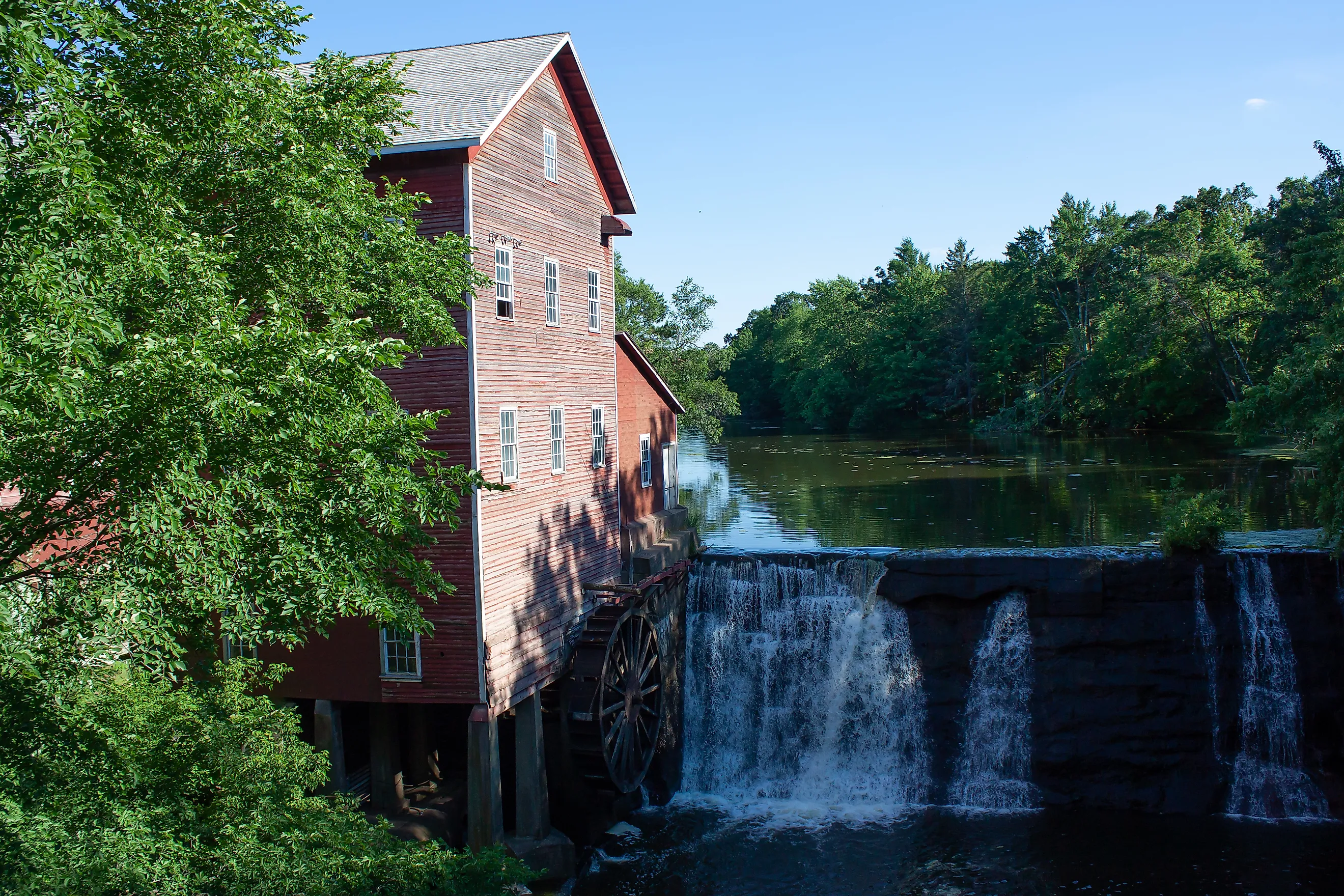
Dells Mill has been a fixture in Augusta since it opened as a flour mill in 1864. Located a few miles outside of town, this picturesque old building on Bridge Creek was built with massive hand-hewn timbers secured with wooden pegs. It was a construction method that proved remarkably durable, allowing the mill to grind wheat, oats, and other grains for local farmers right up until it closed in 1968.
While a concrete dam replaced the original log structure in 1919, much else, including the internal machinery, remains intact. Now known as The Dells Mill & Museum, a visit allows you to see the mill's huge turbine in action as the creek turns the 20-foot waterwheel to power the machinery.
Weekend tours are available and include grinding demonstrations and the opportunity to buy flour and oats produced on site. The property also includes a small antique shop and a bakery selling fresh Amish-made goods.
Augusta itself is an ideal base for exploring the surrounding Chippewa Valley. Highlights include Coon Fork Lake County Park with its campsites and boat launches, and the Dells Schoolhouse, a one-room school built in 1866 just down the road from the mill.
Chippewa Falls

The Chippewa River's watershed once had richer timber supplies than any other river system in Wisconsin, and before the arrival of the railroad, the only way to access it was by river. And that was good news for the town that was to become Chippewa Falls.
Located at the very center of what was to become one of the most productive lumber operations in America, the first sawmill was constructed here in 1836. Rebuilt after flooding in 1846, by 1879, Chippewa Falls was home to what locals dubbed the Big Mill, one of the world’s largest sawmills, and capable of cutting 350,000 board feet of lumber a day.

Though the last pine log was sawed in 1911 and the mill shut down, evidence of this once massive operation can still be seen around town. A hydro-electric dam was built on the mill site in 1928 and still actively produces electricity, and its lumber heritage is preserved at the Chippewa Area History Center. This impressive five-story museum near Irvine Park features a design that pays homage to the original Big Mill. Exhibits include a mobile lumberjack museum trailer and many displays of old tools and artifacts.
Beloit

Located six miles west of downtown Beloit, Beckman Mill County Park on Raccoon Creek has a long and colorful history as a mill site. Starting in 1844 with a combined gristmill and distillery, a cooperage for barrel making followed in 1848. After being destroyed by fire, the current gristmill was constructed in 1868 and reached peak production in the early 20th century, grinding grain for neighboring farms and producing its own branded products until 1954.

Now restored and functioning as the Beckman Mill, the mill is still powered by its original 1860s Leffel turbine. The park also features a rebuilt dam and millpond, a fish ladder, a footbridge, a sawmill display, and the original 1840s cooperage building. There’s also a visitor center, blacksmith shop, and heritage garden.
The best time to visit? Shoot for the attraction’s spring opening day (always a celebration), its regular ice cream socials, or fall’s Heritage Sunday event. Highlights of these fun experiences include grinding and blacksmithing demos, live music, and classic car displays.
Waupaca
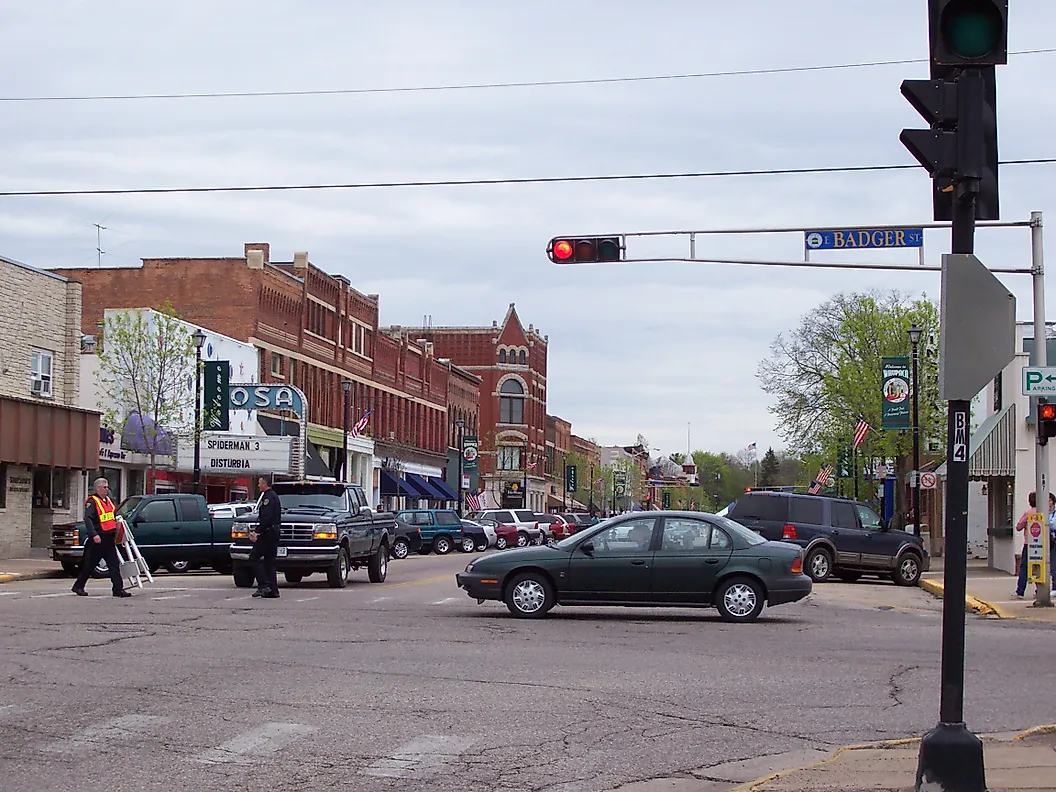
Back in the 1850s, farming communities were popping up around central Wisconsin at a brisk pace. With them came the mills needed to process grain and feed livestock, with several of them positioned along the fast-running Crystal River in places like Waupaca. In all, three mills were built here, one of which, the Red Mill (formerly the Crystal River Grist Mill), survives to this day.
Built in 1855, this two-and-a-half-story frame structure was used to grind flour, cornmeal, and livestock feed for the farmers of Little Hope and the broader Waupaca area. Two metal waterwheels powered the operation, one dedicated to grinding flour and the other to processing livestock feed, and ran continuously until 1959, when new owners decided to turn it into an attraction.
While preserving the original structure and its machinery, a gift shop was added, along with a decorative wooden water wheel, a red covered bridge over the Crystal River, and the Chapel-in-the-Woods on a small island in the river. In addition to being popular for weddings, a prayer path through the woods behind the chapel still provides a meditative walking experience.
Today, the Red Mill operates as a gift shop and café in an attractive riverside setting that includes gardens, walking paths, and picnic benches along the Crystal River.
Explore Wisconsin's Mill Towns
Whether you’re a history buff, a photographer, or are simply on the lookout for a fun day trip, these five mill towns are worth including in your Wisconsin travels. Taken together, they not only provide an impressive snapshot of Wisconsin’s early industry but also the inventiveness of its people.