5 Old Mill Towns To Visit In New Jersey
Much of the success of early American settlers came from their ability to harness the natural resources of the land to their advantage. This was especially the case in New jersey where the highlands and streams were utilized for grist mills. From the 1700s to the 1800s, communities popped up around local mills. Many of them were originally of wood, which made them easy to burn down, but many stone ones or recreated mills still survive to this day.
New Jersey is the perfect place to see these old mills and the historic communities that sprung up from them. Within these old mill towns, you can see a beautiful Red Mill, an open-air industrial museum, a village hidden away in the mountains, along with local attractions like a cute millpond park, an 18th-century inn, and many art museums.
Clinton

Out of all the milling towns in New Jersey, Clinton is the most well known as its mills are both still standing. Clinton was originally part of a trail used by the Lenape people, before being settled by German and English settlers in the 1710s, forming several communities. More than a century later, residents chose the name Clinton to honor former New York Governor Dewitt Clinton.

The two mills in Clinton served two different purposes. The first one was the Red Mill, which was built in 1810 for wool processing, but later on was enlarged for use as a gristmill. Today it is part of the Red Mill Museum Village. The second is the Stone Mill which operated from 1837 to 1952 as a gristmill, but today is home to the Hunterdon Art Museum, which exhibits both local and national artists. After visiting these two historic places, go for a walk alongside a pond at the Landsdown Trail or Hunts Mills Park.
Allentown

The area around Allentown was first acquired by Scottish Quaker Robert Burnett in the early 1700s. He later gave two sections of that land to his son in law Nathan Allen in 1706. In 1714, Allen would build both a gristmill and fulling mill. The grist mill was used for turning grain into flour, feed and molasses whereas the fulling mill would clean flax and wool for cloth and linen.
Both of these original mills are gone but a replacement called the Allentown Mill is still standing. This four-story structure was built in 1855 by Abel Cafferty. After checking out the mill, visitors can walk by the Indian Run creek at Heritage Park or take a boat out onto Pete Sensi Park, nestled on Conines Millpond.
Byram Township

Byram Township is a underrated town in New Jersey, as it contains a beautiful museum on its southern border called Waterloo Village. Located within the larger Allamuchy Mountain State Park, Waterloo Village was a canal town founded in 1820, complete with its own watermill, general store and blacksmith shop. It flourished with the opening of the Morris Canal in 1831. However, with the arrival of the railroads, business dried up and the village was virtually abandoned during the Great Depression.
In addition to the water mill, visitors can also see several houses at the village such as Smith's General Store and the Peter D. Smith House. Other than exploring this village or going fishing or hiking in the state park, visitors can also try out German fare from the Black Forest Inn or go on a pony ride at the Wild West City theme park.
Asbury

Just a few hundred people call this small community home alongside the Musconetcong River. The first mill here was built in the 1770s and was then called Hall's Mill. The area would be swept up in the Second Great Awakening, which saw Methodists traveling into the area to preach and establish churches, such as Bishop Francis Asbury, who would lay the cornerstone for the Methodist Church in 1796. The town and the mill's name were changed to Asbury in 1800 in Francis Asbury's honor.
In 1867, the original mill was replaced with the current Asbury Grist Mill. Made of stone with a lime stucco exterior finish, this five-story structure has been maintained by the Musconetcong Watershed Association. While you're in town, grab a cup of coffee from the Asbury Coffee Mill, named affectionately after the mill, purchase some locally grown vegetables from the Cabbage Throw Farm, or go through the orchards of Mill Stone Farms.
Stockton

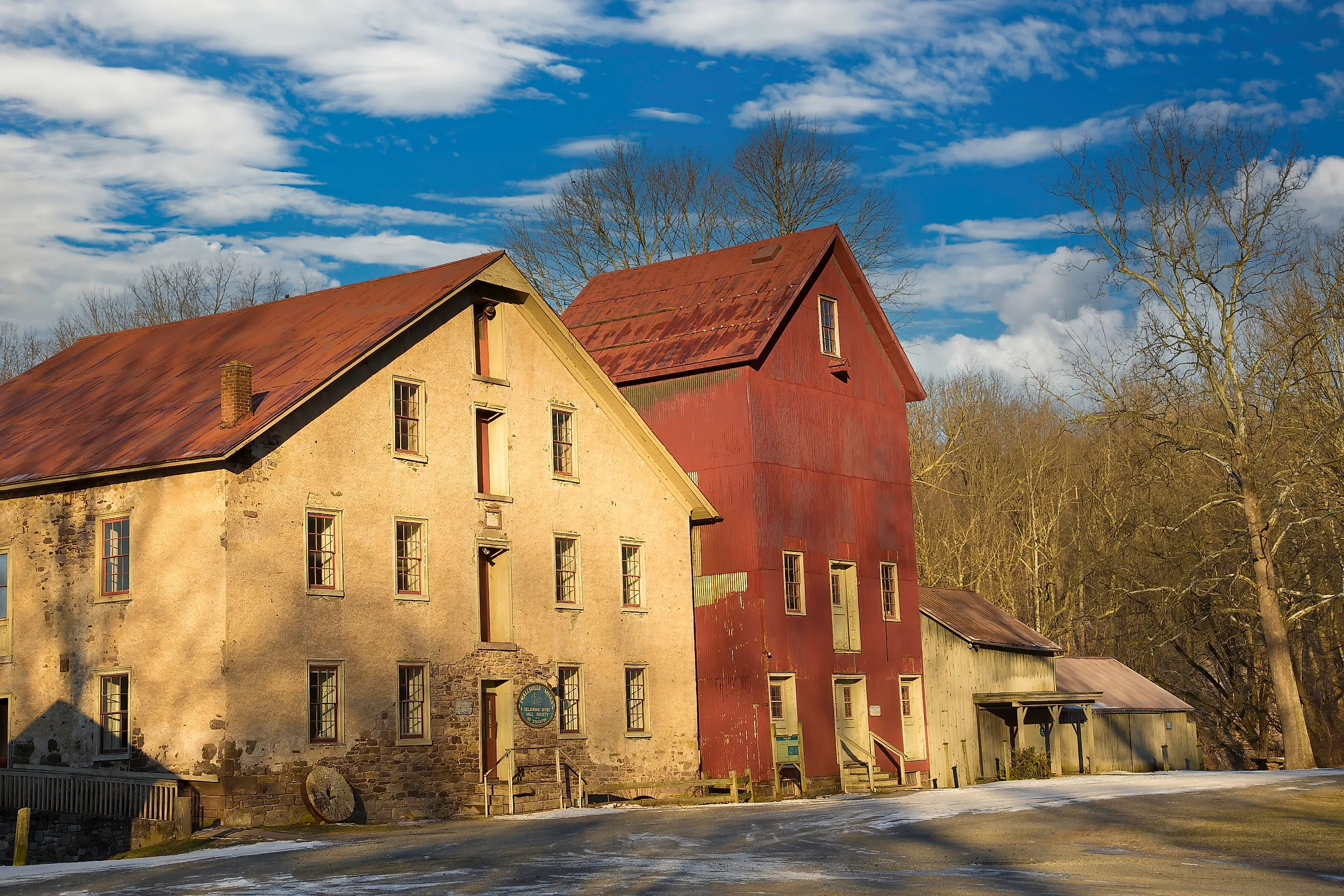
Much like Bryam Township, Stockton contains an intriguing museum that features multiple historic mills ranging from the late 1700s to mid 1800s at the Prallsville Mill. It is named after John Prall, Jr. who purchased the area in the 1790s, which at the time only included one gristmill. He would turn this area into an industrial powerhouse, by adding a linseed oil mill.
Over time, other mills would be added from an 1850 sawmill to an 1877 grist mill. Today, the linseed oil mill also includes the Art Colony Gallery, which honors the work of artist Ty Hodanish. This isn't the only artistic spot you can visit in the Prallsville Mill, as the Quarry House contains the Myles Cavanaugh Studio. Lastly, don't forget to check out the historic Stockton Inn built in 1710 before you leave this milling town.
Hidden industrial gems
These old mill towns are beautiful hidden industrial gems that preserve a bygone era when pioneers were wrestling with the landscape to make a living in New Jersey. Many of these towns eventually morphed into larger industrial headquarters such as the growth of one small grist mill in Stockton to a sawmill, linseed oil mill, and more. But of course, as this list reveals, these old mill towns have more to see than just the mills themselves, as one can grab local produce from Asbury, visit local artists in Stockton, go to a cutesy theme park in Bryam and other activities.