5 Classic Americana Downtowns In North Carolina
Americana reflects how American towns developed through local work, trade, and the American spirit. North Carolina stretches from the Atlantic coast to the Appalachian foothills, and its rivers and inland routes concentrated settlement into compact town centers rather than spread-out development. From the 18th century through the early 20th century, these towns invested in brick downtowns meant to last, creating streets where stores, workshops, and services shared the same blocks. Many of those downtowns remain active today through family-run shops, long-standing eateries, and locally owned storefronts that operate in original buildings. Pack your bags, take the slower roads, and explore these North Carolina downtowns on foot to experience Americana grounded in place, history, and everyday use.
Hillsborough

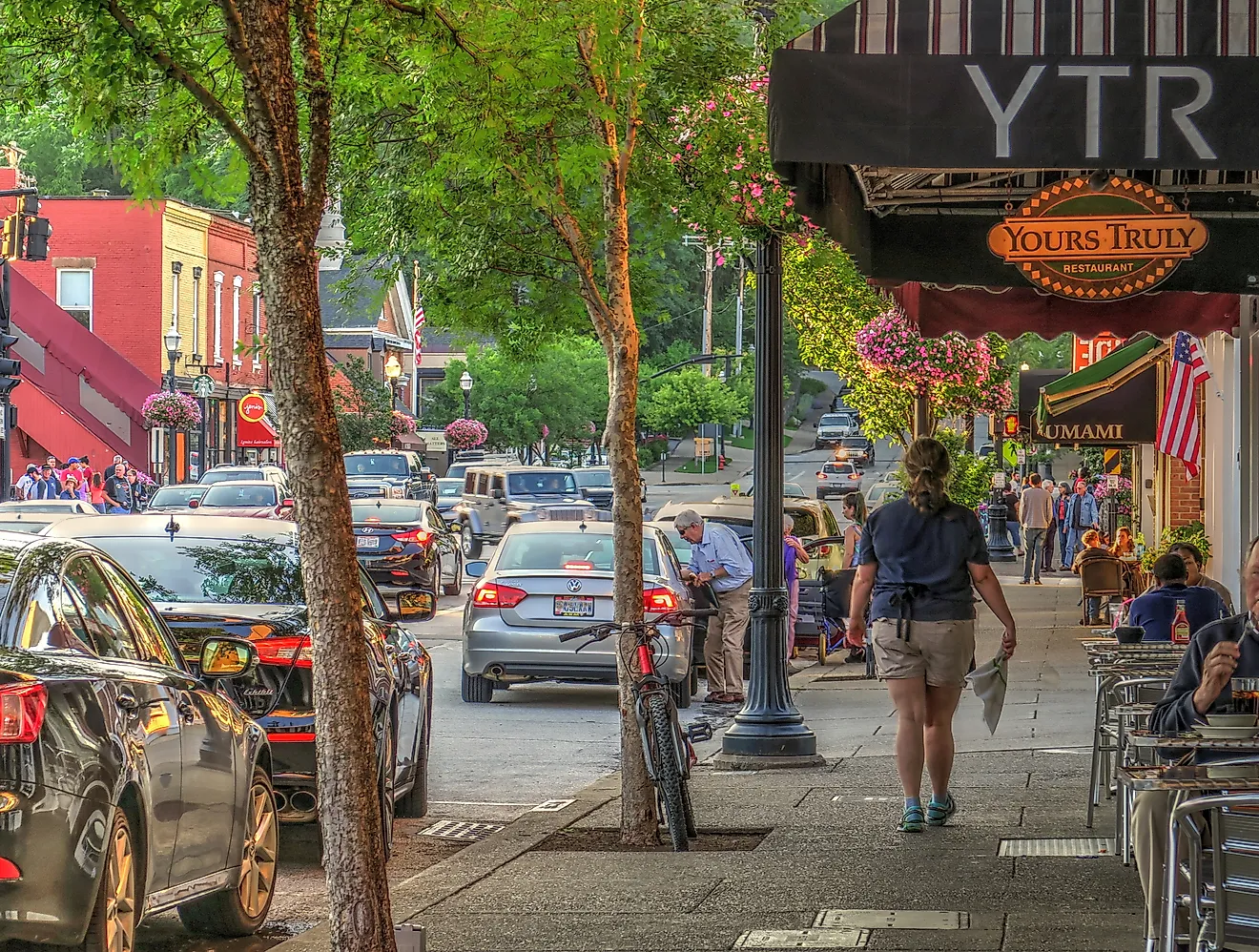
Established in 1754, Hillsborough features a nationally recognized historic downtown that serves as a living museum of American history from the colonial era through the 19th century. The street pattern formed early around civic buildings and inns, and later brick storefronts followed along Churton Street without altering the original alignment. That continuity still guides movement today. Near the center, Purple Crow Books anchors the block as a locally owned bookshop carrying current titles alongside works by local authors, many of whom live in town. A short walk away, the Hillsborough Gallery of Arts occupies a prominent downtown space, showcasing paintings, pottery, and jewelry created by regional artists.
Continuing along the same route, the street transitions naturally from galleries to specialty retail and food. Uniquitiques, set in a historic farmhouse just off the main corridor, mixes vintage and new clothing, cowboy boots, and gifts by local makers, making it a natural browsing stop. The walk often ends at Matthew’s Chocolates, a small specialty shop known for handmade chocolates and desserts prepared on site.
Washington

Often called the “Original Washington,” this riverfront town holds the distinction of being the first US city named after George Washington, founded in 1776. Set along the Pamlico River, its downtown developed as a port and commercial center tied to shipping and agriculture rather than rail lines. Today, the core forms a National Register Historic District, with buildings dating from the late 18th century through the early 20th century. Brick storefronts, former warehouses, and offices face streets that still open toward the water, keeping the relationship between commerce and the river easy to read.
Near the river, the River Walk Gallery represents local artists, many of whom focus on coastal landscapes drawn from the surrounding waterways. Just inland, Harbor District Market brings together over 26 full-time vendors selling goods such as handmade soap, local artwork, farm produce, and specialty chocolates. A short stroll leads to Pamlico Books, a locally owned bookstore that fits naturally into the historic blocks. The walk often ends at Bill’s Hot Dog Stand, operating since 1928 and known for oil-fried hot dogs topped with spicy white chili.
New Bern

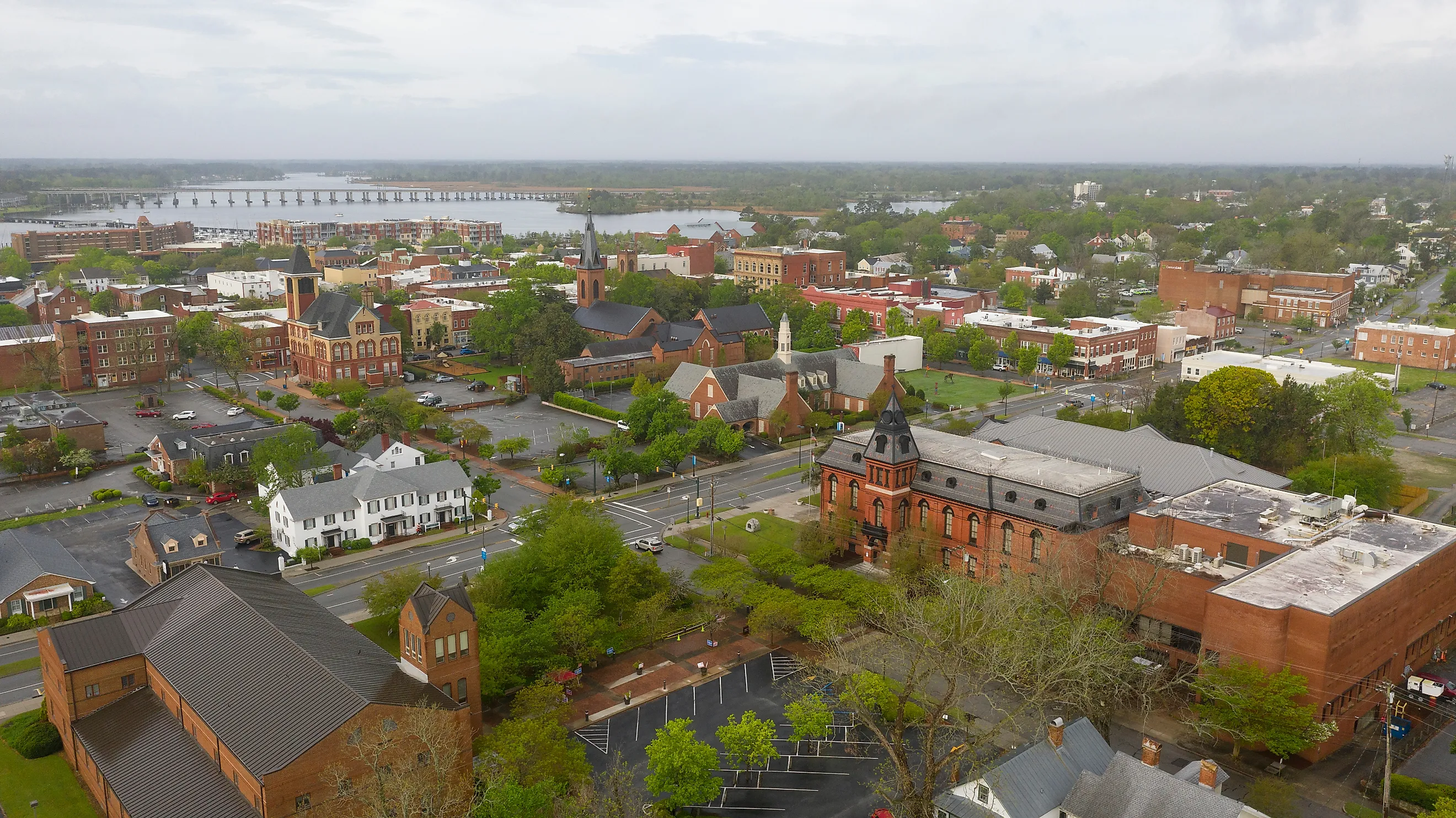
New Bern includes a 300-year-old historic district recognized for its architectural continuity from the colonial period through the early 20th century. Founded in 1710 and located at the meeting point of the Neuse and Trent Rivers, the town developed as a planned port and later a civic center, which explains the density of brick commercial buildings along Middle Street. That same corridor later entered American cultural history in 1898, when local pharmacist Caleb Bradham created “Brad’s Drink,” later known as Pepsi-Cola, at his downtown drugstore. The original site, now known as the Birthplace of Pepsi Cola, operates as a museum and soda fountain, commemorating New Bern’s significant role in everyday American consumer culture.
Many visitors begin their journey at The Next Chapter Books & Art, an independent bookstore and gallery combining new books with rotating art displays. Just down the street, Bear City Fudge Company adds a classic sweet-shop stop with a wide selection of handmade fudge. An evening of exploring can be capped off at The Chelsea, a locally owned restaurant serving American cuisine inside a historic downtown building.
Tarboro

This Americana town features one of North Carolina’s largest and oldest historic districts, chartered in 1760 and spanning 45 blocks. The Tarboro Historic District contains more than 300 contributing structures, ranging from late-18th-century residences to early-20th-century commercial buildings clustered around the Town Common. Brick storefronts and civic buildings expanded through the 1800s and early 1900s, fixing a courthouse-centered layout that remains easy to read today. Original street widths, block lengths, and building footprints continue to guide movement through the downtown.
Shopping often begins at Rusty’s, a family-owned gift shop established in 1983, known for home décor, clothing, and handmade peanut brittle. Nearby, On the Square operates as an intimate American bistro with a changing menu and regular wine-focused evenings. A few blocks away, Tarboro Brewing Company occupies a former Chevrolet dealership, producing small-batch beers in a taproom with outdoor seating. Browsing continues at Creative Salvage, a secondhand and salvage shop that sources finds from local auctions and house clearances.
Lexington

The historic downtown in this town is commonly referred to as Uptown Lexington. It is a National Historic District recognized for its preserved 19th-century architecture and its long role as the city’s commercial center. Main Street and the surrounding blocks developed in tandem with rail access, with brick buildings dating from 1824 to 1946 forming a continuous corridor of storefronts and upper-floor workspaces. At the intersection of Main and Center Streets, The Square marks the civic heart of downtown. Military monuments occupy the site today, and the location is also remembered as the place where Lexington-style barbecue first drew courthouse crowds during the 1920s, tying food culture directly to the public space.
A stroll Uptown follows that historic alignment. Near the Court Square, Pig City Books operates as a locally owned bookstore with a carefully curated selection and strong ties to the community. Just along North Main Street, The Candy Factory occupies a 1890 building, offering homemade fudge, chocolates, and vintage toys in a setting that emphasizes continuity over reinvention. The route often ends at Goose and the Monkey Brew House, which combines espresso, local wines, and small-batch beers in a relaxed downtown setting.
Downtowns Built on American Tradition
These North Carolina downtowns tell a shared story of how American towns evolved and endured change without losing their character. Hillsborough sets the tone with a colonial-era streetscape shaped by law, printing, and early civic life. Following the rivers east leads to New Bern, where port activity and early consumer culture anchored a walkable historic core. That civic pattern deepens inland in Tarboro, whose vast historic district grew around public space and long-standing commerce. Rail and food traditions define Lexington, while the Pamlico River carries the story outward again in Washington, where waterfront trade still guides downtown life today.