Maps of Japan
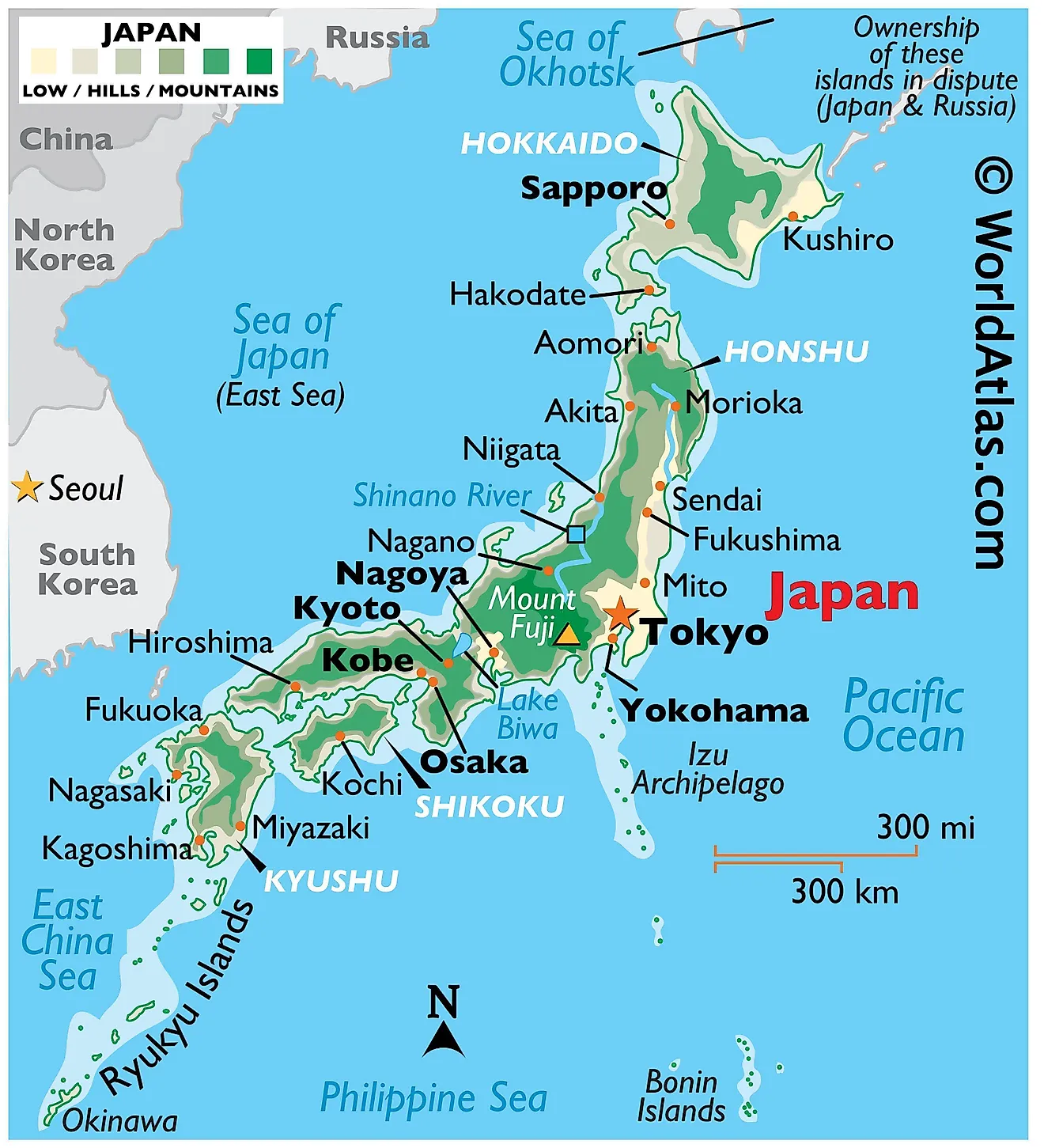
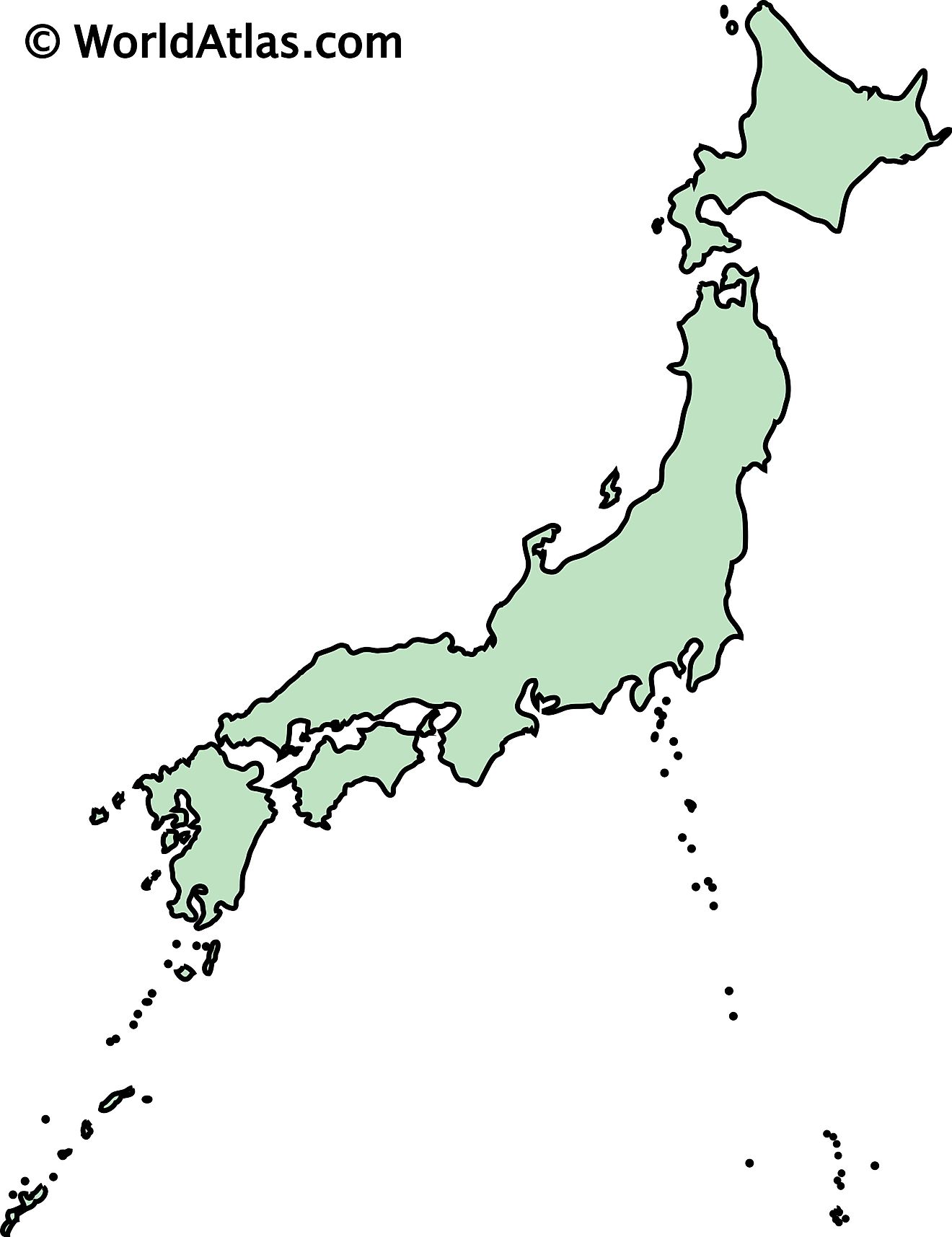
Japan is an island nation located in East Asia, situated in the Pacific Ocean off the eastern coast of the Asian mainland. It borders Russia to the north across the sea, and to the west with China, North Korea, and South Korea, while Taiwan lies to the south. Covering about 377,975 square kilometers (145,937 square miles), Japan has a population of approximately 123 million, mostly on its four main islands. A 2023 government survey, enhanced by digital mapping technology, identified the country's total islands at 14,125—more than twice the previous count of 6,852. The primary islands, aligned roughly from north to south, are Hokkaido, Honshu, Shikoku, and Kyushu.
Hokkaido

Hokkaido, the northernmost of Japan's four main islands, experiences a cool climate characterized by lengthy, snowy winters and gentle summers. The region is largely covered by extensive forests and mountain ranges, notably the Daisetsuzan volcanic area at its core. Its biggest city, Sapporo, was the site of the 1972 Winter Olympics and attracts visitors every February for its renowned snow festival. Additionally, Hokkaido serves as Japan's primary agricultural region, producing significant quantities of potatoes, wheat, and dairy products.
Honshu

Honshu, the largest island of Japan, serves as its cultural, political, and economic center, hosting over 80% of the population. It contains the capital, Tokyo, as well as major cities like Osaka and Kyoto. The island's diverse landscapes include the Japanese Alps, which divide the island between the Pacific and Sea of Japan coasts, and the fertile plains of Kanto and Kansai. Honshu also features many of Japan's most famous sites, such as Mount Fuji, which stands as the country's highest peak at 3,776 meters (12,389 feet).
Shikoku

Lying south of Honshu across the Seto Inland Sea, Shikoku is the smallest of Japan's four main islands. Its largely mountainous interior is drained by the Yoshino River, a major waterway, with Mount Ishizuchi reaching 1,982 meters as the highest peak in western Japan. Matsuyama and Takamatsu serve as the island's primary cultural and economic hubs. Shikoku is particularly famous for its 88-temple pilgrimage, an ancient Buddhist route that encircles the entire island.
Kyushu

Kyushu, the southernmost of the main islands, is located on the Pacific Ring of Fire. It features active volcanoes like Mount Aso, famous for its enormous caldera, and hot springs such as Beppu. The island's mild, nearly subtropical climate supports agriculture, while Fukuoka, its largest city, serves as an important economic center with long-standing trade connections throughout Asia.
The Smaller Islands
Beyond Japan's main four islands, the remaining islands extend in a long arc across the western Pacific. The notable Nansei Islands, which include the Ryukyu chain and Okinawa southwest of Kyushu, stand out. Historically part of the independent Ryukyu Kingdom, this area has a unique culture, cuisine, and history, distinct from the mainland, complemented by a subtropical climate and coral reefs. Further to the southeast, the Ogasawara (Bonin) Islands, a UNESCO World Heritage site, are remote and known for their natural beauty.
Bodies Of Water And Rivers
Japan is bordered by the Sea of Japan to the west, the East China Sea to the southwest, and the Pacific Ocean to the east. Its mountainous terrain results in rivers that are generally short, steep, and swift. The Shinano River, at about 367 km, is the longest, flowing through central Honshu to the Sea of Japan. The Tone River also plays an important role, draining the Kanto Plain. These rivers are essential for generating hydroelectric power and irrigating rice paddies, which continue to be a key aspect of Japanese agriculture.
Prefectures of Japan Map
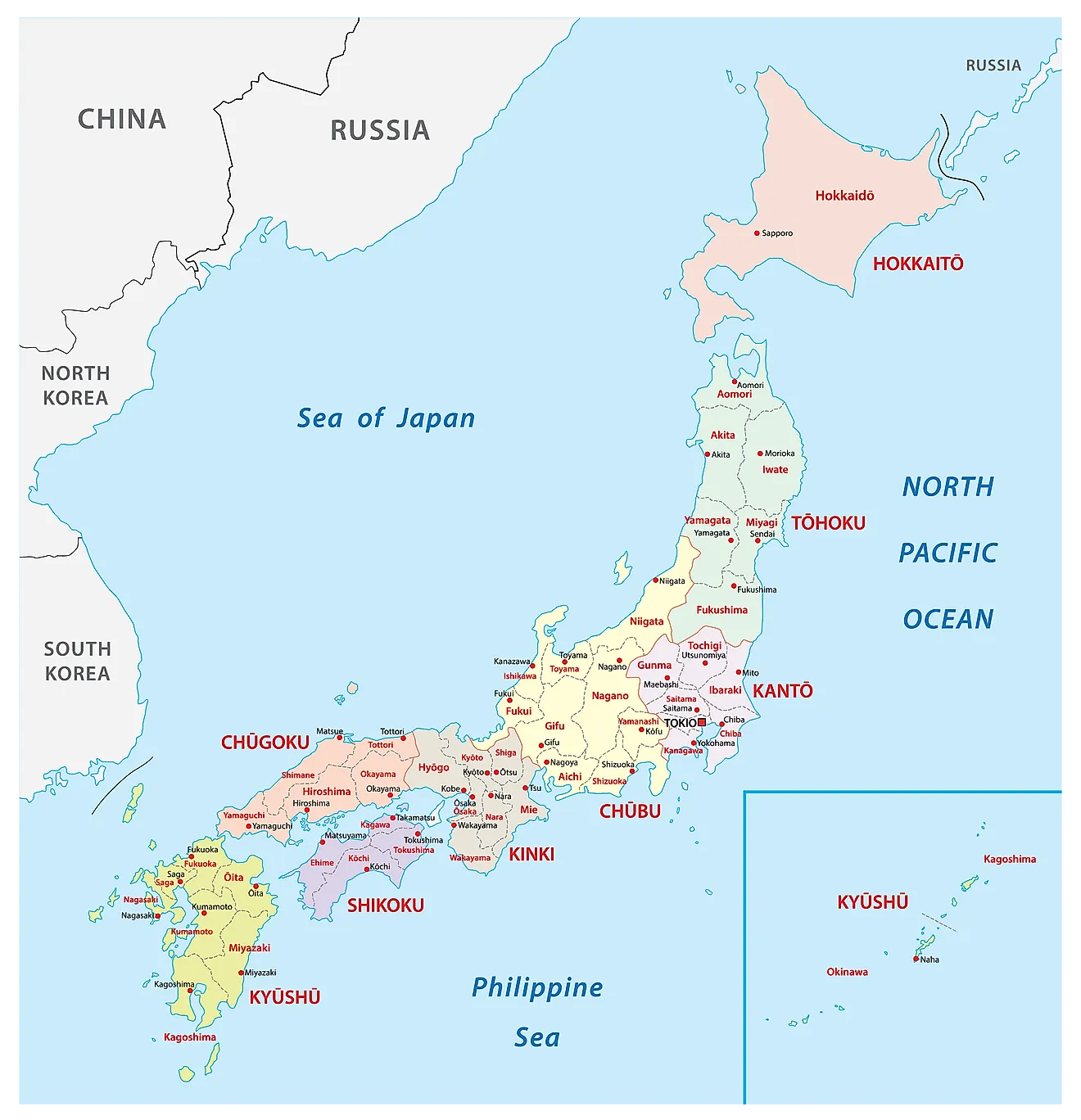
Japan is divided into 47 prefectures. In alphabetical order, these prefectures are – Aichi, Akita, Aomori, Chiba, Ehime, Fukui, Fukuoka, Fukushima, Gifu, Gunma, Hiroshima, Hokkaido, Hyogo, Ibaraki, Ishikawa, Iwate, Kagawa, Kagoshima, Kanagawa, Kochi, Kumamoto, Kyoto, Mie, Miyagi, Miyazaki, Nagano, Nagasaki, Nara, Nilgata, Oita, Okayama, Okinawa, Osaka, Saga, Saitama, Shiga, Shimane, Shizuoka, Tochigi, Tokushima, Tokyo, Tottori, Toyama, Wakayama, Yamagata, Yamaguchi and Yamanashi. These are further divided into sub prefectures and smaller subdivisions.
Located at the northwest of Tokyo Bay on the Pacific coast of central Honshu Islands – is Tokyo, the capital and largest city of Japan. The Greater Tokyo Area is the largest, most populous, urbanized metropolitan area in Japan as well as in the entire world. Tokyo also forms the largest economic, industrial and commercial center of Japan, apart from being the country’s administrative center.
Where is Japan?
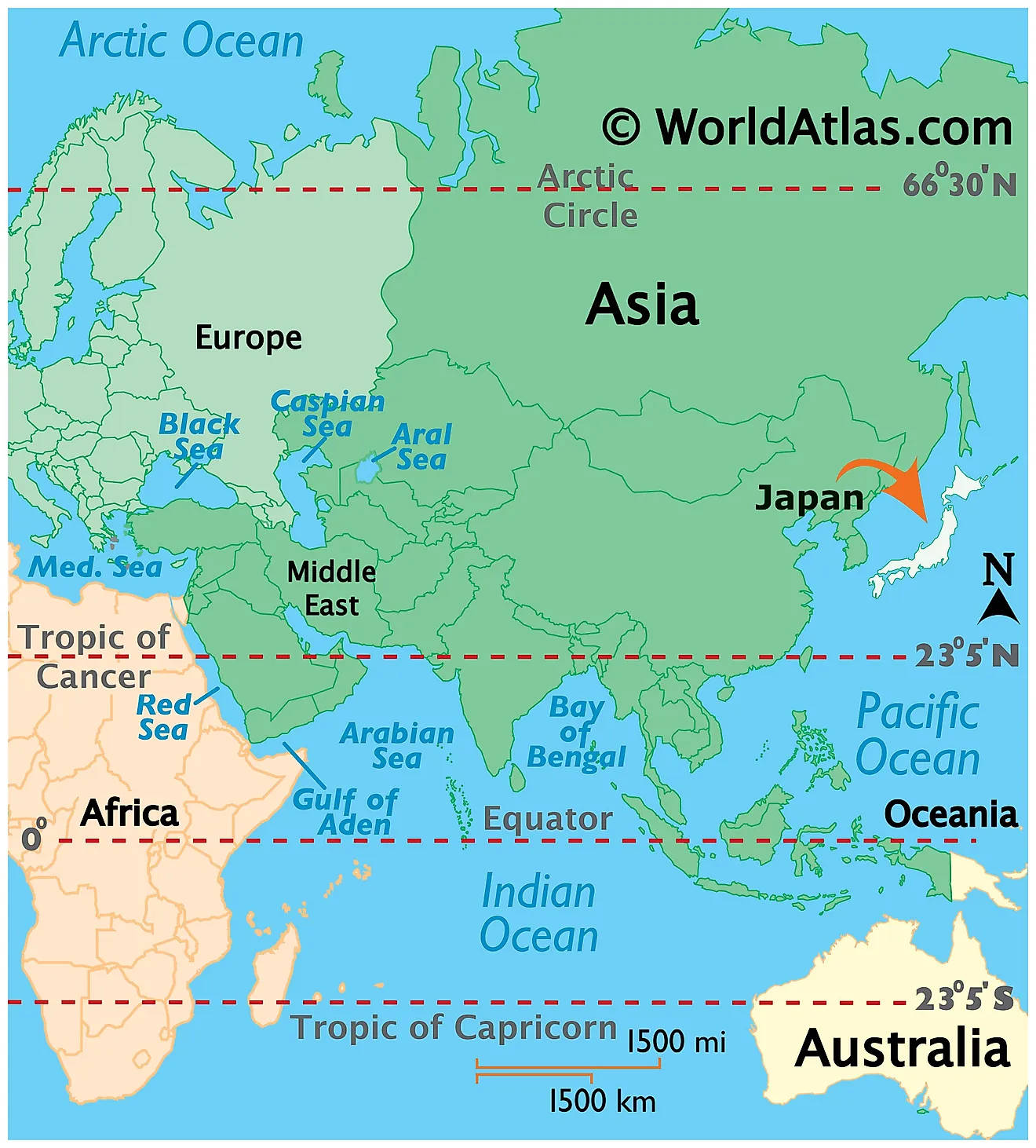
Japan is an East Asian country comprising a chain of islands between the North Pacific Ocean and the Sea of Japan, at the eastern coast off the Asian Korean Peninsula. It is located in the Northern and Eastern hemispheres of the Earth. The island country stretches from the Sea of Okhotsk in the north to the East China Sea in the south. It is bordered by the Sea of Japan in the west. The country shares its maritime borders with North Korea, South Korea, Philippines, Taiwan, Russia and China.
Regional Maps: Map of Asia
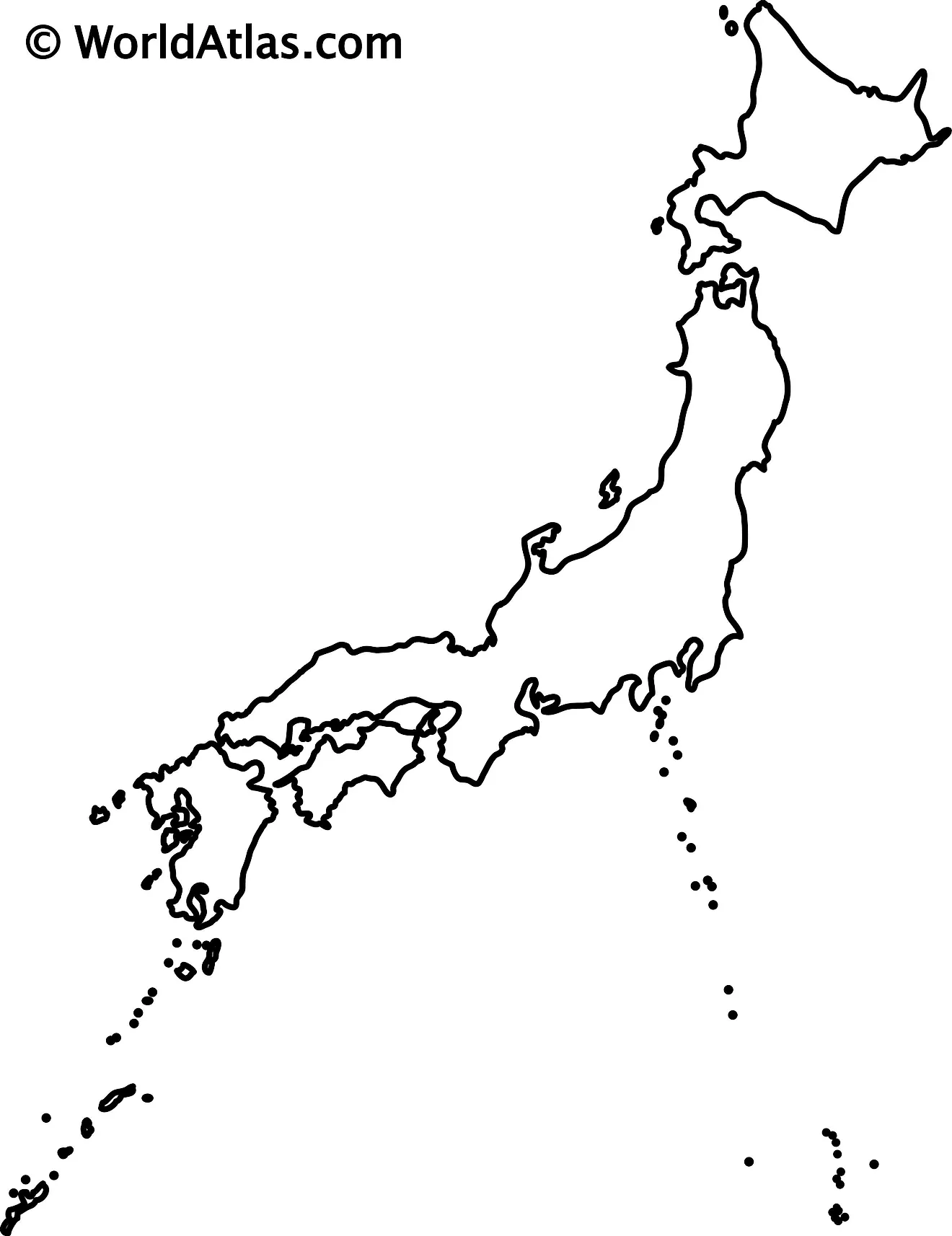
Outline Map of Japan
Key Facts
| Legal Name | Japan |
|---|---|
| Flag |
|
| Capital City | Tokyo |
| 35 41 N, 139 45 E | |
| Total Area | 377,915.00 km2 |
| Land Area | 364,485.00 km2 |
| Water Area | 13,430.00 km2 |
| Population | 126,264,931 |
| Major Cities |
|
| Currency | Yen (JPY) |
| GDP | $5.08 Trillion |
| GDP Per Capita | $40,246.88 |
This page was last updated on August 21, 2026