5 Most Rattlesnake Infested Areas in Indiana
Rattlesnakes thrive in many of Indiana’s natural landscapes, from marshes and forests to rocky hillsides. Two species live in the state: the timber rattlesnake and the eastern massasauga rattlesnake. Fortunately, their habitats rarely overlap. Timber rattlesnakes are typically found in the southern and south-central parts of Indiana, while eastern massasaugas are mostly limited to the northern third of the state.
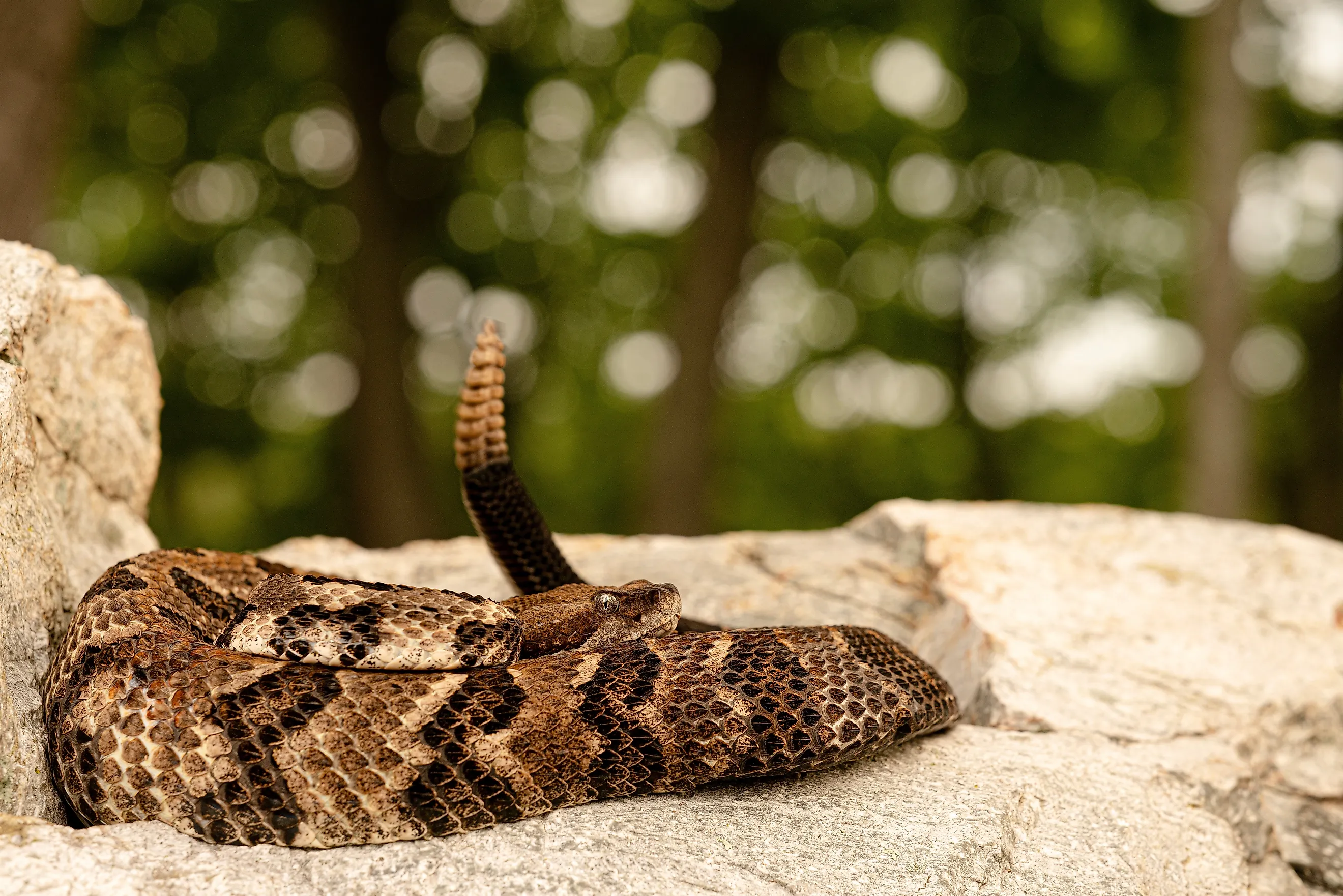
Timber rattlesnakes are larger, with broad heads and dark, blocky blotches on a gray or yellowish body, while eastern massasaugas are smaller and typically appear gray or tan with darker spots. Both snakes usually avoid people, but hikers can still surprise one along trails, wetlands, or rocky cover. Knowing where sightings are most likely helps you stay alert. Here are seven Indiana hotspots to watch for in the wild.
Pokagon State Park

Pokagon State Park is a lakeside facility which hugs the shore of Lake James in Angola, Indiana. It was originally named after the lake before the name was changed to honor the Pokagon Band of Potawatomi Indians. Lake James, along with the more than 100 other natural lakes in Steuben County were formed by melting glaciers 10,000 to 15,000 years ago.
Today, the park acts as a natural escape for Angola residents and the nearby area with its lakeside hiking trails, boating, fishing, and other activities. During the winter when the snakes are hibernating, the park unleashes a refrigerated toboggan run track, which tears through the countryside at up to 40 miles per hour.
This Northern Indiana park is a good habitat for the rare eastern massasauga rattlesnake, which have been seen throughout Steuben County. Due to its small size, its rattle is not as loud as other rattlesnakes and may be difficult to hear. It even has a tendency to break off from the snake's tail. You are highly unlikely to be bit by this rare and shy creature.
Brown County State Park

Brown County State Park is a major Hoosier outdoor destination with its landscape of steep cliffs interrupting the flatter lands around central Indiana. In fact, it has been nicknamed the "Little Smokies" as its misty hilly landscape closely resembles the Great Smoky Mountains National Park in Tennessee and North Carolina.
Hikers come here for the views, whether that's up the 90-foot Fire Tower, the endangered Yellowwood Trees, the foggy ravines, or Strahl Lake. Campers also frequent here, but they have at times run afoul of venomous snakes that live in the park. There have been multiple reports of Copperhead bites in the park in recent years, as well as sightings of timber rattlesnakes. The underbrush and rocky outcrops provide ideal cover for pit vipers of all kinds, including the Timber Rattlesnake.
Copperhead bites are more common because these snakes tend to freeze in place when spotted rather than flee like a timber rattlesnake. However, hikers and campers alike should be wary of timber rattlesnakes as well, as their bites have more venom than a copperhead, meaning it can kill a human if left untreated.
Morgan-Monroe State Forest

To the west of Brown County State Park is one of Indiana's largest forests. At more than 24,500 acres, the Morgan-Monroe State Forest has many of the same features as Brown County, with ridges, valleys, and hardwood trees. The land was originally owned by farmers, but they abandoned it due to the rocky soil frustrating their efforts.
The forest trails lead one by many landscapes, such as the Three Lakes Trail going by the Cherry Lake, Bryant Creek Lake and the drained Bean Blossom Lake, and the Scout Ridge Nature Trail which traverse through glacial boulders. The most challenging trail in the forest is the one way 40 mile Tecumseh Trail for adventurous backpackers and campers.
Timber rattlesnakes have been identified in this park both by Indiana park authorities and by hikers. Some have reported seeing dens of timber rattlesnakes in parts of the forest. Timber rattlesnakes do share dens with other snake species during the winter, before coming out during the spring to hunt and later on to mate from July to August.
Indiana Dunes National Park

The Indiana Dunes National Park is one of the most scenic destinations in the state. Situated by Lake Michigan, these dunes formed during the the end of the ice age as the glaciers retreated, leaving behind old shorelines and ridges. Diverse ecosystems flourished around these dunes such as oak savannahs and wetlands. Hikers come here to hike up the dunes to get a panoramic view of Lake Michigan, or as a stop on their way to one of many Lake Michigan beaches.
Colorful and endangered animals call this park home as well, from the red-headed woodpecker to the northern leopard frog. The eastern massasauga rattlesnake also can be found here, although its habitat has eroded over the years due to human activity. Today, they mainly are found in the Cowles Bog Trail or Great Marsh Trail. This animal is protected by law, so it is illegal to harm or harass it. These snakes are highly unlikely to attack anyway, unless they feel threatened.
Hoosier National Forest

The Hoosier National Forest is a 204,000 acre retreat that goes through multiple communities in south-central Indiana. It connects with other parks in Indiana, including the Brown County State Park through the Brown County D Trail. There are also several undisturbed trails like the old-growth oak-hickory trails of Pioneer Mothers' Memorial Forest or lakeside boat launches at the Springs Valley Lake.
Hunting is a popular activity here, as is wildlife viewing.There are Wildlife Viewing Areas located around the forest to view turkey, songbirds, waterfowl, and mammals. Timber rattlesnakes and copperhead snakes can both be found throughout the park, even out on hiking trails hiding in leaves or traveling through the underbrush. They also might come out onto trails to bask in the sunlight.
You aren't their prey
One important fact to remember about timber rattlesnakes and eastern massasauga rattlesnakes is you are not their prey. If anything, you are more akin to their predator. A human is much more of a threat to a snake than they are to us. That's why these snakes are federally protected.
That being said, it is still important to practice basic safety precautions to avoid being bitten by a rattlesnake. These include wearing proper footwear, not sticking your hand under rocks or bushes, and not picking up a snake, or throwing objects at it. In the unlikely event you are bitten by a venomous snake, keep the wound at heart level, and don't apply any ice or a tourniquet. Remain calm and seek medical attention immediately.