8 Most Beautiful Gothic Churches In North Dakota
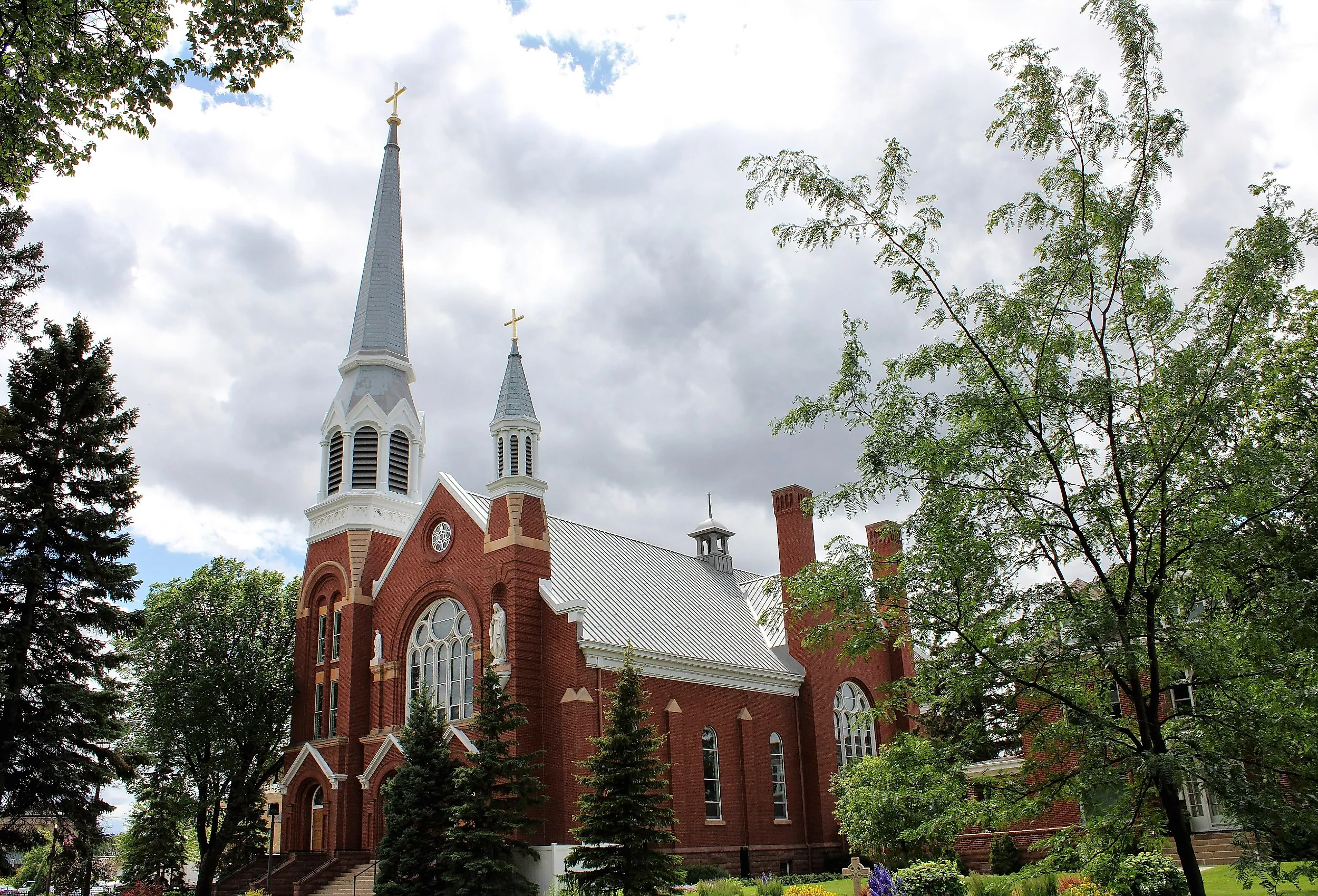
The windswept plains and historic villages of North Dakota abound with exquisitely designed churches that tell the tale of the Gothic tradition introduced to the state by its first settlers. The phrase "North Dakota Gothic" does not describe true Medieval Gothic architecture. Rather, it is used to designate the Gothic, or more commonly, closely related Carpenter Gothic and Victorian Gothic forms found in some of North Dakota's most historically significant and beautiful churches. Using the classic Gothic hallmarks of pointed arches, steep, high-pitched roofs, stained glass, and vertical lines that draw the eyes up to the heavens, these breathtaking churches, like the St. James Basilica in Jamestown and Cathedral of St. Mary in Fargo, combine earthly materials with a soaring spirit of the divine.
St. John's German Evangelical Church, Hebron

Constructed in 1908, St. John's German Evangelical Church of Hebron is a fine example of Gothic Revival architecture with a tall square tower featuring corner pinnacles and pointed arch windows and doors, which typify Gothic forms. A dominant fixture in the Hebron landscape, St. John's was designed by early North Dakota architects, Hancock Brothers, and built from local bricks. Its overwhelming height and its Gothic silhouette make it one of the most photographed historic buildings in the state, and its continued use as a gathering place in the community speaks to its importance as a testament to German settlers in the region. It is another structure that showcases the Gothic form being adapted to a regional material: bricks.
Church of the Good Shepherd, Lakota

The Church of the Good Shepherd of Lakota is another great example of Victorian Gothic Revival architecture. Built primarily from field stone, it was designed by Hancock and constructed in 1885. Like most Gothic churches, it has a tall square bell tower topped with a steep steeple and pointed arch windows and doors. While it is no longer operating, it is one of the earliest churches built in Lakota. This structure, which was placed on the National Register of Historic Places in 2017, remains an important reminder of the devotion of its founders and their gift for graceful, aesthetically pleasing structures. The rugged field stone of its exterior juxtaposes with a beautifully sunlit interior illuminated by stained glass.
Grace Episcopal Church, Jamestown

Grace Episcopal Church of Jamestown is yet another finely crafted example of field stone Gothic Revival architecture that is still in use today. Built as a representation of the Anglican ecclesiological movement that influenced many of North Dakota's early Episcopal churches with an English parish church aesthetic, it was originally constructed in 1884 and later expanded. Fieldstone exterior, steeply pitched roofs, and pointed-arch windows clearly identify it as a North Dakota Gothic Revival structure. Its use of field stone as a primary construction material and Gothic detailing at its window openings is reflective of English Gothic forms that remained influential for Episcopal church architecture in the frontier environment.
St. Paul's Episcopal Church, Rugby

Constructed from 1903 to 1905 by architect Joseph Bell DeRemer, St. Paul's Episcopal Church in Rugby is an even more recent Gothic Revival church that was built around the remains of an earlier church. It is made of local fieldstone and wood, and its stained glass windows were relocated from Holy Trinity Episcopal Church in New York City and installed in new Gothic pointed-arch openings. Although no longer in use as a church, St. Paul's was preserved and is currently home to the Victorian Dress Museum and Boutique, a testament to the cultural value of Gothic church architecture in even the smallest towns across North Dakota.
First Lutheran Church, Fargo

First Lutheran Church in Fargo stands out as a particularly beautiful Gothic Revival brick church. Designed by Minneapolis architectural firm Magney and Tussler, and completed between 1917 and 1919, this structure features tower detailing that incorporates much of the aesthetic from the Gothic period in an early 20th-century style. The spectacular hammer beam timber roof, as well as other detailed stonework, lend the interior the verticality that is a defining aspect of the Gothic style. Still open to an active congregation, it stands in downtown Fargo in close proximity to other historic churches.
St. James Basilica, Jamestown

St. James Basilica in Jamestown is perhaps one of North Dakota’s most imposing and visually outstanding Late Gothic Revival churches. Designed by the Hancock Brothers and completed in 1914, the building features a transept cross plan flanked by a pair of towers with a pointed arch tracery in the facade windows. This building is still an active Catholic Church, featuring rich stained glass and detailed stone work using both brick and limestone for a spectacular visual effect, and it is incredibly spiritually moving.
North Trinity Church, Nash

Found on the open plains just outside of the tiny village of Nash, the North Trinity Church of 1893 utilizes the Carpenter Gothic form that became extremely common for charming wooden-framed churches across the Plains. Its tall, steep, pointed roof, a steeple, and arched window openings show clear ties to the Gothic tradition. While it no longer operates as a church, it was added to the National Register of Historic Places in 2004. It remains an important example of the earliest Gothic Revival structures, built by pioneers who rushed to construct with available local materials and carpentry.
Cathedral of St. Mary's, Fargo

Although often described as Romanesque Revival, the interior and exterior of Fargo's Cathedral of St. Mary both have important elements that are drawn from the Gothic style, including its spired tower and stained glass windows. This magnificent building is still active, was dedicated in 1899, replacing its predecessor, which was destroyed in a fire, and has commanded a prominent position on the Fargo skyline since that time. Despite any divergences from true Gothic, the use of pointed arch window shapes, along with its commanding height, has tied it to the Gothic architectural story of historically significant churches constructed by settlers as they built on the frontier.
Beautiful Gothic Churches
These beautiful buildings are vital to North Dakota's history. They show evidence of European architectural forms being transmitted to North America and the Plains region, and successfully utilized with local materials and building techniques. They continue to stand, some still as active parish churches and others now serving as museums, private homes, or historic landmarks, as reminders of the early days of settlement, skilled craftsmanship, and the architectural imagination of their communities.