Texas's 10 Best Retirement Towns Ranked
Texas makes living flexible and convenient, with a central U.S. location that eases travel and a wide range of climates, from dry desert air to humid green regions. And during retirement, that matters. Nacogdoches stands out for combining the Ruby M. Mize Azalea Garden, the Stone Fort Museum, and one of the oldest historic cores in Texas with housing that stays comfortably below the state median. Alpine feels completely different, trading bluebonnets for desert mountains, Hancock Hill views, the Museum of the Big Bend, and a dramatic West Texas setting that few places in the state can match. Below are the 10 best retirement options in Texas, all with housing prices below $250,000, starting with Brenham.
Brenham

Washington County places Brenham almost midway between Houston and Austin, and local real estate still looks reasonable, with homes around $241,100 and a population close to 20,000. Blue Bell Creameries remains the town’s best-known draw, pairing factory tours with a visitor center and ice cream served right by the source. Washington-on-the-Brazos State Historic Site connects the area to the 1836 declaration of independence through reconstructed buildings and sharply focused exhibits. In the Downtown Brenham Historic District, restored nineteenth-century storefronts house antiques, boutiques, and familiar stops like Must Be Heaven. Spring changes the roads outside town completely when the Bluebonnet Trail fills the countryside with color.
Nacogdoches

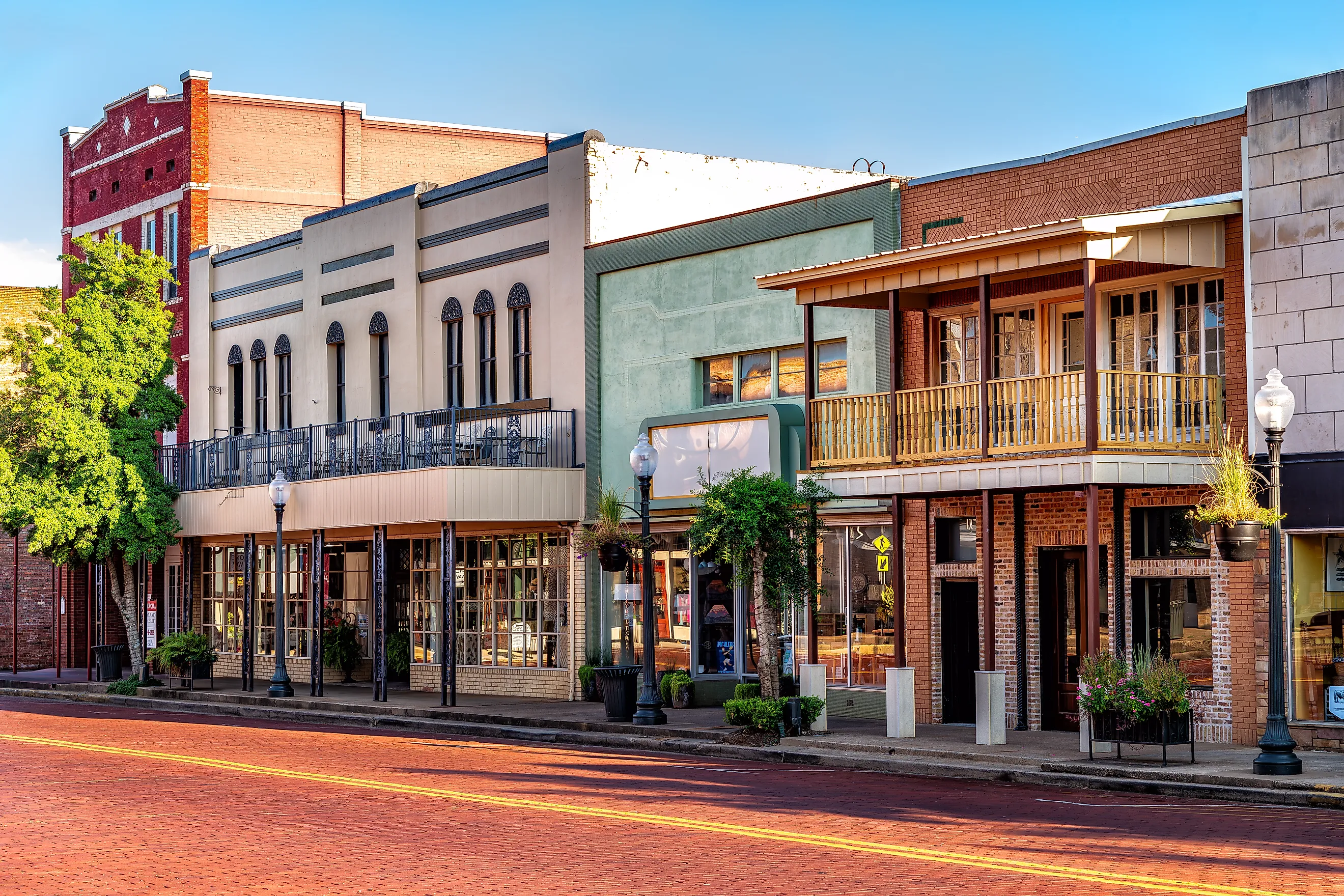
In the piney corner of East Texas near Louisiana, Nacogdoches has 32,381 people and housing around $186,000, which keeps the city less expensive than many attractive college communities. Stephen F. Austin State University’s Ruby M. Mize Azalea Garden supplies the strongest burst of color, with long paved paths cutting through the largest azalea garden in Texas. The Stone Fort Museum traces regional settlement and includes material tied to Antonio Gil Y’Barbo’s original trading post. Downtown Nacogdoches still feels rooted in age and place, with brick streets, antique stores, and older shopfronts instead of interchangeable strips. The Durst-Taylor Historic House and Gardens preserves one of the community’s oldest surviving homes along the old El Camino Real route.
Alpine

Between Big Bend country and the Davis Mountains, Alpine sits in a dramatic stretch of West Texas where about 6,035 people live and housing lands near $219,800. The Museum of the Big Bend at Sul Ross State University covers ranching, border history, and the wider Trans-Pecos through exhibits that feel much larger than the town itself. Hancock Hill makes everyday scenery easy to reach, with trails and wide views stretching across the valley toward surrounding peaks. The Holland Hotel gives downtown a distinct visual identity through Henry Trost design and a long history as Alpine’s landmark lodging address. Kokernot Field adds another memorable piece of the setting, mixing old stonework with mountain views beyond the outfield fence.
Mineral Wells

Palo Pinto County gives Mineral Wells a rugged setting about an hour west of Fort Worth, and buyers will still find prices around $161,300. Lake Mineral Wells State Park is the big outdoor pull, especially for paddling, swimming, and the sandstone walls at Penitentiary Hollow. The 20-mile Lake Mineral Wells Trailway creates a long route for biking, hiking, and horseback riding on a former rail corridor stretching between the park and town. Downtown gets much of its character from the Crazy Water Hotel, a restored 1912 building with a coffee bar, shops, and upper-floor rooms. The Baker Hotel continues to dominate the skyline with its massive 1929 profile, making it the city’s most recognizable historic landmark.
Lampasas

Northwest of Austin on the Hill Country edge, Lampasas stays relatively small at under 8,000 people, and housing sits around $198,800. Hancock Springs Park remains the standout natural feature, with spring-fed water, open lawns, and a direct link to the mineral-water era that first brought attention to the area. The Lampasas County Courthouse gives downtown its strongest visual anchor through an imposing 1884 building that still towers over the square. Cooper Spring Nature Park offers a quieter change of pace with limestone scenery, native plantings, and walking trails close to the center. Storm’s Drive-In supplies the local institution, known for old-school burgers, shakes, and a setting that still feels specific to Lampasas.
Port Lavaca

On Lavaca Bay along the middle Gulf Coast, Port Lavaca has 11,299 residents and housing near $128,200, an unusually low figure for a waterfront community. Lighthouse Beach and Fishing Pier shapes daily life here with bay views, public art, birding spots, and a long pier that stays busy around sunrise and dusk. The Calhoun County Museum traces ranching, storms, shipping, and early settlement along this stretch of coast. Bayfront Peninsula Park extends the shoreline appeal with walking paths, open views, and space to watch boats move across the water. La Vaca Mexican Restaurant adds a recognizable hometown business instead of leaving the commercial side defined by anonymous highway chains.
Palestine

Between Dallas and Houston in the wooded part of East Texas, Palestine has around 19,583 people and housing near $166,000, a price that stays modest for a place with this much historic fabric. Davey Dogwood Park leads on scenery, especially in spring when blooms spread across rolling forested roads and trails. The Texas State Railroad gives the city a rare attraction, sending vintage trains through East Texas woods between Palestine and Rusk. Downtown Palestine Historic Main Street District keeps its sense of age through brick streets, antique stores, and preserved façades. The Anderson County Courthouse rises above the center in dramatic Romanesque form, giving the skyline more authority than most towns of similar size.
Sulphur Springs

Roughly 80 miles east of Dallas, Sulphur Springs has 16,891 people and housing near $217,800, which remains more manageable than in many polished small-city centers. Celebration Plaza works as the social center, with event space, a broad lawn, and the famous glass bathrooms that turned into a genuine local curiosity. Hopkins County Courthouse frames the square in warm-toned stone and gives the core its strongest historic presence. The Southwest Dairy Museum keeps things more distinctive, pairing exhibits on the regional dairy business with an operating ice cream parlor. Coleman Lake and Buford Park bring in water views, paths, and green space close to the middle of town.
Brownwood

Central Texas places Brownwood west of Fort Worth, where 18,772 residents and housing around $144,400 make it one of the easier small places in the state to buy into. Lake Brownwood State Park supplies the main outdoor attraction, with a large reservoir, fishing, boating, swimming areas, and shoreline trails. The Brown County Museum of History uses the old jail as its backdrop and packs in material on Camp Bowie, ranching, and early regional growth. The Lyric Theatre strengthens downtown with a restored 1914 performance hall and an active run of productions. UnderWood’s Bar-B-Q remains the local name people remember, thanks to its long cafeteria line and old-school barbecue plates.
Jasper

Deep East Texas puts Jasper near the Louisiana line, where about 7,505 people live and housing comes in around $130,100. Sandy Creek Park on B. A. Steinhagen Lake provides the clearest outdoor asset, with fishing, boating access, and wide water views edged by dense pine woods. The Jasper County Courthouse gives downtown a formal centerpiece through its classical design and prominent placement. The Lake Sam Rayburn area expands the recreation options with marinas, fishing water, and room for longer weekend outings. Elijah’s Cafe brings in a recognizable local business that feels like a true hometown gathering spot rather than another generic strip-center stop.
Texas offers retirees real variety without forcing them into the state’s most expensive markets. Across these towns, the best options combine lower housing costs with historic downtowns, outdoor access, and standout local landmarks that make daily life feel richer. Whether you prefer East Texas woods, Hill Country springs, Gulf Coast water, or West Texas mountain views, this list shows that retirement in Texas can still be scenic, comfortable, and realistically affordable.