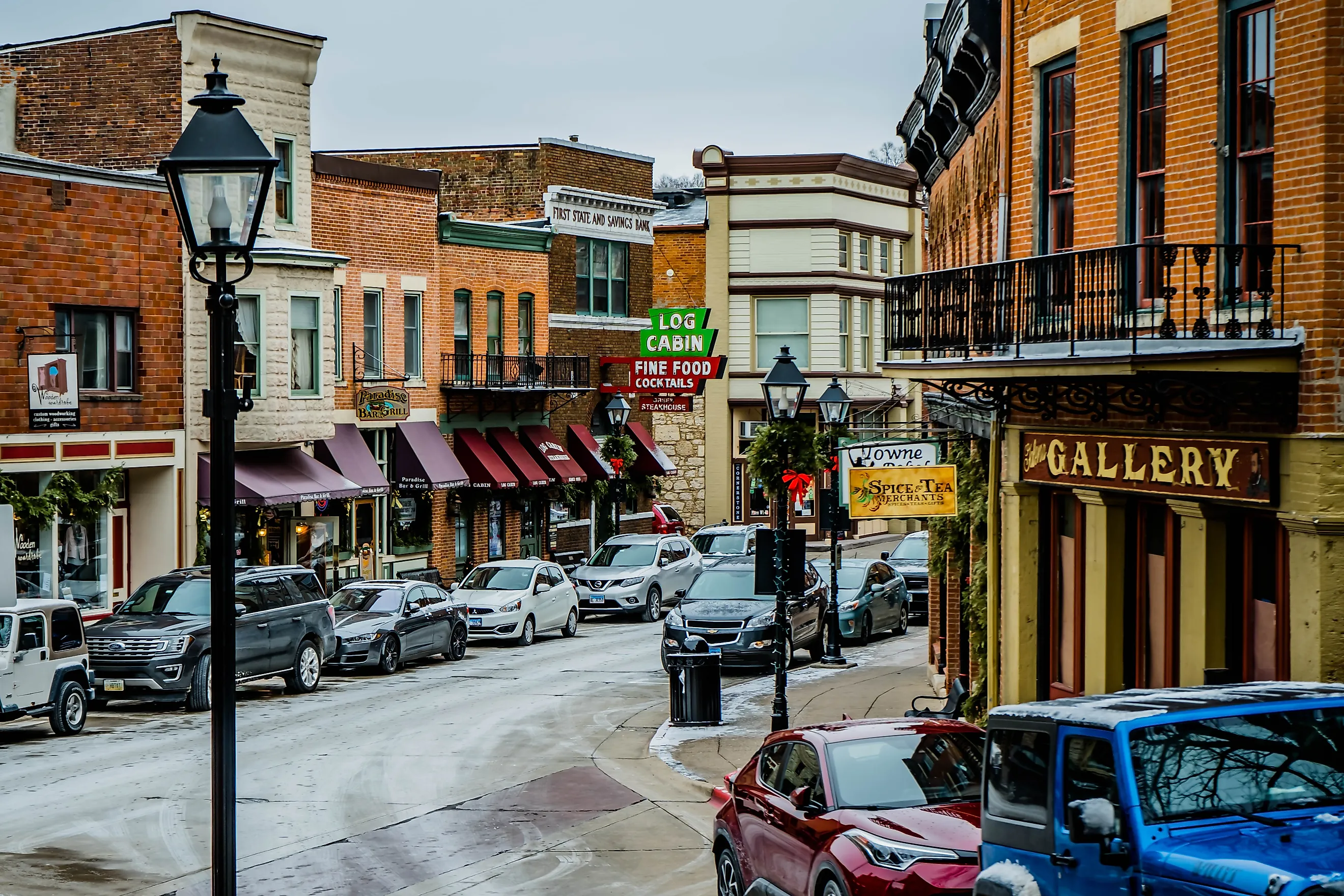
9 Illinois Towns That Rival Europe's Best
In the 1840s a group of settlers from Muttersholtz, a village in Alsace that belonged to Germany at the time, cleared a patch of oak woods north of Chicago and named their new home after the old one. It is called Long Grove now, and it is still there, cobblestones and all. That is the thing about Illinois: a lot of it was built by people who had just left somewhere else and were trying to rebuild it from memory. A Swedish commune on the prairie. An English-looking stone village wedged into a limestone gorge. A French utopian colony on the Mississippi that fell apart and left a winery behind. Here are nine Illinois towns where you can feel Europe without the airfare.
Bishop Hill

Start with the most literal answer to the premise. Bishop Hill is a Swedish colony on the Illinois prairie, and not in a heritage-festival sense. In 1846 a pietist preacher named Erik Jansson, run out of Sweden for telling his followers the Lutheran church was an abomination, led roughly 1,400 emigrants here to build what he called the New Jerusalem. Ninety-six of them died the first winter in dugouts cut into the ravines. The survivors stayed, held everything in common, and farmed 12,000 acres of flax and broom corn until the commune dissolved in 1861.
What they built is still standing, and it is a National Historic Landmark. Tours start at the 1854 Steeple Building, whose clock tower has exactly one hand, because the colonists decided minutes were not worth tracking. The 1848 Colony Church has its original pews upstairs and single-room apartments below. The Heritage Museum holds the folk paintings of Olof Krans, a colonist who painted his neighbors from memory decades later, and they are the closest thing America has to a photo album of a utopian commune. Come in September for Jordbruksdagarna, the harvest festival, when they thresh with period equipment. Fewer than 150 people live here.
Galena

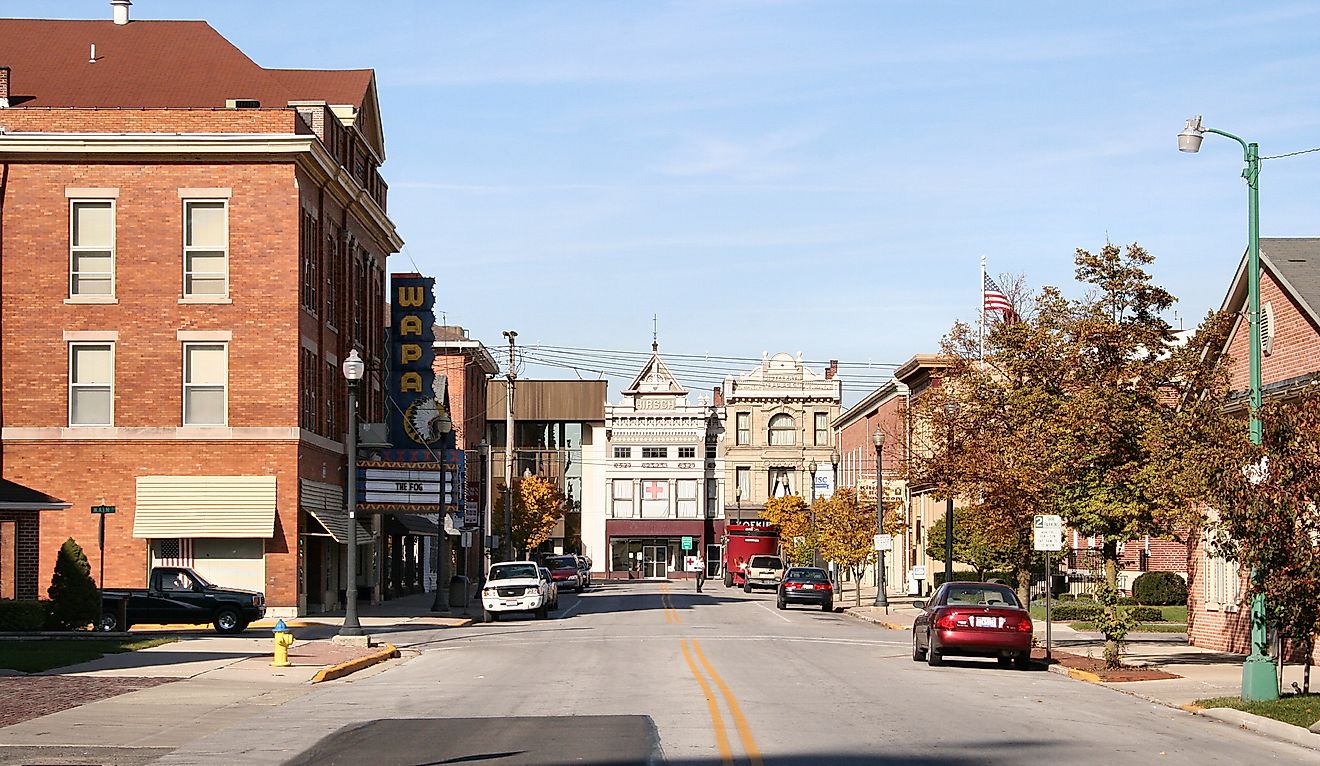
Roughly eighty-five percent of the buildings in Galena sit inside a National Register historic district, which is a statistic that sounds invented until you walk Main Street. The town got rich on lead mining before the Civil War, then the river silted up and the railroad went elsewhere, and the money that would normally have knocked everything down and rebuilt it simply never arrived. Poverty is an excellent preservative. Over 125 shops and restaurants now occupy a street that has not been substantially rebuilt since the 1800s.

One correction worth making, because it turns up constantly: Galena sits on the Galena River, not the Mississippi. The big river is about three miles west. What the town does have is hills, which is unusual enough in Illinois to feel foreign, and the driftless terrain around it supports real vineyards. Galena Cellars has been run by the same family for three generations, and Massbach Ridge lets you bring your own snacks to pair with the flight.
Elsah

Elsah is the one that will genuinely stop you. About a hundred people live in a narrow valley between limestone cliffs on the Great River Road, in stone cottages built between the 1850s and 1880s and barely touched since. In 1973 the whole place became the first entire village in the country listed on the National Register of Historic Places. Not a district within a village. The village.

Forty-eight buildings contribute to the district across 350 acres. On LaSalle Street, every pre-1861 building but one is still standing, including all four of the village's original taverns. Mill Street has the Greek Revival houses. Locals call it the town that time forgot, and unusually for that phrase, it is accurate rather than promotional. Up on the bluff, the Principia College campus is a National Historic Landmark in its own right, with a limestone church by Bernard Maybeck. Come in winter and the bald eagles are the other attraction. It really is in Illinois.
Long Grove

The settlers who arrived here in the 1840s came from Muttersholtz in Alsace, then German territory, and called their new village the same thing. It means Mother's Wood. English-speaking neighbors eventually wore the name down to Long Grove, but the twinning stuck: the deputy mayor of the real Muttersholtz still writes to the historical society here.
Long Grove became Illinois' first designated historic district, and the cobblestones, the covered bridge, and the Village Tavern all date to that era. The tavern claims to be the oldest continuously operating one in the state. Buffalo Creek Brewing leans all the way into the Bavarian theme and throws a Muttersholtz Fest to prove it. Blu Fig Cafe handles lunch, Covered Bridge Creamery handles dessert, and the Chocolate Fest and Strawberry Fest fill the calendar in between.
Geneva

There is an actual Dutch windmill in Geneva. Not a decorative one. The Fabyan Windmill is a genuine 19th-century Dutch smock mill that a wealthy couple bought and moved to their estate on the Fox River, and it still has its working machinery. It sits in the Fabyan Forest Preserve, reachable on the river trail straight out of downtown.
The rest of the town does its Swiss namesake no dishonor. The old streets run down to the water, the Herrington Inn overlooks the Fox, and there are wineries and breweries scattered through the district. The real draw for anyone traveling with children is All Chocolate Kitchen downtown, where the pastry work is closer to sculpture than baking.
Woodstock

No, not that Woodstock. The concert was in New York. This one has a Victorian square that has been sitting at the center of town since the 19th century, ringed by brick storefronts and listed on the National Register as a historic district.
The Opera House on the square is full Gothic, and it still programs a proper season rather than trading on its architecture. The square itself is where Groundhog Day was filmed, and you can stand in the puddle Bill Murray kept stepping into, which is marked with a plaque because of course it is. Come in December for the Lighting of the Square.
St. Charles

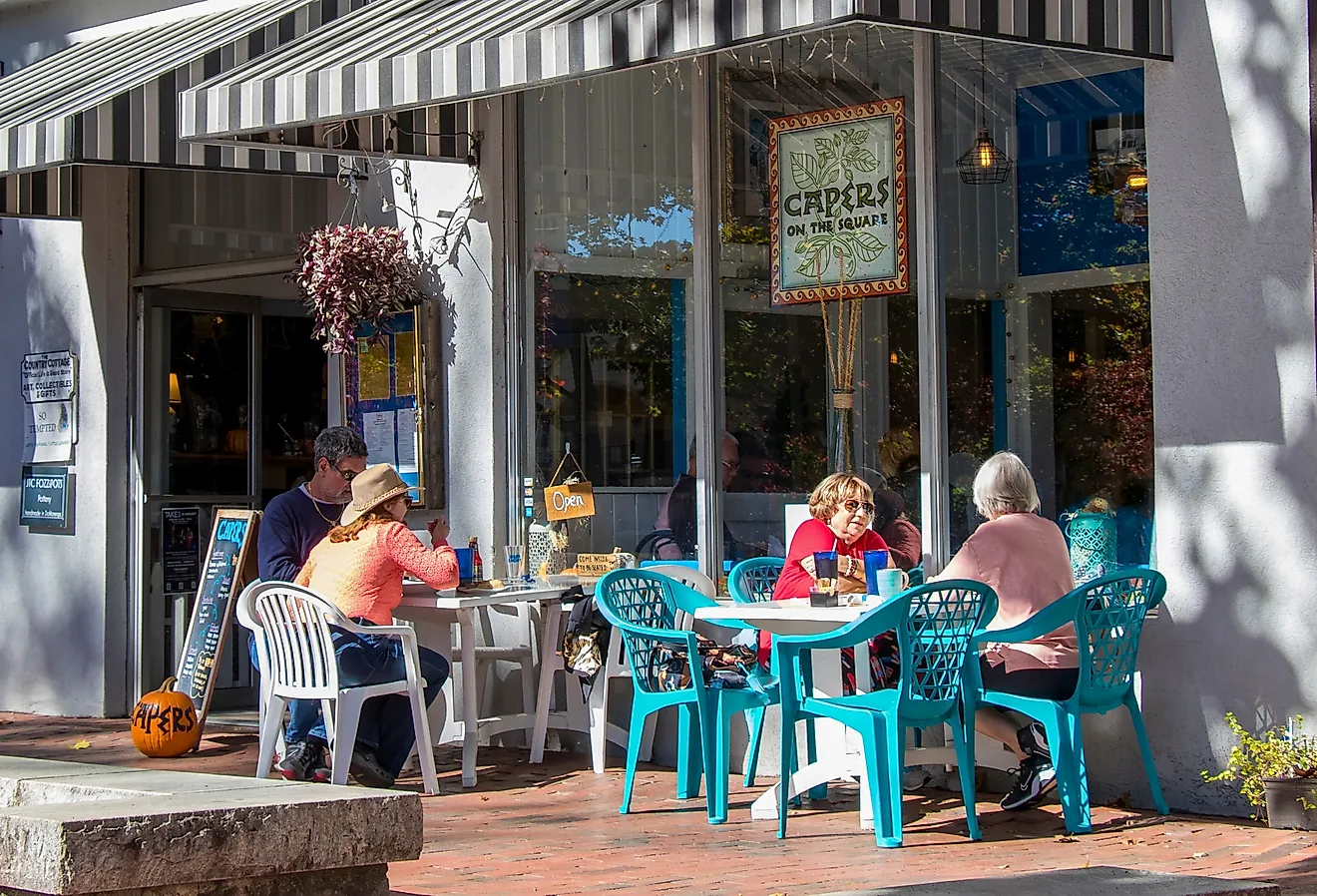
Thirty-five miles from Chicago and a good deal further away in feel, St. Charles puts a Tudor-revival downtown along both banks of the Fox River and adds a plaza on First Street where the cafe tables stay out as long as the weather allows. The city has about 33,000 people, so it is the largest entry here, but the riverfront reads far smaller than that.
Mount St. Mary Park runs an annual outdoor sculpture exhibit with artists from around the country, which is a genuinely unusual thing for a town this size to sustain. There are miles of trail along the water and several working theatres within walking distance of each other.
Alton

People compare the bluffs along this stretch of the Mississippi to the Rhine, and for once the comparison holds up. The Great River Road runs beneath limestone cliffs with the water on one side and the rock face on the other, and Alton sits at the southern end of it, about 25 miles north of St. Louis.
The town has three historic districts and a serious theatre habit for a place this size, with the Jacoby Arts Center, the Alton Little Theater, and the Alton Children's Theater all operating. The riverfront walkways are the thing to do at dusk. Alton was laid out in 1818 and incorporated as a city in 1837, and both dates get quoted, so do not be surprised to see either.
Nauvoo

Nauvoo has been abandoned and refounded more than once, which is why it feels like a European town in a way the newer entries here do not. Latter-day Saints built it into one of the largest cities in Illinois in the 1840s, then left en masse for Utah. Into the emptied town came the Icarians, French utopian socialists following Étienne Cabet, who ran a commune here until it collapsed in 1857.
A Frenchman named Emile Baxter had come over in 1855 to join that commune. When it broke up he stayed, planted grapes, and founded what is now the oldest winery in Illinois. Baxter's Vineyards is on its fifth generation of the same family. The restored brick workshops of Historic Nauvoo run costumed demonstrations of period trades in the warmer months, Nauvoo State Park spreads along the water, and the whole thing sits on a bend of the Mississippi that the French, the Germans, and the Icarians all looked at and decided was worth planting vines on.
Why Illinois Of All Places
Because it was cheap land at the right moment. Between about 1840 and 1860, the prairie and the river bluffs were the destination for people leaving Sweden, Alsace, Germany, and France with a plan and not much else, and several of them built what they had left behind rather than something new. Bishop Hill and Nauvoo were outright utopian experiments that failed and left their architecture standing. Galena and Elsah got preserved by economic collapse, which turns out to work better than any preservation ordinance. Long Grove kept its name in translation. None of these places is pretending to be Europe for the tourists. They just never got around to becoming anything else.