5 Old-Timey Mining Towns In Kentucky
Kentucky is a state that represents the best of America as a whole: expansive nature, inviting towns, and alluring history. This article will explore that history and examine how some of Kentucky's many old-timey small towns were built around mining. A formative industry, whether digging for riches or for more practical materials, mining is as crucial to the construction of the nation as the railway. Learn more about five Kentucky towns with a past dependent on underground resources.
Central City

First settled as Morehead's Horse Mill, Central City underwent a name change, inspired by the Central Coal and Iron Company, in 1882. By then, the citizens of Central City had one goal in mind: to mine coal. Much of the town's 19th-century economy centred around the mining industry, and large portions of Kentucky's western coalfield were supplied by way of the town.
Central City's modern amenities include Lu-Ray Park & Amphitheater, an open-air facility located downtown, featuring a paved walking trail and seating for up to 5,000. Performances are held here throughout the year. Visitors are encouraged to explore the Muhlenberg Music Museum, which celebrates the Everly Brothers, John Prine, and other musicians who have ties to the town or state. The Muhlenberg County Rail Trail also connects Central City to several nearby towns; repurposing the now out-of-use rail lines of old, this paved trail is wheelchair-accessible, ensuring that anyone can enjoy a stroll through nature and appreciate much of the extant rail line signage along the way.
Middlesboro

Like Central City, Middlesboro was founded with a different name: Middlesborough, after the British counterpart. Also like Central City, coal production was an integral part of Middlesboro's earliest years. Unique to Middlesboro, however, is that it was built in a meteor crater. Centred in this three-mile-wide impact hole, the town struggled to connect to the rail lines through challenging terrain, so a 1930s rebranding of the town brought in gambling, salons, slot machines, and violence associated with the Wild West.
Some of Middlesboro's most interesting attractions are centred around its past. The Cumberland Gap National Historic Park contains historic landmarks, hiking trails, and overlooks of the same rugged landscape settlers mined through over a century ago. The Middlesboro Country Club is the oldest continuously played nine-hole golf course in America.
Efforts are being made to revitalize Middlesboro's downtown, as well. Murals throughout the area paint a picture of the town's formation, while the Bell County Chamber of Commerce, AKA the Coal House, is built from 42 tons of coal.
Princeton

While most of Kentucky's mining history was built around the coal industry, the mining town of Princeton aimed, in addition to coal, to extract fluorspar, a mineral high in fluorine and used in everyday materials like steel, glass, and electronics. Princeton's existence as a mining town did not last long, but its importance as a railway junction town meant that Princeton continued to grow throughout the 20th century.
The town's history was also shaped by tobacco production, and every September, the annual Black Patch Festival celebrates the community's rich heritage by way of food vendors, artisans, performers, crafts, and music. The Adsmore Museum gives another in-depth view of Princeton's past; furnished with early 1900s decor, this interactive home-turned-museum invites visitors to experience what life was like over a hundred years ago. Big Springs, located in the heart of downtown Princeton, is a large, natural spring that flows from a cave. It was around this spring that the town was founded and then flourished. The spring also marks an important and sobering location along the Trail of Tears.
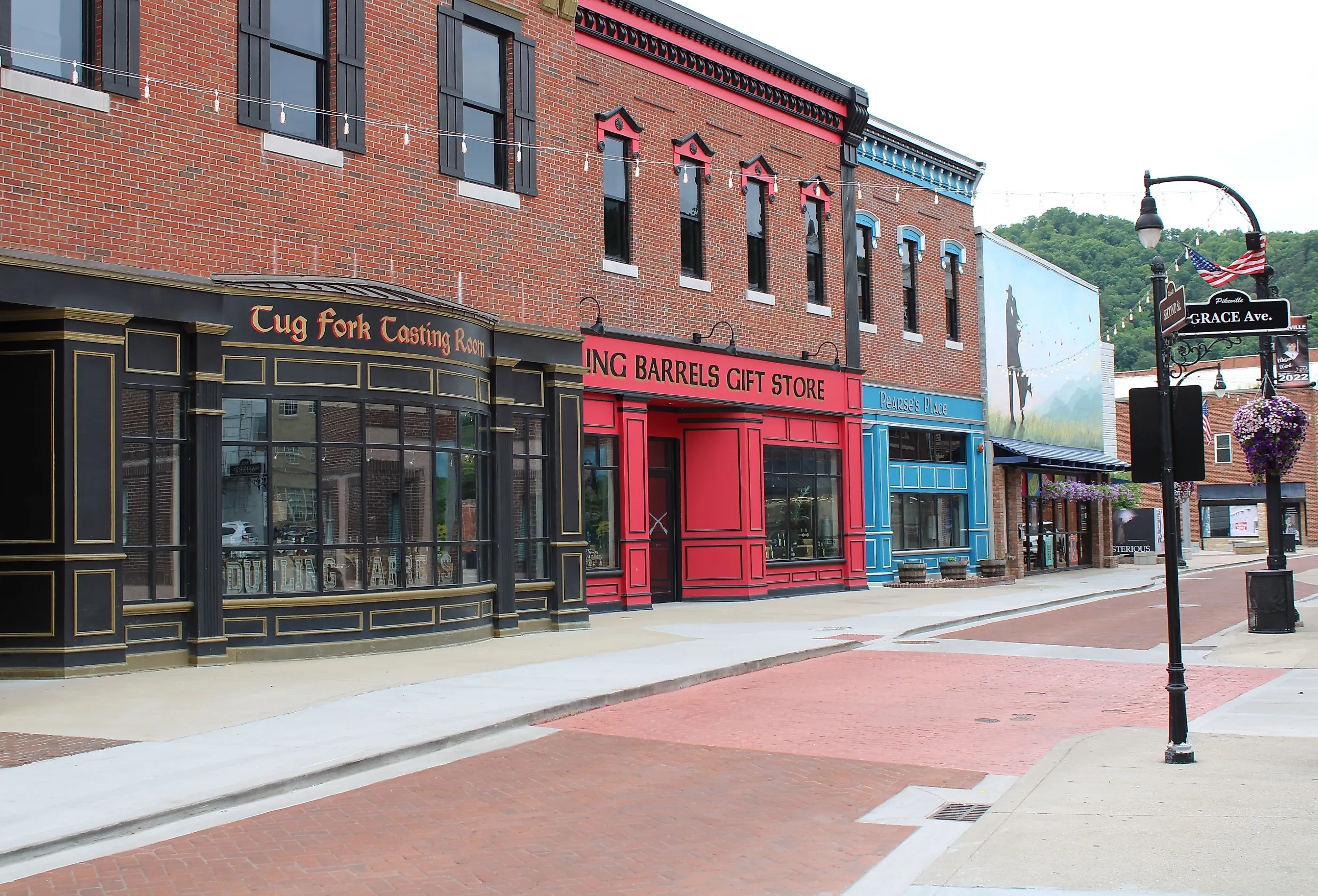
Pikeville

Since its establishment as a coal-mining town over 200 years ago, Pikeville, a small but charming town on the eastern side of the state, has been thriving. Its coal production was long prolific, but mining operations at the nearby MC Mining Complex, operated by Excel Mining, began winding down in late 2024 and are expected to cease entirely as the site approaches permanent closure in 2025. Visitors may appreciate the centuries-spanning industry for which Pikeville is proud, but there is plenty more to this beautiful town that is worth exploring as well. The Pauley Bridge is a historic project that began in 1936; today, it is closed to vehicular traffic, but visitors can still enjoy walking the length of this scenic structure. The backdrop of the Appalachian Mountains and the Big Sandy River below makes this spot one of the most stunning in the state.

Local establishments provide excellent culinary options, as well, such as Biggen's BBQ: the perfect spot for smoked and seared meals. Pikeville's best place to stay is the Landmark Hotel, located in the heart of town and replete with an outdoor pool and a living room fireplace.
Madisonville

While Pikeville is near Kentucky's eastern border, Madisonville is on the other side of the state. Originally a tobacco-farming district, coal was discovered in 1837, and Madisonville expanded its economic pursuits. A rail line was implemented to connect the town to other railway networks, and soon both the economy and the community were soaring.
Modern-day Madisonville prides itself on outdoor recreation. The town offers scenic trails, lakes, and forests to explore. Grapevine Lake, in particular, is a tranquil day waiting to be spent on or near the water. The Historical Society Museum of Hopkins County is housed in a former library; this red-brick building showcases the region's history of coal mining as well as varying displays of 1800s memorabilia. It even houses a 1910 Buick Buggyboat, one of only three left in the world. For those interested in the arts, the Anne P. Baker Gallery offers free admission and features both regional and national art exhibits of textiles, photography, oil paintings, and more.
Explore Kentucky's Mining Past
The wide state of Kentucky is as beautiful as it is historic. Visitors interested in this state's industrial past (and sometimes present) will have no shortage of museums and locations to explore that represent the foundation of much of the country as a whole. While you may be drawn to the five towns in this list for their mining histories, they each contain a charm and allure that make them worth exploring. One can appreciate the earliest forms of industry in Kentucky while in turn appreciating all that these towns have blossomed into during the intervening years.