Maps of Saskatchewan
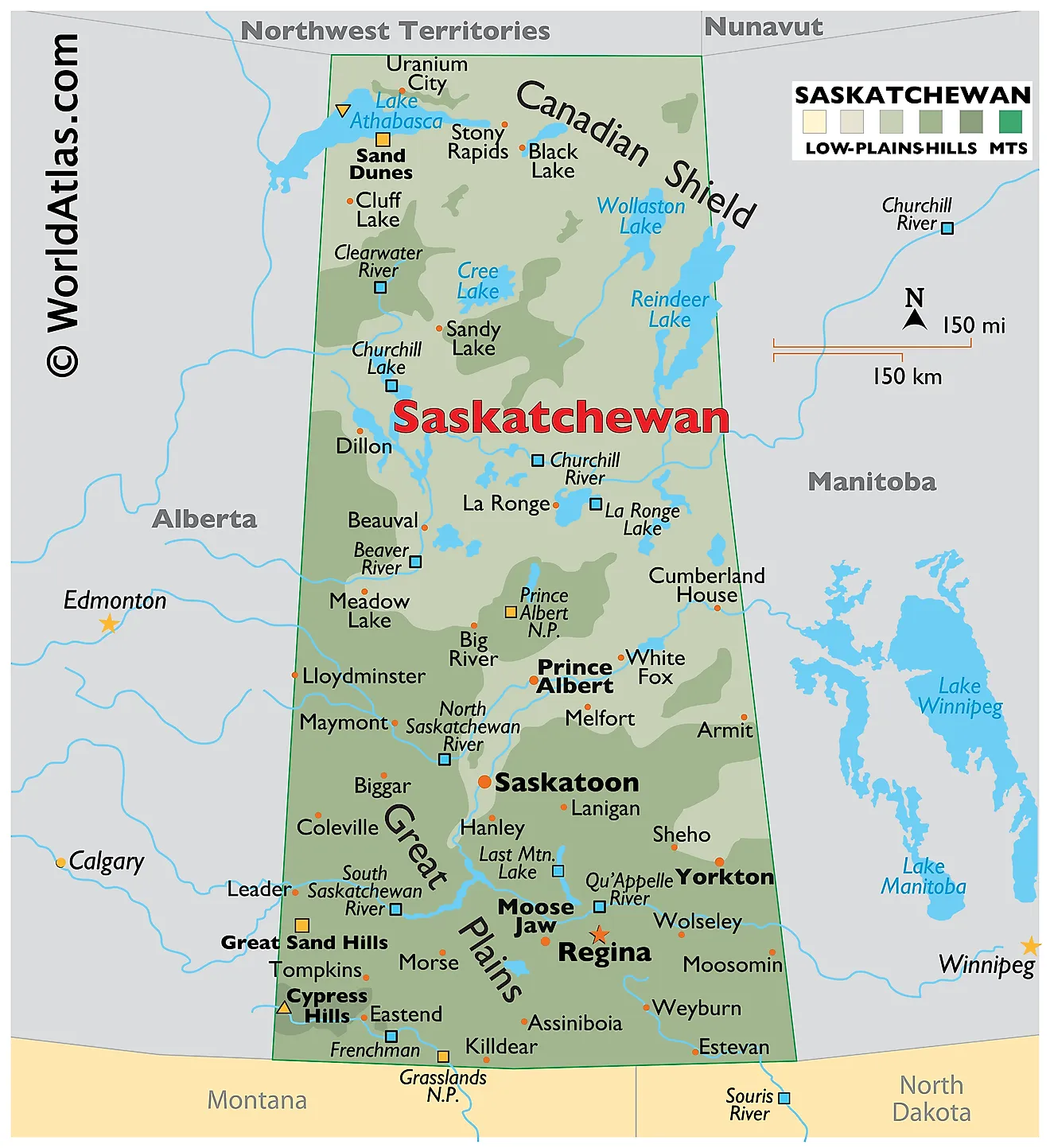
Saskatchewan, a province in Canada, encompasses a total area of 251,700 square miles. It shares borders with Alberta to the west, Manitoba to the east, the Northwest Territories to the north, and the U.S. states of Montana and North Dakota to the south. The province exhibits a diverse geography, characterized by various regions, major bodies of water, and rivers.
The geography of Saskatchewan divides into three main regions: the Canadian Shield, the Interior Plains, and the Boreal Shield. The Canadian Shield covers the northeastern part of the province, consisting of rugged terrain, dense forests, and numerous lakes. The Interior Plains, which dominate the central and southern parts of Saskatchewan, consist of prairie grasslands and fertile farmlands. The Boreal Shield, in the northwestern portion of the province, features a mix of forested areas, lakes, and wetlands.
Saskatchewan contains numerous major bodies of water. Lake Athabasca, the largest lake in the province, straddles the border between Saskatchewan and Alberta. Covering an area of approximately 3,031 square miles, the lake serves as a critical habitat for various fish species and waterfowl. Another notable body of water is Reindeer Lake, which spans an area of roughly 2,510 square miles. It ranks as the second-largest lake in Saskatchewan and the ninth-largest in Canada.
The province boasts an extensive network of rivers, with the Saskatchewan River being the most prominent. This river system consists of two major branches: the North Saskatchewan River and the South Saskatchewan River. The North Saskatchewan River originates in the Canadian Rockies and flows eastward across Alberta and Saskatchewan, while the South Saskatchewan River begins in the Rocky Mountains of southwestern Alberta and merges with the North Saskatchewan River near the city of Prince Albert. The combined rivers continue their journey eastward, eventually draining into Lake Winnipeg in Manitoba.
Other significant rivers in Saskatchewan include the Churchill River, which flows through the northern part of the province and into Manitoba, and the Qu'Appelle River, which meanders across the southern portion of Saskatchewan before emptying into Lake Winnipegosis in Manitoba.
Saskatchewan's diverse geography supports a wide variety of plant and animal life. The Canadian Shield region boasts coniferous forests, which provide habitats for species such as moose, black bears, and woodland caribou. The prairie grasslands of the Interior Plains support populations of bison, pronghorn, and numerous bird species, while the Boreal Shield region features a mix of wildlife, including elk, lynx, and various species of waterfowl. The abundant water resources throughout the province play a crucial role in sustaining these ecosystems, making Saskatchewan's geography essential for its rich biodiversity.
Provinces Map
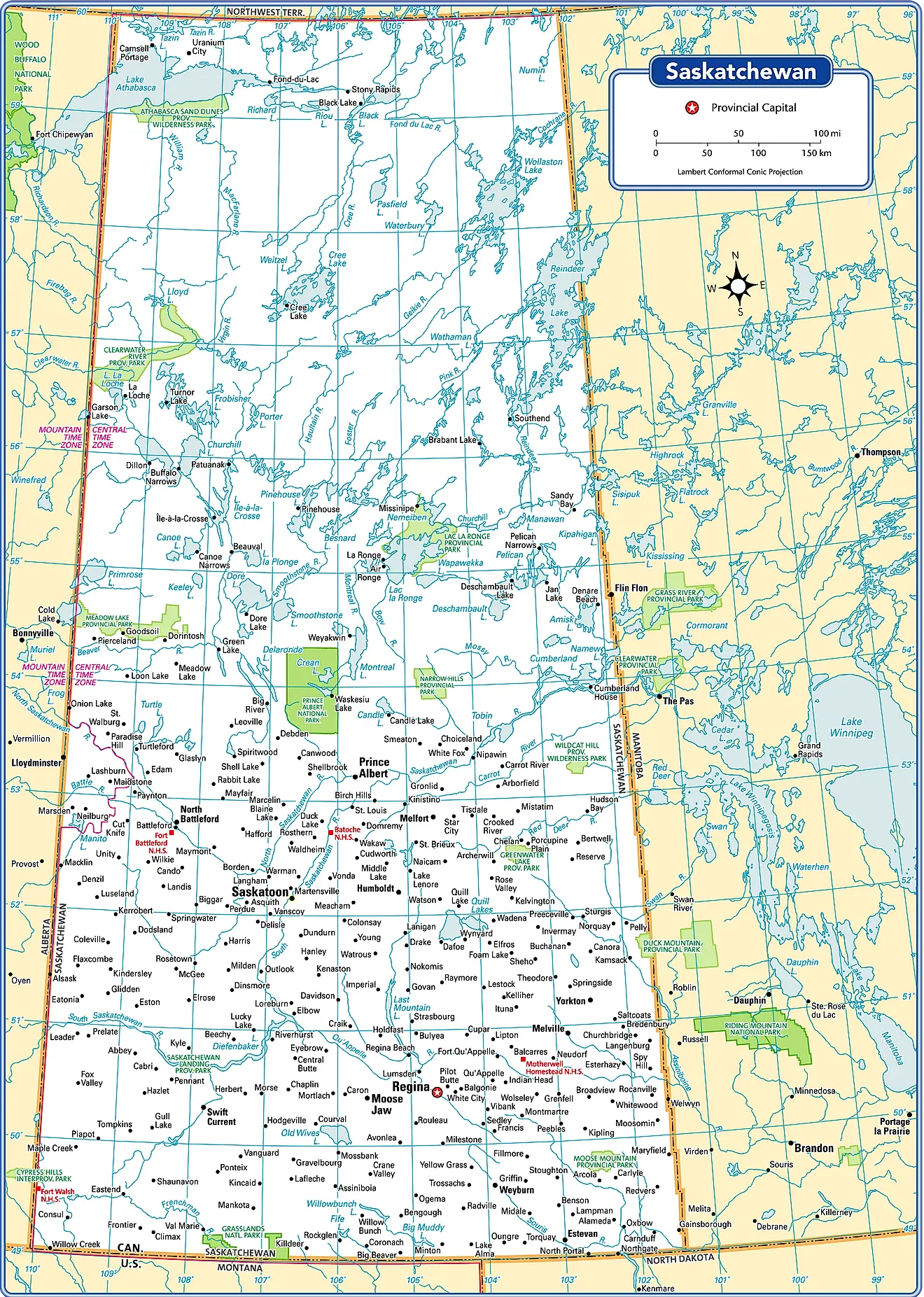
The Canadian Province of Saskatchewan is administratively divided into a total of 774 municipalities. Of these 774 municipalities, there are 454 urban municipalities, 296 rural municipalities and 24 northern municipalities. The 454 urban municipalities are further subdivided into 16 cities, 250 villages, 147 towns and 41 resort villages. The 24 northern municipalities are further subdivided into 2 northern towns, 11 northern hamlets and 11 northern villages. The major portion of Northern Saskatchewan forms a part of the unorganized Northern Saskatchewan Administration District.
Saskatchewan is also dividted into 18 census divisions meant only for the use of statistical data collection and analysis. These divisions are not associated with any government.
With an area of 588,244 sq.km, Saskatchewan is the 5th largest and the 6th most populous Canadian province. Located in the south-central part of the province on the Wascana Creek is Regina, the provincial capital and the 2nd largest city of Saskatchewan. It serves as a cultural and commercial center for the southern part of Saskatchewan. Situated in the central part of the province along the South Saskatchewan River is Saskatoon – the largest and the most populous city of Saskatchewan. It serves as a regional cultural and economic hub.
Where is Saskatchewan?
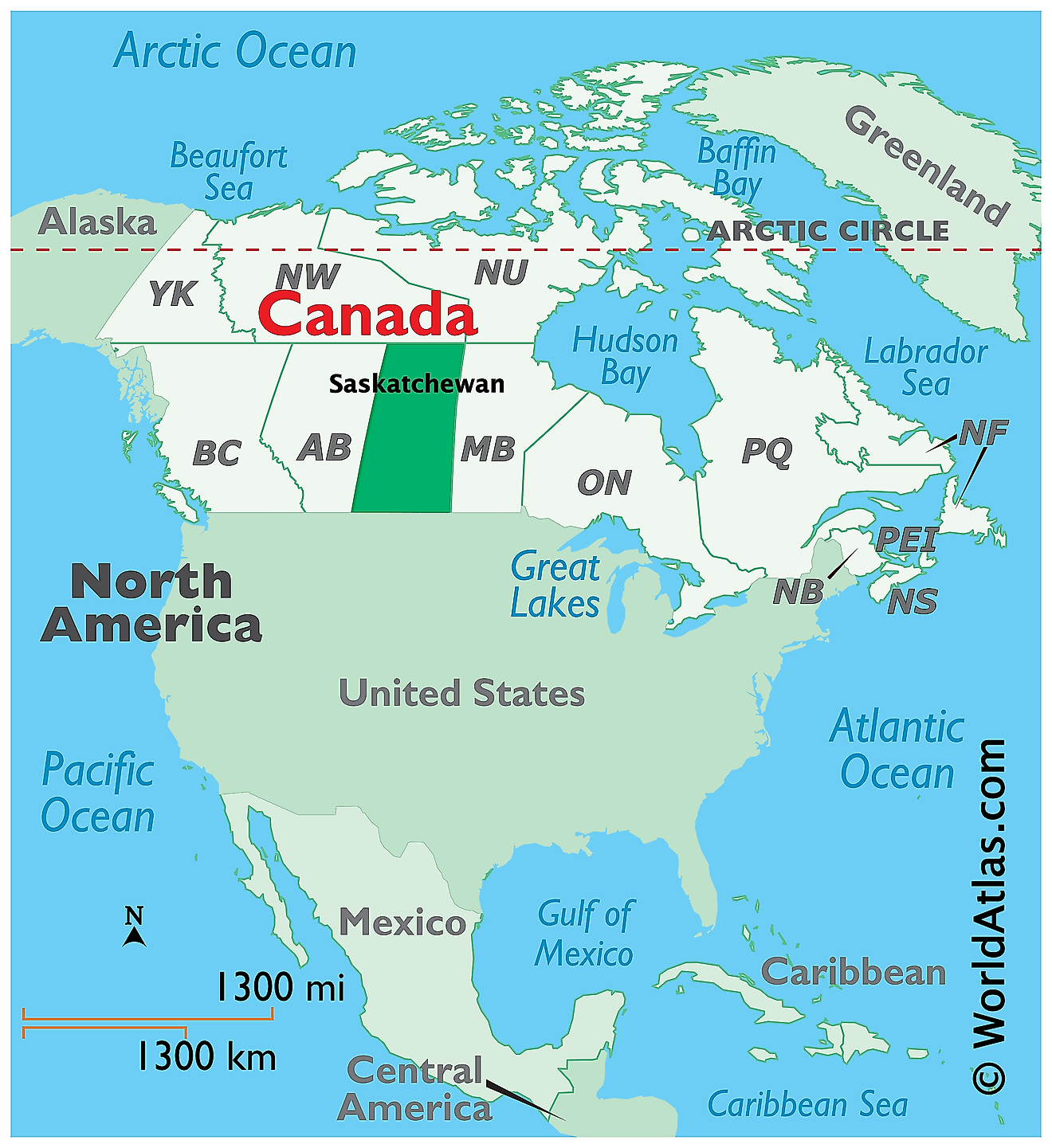
The Province of Saskatchewan is located in the central part of Canada, in the Continent of North America. It is geographically positioned in the Northern and Western hemispheres of the Earth. Saskatchewan is a landlocked boreal and prairie Canadian province and the only one which lacks natural boundaries. It is bordered by the Canadian provinces of Alberta in the west; Manitoba in the east; Northwest Territories in the north; and Nunavut in the northeast. In the south it is surrounded by the US States of North Dakota and Montana.
Regional Maps: Map of North America
Outline Map of Saskatchewan
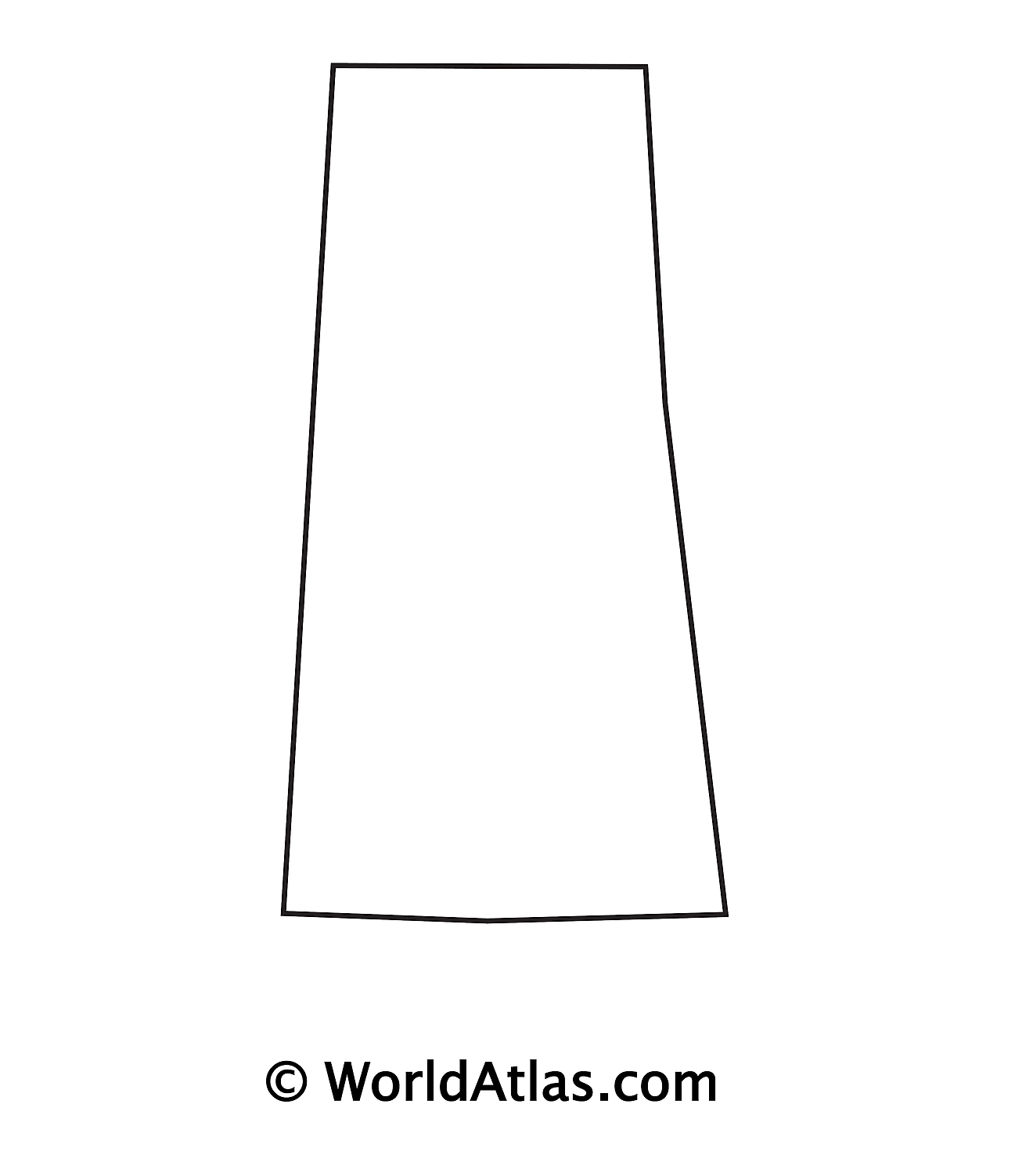
The above blank map represents the Province of Saskatchewan, located in the central part of Canada. The above map can be downloaded, printed, and used for geography education purposes like map-pointing and coloring activities.
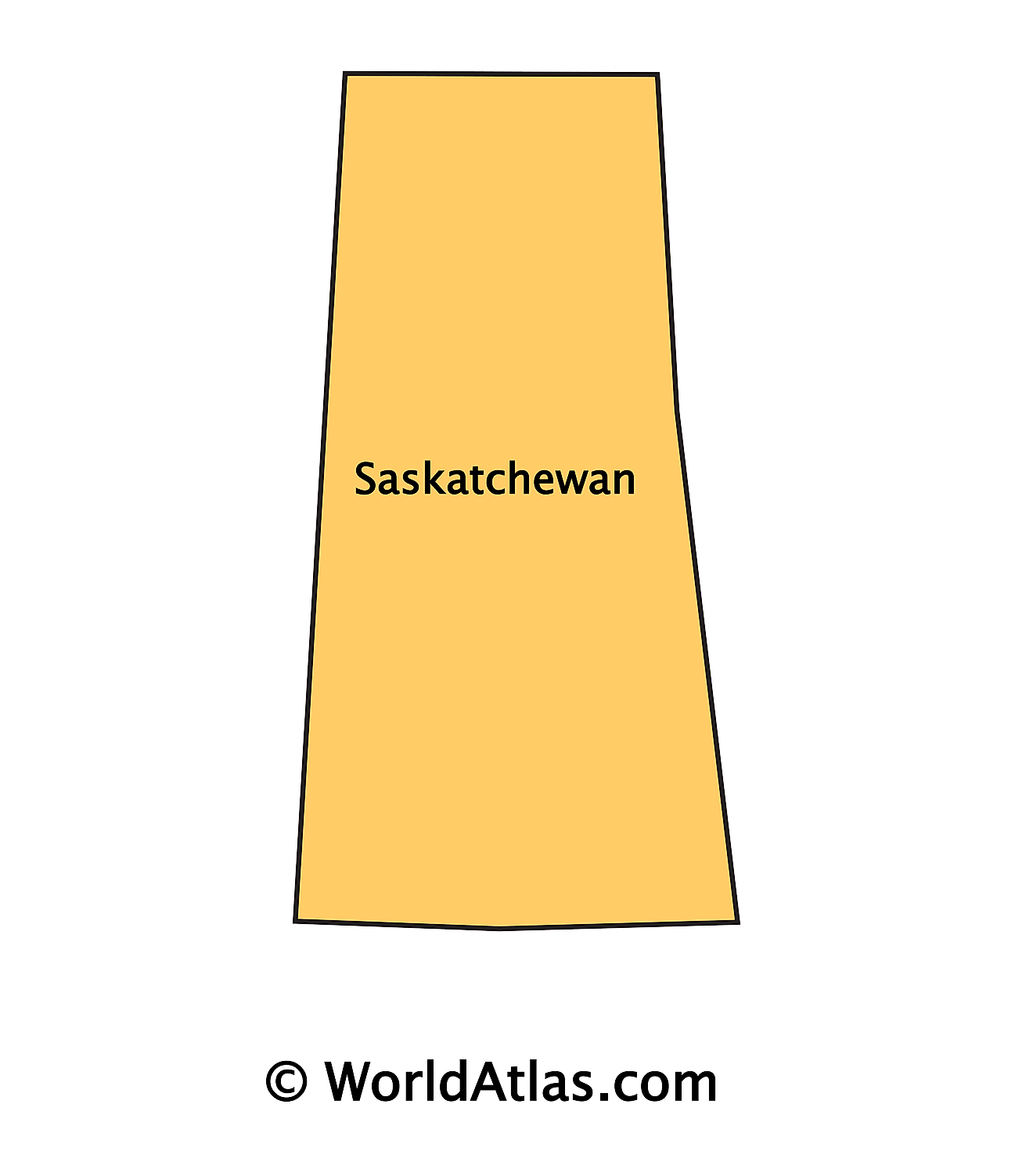
The above outline map represents the Province of Saskatchewan, located in the central part of Canada.
Key Facts
| Legal Name | Province of Saskatchewan |
|---|---|
| ISO 3166 Code | CA-skz |
| Capital City | Regina |
This page was last updated on March 31, 2023