return to Graphic Maps

worldatlas.com


Africa | Antarctica | Arctic | Asia | Australia/Oceania | Caribbean | Central America | Europe | Islands of the World
Middle East | North America | South America | World Atlas | WIN $100 here

dot
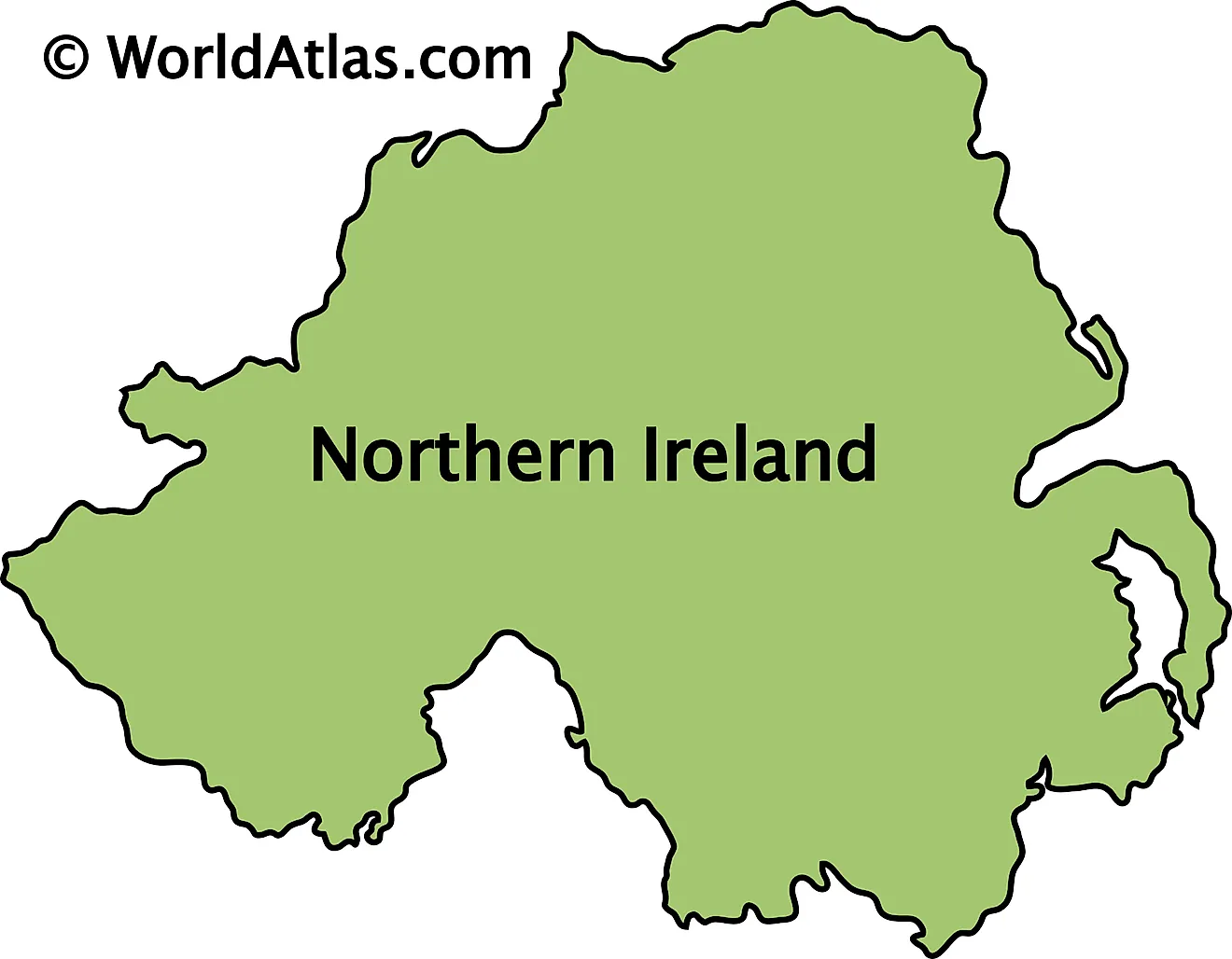
arrow EUROPE PAGE NORTHERN IRELAND: arrow Description Fast Facts Famous Natives Flag Islands/Regions

Land Statistics Landforms Lat/Long Links Maps Symbols Time Timeline Travel Info Weather


England here Scotland here United Kingdom (UK) here Wales here

PRINT THIS MAP

In Affiliation with AllPosters.com
Viking Raider


In Affiliation with AllPosters.com
England's Oliver Cromwell


PRINT THIS MAP

In Affiliation with AllPosters.com
Tully Castle, Northern Ireland


In Affiliation with AllPosters.com
City Hall, Belfast


Timeline

arrow (1200 BC) Colonists built crannogs (islands) in middle of lakes

arrow (600 BC) Celts began arriving in Ireland

arrow (200 BC) Celtic Ireland divided into 150 miniature kingdoms

arrow (100 BC) Gaels arrived in Ireland

arrow (150 AD) Ptolemy drew map of Ireland

arrow (367) Irish Picts and Saxons attacked Romans, controlled Britannia

arrow (455) St. Patrick founded church at Armagh

arrow (795) Vikings attacked Celtic coastal monasteries

arrow (841) Vikings fleets wintered in Dublin

arrow (914) Vikings established settlements at Waterford

arrow (916) Vikings established settlements at Dublin

arrow (920 Vikings established settlements at Limerick

arrow (967) Irish and Vikings at war

arrow (1014) King Brian Boru killed at Battle of Clontarf, Vikings defeated

arrow (1167 - 1169) Normans arrived; 800-year struggle between English and Irish began

arrow (1170) Anglo-Norman Earl of Pembroke (Strongbow) arrived to aid Irish king of Leinster; the Pale, a line of fortifications was erected; Irish outside boundary were deemed barbarians "beyond the pale"

arrow (1171) Strongbow became king of Leinster

arrow (1297) First Irish Parliament met in Dublin

arrow (1348-1351) Black death killed third of population

arrow (1366) Statutes of Kilkenny enacted, forbade Irish/English marriages

arrow (1394) King Richard II of England arrived Dublin

arrow (1515) Anarchy in Ireland due to hardships placed on Irish by Anglo-Irish lords

arrow (1541) Henry VIII of England declared himself King of Ireland

arrow (1558) Elizabeth I became queen; tried to outlaw Protestantism in Ireland

arrow (1562) Elizabethan wars took place in Ireland

arrow (1585) Ireland mapped and divided into counties

arrow (1595) Hugh O'Neill, Earl of Tyrone, began rebellion, start of Nine Years War

arrow (1598) O'Neill victory at Yellow Ford in Ulster

arrow (1601) O'Neill defeated at battle of Kinsale

arrow (1603) James I became King; O'Neill surrendered; English law enforced in Ireland

arrow (1606) Scots settled in Ards Peninsula; English confiscated land in Ulster

arrow (1641) Catholic-Gaelic rebellion for return of land; English settlers driven out of Ulster; Catholics held 59% of land in Ireland

arrow (1649) Oliver Cromwell, England's "Protestant" Lord Protector, landed at Dublin, led expedition into Ireland, killed 2,000 Irishmen, confiscated land and divided among English soldiers

arrow (1650) Catholic landowners exiled to Connaught

arrow (1656) Over 60,000 Irish Catholics sent as slaves to islands in Caribbean

arrow (1661 - 1668) Duke of Ormond ruled Ireland as Viceroy

arrow (1688) English revolution began; James II of England deposed

arrow (1689) James II attempted capture of Derry, failed

arrow (1690) English King William III defeated James at Battle of the Boyne; James fled to France

arrow (1695 - 1728) Penal Laws passed against Catholics

arrow (1740) Extreme cold, rainy weather resulted in poor potato harvest - "Forgotten Famine"

arrow (1759) Arthur Guiness purchased brewery in Dublin

arrow (1798) United Irishmen rebellion against British rule

arrow (1801) Act of Union abolished Irish Parliament, created United Kingdom of Great Britain and Ireland

arrow (1829) Catholic emancipation passed, Tithe War began

arrow (1845-1849) Great Potato Famine resulted in more than one million deaths; mass immigration to the United States occurred

arrow (1879-82) Land Wars for the reform of tenancy laws

arrow (1886) First Home Rule Bill introduced, proposed separate parliament and government to be set in Dublin; defeated

arrow (1893) Second Irish Home Rule bill defeated

arrow (1905) Sinn Fein "we ourselves" political party formed

arrow (1912) Third Home Rule Bill introduced, passed; Titanic, built in Belfast, sunk

arrow (1914) Home Rule legislation implementation delayed due to outbreak of World War I

arrow (1914) Easter Uprising by Irish Volunteers and Irish Citizens Army proclaimed an independent Irish Republic, British crushed uprising - over 400 killed, 2,500 wounded; leaders executed; Irish Republican Army formed

arrow (1920) British parliament passed Government of Ireland Act, established two parliaments, Irish Free State in Dublin with twenty-six counties, Provisional Government in Belfast with six counties

arrow (1922) Dublin parliament ratified act; Provisional Government remained part of United Kingdom; Free State became independent; Catholics in North opposed, Civil War broke out

arrow (1932) Prince of Wales opened new home of Northern Ireland government at Stormont

arrow (1968) Government attempted to stop Catholic civil rights demonstration turned into riots; the tragic era named "the Troubles" began

arrow (1969) Irish Republican split into two wings - Marxist Official IRA and Provisionals

arrow (1972) Civil rights demonstration in Derry resulted in British troops opening fire; 14 killed; Northern Ireland parliament suspended; England began direct rule; IRA set 26 bombs in Belfast, 11 killed, 130 injured

arrow (1973) Council of Ireland created to allow Republicans role in government; Protestants opposed; violence continued

arrow (1974) IRA bombs in United Kingdom killed 28, injured more than 200

arrow (1978) IRA bomb in restaurant in Comber killed 12, injured 30

arrow (1979) 18 soldiers killed by IRA bomb at Warrenpoint; assassinated Lord Earl Mountbatten

arrow (1981) Ten IRA prisoners died during hunger strike

arrow (1982) Bomb attacks in London killed 11, wounded 50; Irish National Liberation Army bomb killed 17

arrow (1983) IRA bomb at Harrods in London killed six

arrow (1985) Anglo-Irish Agreement signed; Irish government received role in Norther Ireland affairs; Unionists objected, agreement not fully implemented

arrow (1993) Downing Street Declaration issued; Northern Ireland to decide own future; Sinn Fein offered seat at peace talks

arrow (1994) IRA declared cease-fire

arrow (1996) Peace talks began; IRA urged to disarm; IRA broke cease fire, violence resumed; bomb exploded at Canary Wharf killed two, caused millions of dollars in damages

arrow (1997) IRA announced cease-fire; Sinn Fein joined peace talks

arrow (1998) Belfast (Good Friday) Agreement reached; established power sharing assembly, IRA said no to decommissioning; dissidents formed Real IRA; car bomb killed 29 people; Real IRA claimed responsibility

arrow (1999) IRA announced it would enter talks about decommission

arrow (2000) Devolution assembly began, then suspended, due to IRA's lack of decommissioning; assembly restored when IRA agreed to put weapons "verifiably beyond use"

arrow (2002) Sinn Fein's offices raided by police in investigation of IRA intelligence gathering; IRA suspected of break-in at Castlereagh police headquarters

arrow (2005) IRA declared armed campaign over, confirmed all weapons taken out of action

arrow (2006) Former senior member of Sinn Fein found dead in Irish Republic; IRA said they had no involvement; Stormont assembly sat for first time since suspension in 2002

arrow (2007) On Monday, March 26, 2007, an historic accord was reached in Northern Ireland. Reverend Ian Paisley, the Protestant leader, and Gerry Adams of Sinn Fein collectively announced that on May 8, 2007, the two hostile groups would form a joint administration, and after years of bloody hostility, finally work together. The British government hailed this as a major breakthrough


Contact Us | Privacy Statement

Copyrighted by Graphic Maps
All rights reserved!

All maps, graphics, flags and original descriptions created by Graphic Maps, a d/b/a of the Woolwine-Moen Group, unless otherwise noted and/or directly linked to the source, and use of same for any application whatsoever (with the exception of outline maps) requires written permission.

We make no copyright claim on any statistical data on this page, nor on any non-original graphics, and/or pictures not produced by us. Certain statistical data is gathered from the CIA World Factbook, as well as numerous public domain reference materials.

Every effort is made to be as accurate as possible when disseminating information on any worldwide destination. We are not responsible for unintentional data entry errors or omissions. If you would like to submit an addition, change or correction, or suggest a new link, please forward it to our map department and we will give it our immediate attention.


return to Graphic Maps
worldatlas.com

dot


search and find


dot

European
Countries


arrow Albania

arrow Andorra

arrow Armenia

arrow Austria

arrow Azerbaijan

arrow Belgium

arrow Belarus

arrow Bosnia-Herzegovina

arrow Bulgaria

arrow Croatia

arrow Cyprus

arrow Czech Republic

arrow Denmark

arrow Estonia

arrow Finland

arrow France

arrow Georgia

arrow Germany

arrow Greece

arrow Hungary

arrow Iceland

arrow Ireland

arrow Italy

arrow Latvia

arrow Liechtenstein

arrow Lithuania

arrow Luxembourg

arrow Macedonia

arrow Malta

arrow Moldova

arrow Monaco

arrow Montenegro

arrow Netherlands

arrow Norway

arrow Poland

arrow Portugal

arrow Romania

arrow San Marino

arrow Serbia

arrow Slovakia

arrow Slovenia

arrow Spain

arrow Sweden

arrow Switzerland

arrow Turkey

arrow Ukraine

arrow United Kingdom

including:
England
Scotland
Northern Ireland
Wales

arrow Vatican City