This Lake Superior All-American Road Is the Ultimate US Road Trip
The North Shore Scenic Drive, an All-American Road that closely follows Minnesota Highway 61 along Lake Superior, is one of those rare American routes where the journey itself is the destination. Tracing the rugged edge of Lake Superior, this All-American Road runs from Duluth to the Canadian border, delivering mile after mile of cliffs, waterfalls, historic harbors, and moody inland forests.
The drive rewards slow travel. You'll want to stop often, linger longer than planned, and maybe even turn around to do it all again. For travelers who love dramatic scenery paired with small-town charm, this is the ultimate U.S. road trip, wild, soulful, and deeply memorable.
Duluth

Begin your journey in Duluth, a city that rises sharply from Lake Superior's western tip and immediately sets the tone for the adventure ahead. The lake here feels oceanic, steel-gray wavThe spectacular waterfront area of Duluth, Minnesota. Editorial credit: Jacob Boomsma / Shutterstock.com.es, freighters sliding through the harbor, and wind that carries the scent of pine and cold water. Canal Park is a natural first stop, where you can watch massive ships pass under the Aerial Lift Bridge before heading north. Scenic pullouts along Skyline Parkway offer panoramic previews of what's to come, while local coffee shops and bakeries provide fuel for the road. Duluth also offers an important reminder: Lake Superior dictates the pace here. Weather can change quickly, and the lake's presence is constant, humbling, and beautiful. Leaving the city on Highway 61, you'll feel a subtle shift, from urban energy to untamed shoreline, within just a few miles.
Waterfalls and Basalt Cliffs Along the Mid-North Shore

Just north of Duluth, the drive becomes a greatest-hits collection of natural landmarks, each one deserving real time and attention. Gooseberry Falls State Park is often the first major stop, and for good reason: multiple tiers of waterfalls cascade over dark volcanic rock before the Gooseberry River continues on to its mouth at Lake Superior. Well-maintained trails make exploration easy, but the power of the water, especially in spring, feels anything but tame. Farther along, Split Rock Lighthouse stands dramatically atop a cliff, one of the most photographed sites in the state. Built after a series of devastating shipwrecks, the lighthouse offers insight into the lake's dangerous side, where storms can rival those of the Atlantic.
Inland Detours, Forest Trails, and Quiet State Parks

While Lake Superior commands attention, some of the most rewarding moments on the North Shore Scenic Drive happen when you briefly turn inland. State parks like Tettegouche State Park offer hiking trails that climb to high overlooks, revealing the lake from new angles and emphasizing its immense scale. Inland lakes, cedar swamps, and boreal forest ecosystems add texture to the trip, proving this is more than just a shoreline drive. These detours also bring quiet, true quiet, broken only by wind in the trees or the call of a loon.
Silver Bay to Grand Marais

As you continue north, the towns along Highway 61 feel increasingly intimate, each with its own rhythm and reason to stop. In Silver Bay, it's easy to get right onto the water at the marina or spend an hour watching ore ships load at the nearby taconite plant, a reminder that this is still a working shore. Just outside town, Black Beach's unusual dark sand and sheltered coves make a memorable stop for a lakeside walk or a calm paddle on a clear day. Palisade Head, rising more than 300 feet above the lake within Tettegouche State Park, gives you one of the most dramatic viewpoints on the entire route, with short paths leading out to dizzying overlooks and, on clear days, views that stretch all the way to Split Rock Lighthouse.

Further up the shore, Lutsen turns into your gateway to the hills. Lutsen Mountains ski area spreads 95 runs across four interconnected peaks on the edge of the Superior National Forest and is often billed as one of the largest and most varied ski resorts in the Midwest. In winter, it delivers legitimate vertical drop and long, lake-view runs; in summer and fall, the same slopes become a hub for hiking on segments of the Superior Hiking Trail and for separate lift-served and singletrack mountain biking routes in the surrounding hills. A scenic gondola ride over the Poplar River valley offers a relaxed way to take in the Sawtooth Mountains rolling down toward Lake Superior.

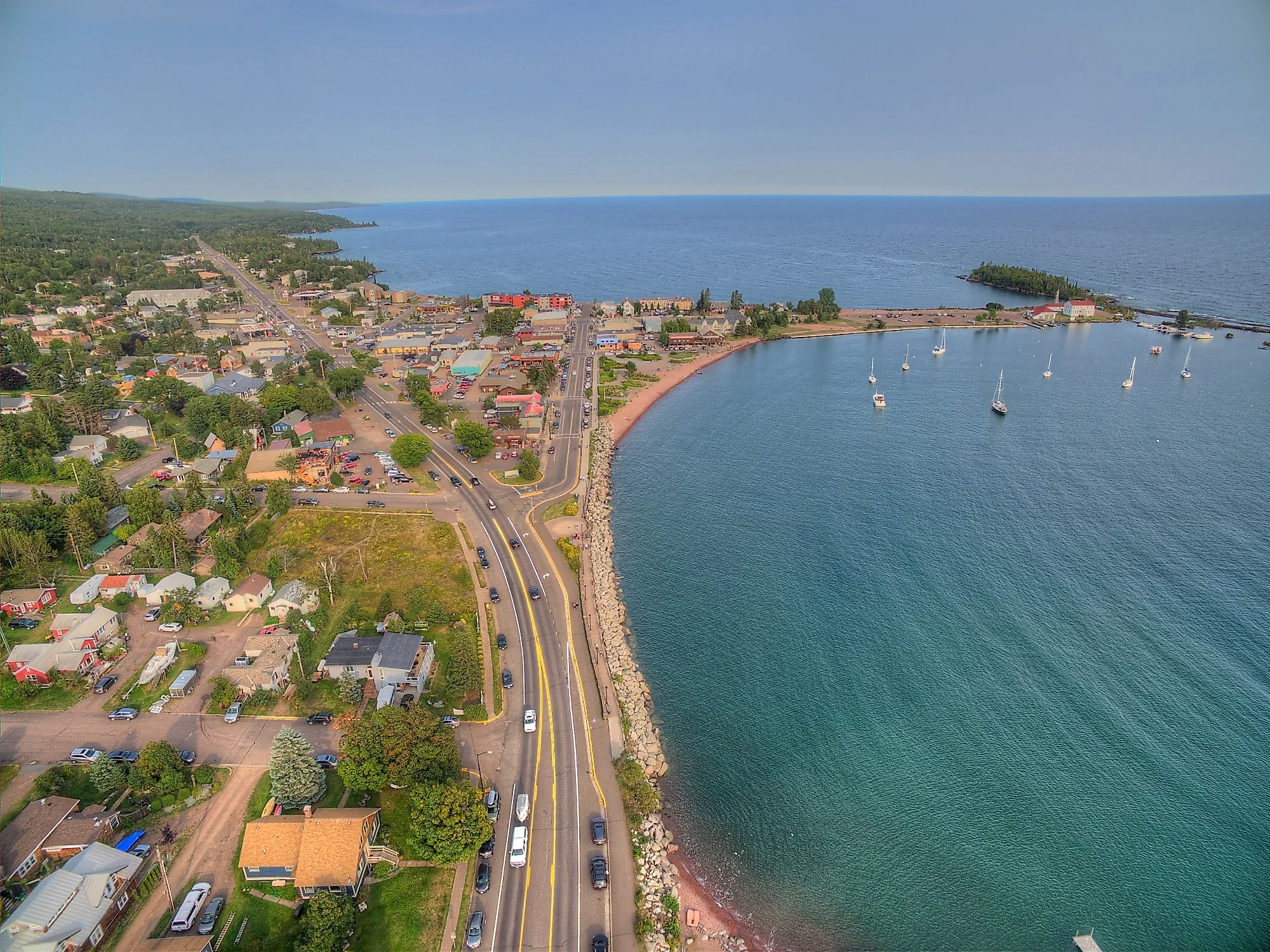
But it's Grand Marais that often becomes the emotional heart of the trip. Curving around a protected harbor, the town mixes practical working-waterfront energy with an artsy, Scandinavian-inflected character. You can browse local work at galleries like the Sivertson Gallery, which focuses on North Shore and Arctic artists, then wander over to Voyageur Brewing Company for a locally brewed pint with lake views. For food, there are long-running institutions such as Angry Trout Café, known for fresh Lake Superior fish served right on the harbor, or the tiny red-and-white World's Best Donuts shop, a North Shore staple since the 1960s. It's the kind of place where an "afternoon in town" easily turns into a full day, walking the breakwater, watching the light shift across the water, and feeling the wilderness at your back. Beyond Grand Marais, Highway 61 narrows into long, quiet stretches of forest and rock, and services thin out, underscoring that you're getting close to the true end of the road.
Seasonal Drama: When to Drive the North Shore
Timing matters on this road trip, because each season reshapes the North Shore Scenic Drive in dramatic ways. Summer brings long daylight hours, cool lake breezes, and ideal conditions for hiking and kayaking. Autumn, however, may be the most spectacular season of all. The forests ignite with red, gold, and orange, creating a fiery contrast against Lake Superior's deep blue. Fall storms can roll in suddenly, sending waves crashing high against the cliffs, a reminder of the lake's raw power. Winter transforms the drive into something quieter and more austere, with frozen waterfalls and snow-draped pines, though careful planning is essential. Spring offers roaring rivers and fewer crowds, though conditions can be unpredictable.
The Canadian Border and the Feeling of Completion

The northern end of the North Shore Scenic Drive reaches toward the Canadian border near Grand Portage, where the road feels both complete and open-ended. Here, history deepens: this was once a vital corridor for Indigenous peoples and fur traders navigating between watersheds. Standing at the edge of Lake Superior this far north, you sense how vast and interconnected the region truly is. Many travelers choose to turn back here, retracing the route with new light and fresh perspectives. Others continue into Canada, extending the adventure along Ontario's own rugged shoreline.
Why This All-American Road Endures
The North Shore Scenic Drive endures because it feels grounded in place. The lake remains dominant, always active, always shaping the experience, whether it's calm as glass or pounding the rocks with wind-driven force. Towns along the route feel connected to the landscape rather than arranged around tourism alone; they offer real warmth, solid food, and practical character that fits the shoreline's mood.