5 Most Beautiful Gothic Churches In Idaho
When missionaries and homesteaders built Idaho’s earliest settlements, Gothic church design quickly became a visual anchor for growing communities. The state’s river corridors and volcanic plains produced towns that needed sturdy sanctuaries capable of enduring long winters while serving as gathering spaces for civic and religious life. Catholic, Episcopal, and Lutheran missions introduced several Gothic traditions to the region and adapted pointed arches, stained glass windows, and buttressed walls to local sandstone, basalt, and timber. All of these churches remain active today and still reflect the craft of early Idaho builders. Pack your things and take a look at five Idaho churches that represent the state’s most enduring expressions of Gothic design.
St. Michael’s Episcopal Cathedral, Boise

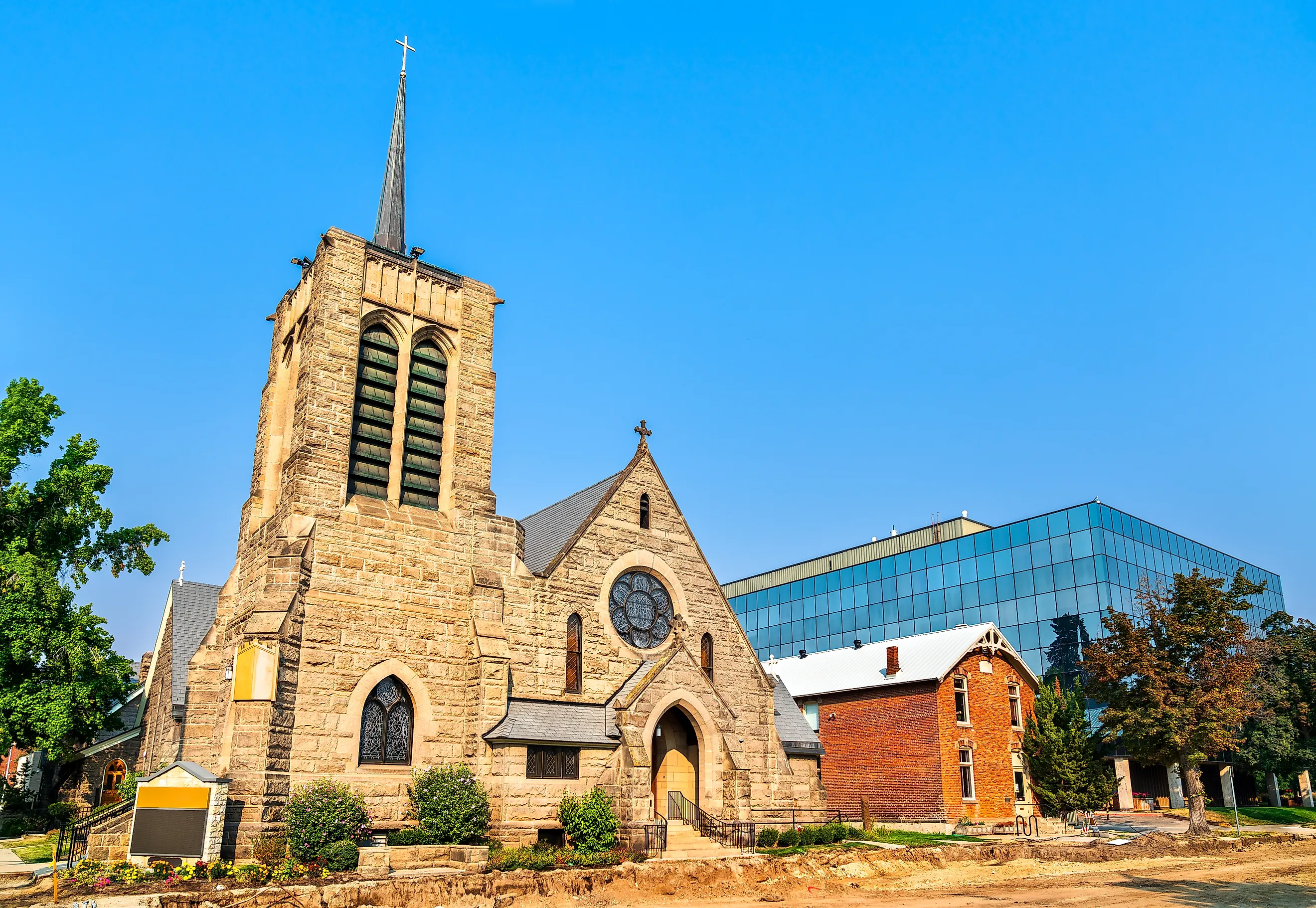
St. Michael’s Episcopal Cathedral is one of Boise’s most accurately preserved examples of early twentieth-century English Gothic architecture. The cathedral was designed by architect Henry Martyn Congdon, supervised by local architect John Tourtellotte. It features Boise sandstone walls, and its square tower defines the structure. Inside, visitors find stained glass windows, exposed timber trusses along the nave, and a stone altar.
Visitors often enter through the tower entrance and step into the colorful light from a Tiffany window installed in 1918. Weekday access allows viewing of the choir stalls, memorial glass, and carved altar. Organ rehearsals and choral practices are often heard throughout the nave. St. Michael’s maintains a full calendar of worship and music events and sits one block from the Idaho State Capitol and within walking distance of the Basque Block, making it a central stop on tours of Boise’s historic district.
Holy Rosary Catholic Church, Idaho Falls

Visitors arriving in Idaho Falls often notice the tall windows and steep roofline of Holy Rosary Catholic Church, built in the Late Gothic Revival style and including elements of the English Gothic style of architecture as well. The church was designed by Hummel, Hummel & Jones, successors to Tourtellotte & Hummel, and built in 1948 by Arlington Construction Co. Its exterior features pointed-arch doorways and buttress-like wall divisions that contrast with the darker brick walls. Inside, the nave is illuminated by lancet stained glass windows, and a long central aisle leads directly to the altar.
The church is open throughout the week for regular masses, confessions, and adoration, allowing people to see the church functioning as a parish and visit the peaceful space. Holy Rosary also hosts seasonal liturgical concerts that take advantage of the vaulted ceiling’s acoustics. Located a short walk from the Idaho Falls River Walk, the church is often paired with strolls through the historic neighborhood that grew around the parish.
Immanuel Lutheran Church, Boise

Immanuel Lutheran Church stands in Boise’s North End and represents one of Idaho’s earliest examples of Gothic Revival ecclesiastical design. Built in 1908 by Charles F. Hummel of Tourtellotte & Hummel, the church incorporates pointed arch windows, a steep gabled roof, and a square corner tower. The stone foundation was quarried near Boise, and the interior retains its historic wooden trusses, plaster vaulting, and original stained glass windows that cast colored light throughout the sanctuary.
Immanuel Lutheran was originally founded as the Swedish Lutheran Church of the Augustana Synod, and services were first held in Swedish. In 1918, the language was switched to English to appeal to a wider congregation, and in 1919, the name was changed. Today, the church hosts Sunday worship services, community outreach events, choir performances, and seasonal concerts, which continue to use the building’s strong acoustics. Many guests combine their visit with a walk through the surrounding historic district, where tree-lined streets and early residences illustrate Boise’s first decades of settlement.
St. Luke’s Episcopal Church, Weiser

“Progressive Ministry with Inclusive Fellowship and Traditional Worship” is how St. Luke’s defines itself. Built in 1892 and expanded in 1942, St. Luke’s is a Gothic-style frame parish church that features a steeply pitched roof, decorative bargeboards, and stained-glass windows. The steeple projects from the front of the building and contains an open Gothic-arch belfry, and a curved triangle of stained glass crowns the gabled entryway. Narrow bands of color fall across the nave through three lancet windows on each side. As a member of the worldwide Anglican Communion, St. Luke’s connects this small Idaho parish with a broader historical tradition that includes the Church of England and the Scottish Episcopal Church.
Most visitors begin with a self-guided tour of the sanctuary, where the original stained-glass lancets and wooden roof framing remain intact. Visitors may also see St. Luke’s in use during scheduled Sunday or weekday services. The church’s acoustics appeal to many community members who hold music events and seasonal parish activities in the space. Some visitors also spend time in the Weiser Historic District, a group of historic civic buildings that surrounds the church.
St. James Episcopal Church, Payette

The Episcopal Church was constructed in 1892, during a period when the Episcopal Church was developing small English Neo-Gothic parish churches throughout what were then considered the Northwest Territory of Montana, Idaho, and Utah. The church’s brick walls, pointed-arch windows, steeply pitched roof, and shingled belfry flanked by buttress-like piers and a Gothic window reflect the English country church designs that served as the architects’ models. The interior preserves the quiet atmosphere of its early congregation, retaining the original wooden trusses that support the ceiling, the narrow stained-glass lancets that filter natural light into the nave, and the original pews.
Although St. James still operates as a church, it no longer holds weekly Sunday services. Instead, it works with the Episcopal Diocese of Idaho to offer weekend retreats in a peaceful setting where participants can meditate, join religious study groups, or take part in small community gatherings. Those who attend these programs experience the church much as it has appeared for more than a century, with its modest scale and simple Gothic detailing. St. James remains open to new small-group uses and is frequently visited as part of a short walking tour of the historic downtown core, often paired with the nearby Payette County Museum.
Gothic Icons of Idaho
Idaho’s historic Episcopal churches, such as St. Luke’s in Weiser, Immanuel Lutheran in Boise, and St. James in Payette, reflect the Gothic Revival architecture that spread through the region in the late nineteenth and early twentieth centuries. Their steep roofs, lancet stained-glass windows, timbered interiors, and modest scale convey the European models that influenced mission congregations across the Northwest. Today, many of these churches continue to serve their communities through worship, retreats, concerts, or heritage tourism while preserving much of their original character. Together, they illustrate how early Episcopal design traditions shaped the architectural and cultural landscape of Idaho’s historic towns.