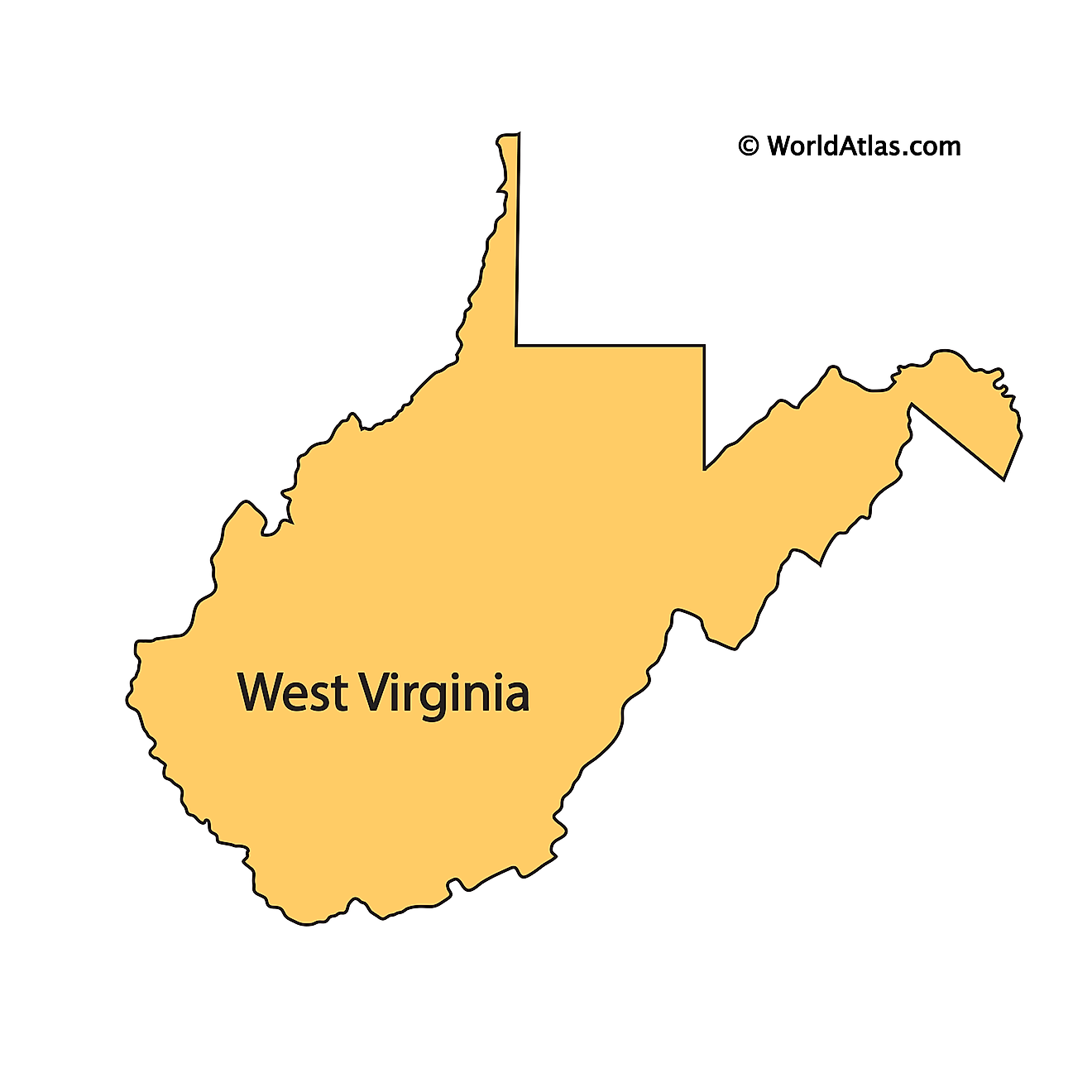
PRINT THIS MAP
George Washington
Travel the World through Poster Art!
Daniel Boone, American Frontiersman
Travel the World through Poster Art!
Abolitionist, John Brown
Travel the World through Poster Art!
The Hatfield Clan in 1897
Travel the World through Poster Art!
The Capital Building, Charleston
Travel the World through Poster Art!
Mary Harris "Mother" Jones
Travel the World through Poster Art!
Mary Lou Retton, Olympic Champion
Travel the World through Poster Art!
PRINT THIS MAP

|
|
|
Timeline

(1607) Virginia Colony established by England

(1669) German John Lederer and companions reached crest of Blue Ridge Mountains, became first Europeans to see (current) West Virginia; French explorer, Robert de La Salle, explored Ohio River, made landings at sites in (current) West Virginia

(1671) Thomas Batts and Robert Fallam led English expedition, claimed lands for England

(1712) Baron Christopher DeGraffenreid searched for land for Swiss families in Eastern Panhandle

(1722) Families allowed to live rent-free for ten years on land owned by state; Iroquois Indians surrendered claims to lands south of Ohio River, included areas in Eastern Panhandle

(1725) Fur traders explored western Appalachians; northern part of western Virginia explored by trader John Van Nehne

(1730) Land grants in West Virginia made to Isaac and John Van Meter

(1731) Welshman Morgan Morgan established first settlement in West Virginia near Bunker Hill

(1732) German, Welsh, Scotch-Irish pioneers settled in western Virginia

(1742) Coal discovered at Coal River; first iron furnace constructed on Shenandoah River

(1744) Indians of Six Nations ceded territory to English between Allegheny Mountains and Ohio River

(1748) George Washington surveyed land in western Virginia for Lord Fairfax; Harpers Ferry began passenger service across Shenandoah River

(1754 - 1763) French and Indian War took place

(1755) General Braddock led army through West Virginia counties enroute to Pittsburgh, suffered defeat by French and Indians; settlement of Draper's Meadows in New River area attacked by Shawnee Indians, nearly all settlers killed or captured

(1763) British government forbade occupation of lands west of Allegheny Mountains

(1768) Iroquois ceded lands north of Little Kanawha River to British in Treaty of Stanwix; first flood of Ohio River recorded

(1771) Natural gas discovered in Kanawha Valley

(1772) George Clark explored Ohio, Kanawha Rivers

(1774) William Morris, Sr. became first permanent English settler in Kanawha County; Battle of Point Pleasant between Virginia settlers, militia and Indian tribes occurred, Virginians won, Indians gave up much of disputed land

(1776) West Virginia residents petitioned Continental Congress for separate government

(1777) Indian wars resume; Chief Cornstalk, his son, Chief Red Hawk murdered by whites at Fort Randolph

(1782) Battle of Fort Henry in Wheeling called "last battle of Revolutionary War"; Fort Henry attacked by Indians and British

(1784) Mason Dixon line agreed to as border of Virginia, Pennsylvania

(1791) Daniel Boone elected delegate to Virginia Assembly

(1794) Indian attacks halted at Fallen Timbers by "Mad Anthony" Wayne

(1806 First salt well drilled in Great Kanawha Valley

(1810) West Virginia protested unequal representation in Virginia legislature; oil discovered

(1815) Nation's first national gas well discovered at Charlestown by James Wilson

(1818) Cumberland (National) road completed from Cumberland, Maryland to Wheeling; first commercial coal mine near Fairmont opened

(1829) Counties west of Allegheny Mountains protested constitution that favored slave-holding counties

(1830) The Wheeling Gazette proposed separation of western Virginia from eastern Virginia

(1831) Slavery debates enhanced political divisions

(1833) 23 killed in one day by cholera epidemic

(1835) John Templeton, John Moore, Stanley Cuthbert, Ellen Ritchie charged with teaching blacks

(1836 First railroad reached Harpers Ferry

(1847) First telegraph line in state reached Wheeling

(1849) Wheeling Bridge completed

(1852) B & O Railroad from Baltimore to Wheeling completed (was longest railroad in world - 370 miles)

(1854) Wheeling Bridge destroyed by high winds

(1859) Abolitionist John Brown conducted raids on federal arsenal at Harpers Ferry to end slavery; John Brown hung in Charleston

(1861 - 1865) Civil War began

(1861) West Virginia refused to secede from Union, separated from Virginia; West Virginia sent 32,000 soldiers to Union army, 10,000 to Confederates; first land battle of Civil War fought at Philippi; Wheeling Convention met, named western part of Virginia Kanawha; Union troops burned town of Guyandotte; Wheeling Convention reconvened, named new state West Virginia

(1862) Voters approved new Constitution for West Virginia; new legislature petitioned U. S. Congress for statehood admission; Union troops defeated Confederates at Lewisburg; bill passed by West Virginia Senate allowed gradual emancipation of slaves; Battle of Charleston took place, city occupied by Union troops

(1863) West Virginia became 35th state; Confederate General William Jones attempted to burn suspension bridge over Monongahela River; blacks received same rights as whites for criminal trial, but not allowed to serve on juries

(1865) Slavery abolished; Civil War ends

(1866) Voters ratified constitutional amendment denying citizenship to all who had helped confederacy

(1870) First brick street in world laid in Charleston

(1871) Citizenship restored to residents who had aided confederacy

(1872) Voters ratified new state constitution

(1875) State capital moved to Wheeling

(1877) B & O Railroad workers stuck to protest wage cuts; federal troops sent in to stop strike

(1879) First oil pipeline in West Virginia completed; Bloch brothers began manufacturing Mail Pouch tobacco

(1880) Militia sent to Hawks Nest to stop first major coal strike

(1881) Bill approved allowing all eligible voting citizens, including blacks, to serve on juries

(1882) Hatfield-McCoy feud began

(1884) Huntington flooded

(1885) Charleston became permanent state capital

(1886) Mountain Brook mine accident killed 39

(1896) Christopher Payne state's first African-American elected to legislature; first rural free mail delivery in U.S. began in Charleston

(1897) Mary Harris "Mother" Jones sent to West Virginia to organize miners; "Great Lewisburg Fire" caused major damage in Greenbrier county; last public hanging in West Virginia occurred

(1898) Trial of Williams vs. Board of Education

(1902) Mother Jones campaigned for organization of 7,000 miners in Kanawha Valley

(1906) Mining accidents killed 22 at Coaldale Mine, 18 killed at Detroit Mine, 23 killed at Parral Mine, 23 killed at Century Mine

(1907) Mining accidents killed 84 at Stuart Mine, 25 killed at Thomas Mine, 362 killed at Monongah

(1909) Switchback Mine accident killed 67

(1910) Fires destroyed Mount Hope

(1912 - 1921) Conflicts occurred between miners and mine owners over labor unions

(1912) Paint Creek, Cabin Creek miners struck to gain recognition of United Mine Workers of America, martial law imposed; state prohibition became effective; mine accident at Jet killed 83; fire in Beckley damaged many businesses; Mother Jones led march of miners' children through Charleston's streets

(1913) Mother Jones led protest over conditions in West Virginia mines, was arrested; flooding in Huntington, Parkersburg left thousands homeless

(1914) Eccles mining accident killed 192

(1915) Supreme Court ruled West Virginia owed Virginia over $12.3 million for part of state's debt at time of separation; Layland mining accident killed 112

(1916) Voters rejected proposed constitutional amendment allowing suffrage for women

(1917) U. S. entered World War I; 45,000 West Virginians in active service; 624 killed; fire destroyed business district of Mullens; coldest temperature in state history recorded at minus 37 in Lewisburg

(1919) Miners marched on Logan County, federal military forces activated; nationwide coal strike occurred

(1920 - 1921) Efforts to unionize West Virginia coal miners caused coal wars

(1920) Police in Matewan attempted to arrest detectives hired by coal operators to evict fired mine workers from company housing, shooting occurred, ten people died (Matewan Massacre); federal troops sent to guard mines in southern West Virginia

(1921) Fights between mine guards, police, federal troops and miners occurred in disputes over unions; state capitol at Charleston destroyed by fire; Three Days Battle took place with strikers sniping at state police, coal company officials; raid by police and vigilantes on Lick Creek tent colony occurred, 47 strikers arrested; sales tax became effective; Matewan Police Chief, Sid Hatfield, killed in revenge of Matewan Massacre; Battle of Blair Mountain occurred, (largest organized armed uprising in labor history)

(1924) Benwood mining accident killed 119

(1927) Mining accident at Everettville killed 97

(1928) Minnie Buckingham Harper became first black woman in state legislature; 34 inches of snow fell in Grant County in 24 hours

(1930) New River power project began, over 476 workers died from silicosis

(1934) State prohibition law repealed

(1937) Flood in Huntington left 6,000 homeless

(1939) West Virginia made final payment to Virginia

(1940) Explosion at Bartley Mine killed 91

(1943) West Virginia State Board of Education vs. Barnett, U.S. Supreme Court ruled schools could not require students to recite Pledge of Allegiance; salt deposits discovered in northwestern West Virginia

(1944) Shinnston Tornado killed 152

(1949) Seven firemen trapped, burned to death, 15 injured in fire at Woolworth's store in Charleston

(1954) West Virginia Turnpike opened

(1956) Voters approved women to serve on juries

(1960) John F. Kennedy defeated Hubert Humphrey in West Virginia primary; fire at Holden Mine killed 18

(1965) Major gas field found near Charleston; capital punishment abolished

(1966) Explosion at Siltix Mine killed seven

(1968) Piedmont Airlines crash at Kanawha County Airport killed 35; Farmington Mine explosions and fire killed 78

(1969) Former governor, W.W. Barron, sentenced to five years in prison for jury tampering; Coal Mine Health and Safety Act law enacted

(1970) Southern Airways plane crashed, 75 Marshall University football team players, coaches, department personnel killed

(1971) 40,000 miners ended 44-day coal strike

(1972) Coal waste dam collapsed at Buffalo Creek, killed 125

(1976) Wildcat mine strike began in Logan, spread to eight states

(1977) World's longest steel-arch bridge opened near Fayetteville (New River Gorge Bridge)

(1981) Miners ended 72-day strike; WVU Mountaineers won Peach Bowl

(1984) Mary Lou Retton of Fairmont first woman to win gold medal in gymnastics in Olympics

(1985) State lottery established; heavy flooding killed 71, damages of $1.2 billion

(1988) Oil spill pollutes Monongahela and Ohio Rivers

(1993) Blizzard paralyzed West Virginia

(1996) Coal industry set production record with 174 million tons

(2000 Peace talks between Israel and Syria held at Shepherdstown

(2001) Flooding wiped out several communities, many left homeless

(2006) 13 miners trapped in mine, one survived

Contact Us | Privacy Statement

Copyrighted by Graphic Maps
All rights reserved!

All maps, graphics, flags and original descriptions created by Graphic Maps, a d/b/a of the Woolwine-Moen Group, unless otherwise noted and/or directly linked to the source, and use of same for any application whatsoever (with the exception of outline maps) requires written permission.

We make no copyright claim on any statistical data on this page, nor on any non-original graphics, and/or pictures not produced by us. Certain statistical data is gathered from the CIA World Factbook, as well as numerous public domain reference materials.

Every effort is made to be as accurate as possible when disseminating information on any worldwide destination. We are not responsible for unintentional data entry errors or omissions. If you would like to submit an addition, change or correction, or suggest a new link, please forward it to our map department and we will give it our immediate attention.

|
|
|
|

|