What Causes Hail?
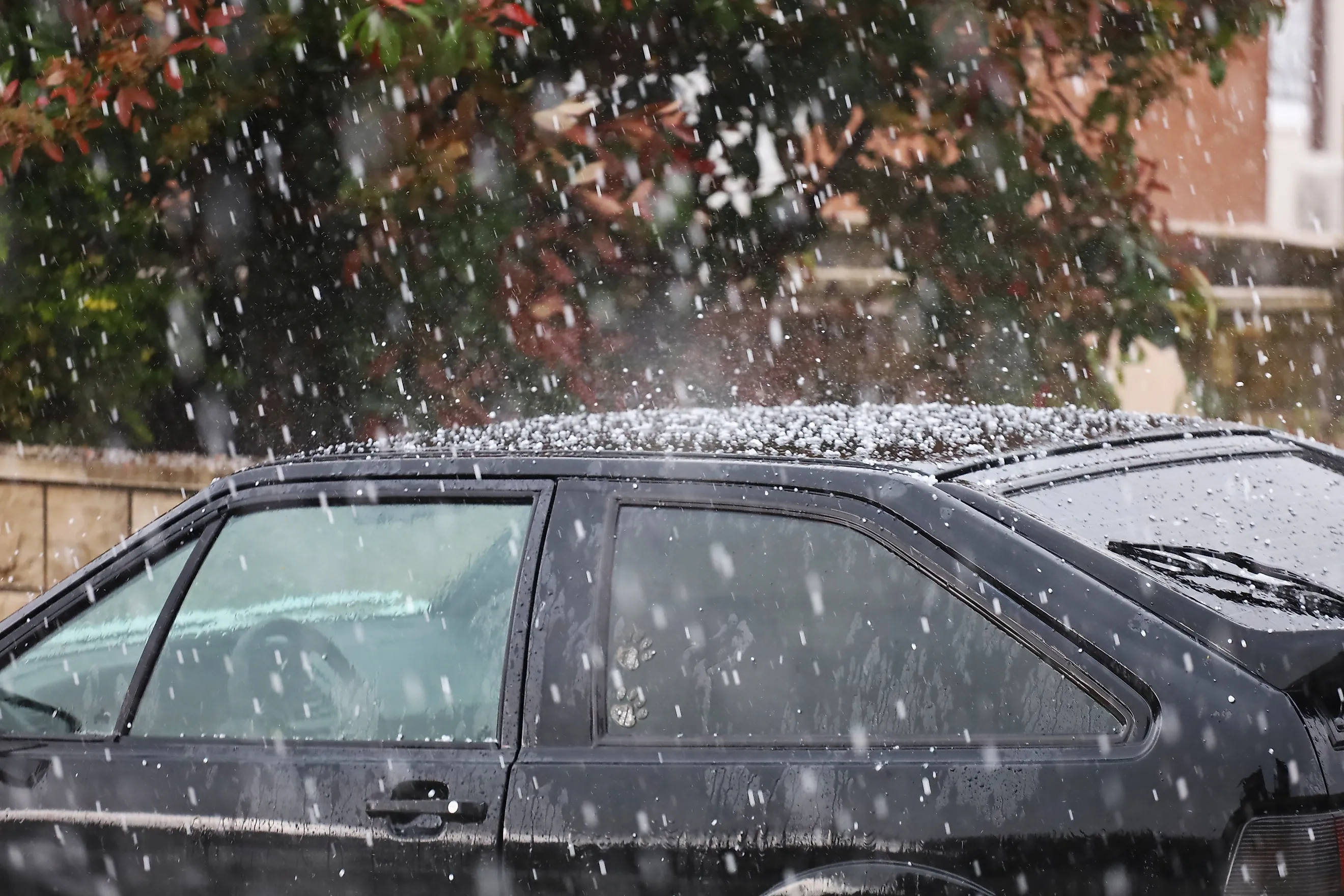
Hail and ice pellets (sleet) are often confused, but they form through fundamentally different processes. Ice pellets develop when rain falls through a shallow layer of freezing air near the surface and solidifies on the way down, typically producing small, translucent pellets a few millimeters across. Hail, by contrast, forms inside the violent updrafts of strong thunderstorms, where supercooled water droplets freeze onto growing ice cores at altitude. That process can produce stones far larger than any ice pellet, from pea-sized to, in extreme cases, larger than a softball. The distinction matters because hail is a product of convective storm energy, not surface-level temperature alone, and its size, speed, and destructive potential place it in a different category entirely.
How Hail Forms

Hail begins inside cumulonimbus clouds, the tall, vertically developed thunderstorm clouds that can extend 40,000 feet or higher into the atmosphere. Within these clouds, powerful updrafts, columns of rising air that can exceed 100 km/h (about 60 mph) in severe storms, carry water droplets well above the freezing level. At those altitudes, the droplets become supercooled, meaning they remain liquid despite being below 0°C. When a supercooled droplet collides with a small ice particle or condensation nucleus, it freezes on contact, and a hailstone embryo begins to form.
As the updraft continues to carry the growing stone upward, it passes through zones of varying humidity and temperature, collecting additional layers of ice. This layering process is called accretion, and it occurs in two forms. In dry growth, the hailstone encounters supercooled droplets that freeze almost instantly on its surface, trapping tiny air bubbles and producing an opaque, white layer. In wet growth, the stone collects water faster than it can freeze, allowing a liquid film to spread across the surface before solidifying into a clear, dense layer. If you cut a large hailstone in half, these alternating layers are often visible as concentric rings, much like the growth rings of a tree.
A hailstone may cycle through the updraft multiple times, gaining mass with each pass, until it grows heavy enough that the updraft can no longer support it. At that point, it falls to the ground. The stronger the updraft, the longer the stone stays aloft and the larger it can grow. This is why the most damaging hail tends to come from supercell thunderstorms, which produce the most powerful and sustained updrafts of any storm type.
Conditions That Favor Hail

Hail formation requires a specific combination of atmospheric ingredients. The storm needs strong updraft speeds, a deep layer of the atmosphere below freezing (so the hailstone has room to grow), and an abundant supply of supercooled water within the cloud. These conditions are most common in the continental interiors of the mid-latitudes, where warm, moist surface air collides with cooler air aloft to produce intense convective storms.
In the United States, the region most prone to significant hail stretches across the Great Plains from Texas north through Nebraska, overlapping heavily with Tornado Alley. This area sees frequent supercell thunderstorms during the spring and early summer months, when the contrast between warm Gulf of Mexico moisture and cooler upper-level air is at its peak. Other hail-prone regions around the world include the Highveld plateau of South Africa, northern India and Bangladesh (which see some of the deadliest hailstorms on record), parts of southern Australia, and central Argentina.
A lower freezing level, generally below about 11,000 feet, tends to favor hail reaching the ground before it melts. Dry air entrainment into a storm can also enhance hail production by increasing evaporative cooling, which lowers the freezing level within the storm environment. Conversely, at temperatures below roughly -30°C to -40°C, supercooled liquid water becomes increasingly scarce, which limits further hail growth. Most of the significant growth happens in the zone between 0°C and about -25°C.
Size, Speed, and Classification

By definition, hail is frozen precipitation with a diameter of 5 millimeters (about 0.2 inches) or greater. Anything smaller is typically classified as graupel or ice pellets. In practice, hailstones range from pea-sized (about a quarter inch) to, in the most extreme cases, several inches across. The largest hailstone on record in the United States measured 8 inches in diameter and weighed nearly 2 pounds. It fell in Vivian, South Dakota, on July 23, 2010.
In the United States, the National Weather Service classifies hail as "severe" when it reaches 1 inch (2.5 cm) in diameter, roughly the size of a quarter. That threshold triggers severe thunderstorm warnings. For context, a 1-inch hailstone falls at roughly 50 mph, while a 2-inch stone (about the size of a hen's egg) can exceed 70 mph. At those speeds, the kinetic energy is substantial enough to crack windshields, dent sheet metal, and strip foliage from trees.
Detection and Forecasting

Modern hail detection relies primarily on Doppler weather radar, which can identify the signatures of hail within a storm by measuring the intensity of returned radar signals. Large hailstones produce stronger radar reflectivity than rain, and dual-polarization radar (which sends both horizontal and vertical pulses) can distinguish between rain, hail, and other precipitation types based on the shape of particles in the air. Forecasters use these tools alongside atmospheric soundings, satellite imagery, and storm environment data to issue warnings, though predicting the exact size of hail a given storm will produce remains one of the more difficult challenges in operational meteorology.
In addition to radar, storm spotters on the ground play an important role in hail reporting, providing real-time ground-truth observations that help calibrate radar estimates and confirm conditions on the surface.
Hazards and Damage

Hail causes billions of dollars in damage annually, with the bulk of losses concentrated in property, agriculture, and aviation. In the United States alone, hail damage to crops, vehicles, and structures has averaged over $10 billion per year in recent estimates, making it one of the costliest natural hazards in the country.
Vehicles are among the most visibly affected. A single severe hailstorm can leave thousands of cars with dented body panels, shattered windshields, and broken mirrors. Roofing damage is another major category. Asphalt shingles lose their protective granule coating under repeated hail impacts, and in severe events, hailstones can punch through roofing material entirely. Agriculture suffers heavily as well. A hailstorm arriving during the growing season can flatten crops, strip leaves and fruit, and destroy an entire season's yield in minutes.
Aviation is particularly vulnerable. Aircraft encountering hail at cruising altitude or during approach can sustain significant damage to windshields, engine inlets, leading wing edges, and radar domes. In July 2017, a passenger jet landing at Istanbul's Atatürk Airport had its windshield shattered by hail during descent, requiring the crew to complete a near-blind landing using instruments alone.
Hail also poses a direct risk to human safety. While fatalities from hail are uncommon in countries with modern warning systems, they do occur globally. Large hailstones can cause concussions, lacerations, and in extreme cases, fatal head trauma. A 1986 hailstorm in Bangladesh's Gopalganj district killed 92 people, one of the deadliest on record, with stones reportedly weighing over 1 kilogram.
Hail in a Changing Climate

The relationship between climate change and hail is an active area of research, and the picture is more complex than a simple increase or decrease. Warmer surface temperatures increase the amount of moisture and instability available to thunderstorms, which can fuel stronger updrafts and potentially produce larger hailstones. At the same time, warmer temperatures raise the freezing level, meaning hailstones have to fall farther through above-freezing air before reaching the ground, increasing the likelihood that they melt before impact.
Some modeling studies suggest that the overall frequency of hailstorms may decrease in certain regions, but that the storms that do produce hail may produce larger, more damaging stones. In the United States, there is evidence that the geographic center of severe hail activity has been shifting eastward from the traditional Great Plains corridor. The full implications of these trends are still being studied, but they underscore the value of continued investment in hail detection, forecasting, and resilient building practices.