A Brief Description

Archaeological evidence in Belize indicates that the famed Maya culture began to emerge in this lowland area of the Yucatan Peninsula around 1000 BC.

That Maya civilization flourished here for eons; great cities were formed, massive ceremonial buildings, palaces, temples and personal dwellings were constructed, and the people farmed the land with great proficiency.

There are many theories (none proven) why the Maya society began its general decline across the entire Yucatan in the 10th century, yet remnants of this extraordinary people and a quite sizeable population of direct descendants still exist in Belize and all across the Yucatan today, despite hundreds of years of European colonization of the area.

And speaking of Europeans, Spain aggressively controlled most of the colonies on the fringes of this New World, when the first English settlers arrived in the early 1600s. For the next two centuries military conflicts (mostly naval) between the British and Spanish raged, as both countries desired this land.

The last attack by the Spanish occurred in 1796, and in the early 1800s, after most of the Spanish colonies in the New World had gained independence, the Settlement of Belize was under British control.

Regional power struggles continued in the area over the next 50 years, and then in 1862, the Settlement of Belize was officially declared a British colony, and named British Honduras.

Similar to all European colonies in the Americas, British Honduras also craved independence, but Guatemala continued to claim the entire area, and the British were reluctant to release their firm grip.

By the 1960s the British began to soften their position, and though they still controlled all of the defense and foreign affairs of the settlement, its name was changed to Belize in anticipation of the independence, which finally did come in 1981.

As the second smallest and least populated country in Central America, the relatively new (independent) nation of Belize continues to struggle with high unemployment, increasing drug traffic and urban crime.

On the hopeful side, the country's natural beauty has sparked a significant increase in cruise ship passengers and eco-tourism, and those industries are now major factions in its improving economy.
More information about Belize

One Man Island, Belize
Travel the World through Poster Art!
Facts and Figures

Name Belize

(long form) none

Population 287,730

Population & Density (all countries) here

Capital City Belmopan (52,000)

Currency Belizean Dollar (BZD)

Currency Converter
here

Languages English (official), Spanish, Mayan, Garifuna, Creole

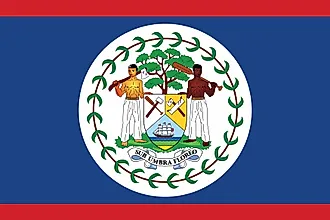
Flag here

National Day September 21

Religions Catholic (50%), Protestant (27%), others

Geographic Coordinates

Latitude/Longitude (Capital City)
16º 13' N, 88º 48' W

Relative Location
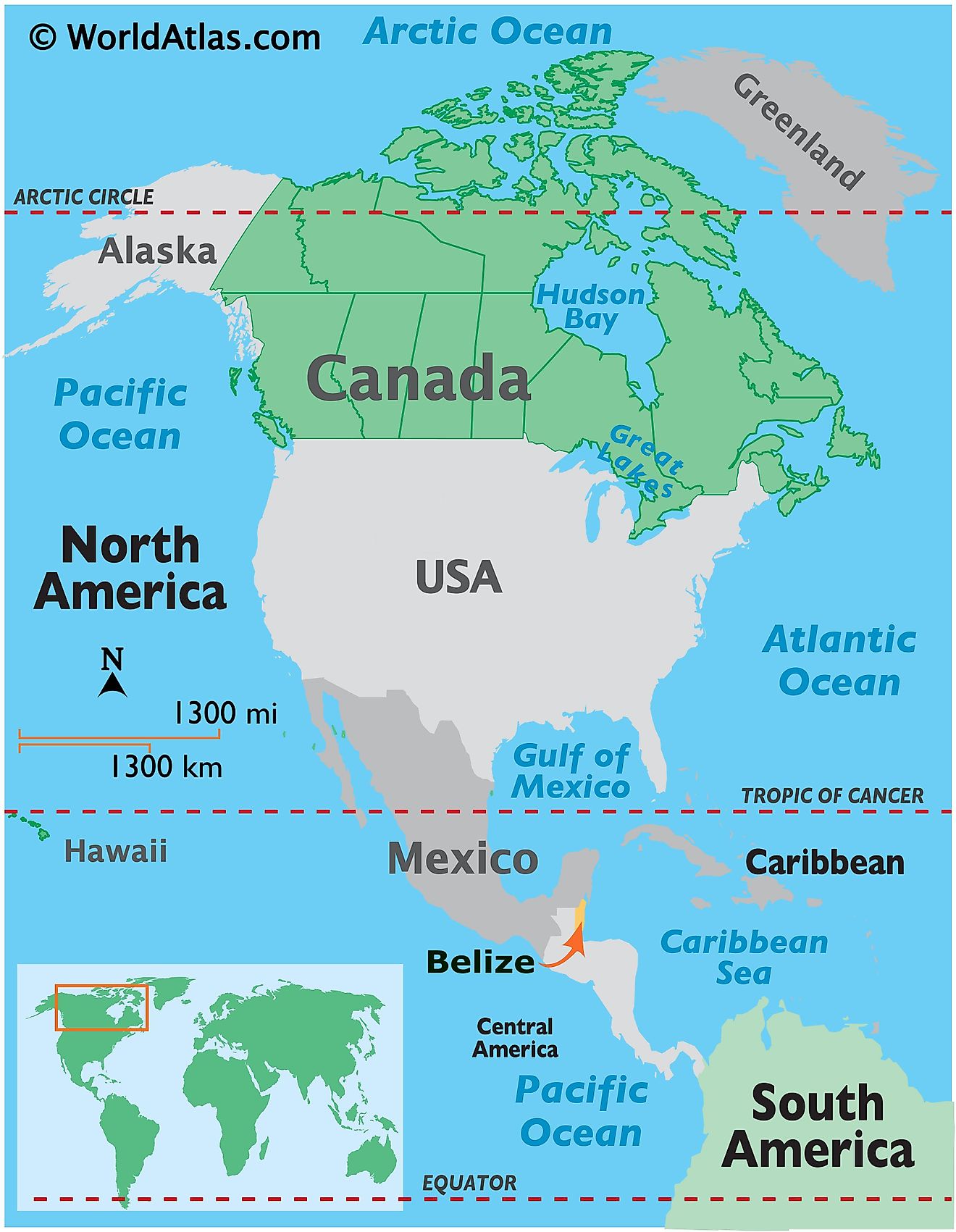
Belize is positioned in both the northern and western hemispheres. Located in North America on the northern edge of the Central America isthmus - a somewhat narrow strip of land that connects North and South America - the country is bordered by Guatemala, Mexico, the Gulf of Honduras and the Caribbean Sea.

Land Statistics

Coastline 240 miles (386 km)

Land Areas

(land) 8,805 sq miles (22,806 sq km)

(water) 62 sq miles (160 sq km)

(TOTAL) 8,867 sq miles (22,966 sq km)

Land Area (all countries) here

Landforms
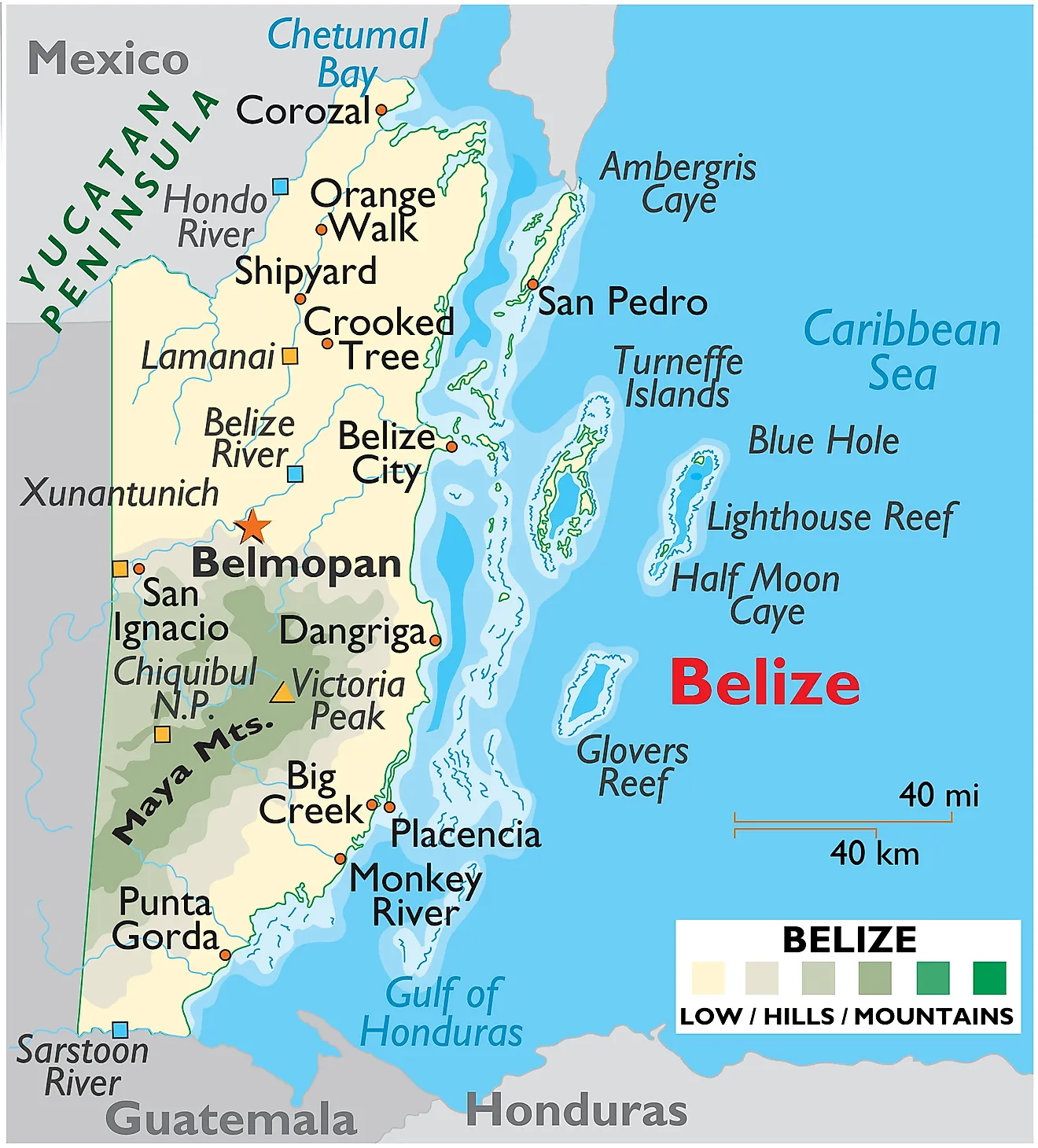
Belize is divided into four main geographic regions, including the relatively low Maya Mountains of the south that dominate all but the narrow coastal plain; the northern lowlands and its many rivers and streams; the flat and swampy coastal plain, and the almost countless cayes, islands and lagoons that fringe its Caribbean coastline.

More than 50% of Belize is covered by tropical rain forest that's dissected by a network of rivers, mostly small in length. The largest and most significant river is the navigable Belize that stretches from the Guatemala border all the way to the Caribbean Sea.

Second only in size to the Great Barrier Reef off the northeast coastline of Australia, a 175 mile long barrier reef fronts the Belize coastline, intermixed with literally hundreds of islands and cayes.

58 miles direct east of Belize City sits the Blue Hole; more than 1,000 feet across and some 400 feet deep, it's the opening to a former Ice Age cave, and is today one of the world's most popular dive sites.

Highest Pt. Victoria Peak - 3,805 ft. (1,160 m)

Lowest Pt. Caribbean Sea - 0 ft. (0 m)

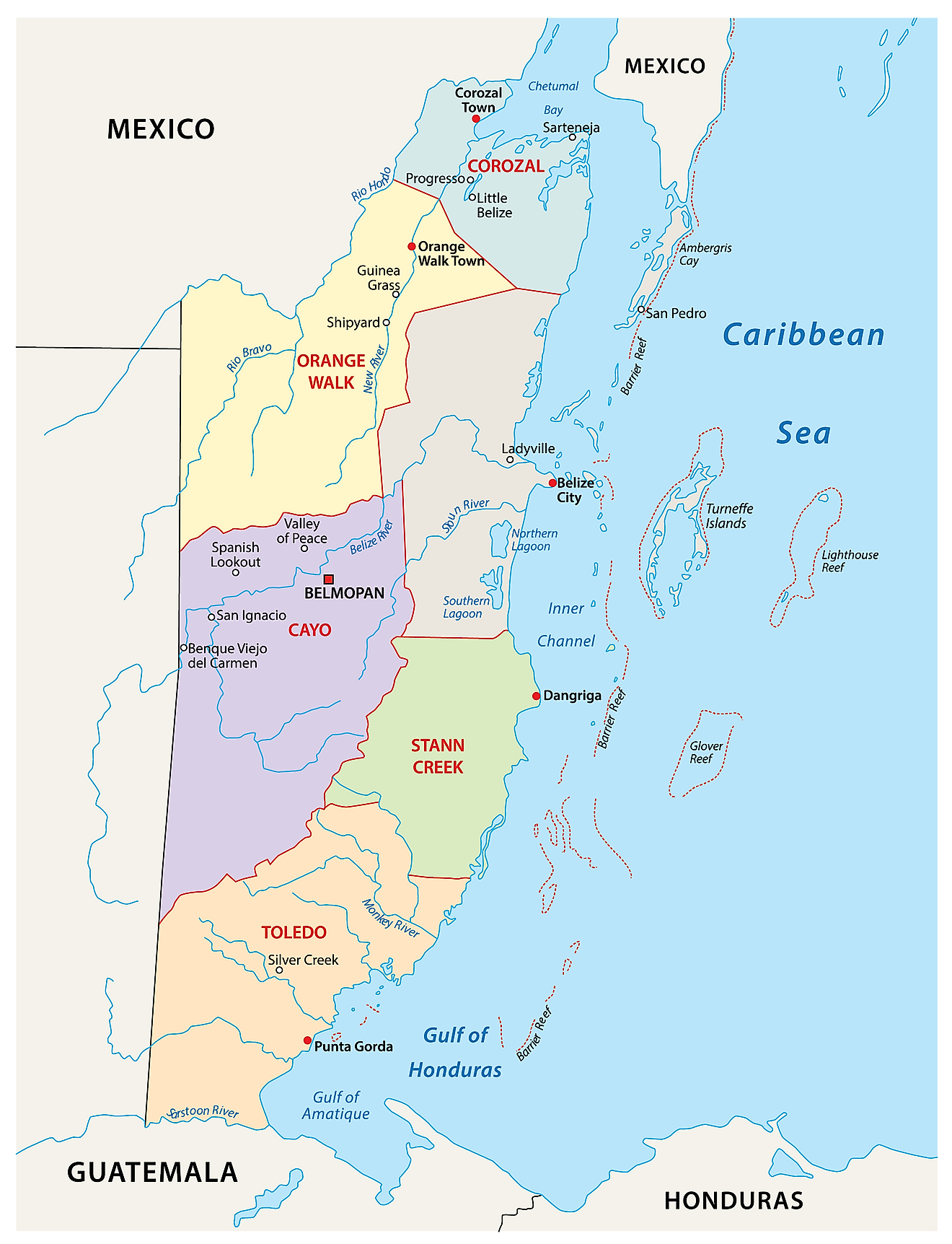
Land Divisions 6 districts; including Belize, Cayo, Corozal, Orange Walk, Stann Creek and Toledo.


Contact Us | Privacy Statement

Copyrighted by Graphic Maps
All rights reserved!

All maps, graphics, flags and original descriptions created by Graphic Maps, a d/b/a of the Woolwine-Moen Group, unless otherwise noted and/or directly linked to the source, and use of same for any application whatsoever (with the exception of outline maps) requires written permission.

We make no copyright claim on any statistical data on this page, nor on any non-original graphics, and/or pictures not produced by us. Certain statistical data is gathered from the CIA World Factbook, as well as numerous public domain reference materials.

Every effort is made to be as accurate as possible when disseminating information on any worldwide destination. We are not responsible for unintentional data entry errors or omissions. If you would like to submit an addition, change or correction, or suggest a new link, please forward it to our map department and we will give it our immediate attention.

|
|
Maps

Belize (large color) Map here

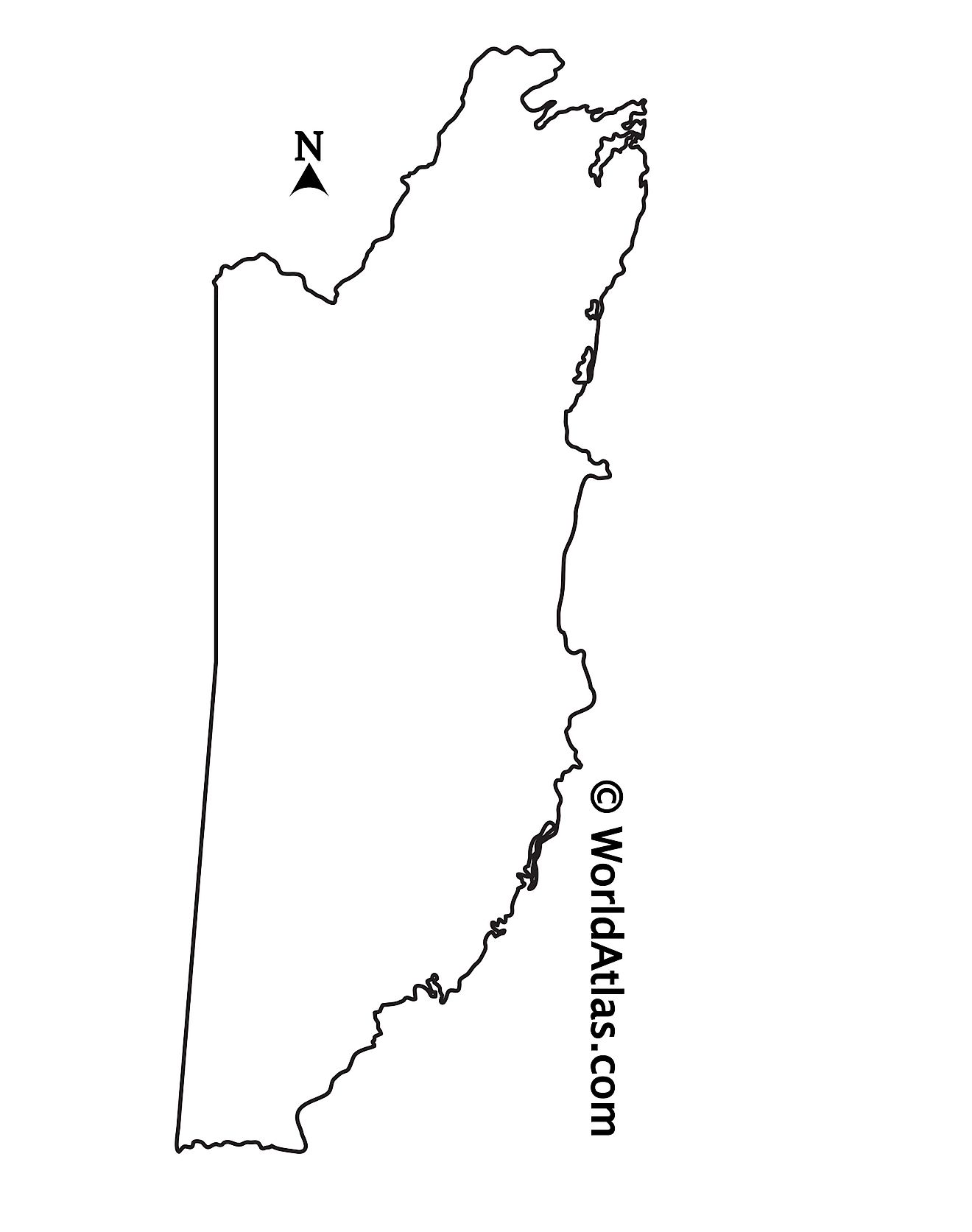
Belize Outline Map here

Belize CIA version here

Belize Maps at UT here

- - - - - - - - - - - - - - - - - - - - - - - - - - - - -

Central America (Capital Cities)
here!

Central America (Maps at UT)
here!

Central America (Outline)
here!

Central America (Volcanoes)
here!

Panama Canal here!

- - - - - - - - - - - - - - - - - - - - - - - - - - - - -

North America (Capital Cities)
here!

North America (Lakes)
here!

North America (Landforms)
here!

North America (Outline)
here!

North America (Rivers)
here!

North America (Country Test) here!

- - - - - - - - - - - - - - - - - - - -

World Outline Maps (printable) here

World Time Zone Map here


Recommended Links

Belize (Complete) info on the (GDP)
economy, imports and exports, natural resources, government, population, military, transportation, and more here

Belize Embassy (Washington, DC) web site

Belize Photos at TrekEarth.com here

Belize Tourism here

Belize Travel here

Ambergris Caye here

Blue Hole here

Half Moon Caye here

Xunantunich a not to be missed site here

Sunrise in Belize
Travel the World through Poster Art!

Time and Weather


Climate
Belize has consistently warm and humid tropical weather with pronounced wet and dry seasons.

The rainy season typically runs (June - December) and the dry season from (January - May). Rainfall is heaviest in the coastal areas of the far south.

Average high temperatures in the coastal regions reach into the mid 70s throughout most of the year, and a bit higher inland. Much higher temperatures in the offshore islands are commonplace, with cooler conditions the norm in the mountains of the south.

Belize is occasionally the victim of the Atlantic Ocean hurricane season, and the most recent one to hit the country (Hurricane Greta) caused severe damage along the southern coastal areas in 1978.

In fact, after Hurricane Hattie devastated the central coastal area of the country in the early 1960s, the subsequent destruction of Belize City was the catalyst for the relocation of the capital to the inland city of Belmopan.


Traveler Info

Attractions:
For any fan of outdoor activities, Belize has a broad menu of choices, including birding and eco-tours, boating, cave diving, world-class fishing and scuba opportunities - to name but a few.

Significant attractions include the remains of the Mayan culture, especially the buildings and ruins at Lamanai, Orange Walk and Xunantunich; Belize City; Ambergris Caye; Half Moon Caye; the Blue Hole; stunning national parks, and a wide variety of colorful native-population festivals and holidays.

Country Dialing Code 501

Electricity Belize uses 110/220 volts AC (60 HZ)

Electrical adapters, products and tips here

Travel Warnings
here

PASSPORTS - TRAVEL VISAS


NOTE: Before making your travel plans to any worldwide destination, we strongly recommend you authenticate important details regarding all passport and visa requirements. The experienced people at Travel Visa Pro can answer all of your questions!

|
|
Central America
Countries

Belize

Costa Rica

El Salvador

Guatemala

Honduras

Nicaragua

Panama

NORTH AMERICA
COUNTRIES


Antigua
and Tobago

Bahamas

Barbados

Belize

Canada

Costa Rica

Cuba

Dominica

Dominican Rep.

El Salvador

Grenada

Guatemala

Haiti

Honduras

Jamaica

Mexico

Nicaragua

Panama

St. Kitts & Nevis

St. Lucia

St. Vincent and
the Grenadines

Trindad
and Tobago

United States

A foggy rain forest scene in Belize
Travel the World through Poster Art!

Central America
Countries


Belize

Costa Rica

El Salvador

Guatemala

Honduras

Nicaragua

Panama

NORTH AMERICA
COUNTRIES


Antigua
and Tobago

Bahamas

Barbados

Belize

Canada

Costa Rica

Cuba

Dominica

Dominican Rep.

El Salvador

Grenada

Guatemala

Haiti

Honduras

Jamaica

Mexico

Nicaragua

Panama

St. Kitts & Nevis

St. Lucia

St. Vincent and
the Grenadines

Trindad
and Tobago

United States
|