Maps of Argentina
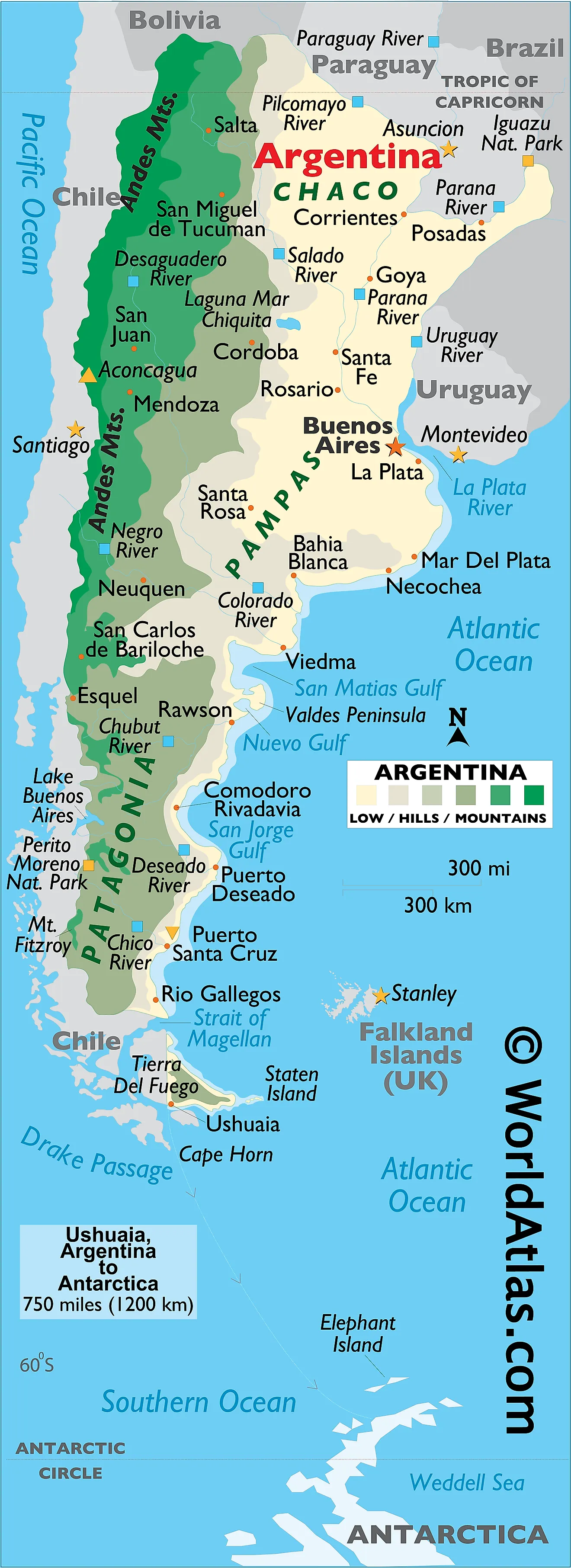
Argentina, located in southern South America, covers a vast expanse of 1,073,500 square miles (2,780,400 square kilometers), making it the second largest country in South America, the fourth largest in the Americas, and the eighth largest in the world. Its geography includes a wide range of environments and landscapes, with a rich variety of physical features, bodies of water, and unique natural phenomena.
The country shares borders with five countries: Chile to the west, Bolivia and Paraguay to the north, and Brazil and Uruguay to the northeast. To the east, the Atlantic Ocean forms a natural border, and the southernmost point of mainland Argentina, Cape San Pío, is located in Tierra del Fuego.
Argentina's landmass can be divided into four general topographical regions: the Andean region, the Pampas, the Patagonian plateau, and the Gran Chaco.
The Andean region, in the west, runs parallel to the border with Chile and includes some of the highest peaks in the world. Aconcagua, the highest peak in the western hemisphere, stands at 22,837 feet (6,961 meters). This region is characterized by high plateaus, deep valleys, salt pans, and even parts of the Atacama Desert, one of the driest places on earth.
East of the Andes lies the Pampas, one of the most significant agricultural areas in the world. It's a flat, fertile plain known for its cattle ranches, covering central Argentina, stretching almost 700 miles (1,126 kilometers) from the Atlantic coast to the foothills of the Andes. The region is watered by several major rivers, including the Parana, Uruguay, and Paraguay, which provide essential irrigation for agriculture.
Further south, the Patagonian plateau forms a vast, windswept region characterized by its steppe-like landscapes. This region covers the southern half of Argentina and extends to the tip of the continent. To the east, it descends gradually to meet the Atlantic Ocean, forming a rugged coastline marked by gulfs and inlets.
The Gran Chaco region, in the northeast, is a hot, flat plain covered with thorny scrub and forests. It is intersected by several major rivers, including the Pilcomayo, Bermejo, and Salado. The region's geography changes dramatically in the far north, where it intersects with the subtropical forests of the Argentine Mesopotamia.
Argentina is home to many significant bodies of water, aside from its major rivers. One notable example is Lake Mar Chiquita, the largest salt lake in the country, situated in the province of Cordoba. However, Argentina's largest lake is Lake Argentino, located in the Patagonia region. In the southernmost region, the Beagle Channel, a strait in the Tierra del Fuego archipelago, provides a crucial navigational route between the Atlantic and Pacific Oceans.
Argentina also boasts several island territories. The most significant of these is the Tierra del Fuego, an archipelago off the southernmost tip of the South American mainland. Shared with Chile, it encompasses a variety of terrains, including mountains, glaciers, and forests. Argentina also maintains a territorial claim over the Falkland Islands (Islas Malvinas) and South Georgia and the South Sandwich Islands. However, these territories are administered by the United Kingdom which has led to an ongoing dispute.
Provinces of Argentina Map
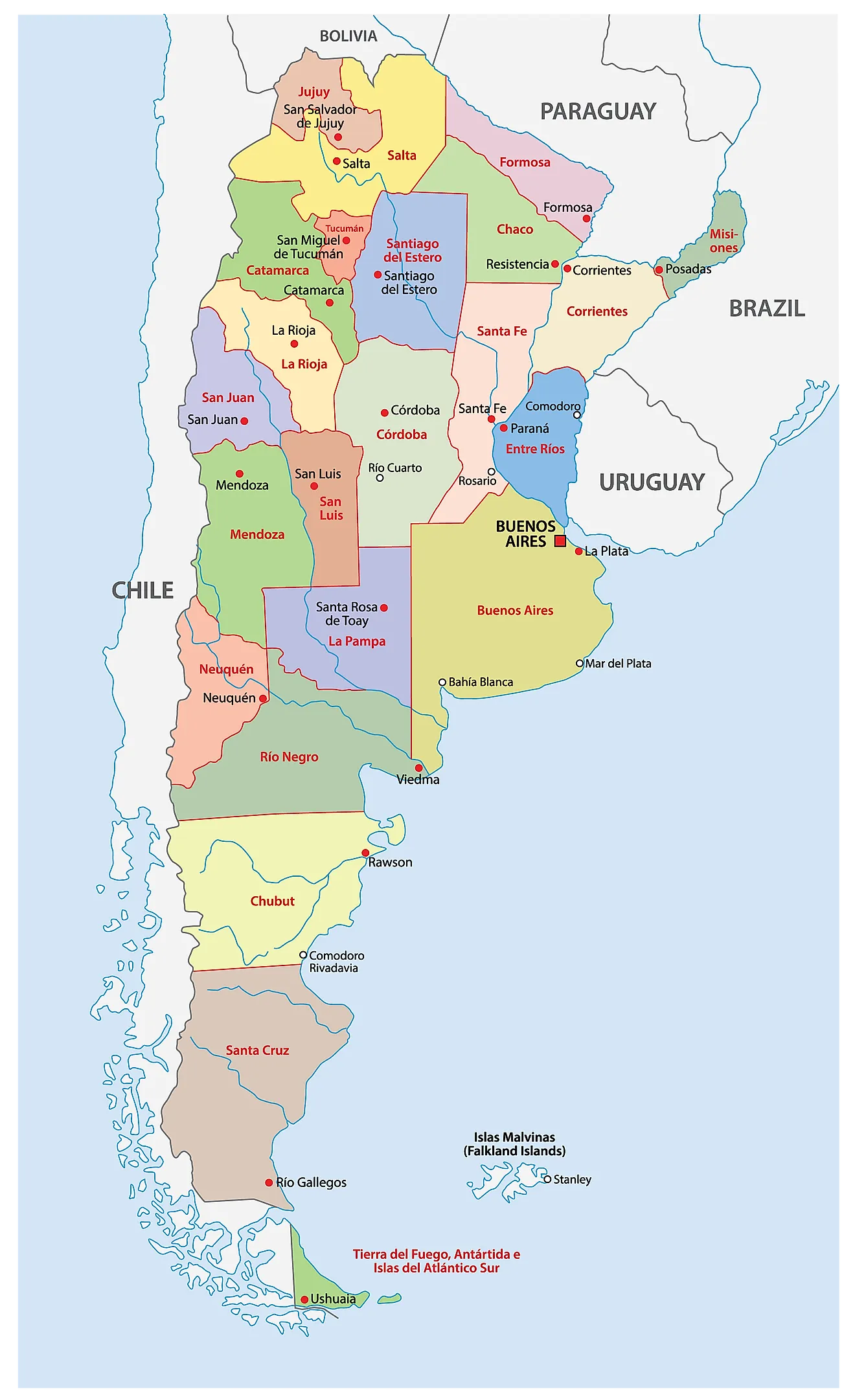
Argentina (officially, the Argentine Republic) is administratively divided into 23 provinces (provincias, sing. provincia) and 1 autonomous city. In alphabetical order, the provinces are: Buenos Aires, Catamarca, Chaco, Chubut, Cordoba, Corrientes, Entre Rios, Formosa, Jujuy, La Pampa, La Rioja, Mendoza, Misiones, Neuquen, Rio Negro, Salta, San Juan, San Luis, Santa Cruz, Santa Fe, Santiago del Estero, Tierra del Fuego - Antartida e Islas del Atlantico Sur (Tierra del Fuego - Antarctica and the South Atlantic Islands) and Tucuman. Ciudad Autonoma de Buenos Aires is an autonomous city of Argentina. These provinces are further subdivided into 378 departments and municipalities. The Buenos Aires province is subdivided into 135 partidos; while the autonomous city of Buenos Aires is subdivided into 15 communes.
Covering an area of 1,073,500 square miles (2,780,400 square kilometers), Argentina is the 8th largest country in the world and the 2nd largest country in South America. It is also the 4th largest country in America and the largest Spanish-speaking country. Located along the western shore of Rio de La Plata estuary, on the southeastern shore of South America is, Buenos Aires - the national capital, the largest and the most populous city of Argentina. It is also the 4th largest city in the Western hemisphere and one of the most important ports in Latin America. Buenos Aires is the administrative, cultural, technological, industrial and commercial center of Argentina.
Where is Argentina?
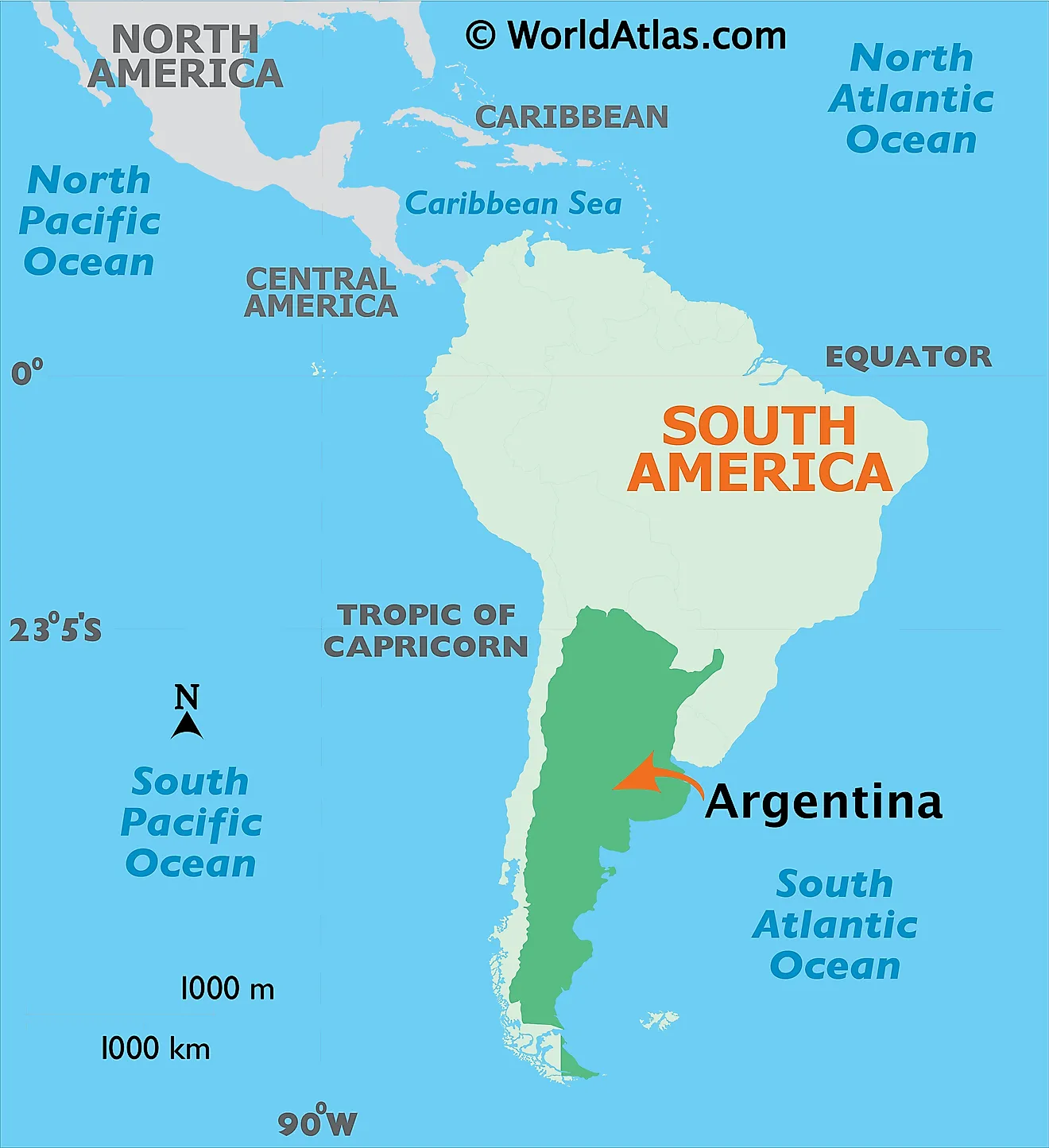
Argentina is a large country occupying the southern part of South America. It is positioned in the Western and Southern hemispheres of the Earth. Argentina shares it's borders with 5 countries: with Chile and the Andes Mountain Range to the west; with Bolivia to the northwest; with Paraguay to the north; with Brazil to the northeast and with Uruguay to the east. It is also bounded by the South Atlantic Ocean to the east and the Drake Passage to the south.
Argentina Bordering Countries: Bolivia, Paraguay, Chile, Uruguay, Brazil.
Regional Maps: Map of South America
Outline Map of Argentina
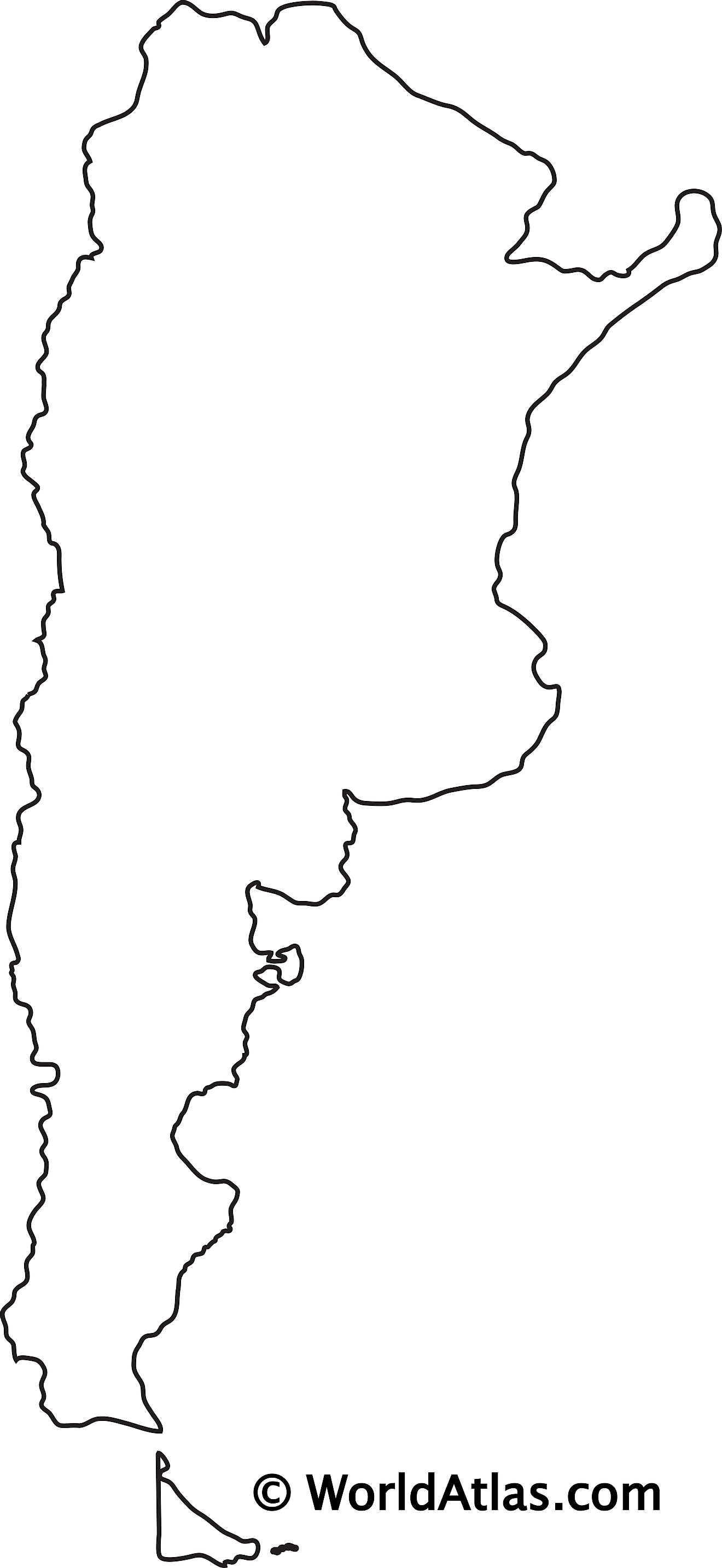
The above blank map represents Argentina, a country located in southern South America. The above map can be downloaded, printed and used for geography education purposes like map-pointing and coloring activities.
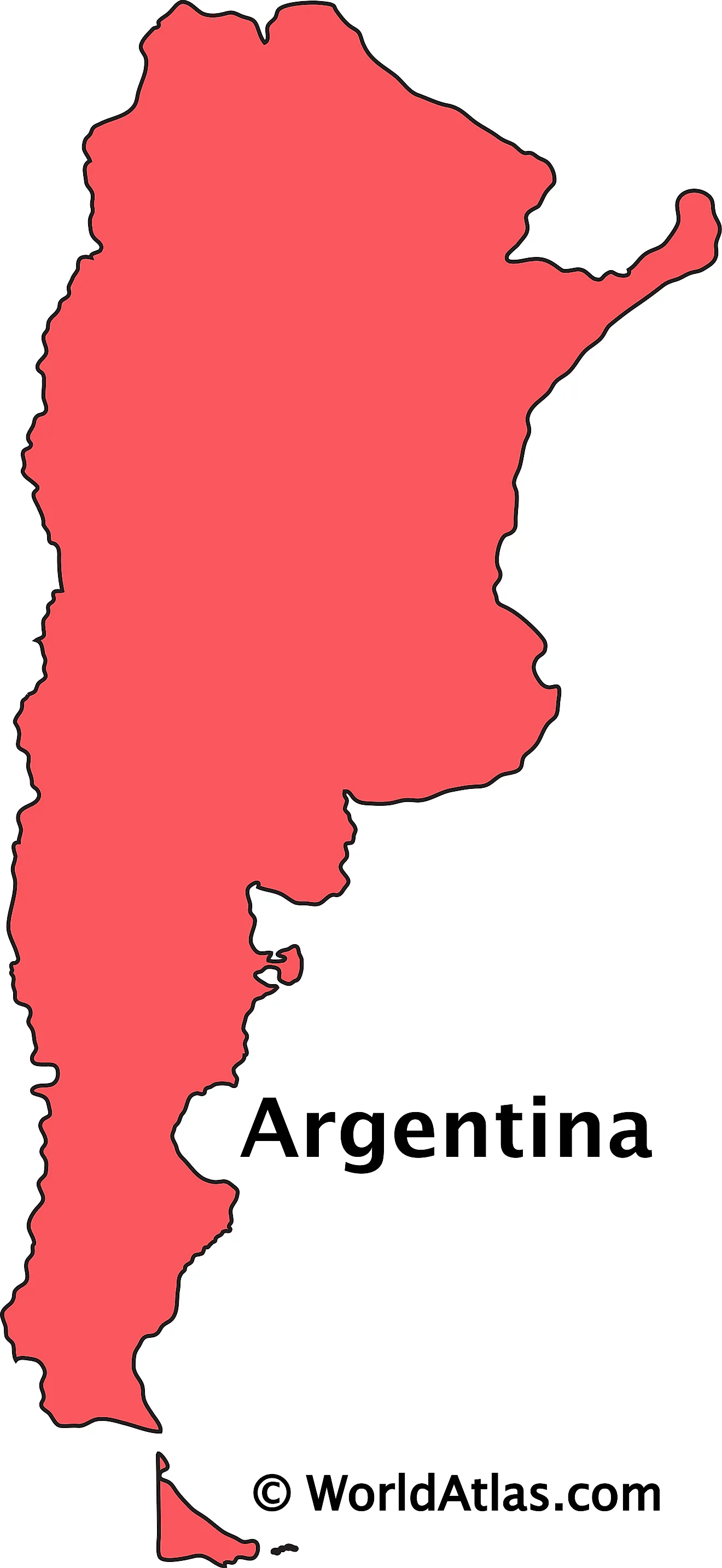
The above outline map represents Argentina, a country located in southern South America. The country is in the shape of an inverted triangle with its base at the top.
Key Facts
| Legal Name | Argentine Republic |
|---|---|
| Flag |
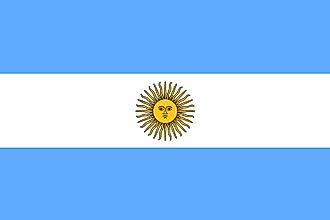
|
| Capital City | Buenos Aires |
| 34 36 S, 58 22 W | |
| Total Area | 2,780,400.00 km2 |
| Land Area | 2,736,690.00 km2 |
| Water Area | 43,710.00 km2 |
| Population | 44,938,712 |
| Major Cities |
|
| Currency | Argentine pesos (ARS) |
| GDP | $449.66 Billion |
| GDP Per Capita | $10,006.15 |
This page was last updated on June 27, 2023