Maps of Oregon
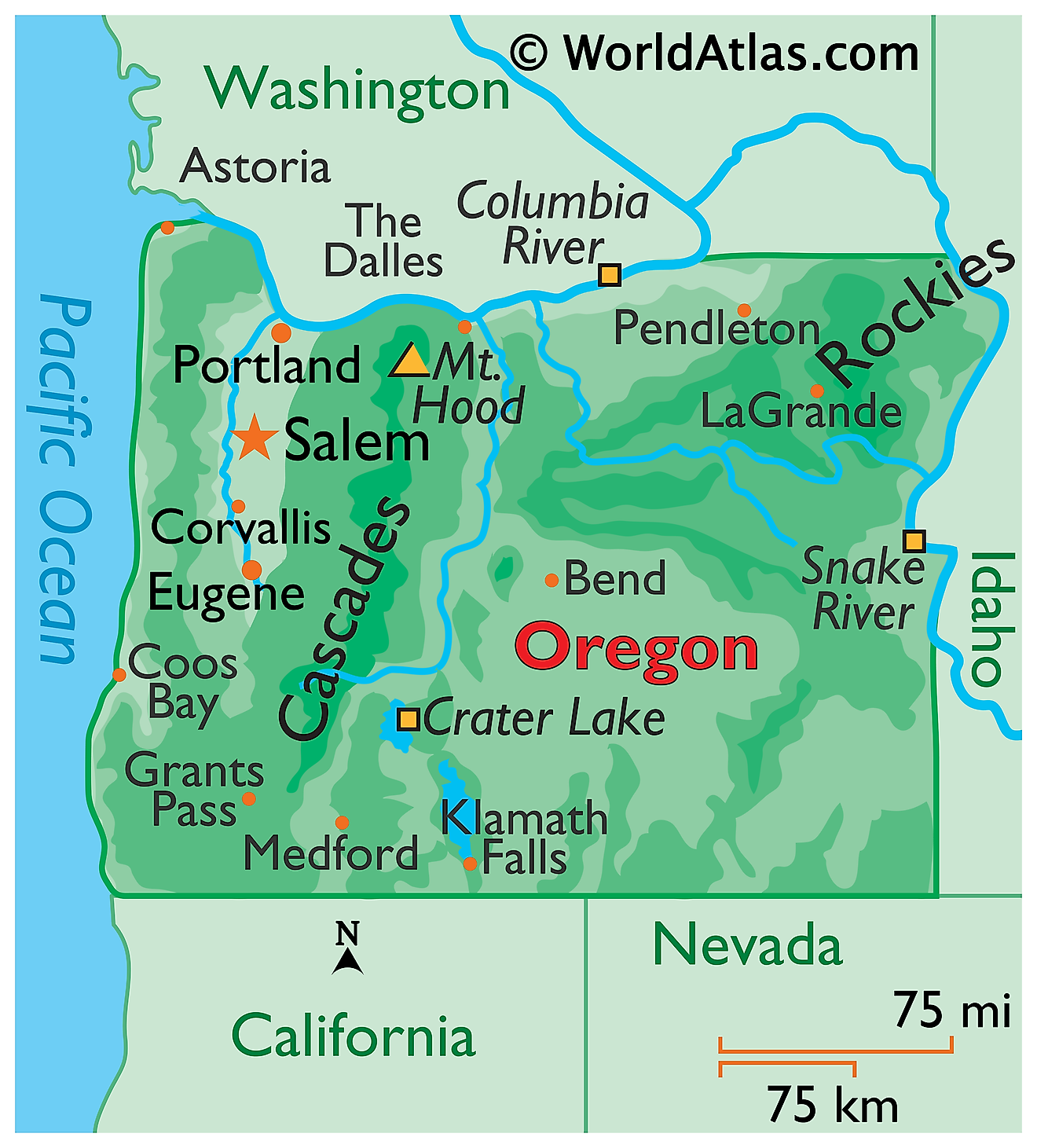
Oregon is a state located in the Pacific Northwest region of the United States. Washington sits to the north, Idaho to the east, Nevada and California to the south, and the Pacific Ocean to the west. In total, the state stretches over 98,381 square miles
Oregon's geography is diverse and includes various natural features such as mountains, valleys, forests, rivers, lakes, and coastlines. The Cascade Range runs through the state from north to south and includes several volcanic peaks such as Mount Hood, Mount Jefferson, and Crater Lake. These mountains are part of the Pacific Ring of Fire and have played an essential role in shaping Oregon's landscape. Mount Hood – the state’s highest point, rises to an elevation of 11,239ft.
Situated directly to the east of these mountains is the Willamette Lowlands – that stretch south, about 175 miles from the Portland area. This fertile strip of land is dissected by the Willamette River which rises in the Cascades and then flows north draining into the Columbia River.
The Columbia Plateau extends south from Washington and covers much of eastern Oregon. The plateau has been formed by ancient lava flows and is a landscape of deep, wide valleys and rugged mountains, which also includes the Blue and Wallowa mountains in the northeastern part of the state.
The western part of Oregon is lined by its coastline, stretching over 360 miles along the Pacific Ocean. The coastline features rugged cliffs, sandy beaches, bays, and estuaries supporting diverse marine life.
Located in the southeastern part of Oregon is the Harney Basin – which is a part of the larger Great Basin region of the western United States. The Basin encompasses an area of 5,240 sq. mi and is an arid and flat stretch of land that has no natural outlet to the sea. The major features of the basin include the freshwater Malheur Lake, the saline Harney Lake, and the Steens Mountains. The state’s lowest point is situated along the Pacific Ocean coastline (0ft).
The most significant rivers of the state are the Columbia and Snake rivers. The Columbia River rises in the Canadian province of British Columbia and then flows south through the state of Washington into Oregon, forming most of the natural northern border between the two states. The Snake River rises in the Grand Tetons of Wyoming and flows to the Columbia River in Washington State. Other major rivers of the state include the Deschutes, John Day, Owyhee, Rogue, and Willamette rivers. The waters of the Snake River dissect the Hells Canyon - the deepest gorge in America, located on the Idaho-Oregon border, at a maximum depth of 7,993ft.
Oregon's climate varies depending on location, but it typically is mild, with cool winters and warm summers. The western part of Oregon receives significant rainfall, while eastern Oregon is drier with a more desert-like climate.
The state's economy relies heavily on its natural resources, which include timber, fishing, agriculture, and tourism. Its forests cover nearly half of the state's land area and provide jobs in logging as well as recreation opportunities for visitors.
Counties Map
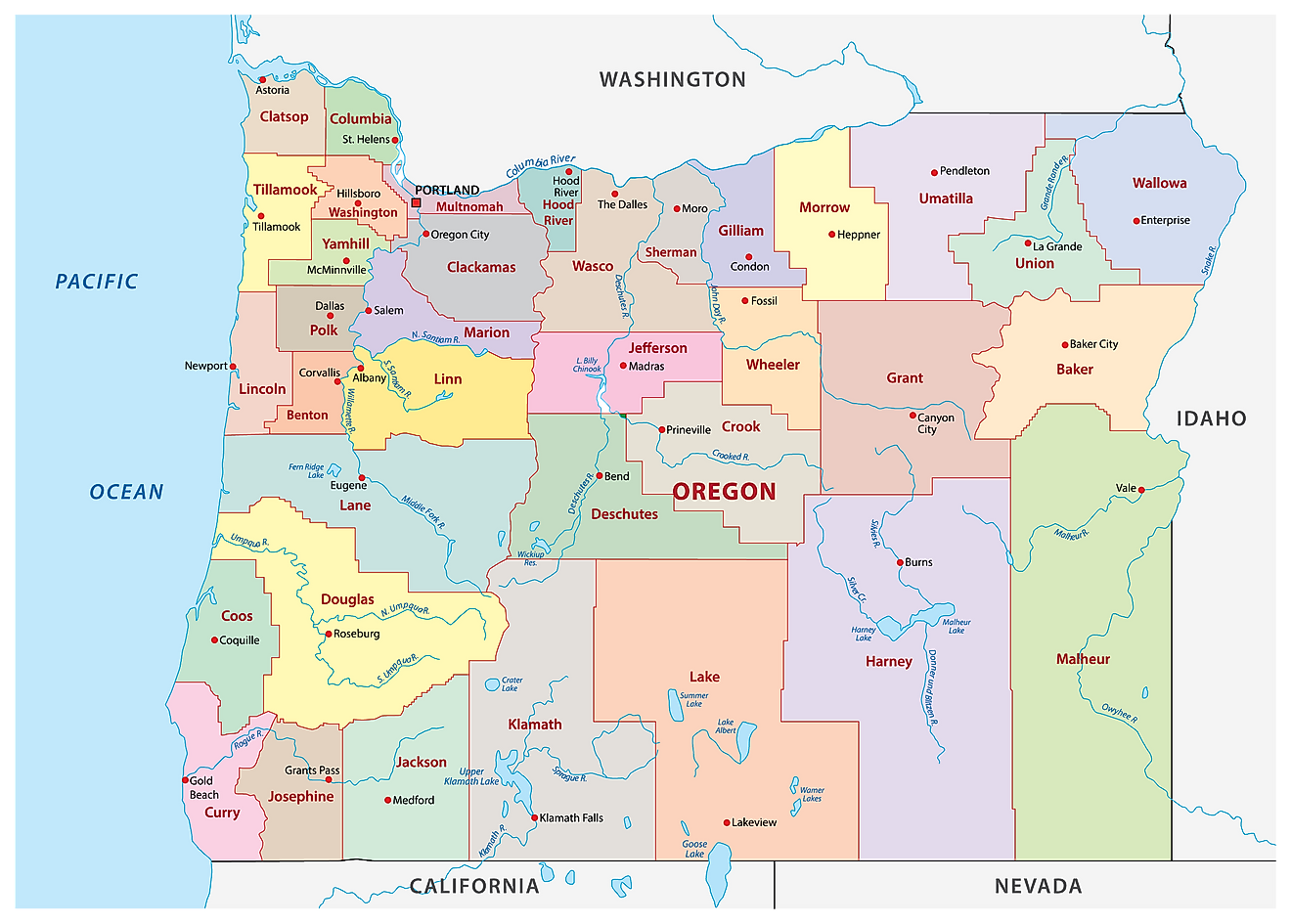
The State of Oregon is divided into 36 counties. In alphabetical order, these counties are: Baker, Benton, Clackamas, Clatsop, Columbia, Coos, Crook, Curry, Deschutes, Douglas, Gilliam, Grant, Harney, Hood River, Jackson, Jefferson, Josephine, Klamath, Lake, Lane, Lincoln, Linn, Malheur, Marion, Morrow, Multnomah, Polk, Sherman, Tillamook, Umatilla, Union, Wallowa, Wasco, Washington, Wheeler, and Yamhill.
With an area of 254,806sq.km, Oregon is the 9th largest and the 27th most populous state in the USA. Located in the northwestern part of the state, along the Williamette River is Salem – the capital and the 2nd largest city of Oregon. Agricultural food processing, natural resources mining, business services, and manufacturing industries are the main economic sectors in Salem. The city of Salem has been nicknamed the “Cherry City” due to its robust cherry industry since 1847. Situated in the northwestern part of the state, at the confluence of Columbia and Williamette Rivers is Portland – the largest and the most populous city of Oregon. High-tech industries, agricultural food processing, electronics manufacturing, public health-care services are some of the main drivers of Portland’s economy. It also serves as the country’s major port, handling the trade and distribution of wheat and automobile equipment.
Where is Oregon?
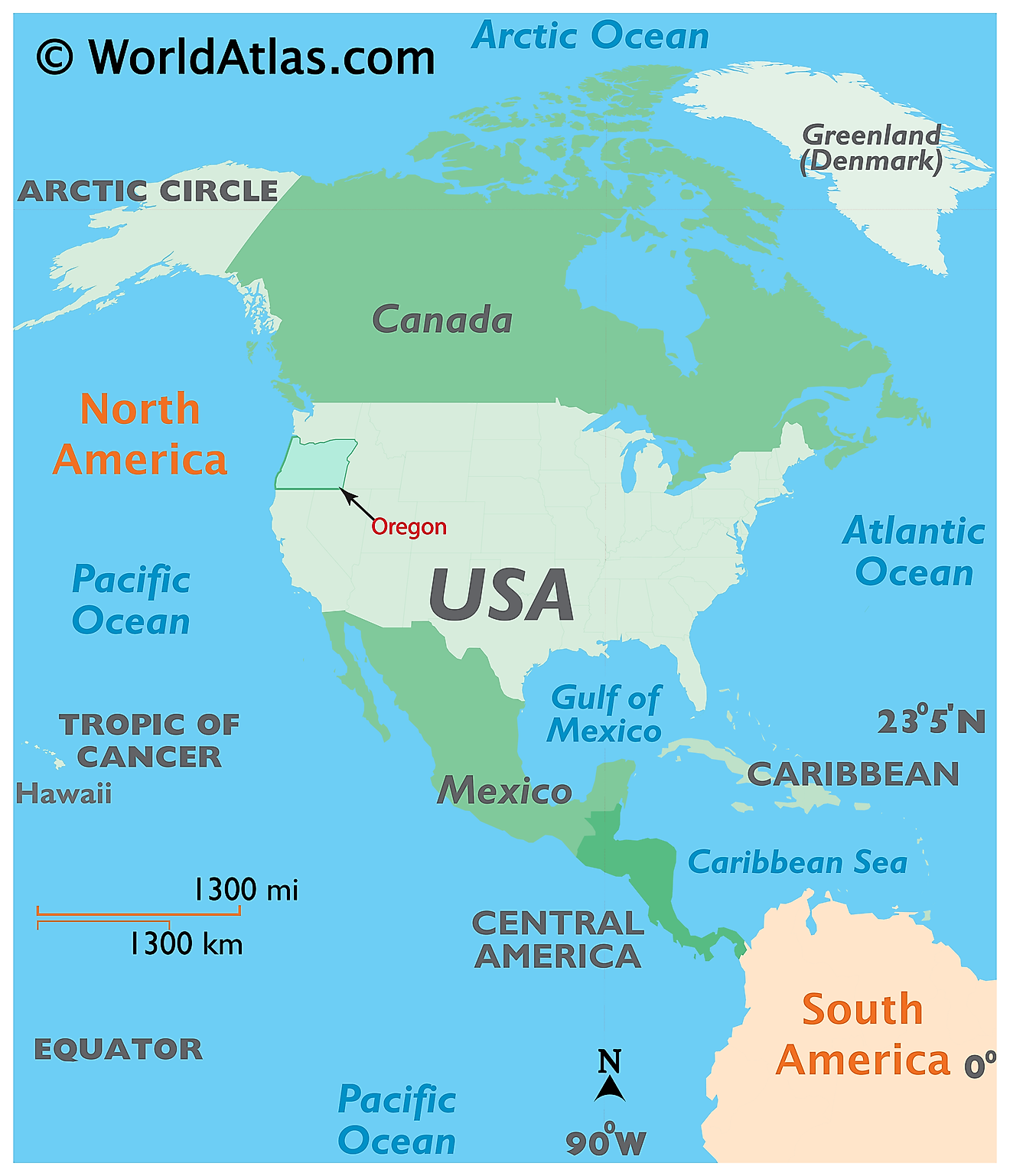
The State of Oregon is located in the Pacific Northwest region of the United States. Oregon is bordered by the state of Washington in the north; by Idaho in the east; by Nevada in the southeast; by California in the south; and by the Pacific Ocean in the west.
Regional Maps: Map of North America
Outline Map of Oregon
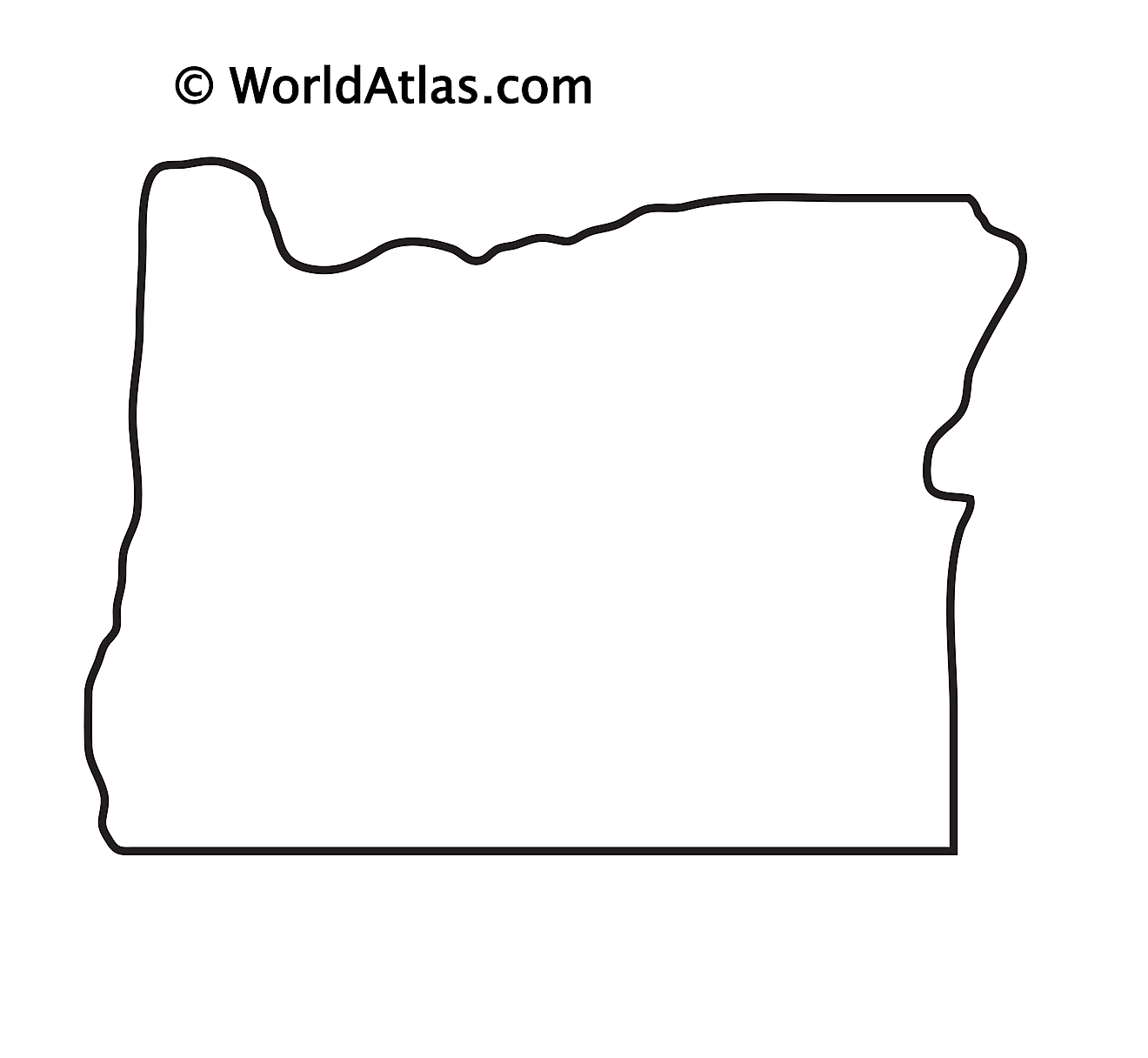
The above blank map represents the State of Oregon, located in the Pacific Northwest region of the United States. The above map can be downloaded, printed and used for geography education purposes like map-pointing and coloring activities.
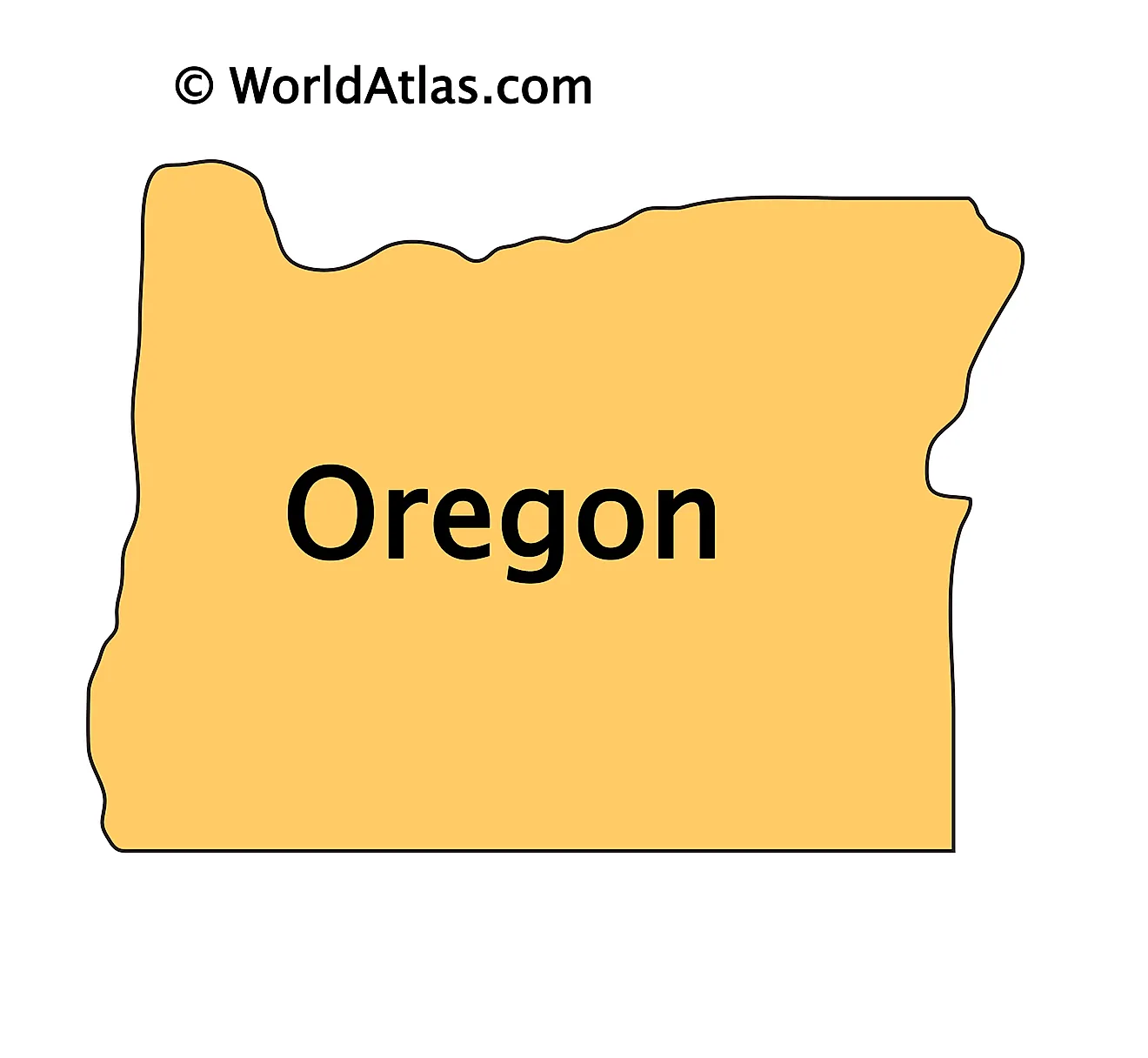
The above outline map represents the State of Oregon, located in the Pacific Northwest region of the United States. Oregon has been nicknamed as "The Beaver State".
Key Facts
| Legal Name | State of Oregon |
|---|---|
| ISO 3166 Code | US-OR |
| Capital City | Salem |
| Largest City |
Portland (2,220,044) |
This page was last updated on March 2, 2023