Maps of Eswatini
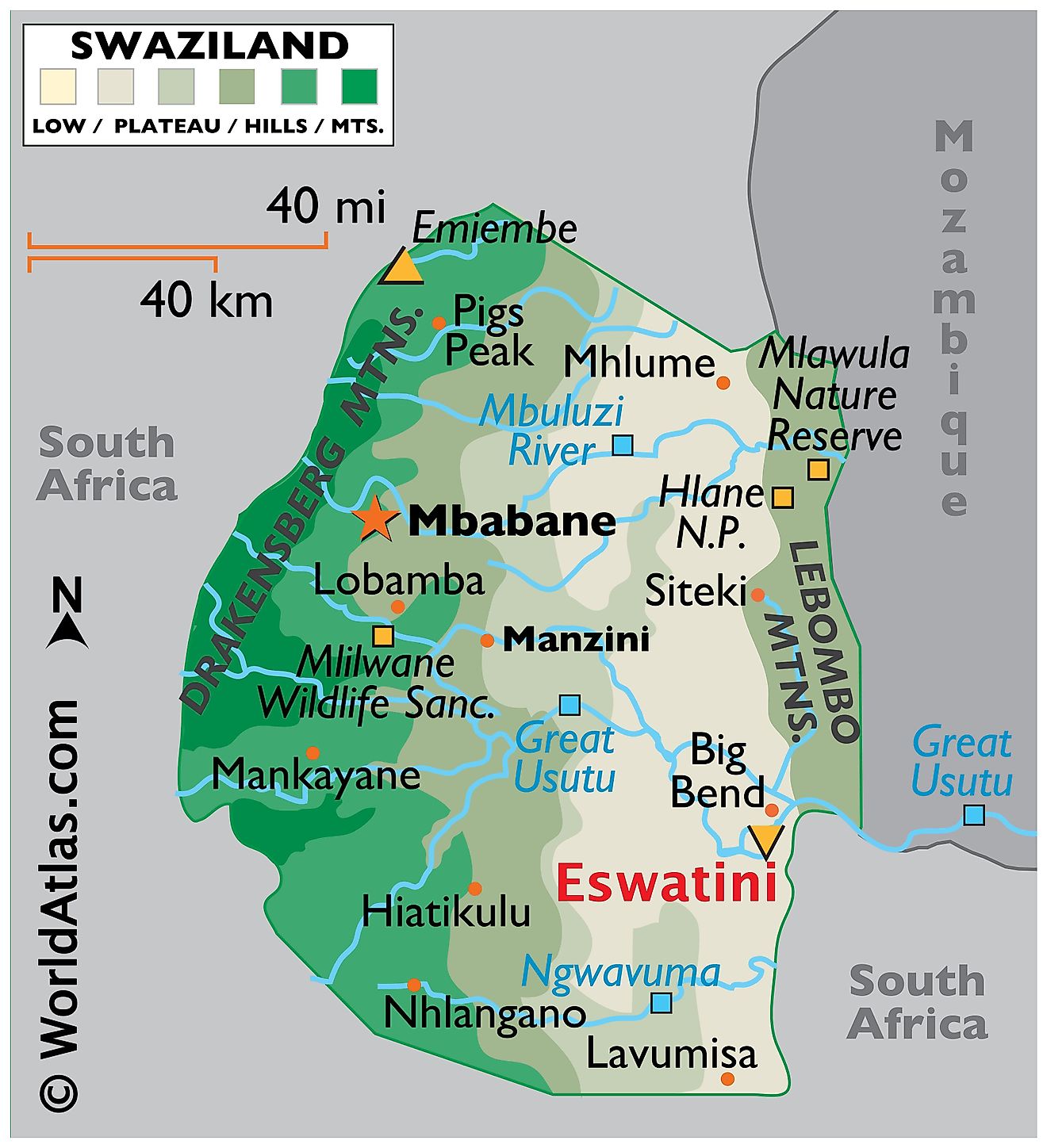
One of the smallest countries in Africa, Eswatini (previously known in English as Swaziland) occupies an area of only 17,364 sq. km. Despite its small size, Eswatini features a variety of landscapes ranging from towering mountains, deep river valleys, grasslands, and savannahs. The nation is quite hilly and mountainous and has an average altitude of around 305 m. it borders the two other nations of South Africa and Mozambique. Eswatini is completely landlocked and has no access to oceans.
The Lubombo Mountain ridge runs along the country's border with Mozambique in the northeast. The map shows that along the western border of the country with South Africa, it is rough and rugged being located on the edge of an escarpment called the Drakensberg which is the eastern part of the Great Escarpment. The average altitude here is 1,200 m. Several rivers also cut through this region forming deep gorges. The capital city of Eswatini, Mbabane is located in this Highveld region. The three major rivers, Mbuluzi, Usutu, and Ngwavuma, begin in the mountains and flow downstream through deep canyons into this region.
The Middleveld, an area of the nation located to the east of the Drakensberg has an average elevation of 700 m above sea level. It is the country's most densely populated region. As you can see from the map, Manzini, the commercial and industrial hub of the country, is located in this region. Many rivers run through this area providing the region with the most fertile and mineral-rich soil in the nation making it ideal for farming and agriculture.
The Lowveld has an average elevation of 250 m. It is populated by grasslands and thorn trees with low human population density. Due to the high prevalence of malaria in the region in the early days, the development of Eswatini's Lowvelg staggered behind the rest of the country. Eswatini also has several protected areas like the Hlane National Park, Mlawula Nature Reserve, Mlilwane Wildlife Sanctuary, and others that protect the country's rich biodiversity. The Hlane National Park is the country's largest protected area and is located around 67 km northeast of Manzini.
Regions of Eswatini Map
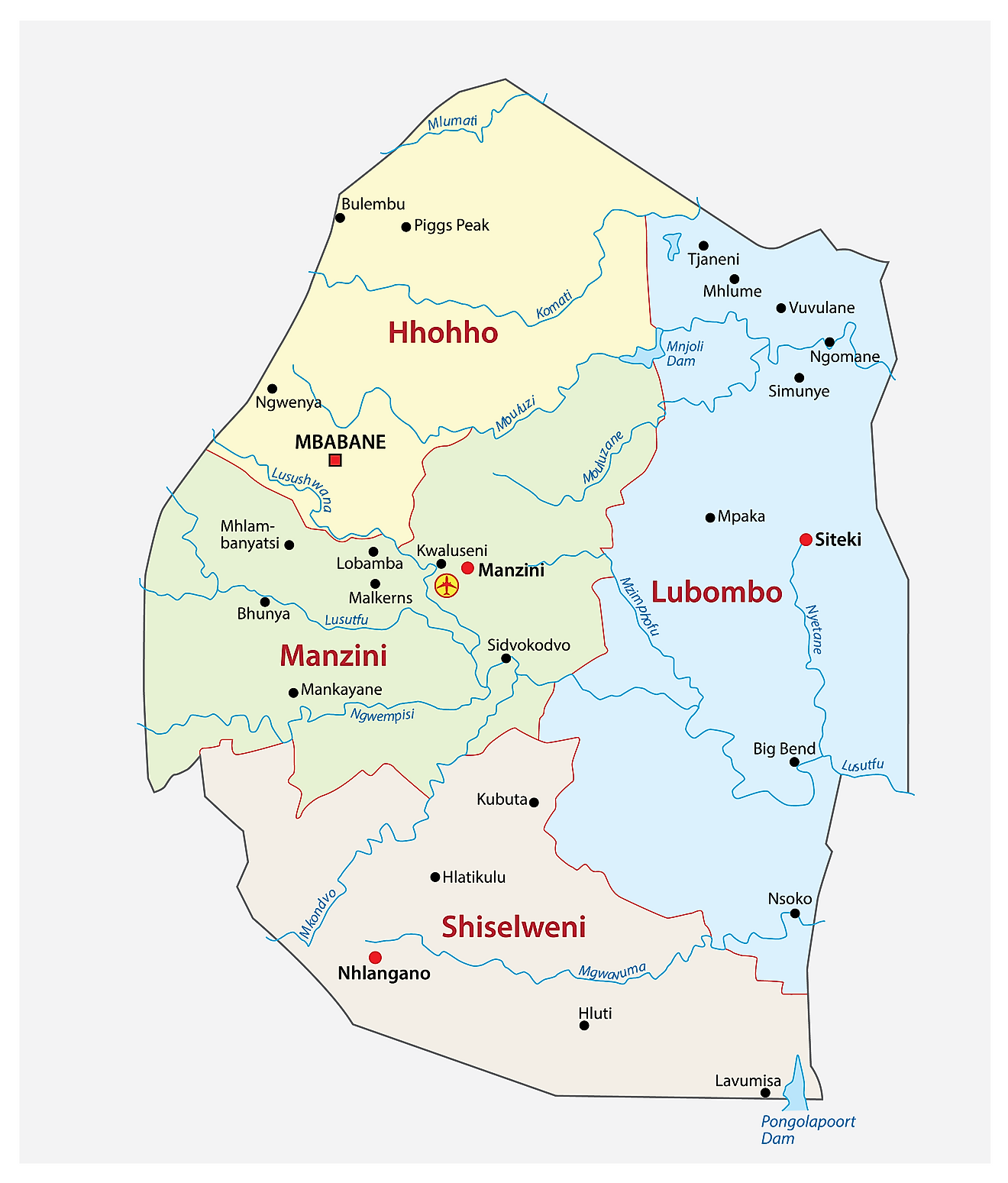
Being a small nation, Eswatini is divided into just four major administrative divisions called regions. These are Hhohho, Lubombo, Manzini, and Shiselweni. With an area of 5,849.11 sq. km, Lubombo is the largest region by area while Manzini is the most populous one. These regions are further subdivided into 55 tinkhundla which are then divided into smaller units called imiphakatsi. Each tinkhundla sends a representative to the House of Assembly of Eswatini. Mbabane is the capital city of the country.
Where is Eswatini?
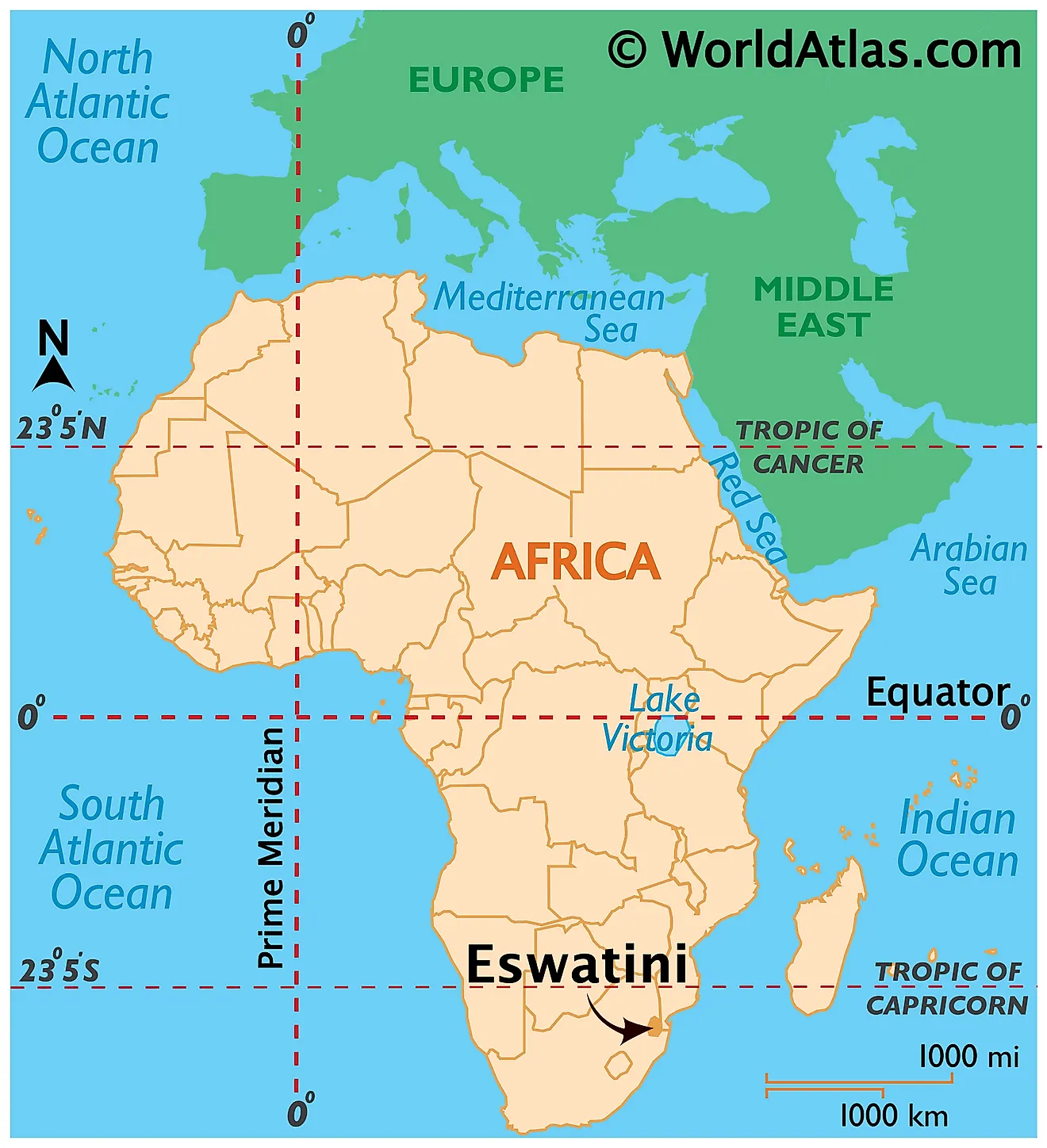
The Kingdom of Eswatini is a landlocked Southern African nation. It is located in the Eastern and Southern Hemisphere regions of the Earth. It is bordered by two countries. South Africa bounds it to the north, west, and south while it shares an international border with Mozambique to the northeast.
Eswatini Bordering Countries: Mozambique, South Africa.
Regional Maps: Map of Africa
Outline Map of Eswatini
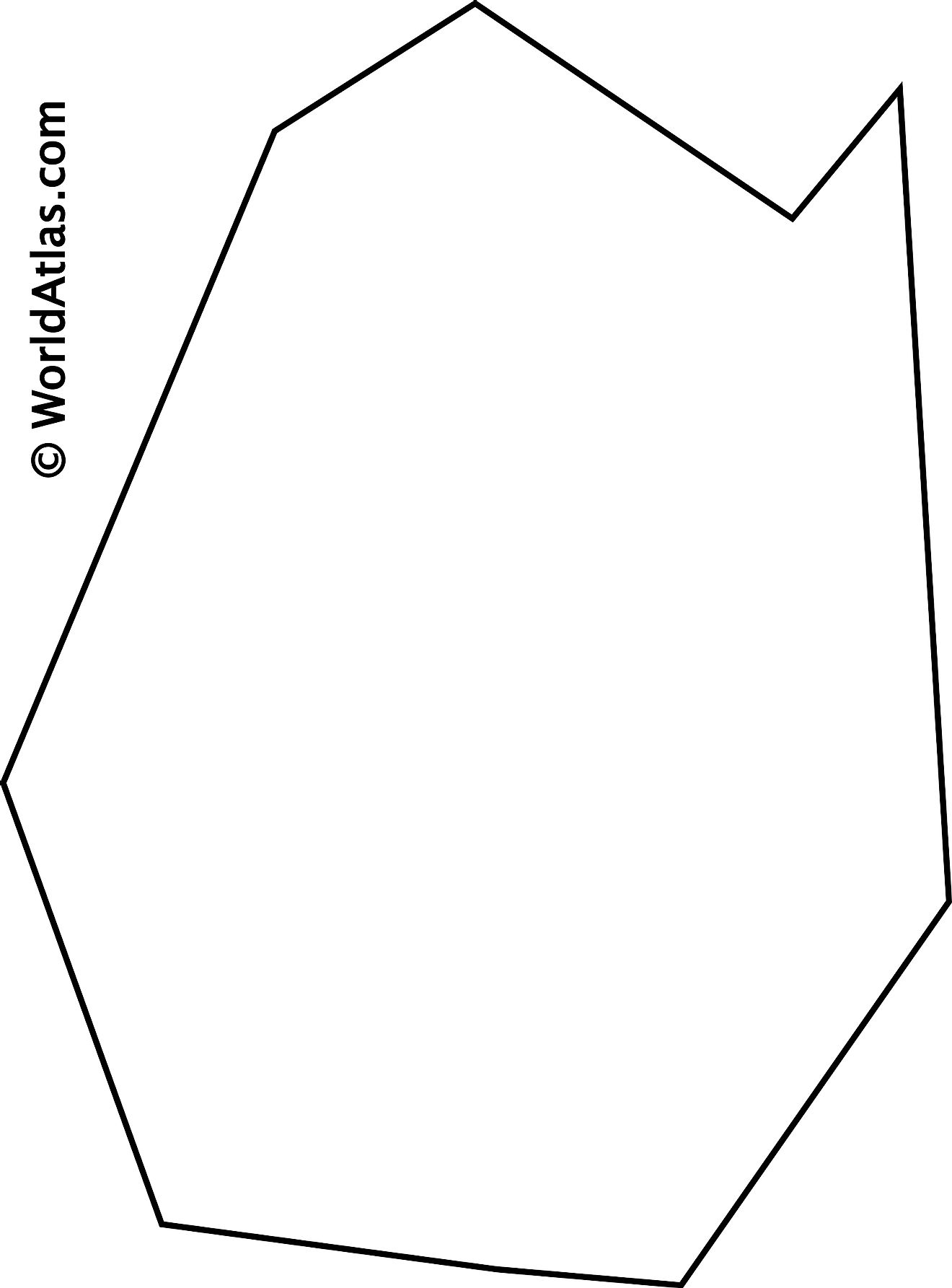
This blank map of Eswatini can be downloaded for free and used for educational purpose. It can be used for coloring or map-pointing tests.
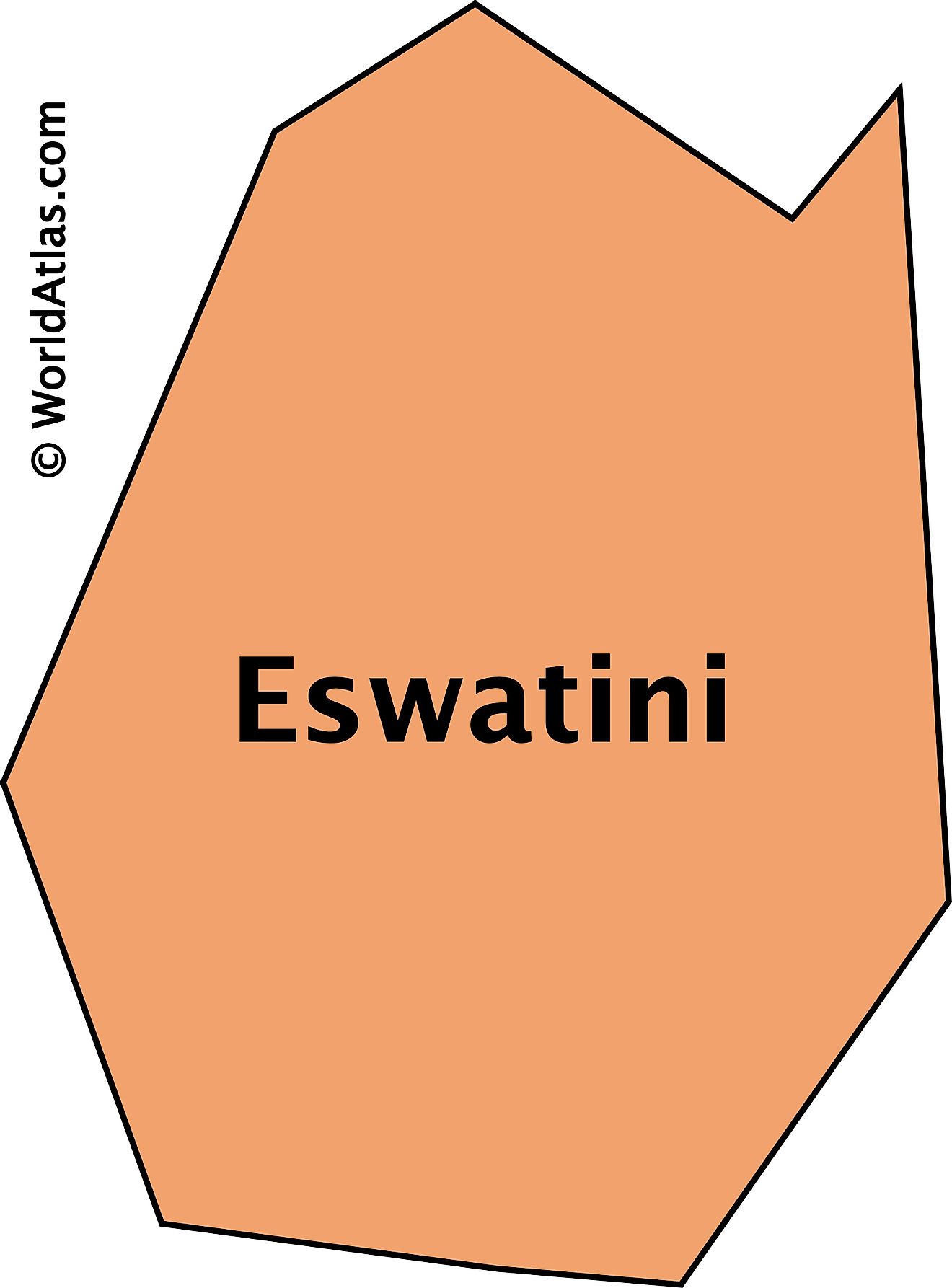
The outline map of Eswatini exhibits the unique shape of the country. Since it is a landlocked nation and has no islands, this map represents the entire country.
Key Facts
| Legal Name | Kingdom of Eswatini |
|---|---|
| Flag |
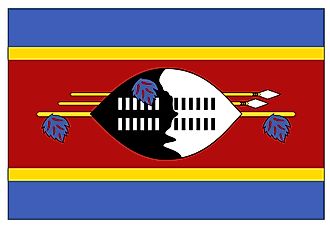
|
| Capital City | Mbabane (administrative capital); Lobamba (royal and legislative capital) |
| 26 19 S, 31 08 E | |
| Total Area | 17,364.00 km2 |
| Land Area | 17,204.00 km2 |
| Water Area | 160.00 km2 |
| Population | 1,137,268 |
| Currency | Emalangeni |
| GDP | $4.89 Billion |
| GDP Per Capita | $4,301.54 |
This page was last updated on December 26, 2023