return to Graphic Maps

worldatlas.com
dot
Africa | Antarctica | Arctic | Asia | Australia/Oceania | Caribbean | Central America | Europe | Islands of the World
Middle East | North America | South America | World Atlas | WIN $100 here


ECUADOR arrow A Brief Description Fast Facts Flag Landforms Lat/Long Links Maps Time Traveler Info Weather

PRINT THIS MAP
A Brief Description

Before the great Inca empire began its conquest of this land called Ecuador in 1463, it was populated by a number of indigenous Indian tribes that were often at war with one another.

In the early 16th century the Spanish discovered and subsequently conquered Ecuador. Over the next two centuries Spanish Colonial rule in this New World spread. Sadly, the Spanish unintentionally brought with them smallpox and measles, diseases that, over time, all but wiped out much of the indigenous Indian population.

After suffering a severe depression throughout most of the eighteenth century, and with Ecuador's cities gradually falling into ruins, the thoughts of independence were in the wind.

That struggle for freedom was bloody, difficult and very long, but independence was finally achieved in 1830, and over the next 140 years a series of military and political groups ruled the land.

Between 1904 and 1942, Ecuador lost territories in a series of conflicts with its neighbors. A border war with Peru that flared in 1995 was resolved in 1999.

Although Ecuador marked 25 years of civilian governance in 2004, the period has been marred by political instability, as seven presidents have governed Ecuador since 1996.

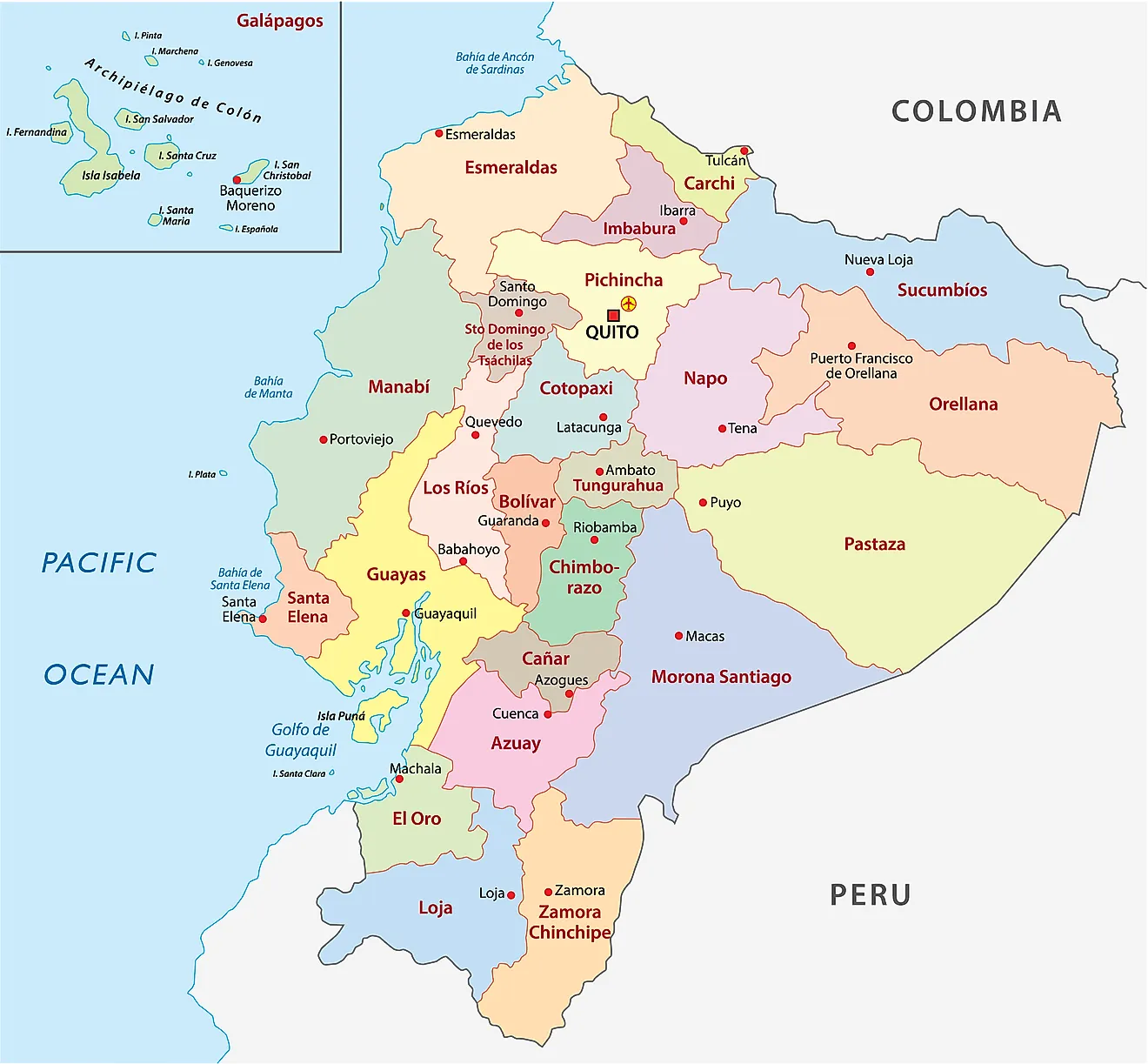
Quito, the capital, is the political center, while Guayaquil is the commercial hub. The world-famous Galapagos Islands (a territory of Ecuador) are positioned about 600 miles to its west.

The indigenous populations mixed with those of European descent give Ecuador a unique cultural texture. It's a very friendly country, known for warm, welcoming hospitality.

Read more about Ecuador
here!

In Affiliation with AllPosters.com
Quito, Ecuador
Travel the World through Poster Art!

Facts and Figures

arrow Name Ecuador

(long form) Republic of Ecuador

arrow Population 13,363,600

arrow Population & Density (all countries) here

arrow Capital City Quito (1.4 mil)

arrow Currency U S dollar (USD)

arrow Currency Converter here

arrow Languages Spanish, Amerindian

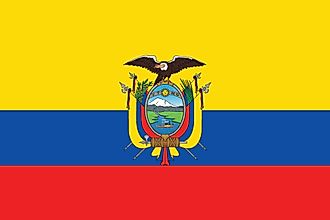
arrow Flag here

arrow National Day August 10

arrow Religions Catholic (95%), others

Geographic Coordinates

arrow Latitude/Longitude (Capital City)
2º 00' S, 77º 30' W

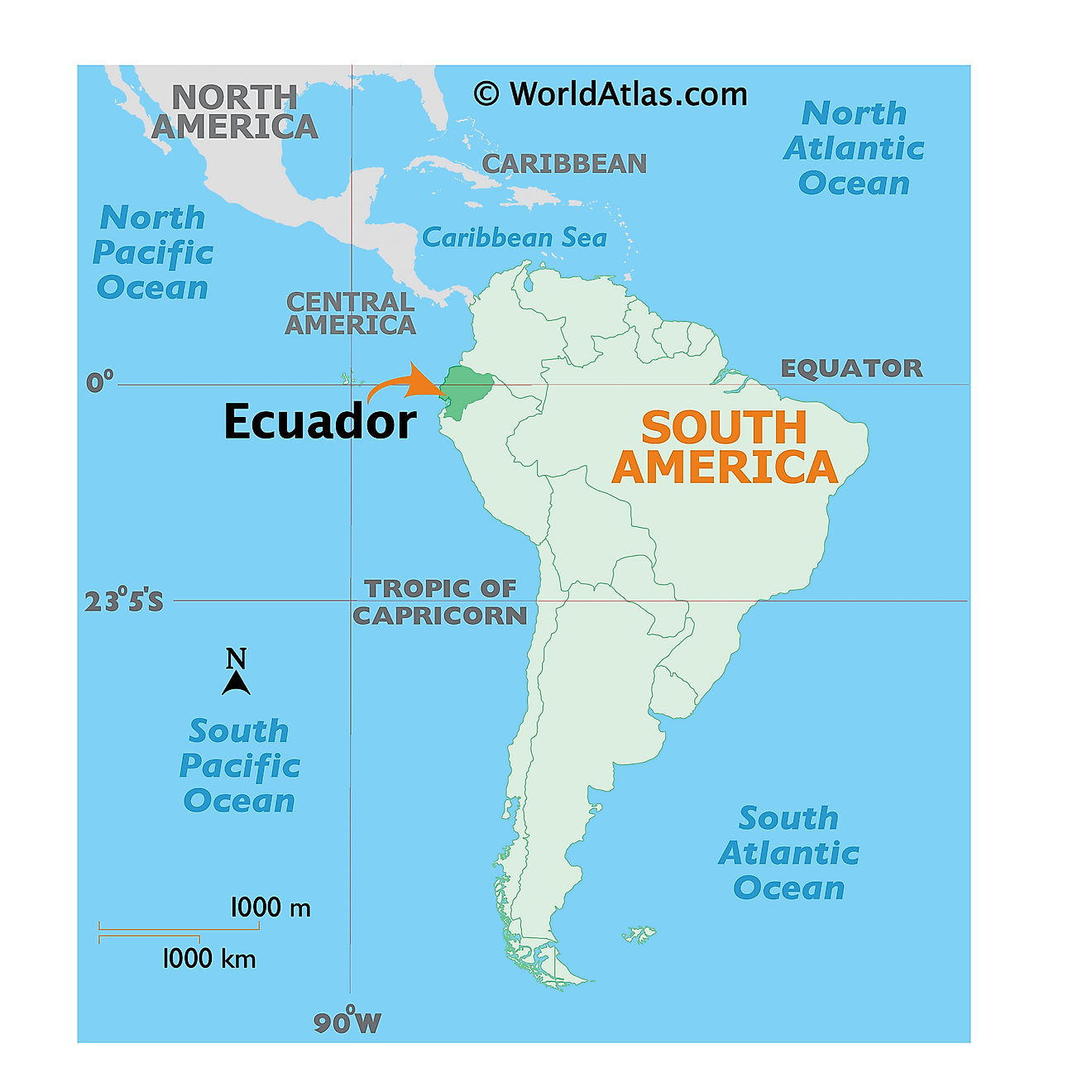
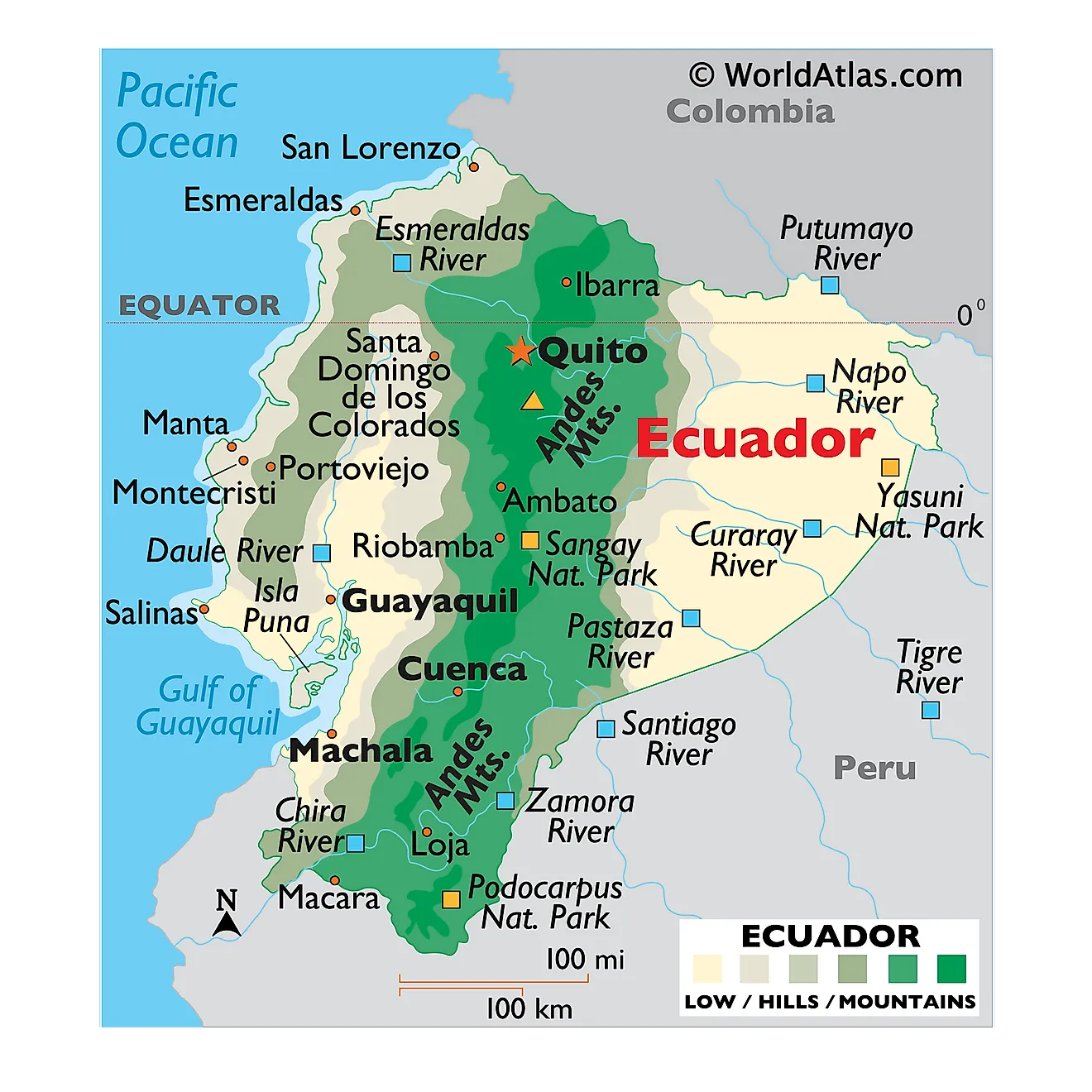
arrow Relative Location Ecuador sits directly on the Equator, and subsequently is positioned in the northern, southern and western
hemispheres. It's located on the northwestern edge of South America, and bordered by Colombia, Peru and the Pacific Ocean.

Land Statistics

arrow Coastline 1,390miles (2,237 km)

arrow Land Areas

(land) 106,888 sq miles (276,840 sq km)

(water) 2,595 sq miles (6,720 sq km)

(TOTAL) 109,483 sq miles (283,560 sq km)

arrow Land Area (all countries) here

arrow Landforms Ecuador is divided into four regions: the coastal lowlands and mountains areas; the central Andes Mountains and it's two major chains (Cordillera Occidental in the west) and the (Cordillera Oriental in the east); the lower mountains that fade into rolling hills and lowlands of the east, and the territory of the Galapagos Islands - officially called the Archipiélago de Colón - located about 1,000 km to the west.

The Andes includes over 20 peaks at least 13,779 ft. (4,200 m) in height with most located in the Cordillera Occidental. In addition, there are over 30 peaks that are volcanic in nature, including many active ones.

Most rivers in Ecuador rise in the upper elevations of the Andes, flowing east toward the Amazon River, or west into the Pacific Ocean. The most significant include the Babahoyo, Chira, Coca, Curaray, Daule, Esmeraldas, Guayas, Napo, Paztaza, and the Putumayo, on its northeastern border with Colombia.

arrow Highest Pt. Mt. Chimborazo - 20,561 ft. (6,267 m)

arrow Lowest Pt. Pacific Ocean at 0 ft. (0 m)

arrow Land Divisions 22 provinces, including: Azuay, Bolivar, Canar, Carchi, Chimborazo, Cotopaxi, El Oro, Esmeraldas, Galapagos, Guayas, Imbabura, Loja, Los Rios, Manabi, Morona-Santiago, Napo, Orellana, Pastaza, Pichincha, Sucumbios, Tungurahua and Zamora-Chinchipe.

search and find


Contact Us | Privacy Statement

Copyrighted by Graphic Maps
All rights reserved!

All maps, graphics, flags and original descriptions created by Graphic Maps, a d/b/a of the Woolwine-Moen Group, unless otherwise noted and/or directly linked to the source, and use of same for any application whatsoever (with the exception of outline maps) requires written permission.

We make no copyright claim on any statistical data on this page, nor on any non-original graphics, and/or pictures not produced by us. Certain statistical data is gathered from the CIA World Factbook, as well as numerous public domain reference materials.

Every effort is made to be as accurate as possible when disseminating information on any worldwide destination. We are not responsible for unintentional data entry errors or omissions. If you would like to submit an addition, change or correction, or suggest a new link, please forward it to our map department and we will give it our immediate attention.


return to Graphic Maps
worldatlas.com
Maps

arrow Ecuador (large color) Map
here

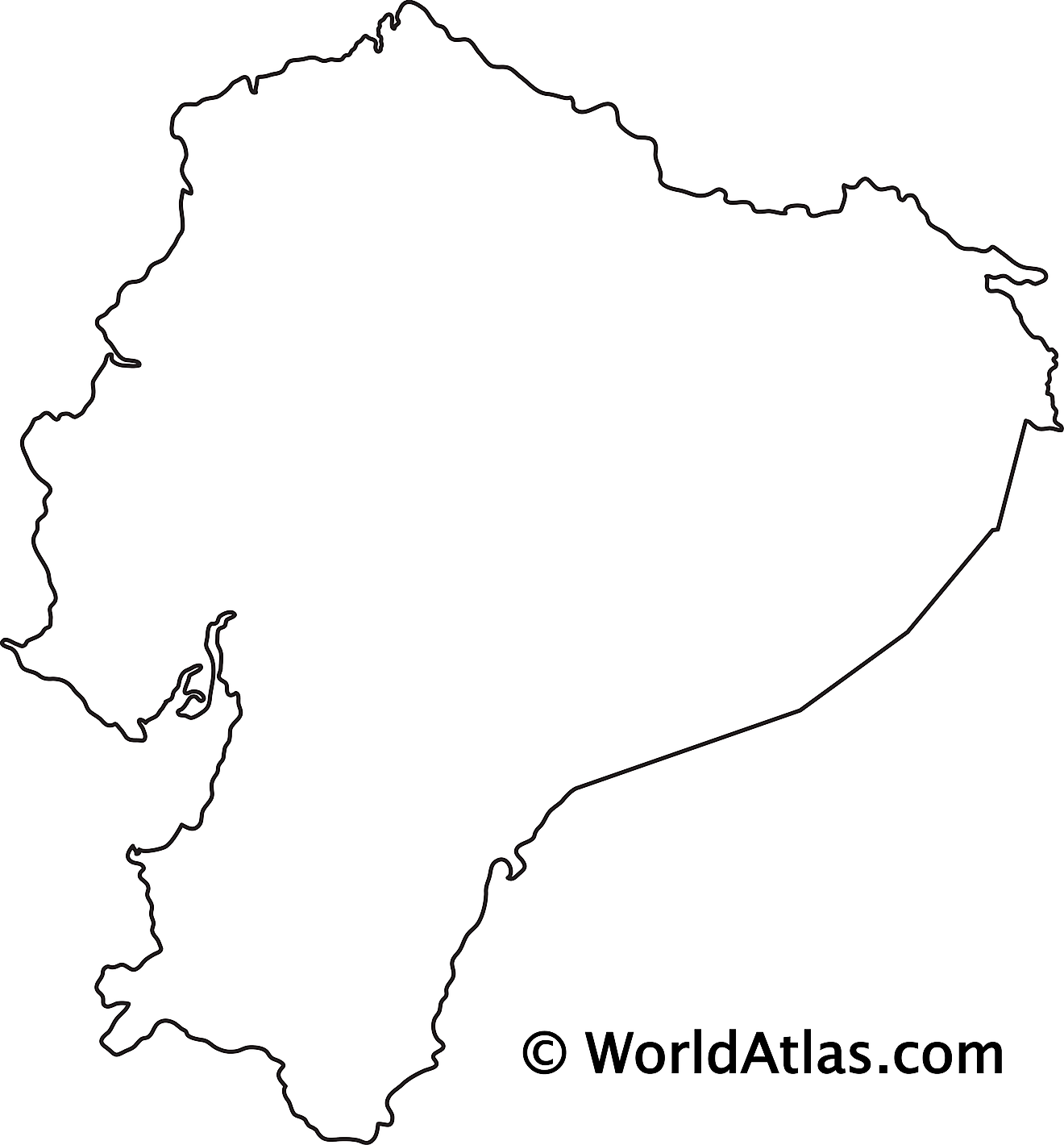
arrow Ecuador Outline Map here

arrow Ecuador CIA version here

arrow Ecuador Maps at UT here

arrow Galapagos Islands Map here

- - - - - - - - - - - - - - - - - - - - - - - - - - - - -

arrow South America (Bodies of Water) here!

arrow South America (Capital Cities) here!

arrow South America (Landforms) here!

arrow South America (Outline) here!

arrow South America (Country Test) here!

- - - - - - - - - - - - - - - - - - - -

arrow Ring of Fire map here

arrow World Outline Maps (printable) here

arrow World Time Zone Map here


Recommended Links

arrow Ecuador (Complete) info on the (GDP) economy, imports and exports, natural resources, government, population, military, transportation, and more
here

arrow Embassy of Ecuador (Tokyo) web site

arrow Ecuador Explorer site

arrow Ecuador Tourism and Travel here

arrow Ecuador Ministry of Tourism here

arrow Ecuador Photos at TrekEarth.com here

arrow Galapagos Islands here

In Affiliation with AllPosters.com
Mt. Chimborazo, Ecuador's highest peak
Travel the World through Poster Art!


Time and Weather


arrow Climate Ecuador has a tropical climate along its coastal areas, then becoming much cooler inland, especially in the higher elevations of the Andes. The jungle-covered plains of the eastern lowlands are hot and very damp throughout the year, with copious amounts of rain.

The most significant climate variations occur in the Andes, where in general terms, mornings are cold and afternoons warm.

The lower levels of the mountains are tropical and experience heavy precipitation. Somewhat typically of any mountainous country, the higher the altitude, the lower the temperatures fall, and rainfall also decreases. In the upper elevations here, the Andes are snow-capped, and temperatures are very cold.

Quito is over (9,200 ft.) in elevation; its highest temperatures are in August and September, where daily highs approach 72° F. The balance of the year high temperatures are generally in the low 60s. The months of June and July are the coldest, with highs in the 40s.


Click for Forecast Click for Forecast

Traveler Info

arrow Attractions: Ecuador is one of the smallest countries in South America, but it surely has some of the continent's most spectacular points-of-interest.

Leading the list is Quito, described by many travelers as the most beautiful city in South America. With its elevation and location near the Equator, its climate is considered a "permanent spring."

Additional attractions include several archaeological sites; a stunning selection of national parks, including Cotopaxi's (Avenue of the Volcanoes,) Podocarpus, Sangay and Yasumi; rainforest expeditions, the cities of Ambato and Otavalo; the natural springs at Banos, and of course, the
Galapagos Islands.

All visitors to Ecuador are advised against travel to its northern border, including the provinces of Sucumbios, Orellana and Carchi and northern Esmeraldas Province. Here, the spread of organized crime, drug trafficking, small arms trafficking, and incursions by various Colombian terrorist organizations remain on-going problems.

arrow Country Dialing Code 593

arrow Electricity Ecuador uses 120 volts AC (60 Hz)

Electrical adapters, products and tips here

arrow Travel Warnings here

arrow Visa Information here

arrow arrow PLEASE NOTE: Before making travel plans for any worldwide destination, we strongly recommend you authenticate important details regarding visas, local health care, customs, etc. We always find it helpful to contact the nearest consulate of any country before beginning a journey into a foreign land.

South America
Countries

arrow

Argentina

Bolivia

Brazil

Chile

Colombia

Ecuador

Guyana

Paraguay

Peru

Suriname

Uruguay

Venezuela


Falkland Islands
(a territory)

French Guiana
(a territory)

Galapagos Islands
(a territory)

arrow

Argentina

Bolivia

Brazil

Chile

Colombia

Ecuador

Guyana

Paraguay

Peru

Suriname

Uruguay

Venezuela


Falkland Islands
(a territory)

French Guiana
(a territory)

Galapagos Islands
(a territory)

arrow

Argentina

Bolivia

Brazil

Chile

Colombia

Ecuador

Guyana

Paraguay

Peru

Suriname

Uruguay

Venezuela


Falkland Islands
(a territory)

French Guiana
(a territory)

Galapagos Islands
(a territory)

In Affiliation with AllPosters.com
A rural family, Ecuador
Travel the World through Poster Art!


arrow

Argentina

Bolivia

Brazil

Chile

Colombia

Ecuador

Guyana

Paraguay

Peru

Suriname

Uruguay

Venezuela


Falkland Islands
(a territory)

French Guiana
(a territory)

Galapagos Islands
(a territory)

arrow

Argentina

Bolivia

Brazil

Chile

Colombia

Ecuador

Guyana

Paraguay

Peru

Suriname

Uruguay

Venezuela


Falkland Islands
(a territory)

French Guiana
(a territory)

Galapagos Islands
(a territory)
dot search and find