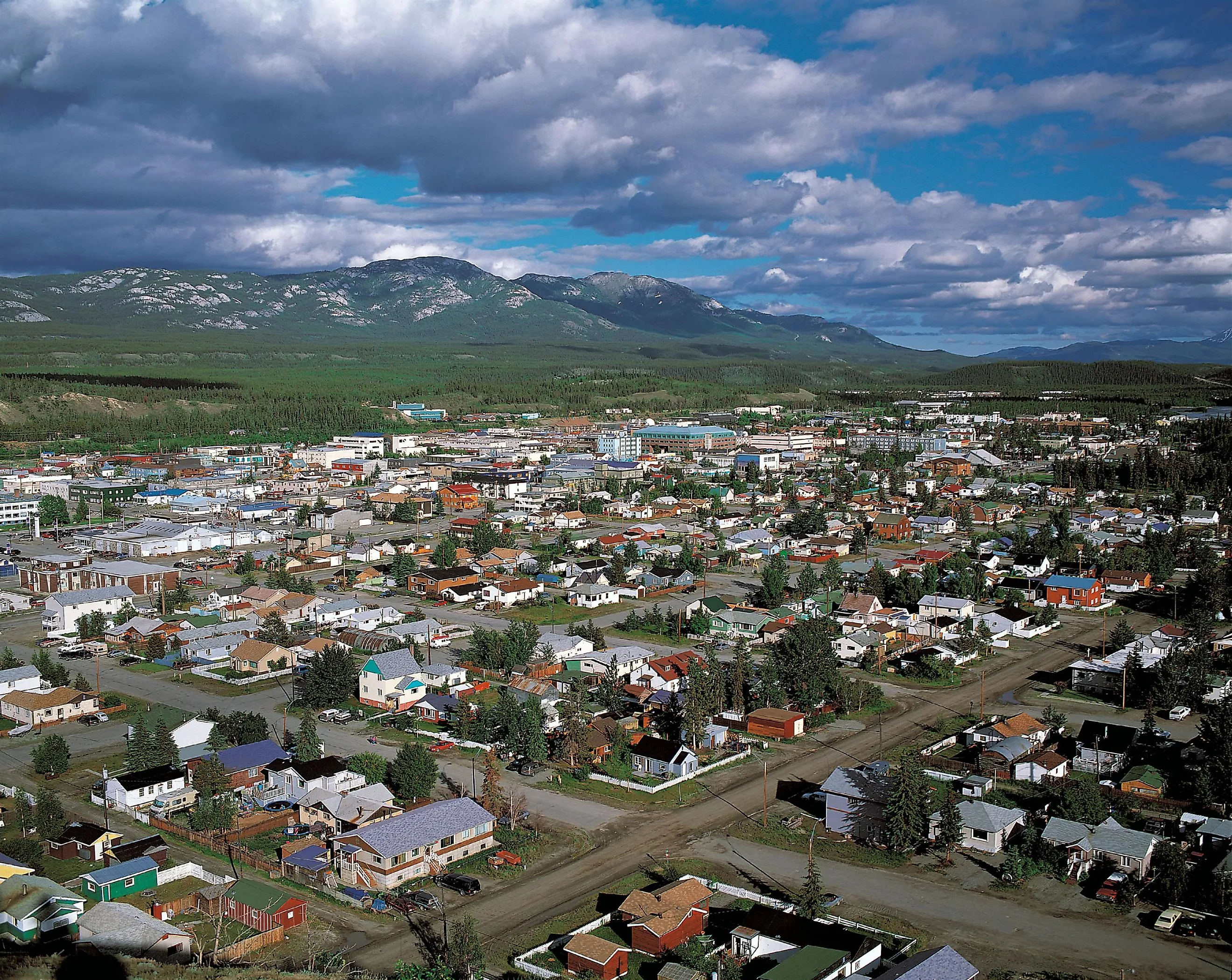
Whitehorse, Yukon
Yukon is a territory in the extreme northwestern corner of Canada. It is also the smallest and the least populous Canadian territory. The city of Whitehorse serves as the territorial capital of Yukon. The city is situated at the Alaska Highway’s kilometer 1,425 in the south-central part of the territory and is surrounded by Grey Mountain, Golden Horn Mountain, and Mount Sumanik. Whitehorse became the capital of Yukon after replacing Dawson City, the former capital, on April 1, 1953.

Whitehorse has been nicknamed “The Wilderness City” and is surrounded by hiking trails and the Yukon River that flows directly through the heart of the city. Although it is noted for its wilderness, it also boasts the comforts of a contemporary city. Whitehorse is located within traveling distance of several major landforms of Yukon such as Watson Lake, the Selwyn Mountains, and the Mackenzie Mountains. With an area of 416.54 km2, Whitehorse is currently Canada’s 65th largest city.
According to the Köppen climate classification, the city of Whitehorse experiences a subarctic climate with dry summers and relatively mild winters. Whitehorse has one of the most comfortable climates in Canada. Its location in the rain shadow area of the Coast Mountains results in very little precipitation and visitors and residents alike can enjoy its natural scenic beauty throughout the year. The city takes pride in the culture and traditions of its First Nations peoples, including the Kwanlin Dün and Ta'an Kwäch'än.
Attractions
MacBride Museum of Yukon History

The richness of Yukon's history and culture is preserved in the MacBride Museum of Yukon History. With four different major exhibits, including the Gold to Government Gallery, the museum offers visitors a personal view of the famous Klondike Gold Rush. Here, one can listen to the individual accounts of men and women who made the treacherous journey to Yukon during the Gold Rush or visit an original miners' saloon from 1898. Aside from the Gold Rush exhibitions, the museum is fun for the entire family, attracting children to the Kids Discovery Zone with hands-on animal games and activities. Nature lovers can experience the immensity of a seven-foot grizzly and an albino moose in the museum's Natural World Gallery. From a First Nations collection of artisan work to a display of the locomotive originally used to construct Yukon's famous railways, visitors rave about the excitement the MacBride Museum has to offer.
Muktuk Adventures
Located along the Tahini River in the Ibex Valley, the Muktuk Adventures is a rustic wilderness lodge that serves as a home to more than 100 friendly Alaskan huskies. In the winter, visitors to the Muktuk Adventures can grab the reins and test their skills on dogsled expeditions. During the off-season, they can attend exciting training sessions with the dogs. Ranging from half-day trips to the 111-day “Follow the Yukon Quest event,” Muktuk attracts novice dogsled fans as well as master mushers. Dog-lovers will find themselves surrounded by friendly dogs, from newborn puppies to those retired from pulling sleds. Along with the animals, visitors to Muktuk kennel won't be disappointed by the exhilarating adventures, experienced and welcoming staff, and breathtaking scenery of Canada.