Flags, Symbols & Currency of Canada
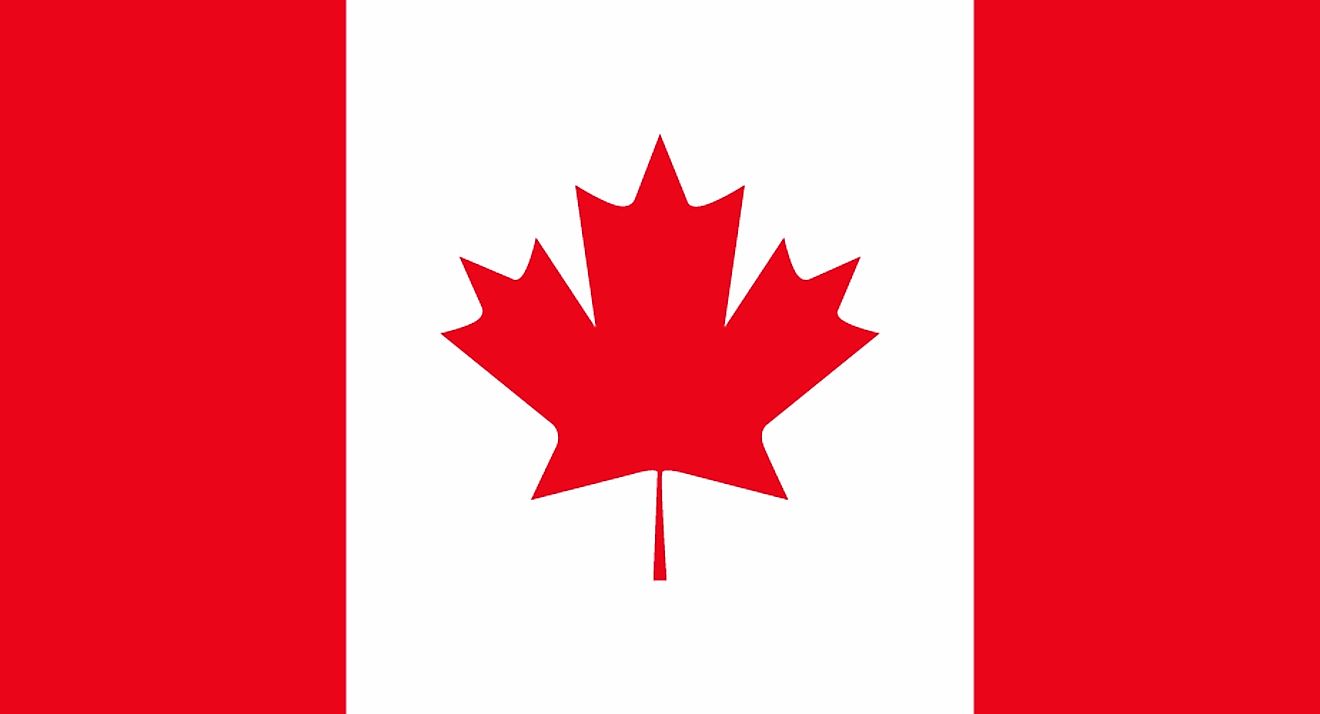
The flag of Canada was officially adopted on February 15, 1965. The flag was designed by George F. G. Stanley, Dean of Arts at the Royal Military College in Kingston, Ontario.
The National Flag of Canada is horizontally symmetric and features two vertical bands of red in the hoist and fly side with a white square between them, in the ratio of 1:2:1. A stylized 11-pointed red maple leaf is centered in the white square. The red maple leaf has been a Canadian symbol since the 18th century and its red color symbolizes the Canadian sacrifice during World War 1. The colors red and white are the official colors of Canada, as proclaimed by King George V in 1921. The red color has been taken from Saint George’s Cross and the white color from the French royal emblem since King George VII.
History of the Flag of Canada
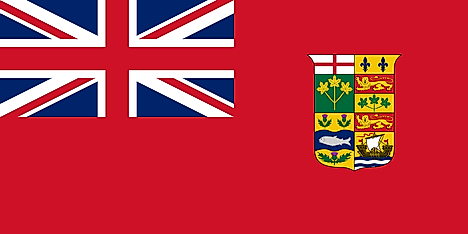
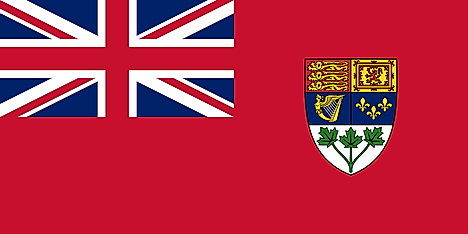
Several different flags have been used in Canada before the advent of the current National Flag. Since the beginning of the European presence on Canadian soil, the flags of respective European homelands were displayed. The flags of British North America were used in colonial Canada and showcased its ties with the British Empire. After the Confederation in 1867 and until 1965 – The Royal Union Flag was used in Canada. The Canadian Red Ensign, bearing the Union Jack and the shield of the royal arms of Canada, was used since the 1870s and became a widely recognized national symbol. The Canadian Red Ensign became a popular patriotic Emblem during the First World War. In 1921, King George V granted Royal Arms to Canada and the shield of Canada’s new coat of arms took its place on the Canadian Red Ensign. This version of the Canadian Red Ensign represented Canada during WWII. In 1957, a new approved interpretation of the coat of arms changed the maple leaves from green to red. This version of the flag was used till 1965. The new maple leaf flag was made official by a proclamation from Queen Elizabeth on January 28, 1965. On February 15, 1965, the flag was inaugurated in a public ceremony on Parliament Hill.
Historical Flags of Canada
The Canadian Red Ensign (1868 to 1921)
The Canadian Red Ensign (1921 to 1957)
Symbols of Canada
Royal Coat of Arms of Canada
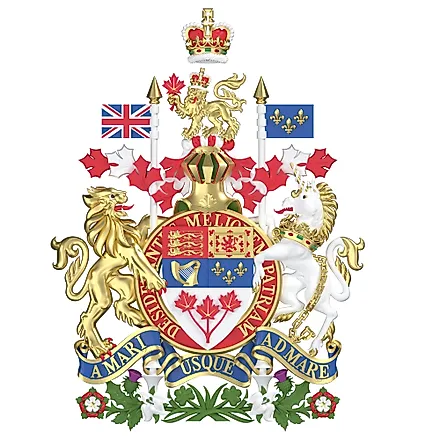
The Royal Coat of Arms of Canada is the official coat of arms of the Canadian Monarch as well as Canada since 1921. It is closely modeled after the royal coat of arms of the United Kingdom with distinctive Canadian elements replacing or added to those derived from the British. The current design of the Arms of Canada was drawn by Mrs. Cathy Bursey-Sabourin. The symbols of the four founding nations of Canada are featured on the shield. These include the three royal lions of England, the royal lion of Scotland, the royal fleur-de-lis of France, and the royal Irish harp of Tara. The Lion of England is seen holding the Royal Union Flag and the unicorn of Scotland is seen carrying the flag of Royal France. The floral emblems of the four founding nations are also featured in the coat of arms: the English rose, the Scottish thistle, the French fleur-de-lis, and the Irish shamrock. The Royal Crown at the top symbolizes that these are the Arms of Her Majesty the Queen in Right of Canada. The maple leaves in the shield blazoned "proper", were originally drawn vert (green) but were redrawn gules (red) in 1957. The maple leaf has been the centerpiece of the National Flag of Canada and the maple tree bears the leaves that have become the most prominent Canadian symbol, nationally and internationally. In 1994, a circular, red ribbon was added to the arms – displaying the motto of the Order of Canada: Desiderantes Meliorem Patriam (“They desire a better country”).
National Anthem
- Anthem Title: 'O, Canada'
- Music Composer: Calixa Lavallee
- Lyricist: Sir Adolphe-Basile Routhier (French) and Robert Stanley Weir (English)
- Date of Adoption: July 1, 1980.
'O, Canada' is the national anthem of Canada. The music of the anthem has been composed by Calixa Lavallee (a concert pianist); as commissioned by Theodore Robitaille (Lieutenant Governor of Quebec). The original French lyrics of the anthem was authored by Sir Adolphe-Basile Routhier (a poet and a judge). The lyrics were translated into English by Robert Stanley Weir in 1908. The anthem was officially adopted on July 1, 1980. "God Save The Queen" remains the Royal Anthem of Canada.
Ô Canada!
Ô Canada! Terre de nos aïeux,
Ton front est ceint de fleurons glorieux!
Car ton bras sait porter l'épée,
Il sait porter la croix!
Ton histoire est une épopée
Des plus brillants exploits.
Et ta valeur, de foi trempée,
Protégera nos foyers et nos droits.
Protégera nos foyers et nos droits.
O Canada!
O Canada! Our home and native land!
True patriot love in all of us command.
With glowing hearts we see thee rise,
The True North strong and free!
From far and wide,
O Canada, we stand on guard for thee.
God keep our land glorious and free!
O Canada, we stand on guard for thee.
O Canada, we stand on guard for thee.
The Currency of Canada is the Canadian dollar
The official currency of Canada is the Canadian dollar (CAD).
The dollar is divided into 100 cents locally referred to as the penny. However, the Canadian penny was removed from circulation because of its low value. The image on the one-dollar coin is the loon, and the locals refer to the coin as the looney. The CAD is the fifth most reserved currency in the world because of the country’s stable economy, and strong sovereign position.
Coins
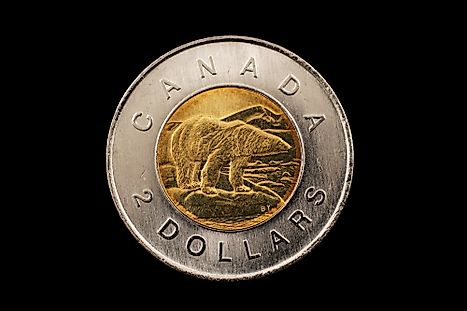
Six denominations of currency circulate as coins in Canada. They are the 5¢ (nickel) 10¢ (dime), 25¢ (quarter), 50¢, $1(loonie), and $2 (toonie). In 2012 the production of the 1¢ (penny) was discontinued due to inflation that made its production costs higher than its value.
The Royal Canadian Mint produces the coins. The circulation of the 50¢ is lower than the other coins; it is estimated that for every one 50¢ coin produced; 142 25¢-coins are produced. There is a similarity between the Canadian coinage currency and the American coinage particularly those below 50¢ regarding the size. Some U.S coins circulate in Canada at par while Canadian coins below 50¢ circulate in the US because of their similarities.
Banknotes
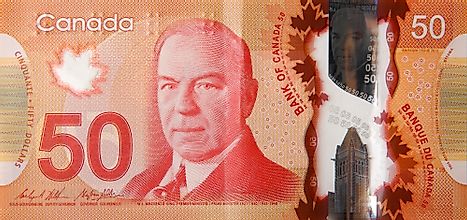
Today the Canadian banknotes are issued in denominations of $5, $10, $20, $50, and $100 denominations.
Canadian dollar Banknote
Canadian dollar Coin
Historical Currencies of Canada
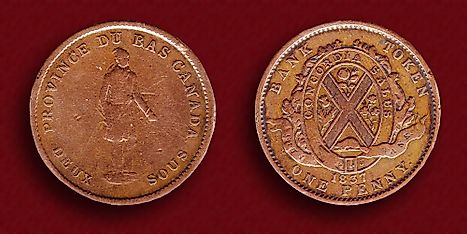
In 1841, Canada’s currency was referred to as the Canadian pound and was worth four US dollars. The imperial government in London imposed the pound in all its colonies, but the local population began to assimilate their currency with the US because of their close trade ties. Between 1841 and 1871, several alignments were conducted to streamline the Canadian pound, the sterling pound, and the American dollar. In 1871, the Canadian Parliament passed an act that created the Canadian dollar, during the Second World War, the exchange rate was C$1.10 = US$1.00. In 1960 the value of the currency dropped significantly before it was pegged in 1962 at an exchange rate of C$1.00 = US$0.925.
Canadian pound