Maps of The Bahamas
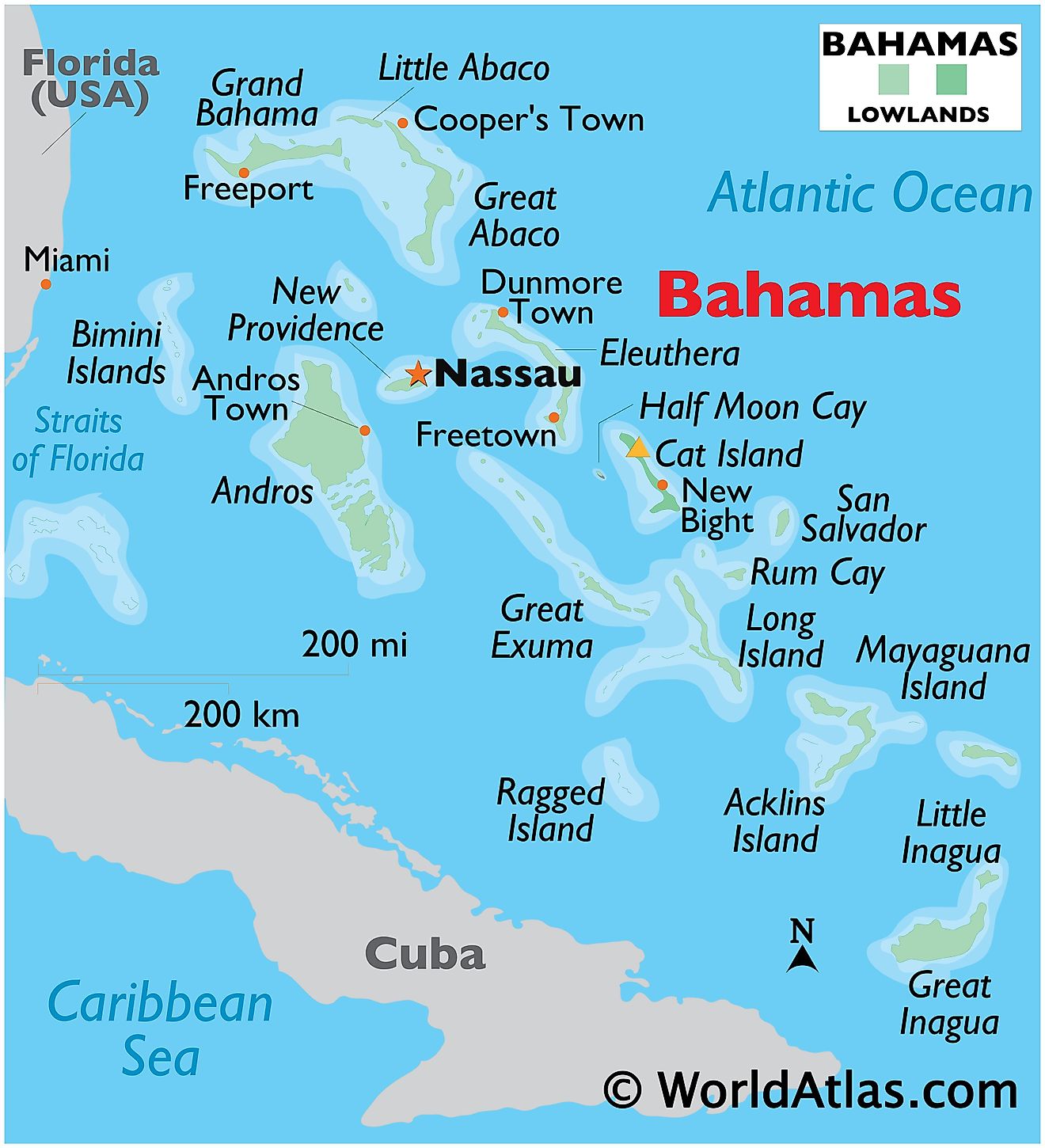
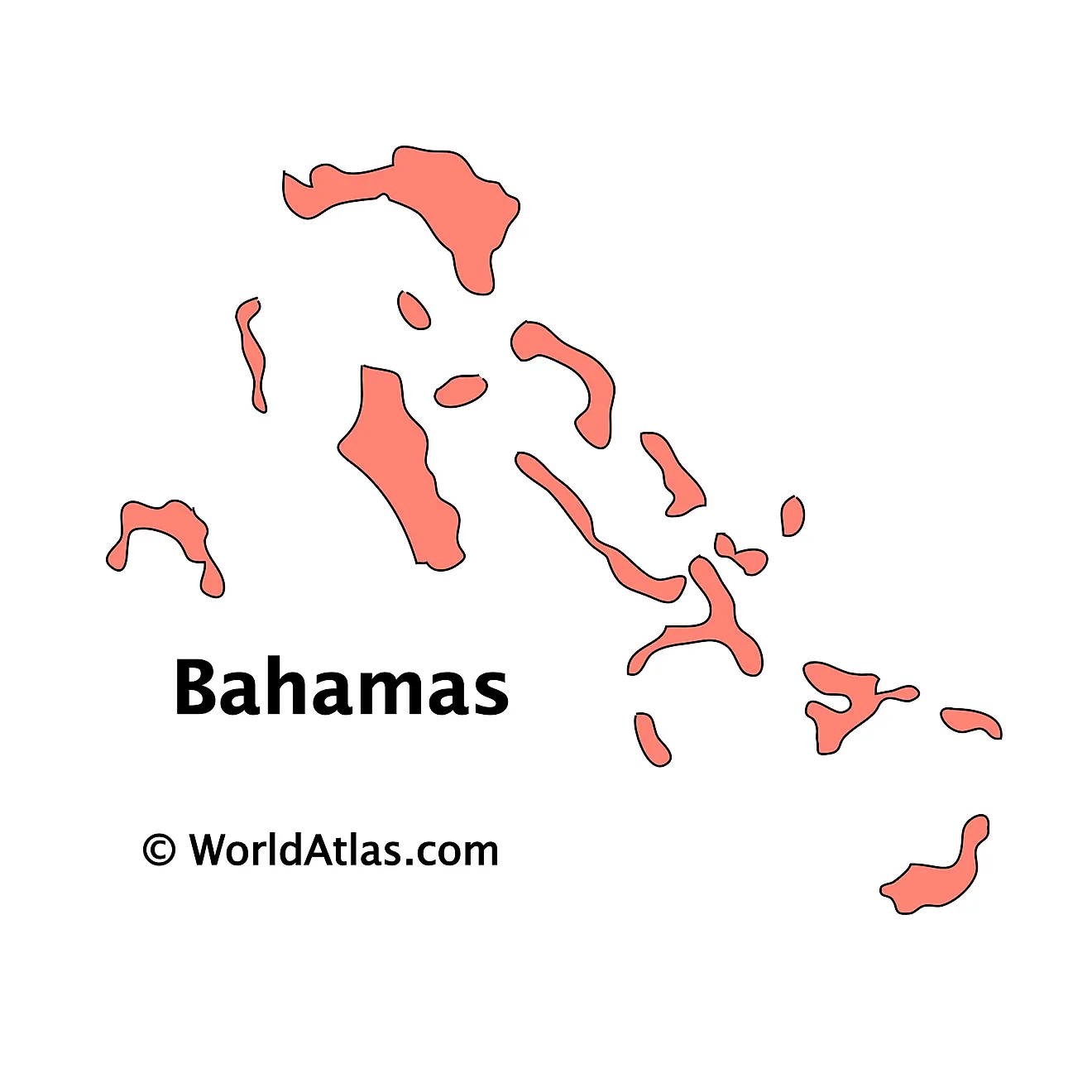
Covering an area of 13,878 sq. km, The Bahamas (all coral in origin) occupies larger part of Lucayan Archipelago and comprises a group of nearly 700 (atolls) ring-like coral islands, and (cays) small, low islands composed largely of coral or sand. The islands were mostly created by the disintegration of coral reefs and seashells, and low scrub covers much of their surfaces. As observed on the map, the highest point is located on Cat Island, where limestone rock rises to 63m (206ft) above sea level. There are a handful of small freshwater lakes and just one small river located on Andros Island.
Districts of The Bahamas Map
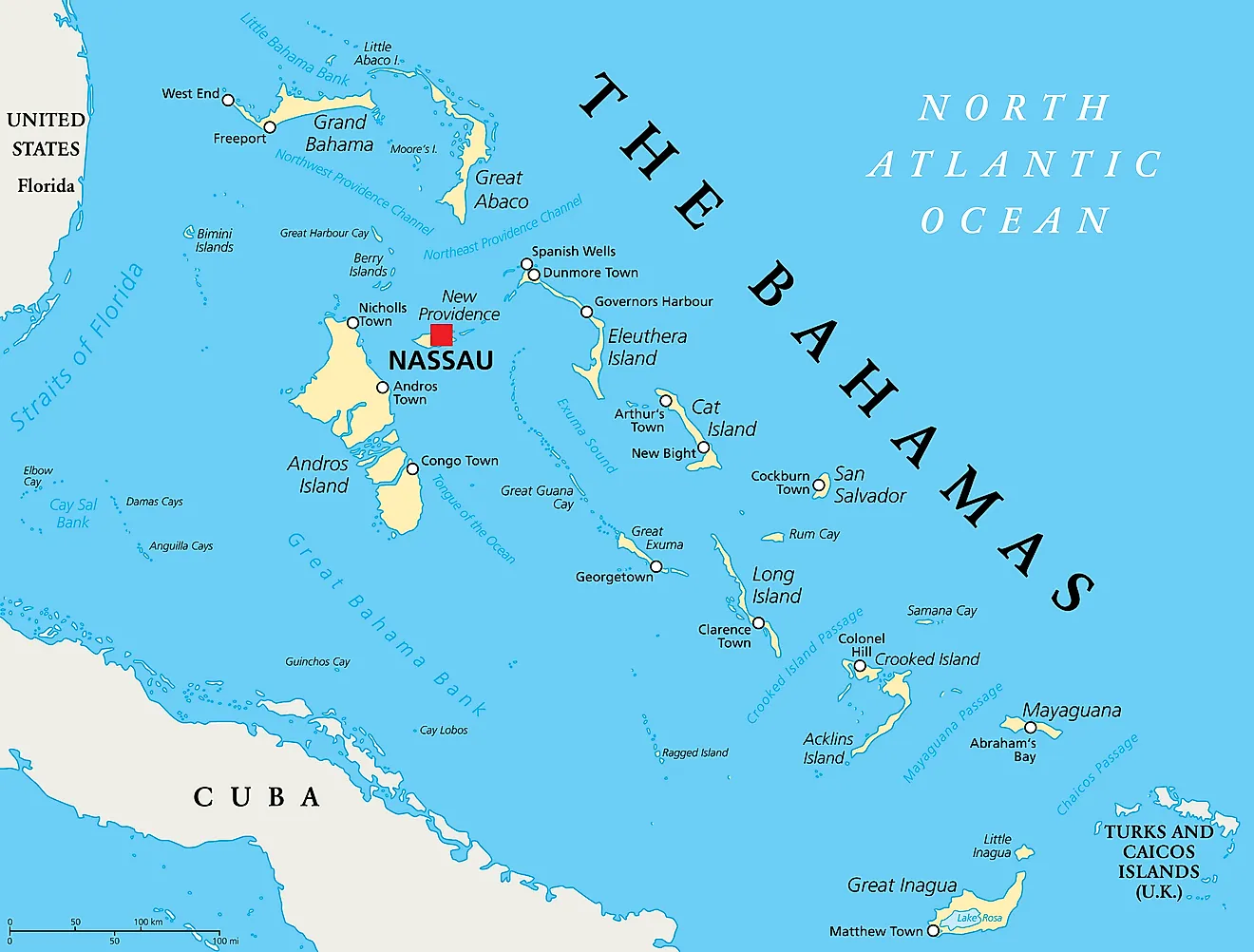
The Bahamas (officially, The Commonwealth of The Bahamas) is divided into 31 districts. In alphabetical order, the districts are: Acklins, Berry Islands, Bimini, Black Point (Exuma), Cat Island, Central Abaco, Central Andros, Central Eleuthera, City of Freeport (Grand Bahama), Crooked Island, East Grand Bahama, Exuma, Grand Cay (Abaco), Harbour Island (Eleuthera), Hope Town (Abaco), Inagua, Long Island, Mangrove Cay (Andros), Mayaguana, Moore’s Island (Abaco), North Abaco, North Andros, North Eleuthera, Ragged Island, Rum Cay, San Salvador, South Abaco, South Andros, South Eleuthera, Spanish wells (Eleuthera) and West Grand Bahama.
Covering an area of 13,878 sq. km, The Bahamas occupies larger part of Lucayan Archipelago and comprises a group of 700 ring-like coral islands, islets and cays. Located on the island of New Providence is, Nassau – the capital and the largest city of The Bahamas. Nassau is a primate city, a busy sea port and a major administrative, educational, economic and commercial center of the country. Its spectacular scenery attracts tourists from all over the world.
Where is The Bahamas?
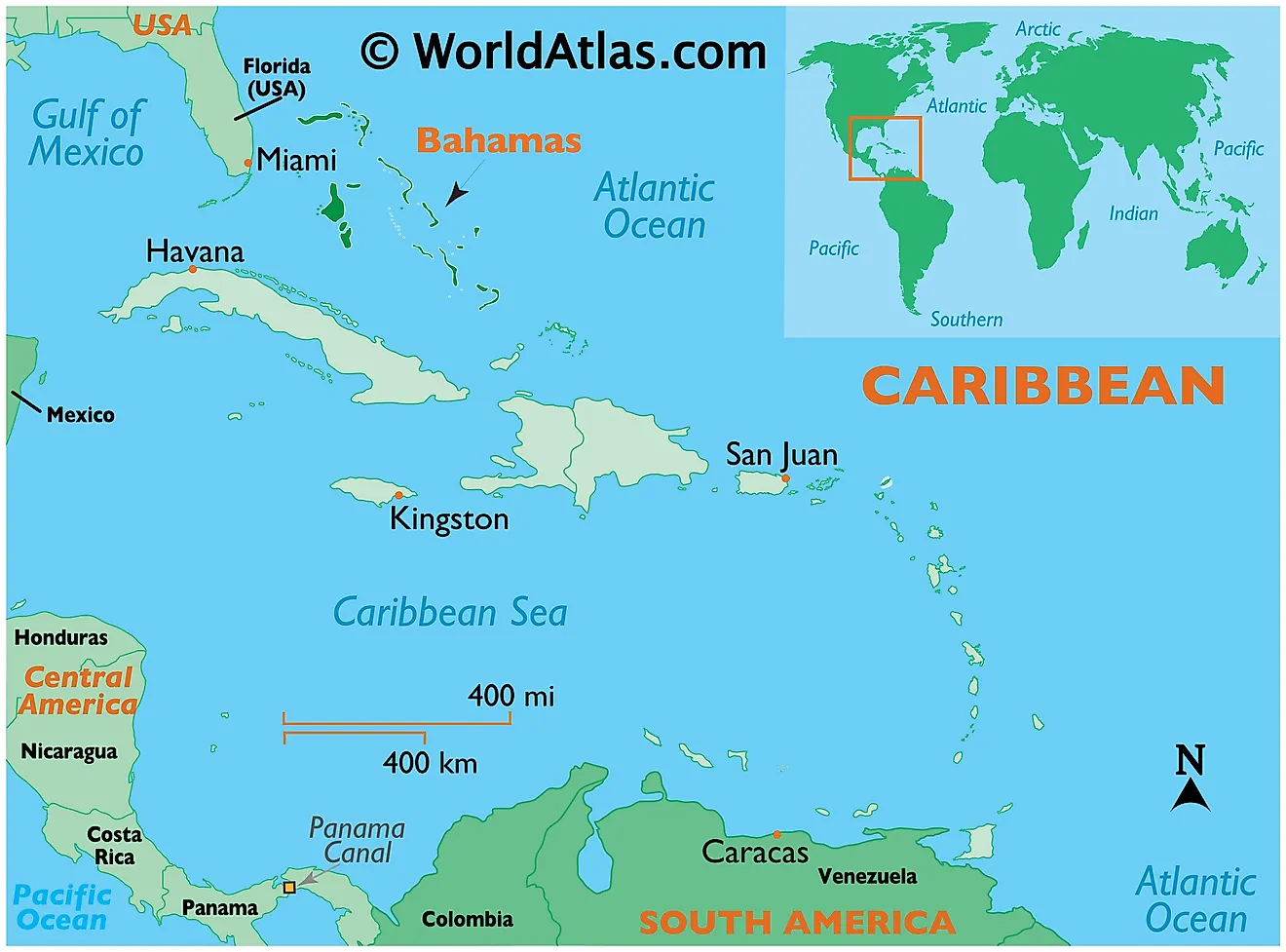
The Bahamas is an archipelagic country comprising over 700 coral islands, islets and cays situated in the northwest of West Indies in West Atlantic Ocean. The Bahamas is positioned both in the Northern and Western hemispheres of the Earth. It is located to the southeast of the US State of Florida; to the east of Florida Keys; to the northwest of Turks and Caicos Islands; and to the north of Cuba and the Hispaniola Islands shared by Haiti and the Dominican Republic. The Bahamas shares its maritime borders with the US, Cuba, Haiti and the Turks and Caicos Islands.
Regional Maps: Map of North America
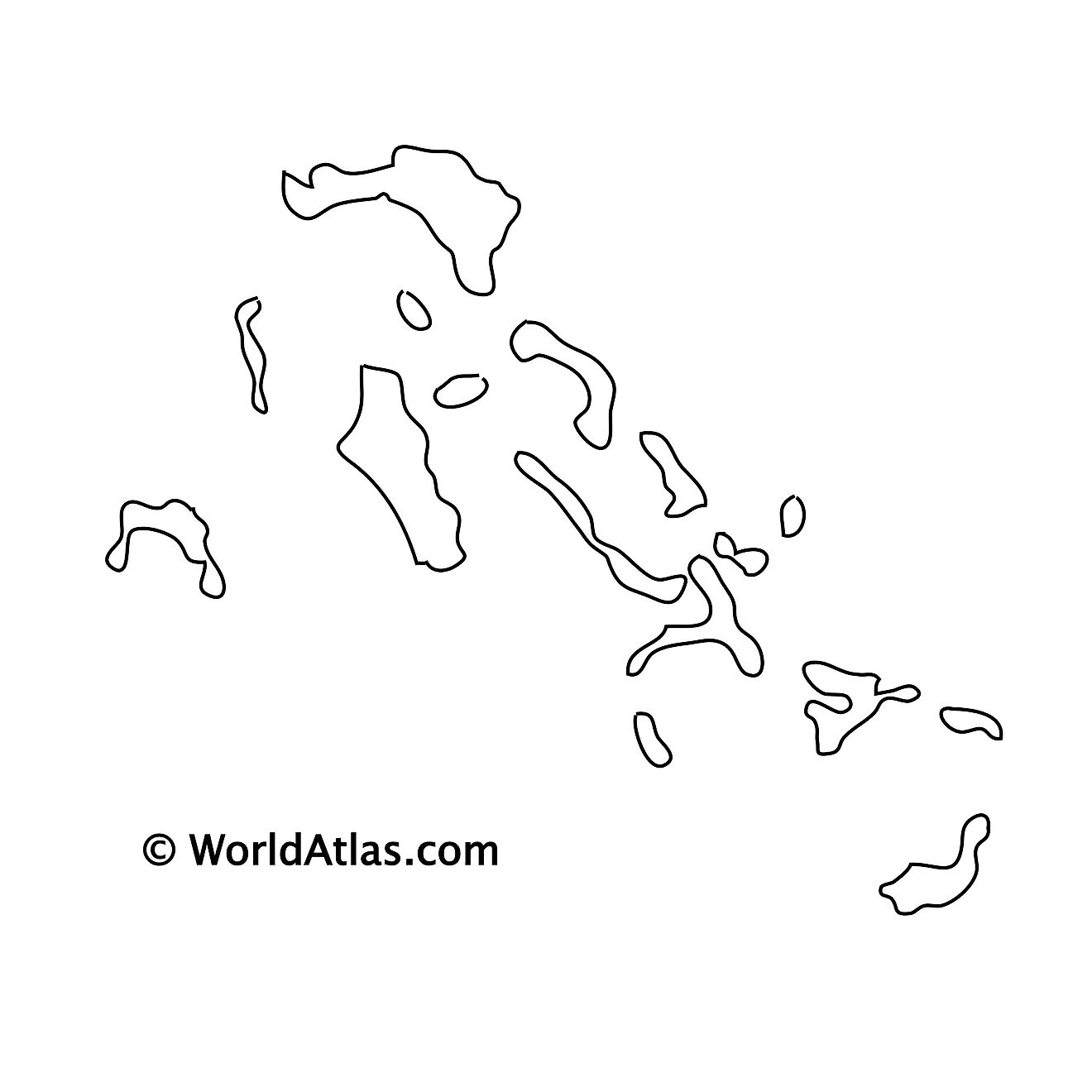
Outline Map of The Bahamas
Key Facts
| Legal Name | Commonwealth of The Bahamas |
|---|---|
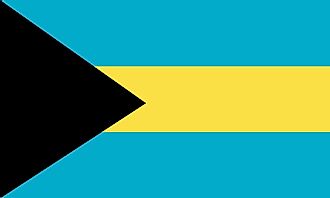
| Flag |
|
| Capital City | Nassau |
| 25 05 N, 77 21 W | |
| Total Area | 13,880.00 km2 |
| Land Area | 10,010.00 km2 |
| Water Area | 3,870.00 km2 |
| Population | 389,482 |
| Currency | Bahamian dollars (BSD) |
| GDP | $12.83 Billion |
| GDP Per Capita | $32,933.49 |
This page was last updated on February 25, 2021