Maps of Malta
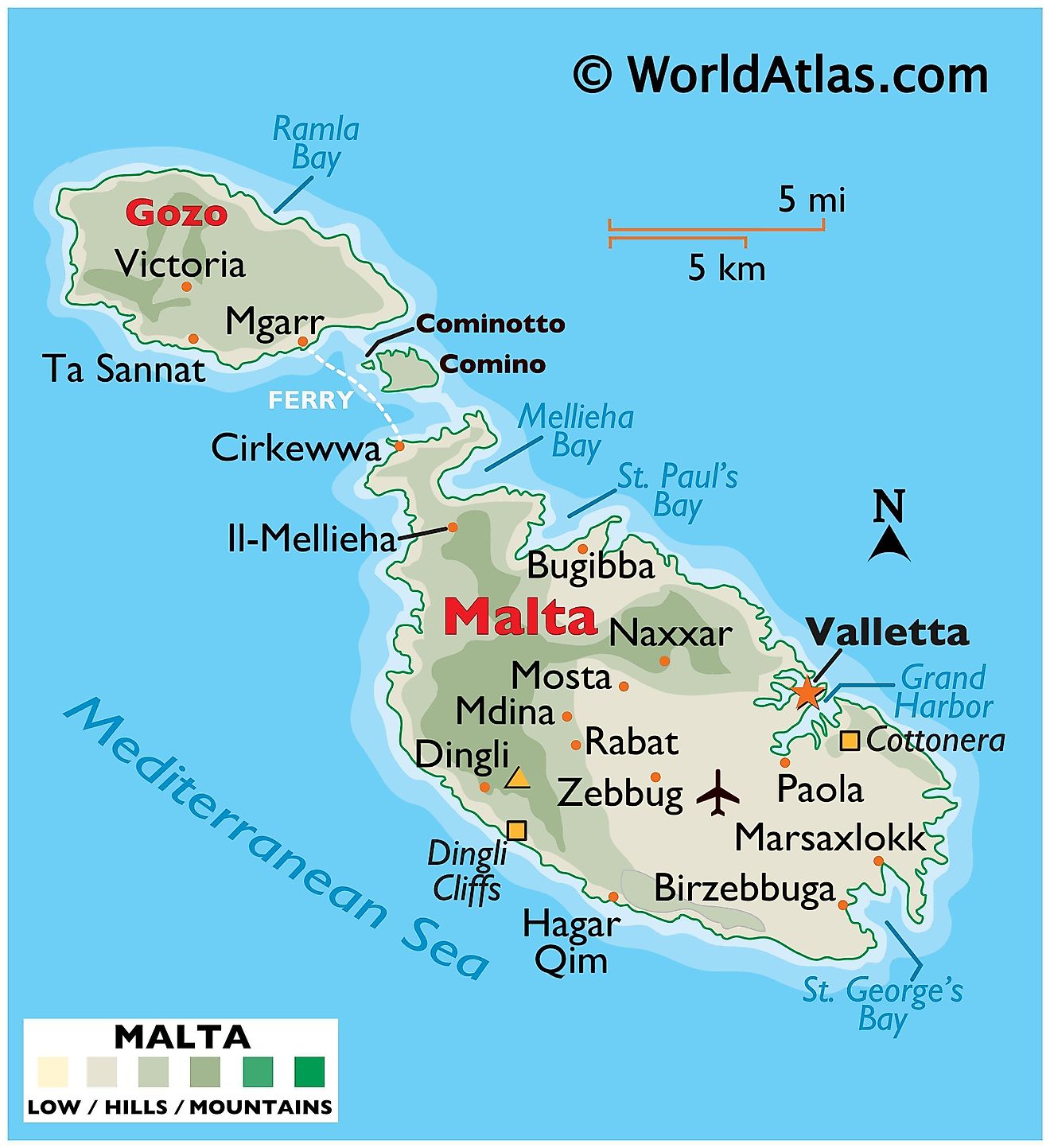
Malta, one of the world's smallest nations, occupies an area of 316 sq. km in the Mediterranean Sea. As observed on the physical map of Malta, the country is a cluster of small islands. These islands are composed of coralline limestone.
The three largest islands in the archipelago are Malta, Comino, and Gozo. Only these three are inhabited. Each of these islands is mostly low, rocky islands with rugged, steep coastal cliffs.The highest point is located within the triangular plateau Ta'Zuta, and rises to 830 feet (253 m). A yellow triangle marks the position of this point on the map above. The famous Blue Lagoon of Malta is located in the Comino island.
Malta does not have any permanent natural lakes or rivers, though during periods of intense rainfall small rivers are known to form.
Localities of Malta Map
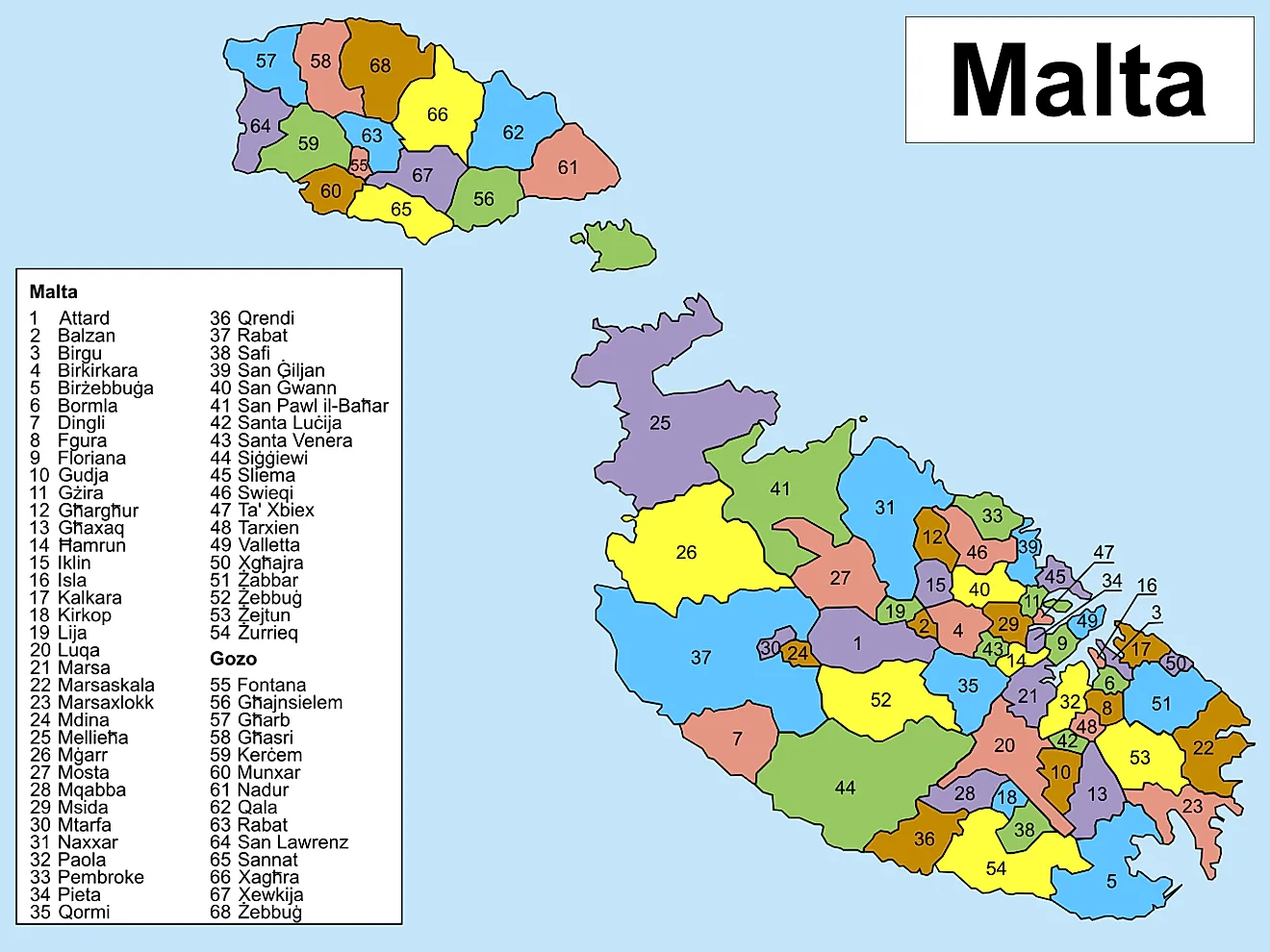
Malta (officially, the Republic of Malta) comprises of the main island of Malta and the smaller islands of Gozo and Comino. Malta is subdivided into 68 localities. In alphabetical order, the 68 localities (Il-lokalita) are: Attard, Balzan, Birgu, Birkirkara, Birzebbuga, Bormla, Dingli, Fgura, Floriana, Fontana, Ghajnsielem, Gharb, Gharghur, Ghasri, Ghaxaq, Gudja, Gzira, Hamrun, Iklin, Imdina, Imgarr, Imqabba, Imsida, Imtarfa, Isla, Kalkara, Kercem, Kirkop, Lija, Luqa, Marsa, Marsaskala, Marsaxlokk, Mellieha, Mosta, Munxar, Nadur, Naxxar, Paola, Pembroke, Pieta, Qala, Qormi, Qrendi, Rabat, Rabat (Ghawdex), Safi, San Giljan/Saint Julian, San Gwann/Saint John, San Lawrenz/Saint Lawrence, Sannat, San Pawl il-Bahar/Saint Paul's Bay, Santa Lucija/Saint Lucia, Santa Venera/Saint Venera, Siggiewi, Sliema, Swieqi, Tarxien, Ta' Xbiex, Valletta, Xaghra, Xewkija, Xghajra, Zabbar, Zebbug, Zebbug (Ghawdex), Zejtun and Zurrieq.
With an area of 316 sq. km, Malta is the 10th smallest country in the world. With a population of about 5.15 lakhs people, Malta is the 4th most densely populated country in the world.
Located on a peninsula between two natural harbours, in the south-eastern part of the island nation, is Valletta – the capital city of Malta. With an area of 0.61 sq. km, it is the southernmost capital of Europe and the smallest capital city of EU. Valletta is Malta’s chief cultural center and also the country’s administrative and commercial hub. Valletta has the island’s largest harbour – Grand Harbour.
Where is Malta?
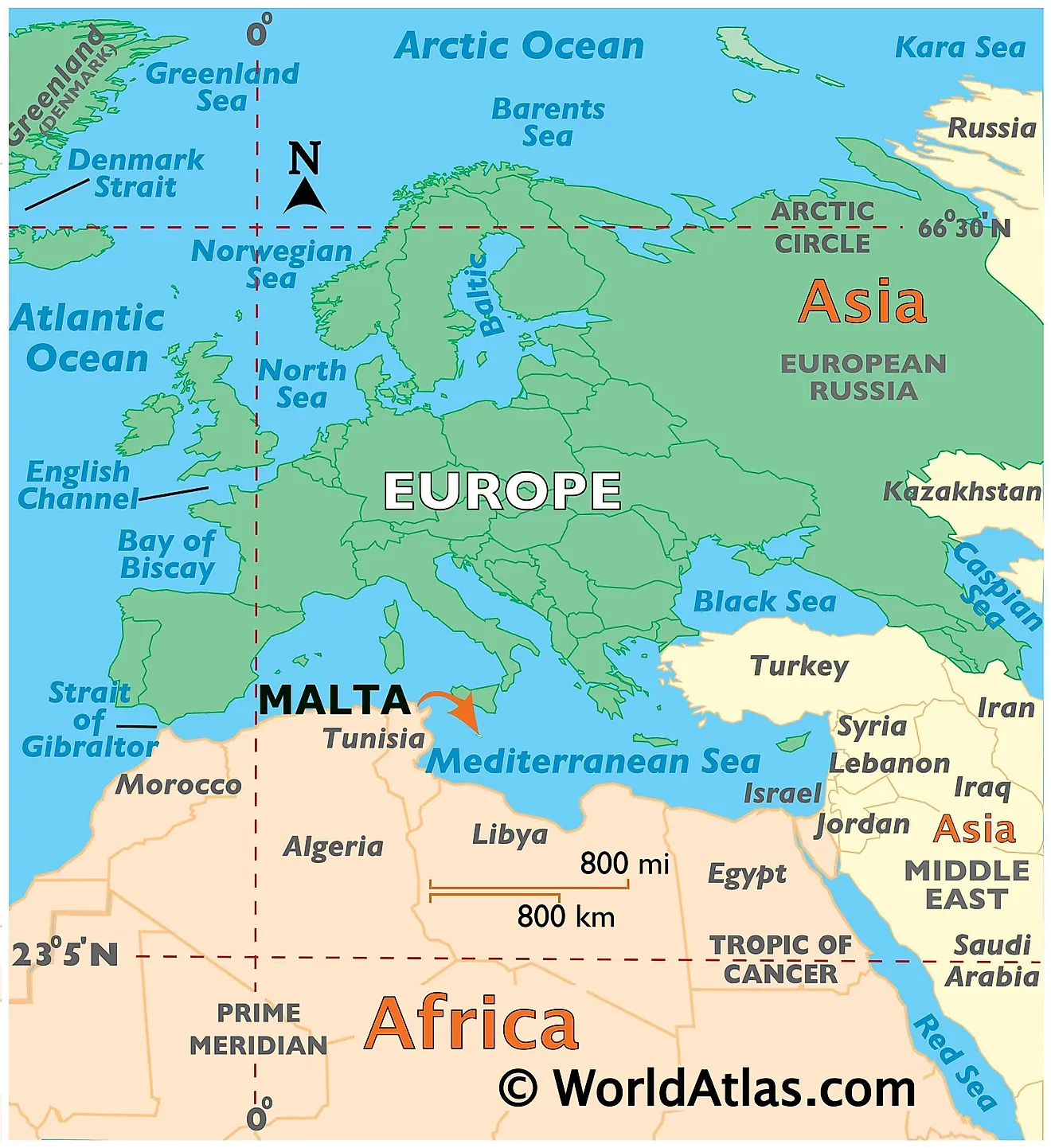
The small island Nation of Malta is an archipelago located in the southern-central region of the Mediterranean Sea, in Southern Europe. It is positioned both in the Northern and Eastern hemispheres of the Earth. Malta is situated about 80km South of Sicily (Italy), 284km East of Tunisia and 333 km North of Libya.
Regional Maps: Map of Europe
Outline Map of Malta
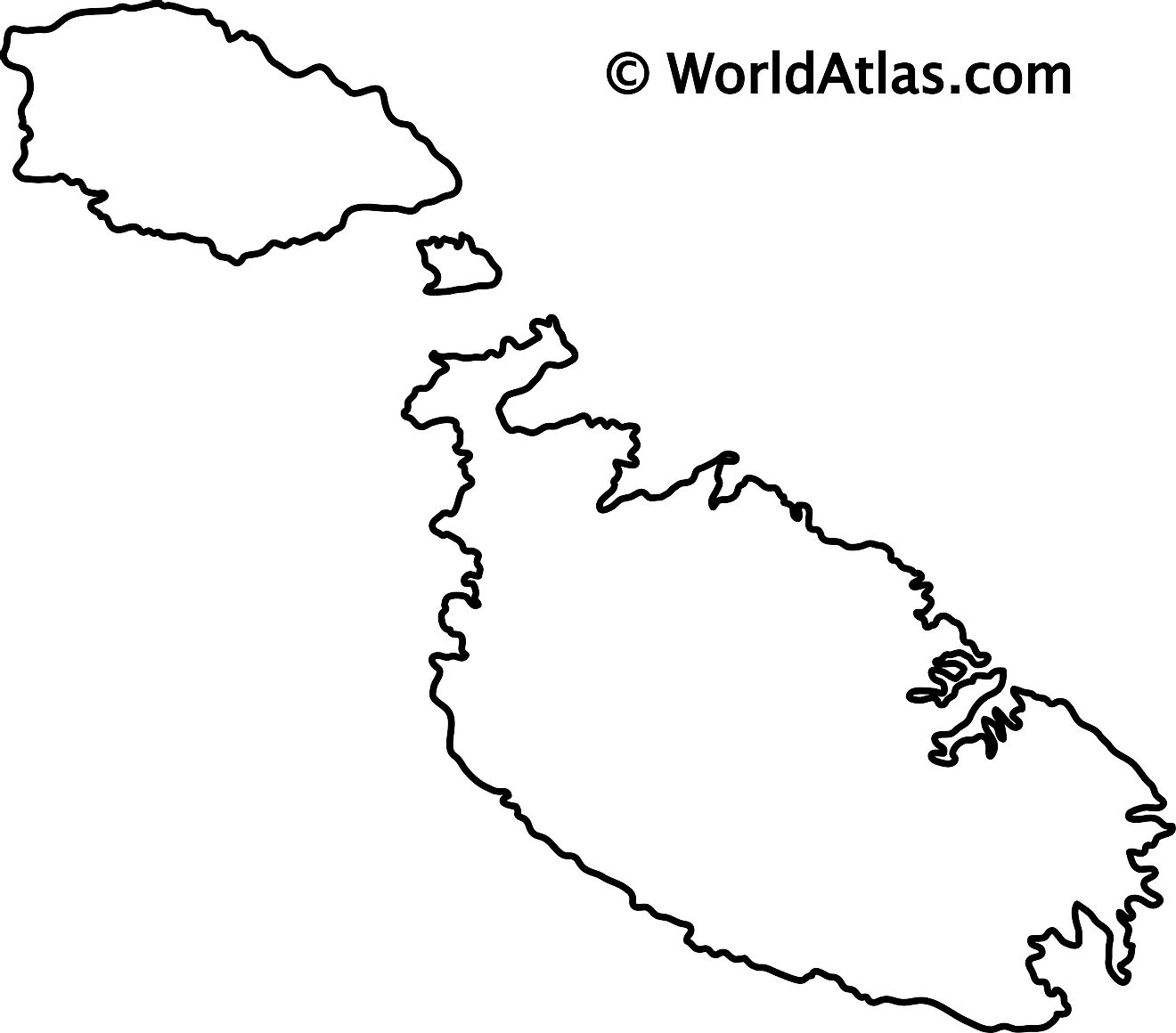
The above outline map is of the archipelago of Malta showing its major islands. It is one of the world's smallest countries. The map can be downloaded, printed, and used for coloring or educational work.
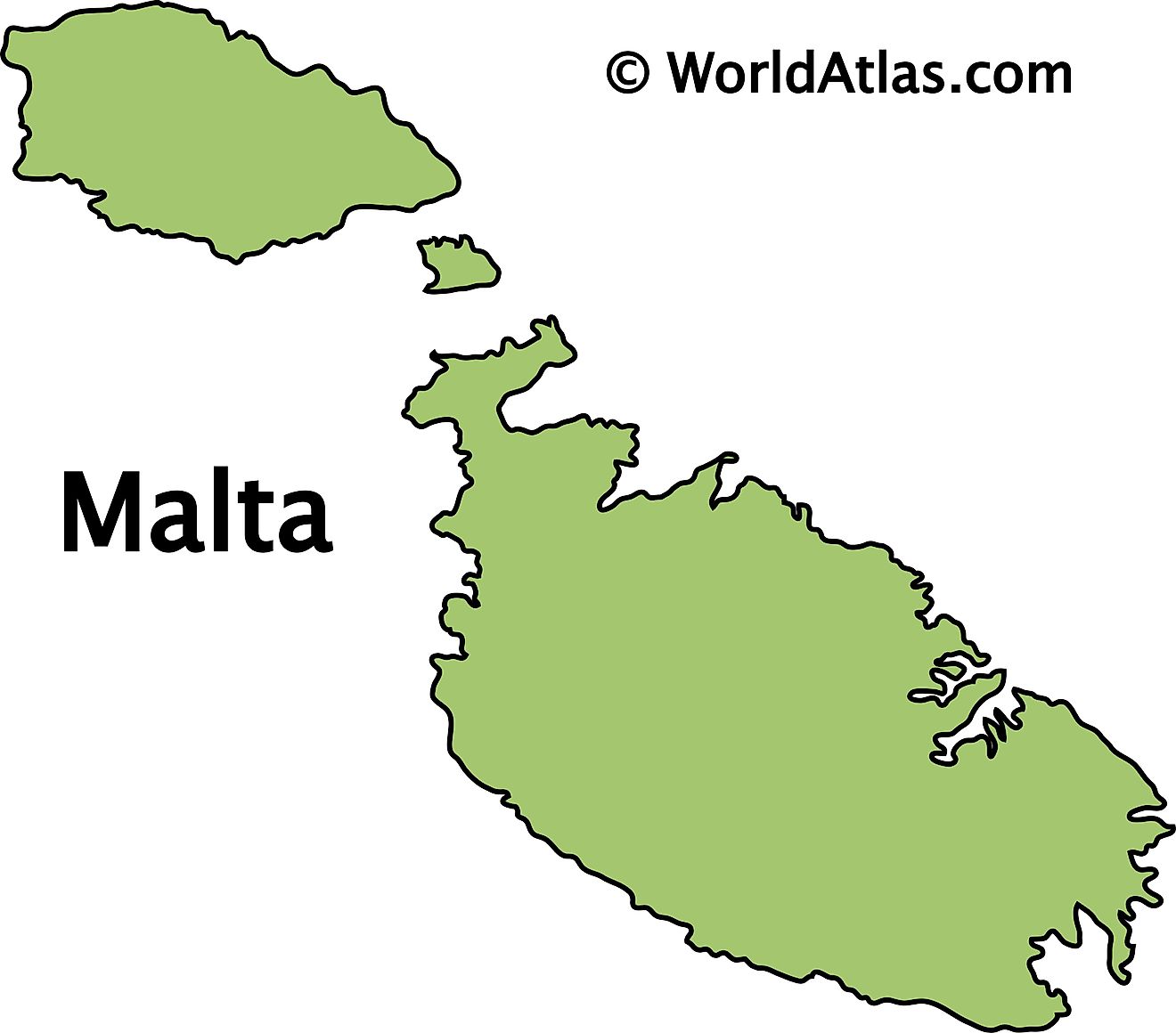
The above map represents the archipelago of Malta, an island nation in the Mediterranean Sea. It is part of Southern Europe and is located to the south of Italy.
Key Facts
| Legal Name | Republic of Malta |
|---|---|
| Flag |
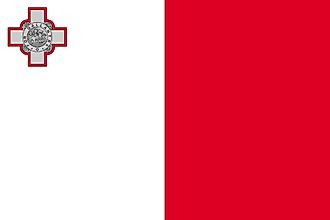
|
| Capital City | Valletta |
| 35 53 N, 14 30 E | |
| Total Area | 316.00 km2 |
| Land Area | 316.00 km2 |
| Water Area | N/A |
| Population | 521,828 |
| Currency | Euros (EUR) |
| GDP | $24.32 Billion |
| GDP Per Capita | $46,609.23 |
This page was last updated on February 24, 2021