Maps of Greece
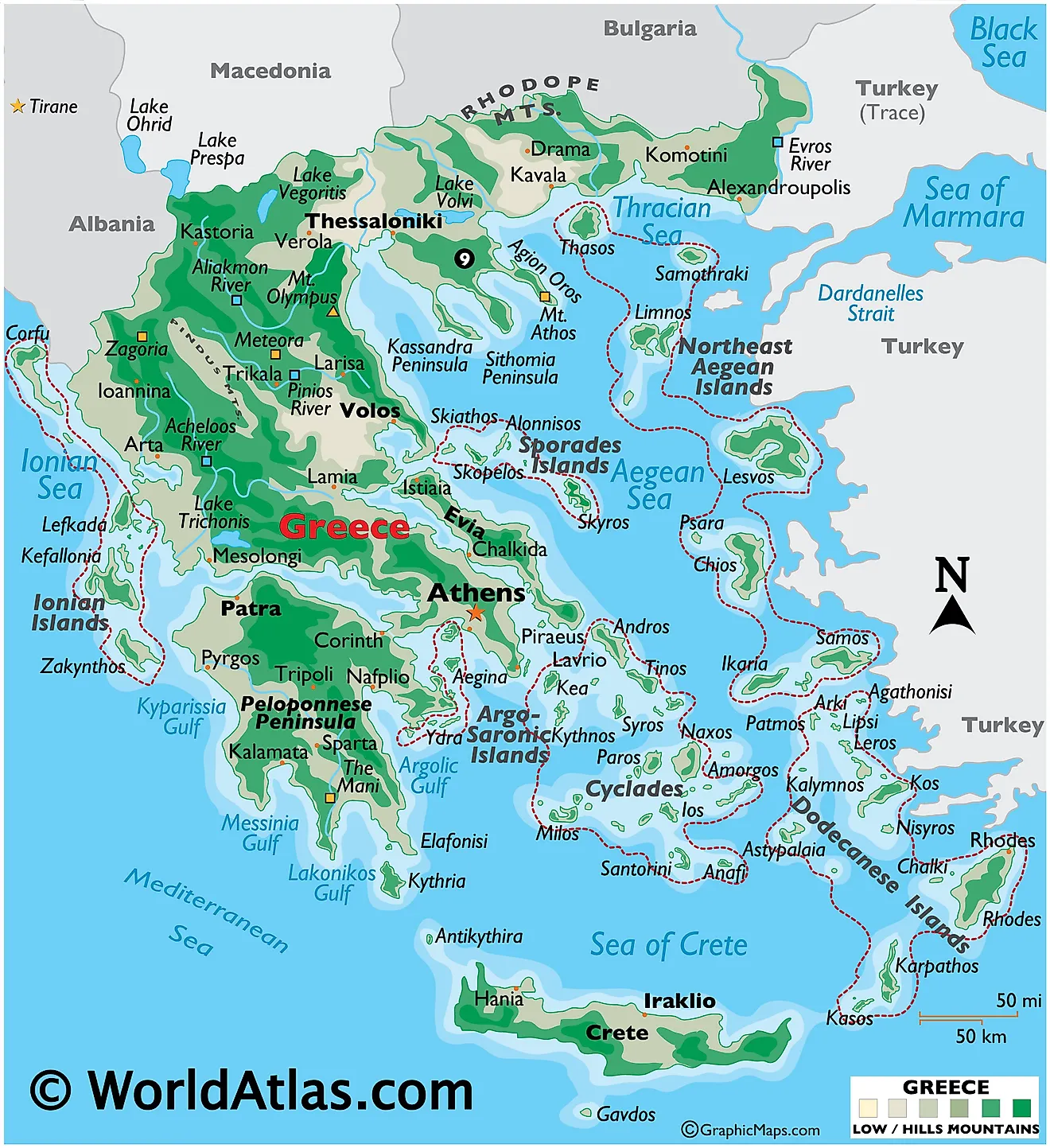
Occupying the southern most part of the Balkan Peninsula, Greece and its many islands (almost 1,500) extend southward from the European continent into the Aegean, Cretan, Ionian, Mediterranean and Thracian seas.
Crete and Evia are its two largest islands and major island groups include the Argo-Saronic, Cyclades, Dodecanese, Ionian, Northeast Aegean and Sporades.
With the vast percentage of its land comprised of hills and rugged mountains, Greece is one of the most mountainous countries in Europe. Its 13,676 km toothy-edged shoreline is deeply indented by dozens of gulfs.
The western half of the country is dominated by the steep peaks of the Pindus mountains, a range of the Dinaric Alps that stretch south from Albania and Macedonia. Typical elevations here exceed 2,500 meters, and those mountains are punctuated by numerous lakes, rivers and wetlands.
The highest Greek mountain is Mount Olympus, rising to 2,918 meters (9,570 ft). To its immediate southwest stand the massive Meteora rock formations; gigantic pillars of stones worn smooth by wind and water over thousands of years.
In the far-north along its border with Bulgaria, the heavily-forested Southern Rhodope Mountain range spreads across the land.
Greece is home to a series of ancient volcanoes, including those on the islands of Kos, Methana, Milos, Nisyros, Poros and Santorini. None are currently erupting, and the last recorded significant eruptions occurred on the island of Nisyros in 1887/1888, and on the island of Santorini in 1950.
The Peloponnese Peninsula is slightly separated from the mainland by the Corinth Canal, a 4-mile long man-made canal through the Isthmus of Corinth. This narrow canal is used primarily for shipping purposes.
While most of the smaller rivers in Greece dry up in the heat of summer, rivers of note include the Acheloos, Aliacmon, Evros and Pinios. Lakes of size include Trichonis, Vegoritis and Volvi.
Regions of Greece Map
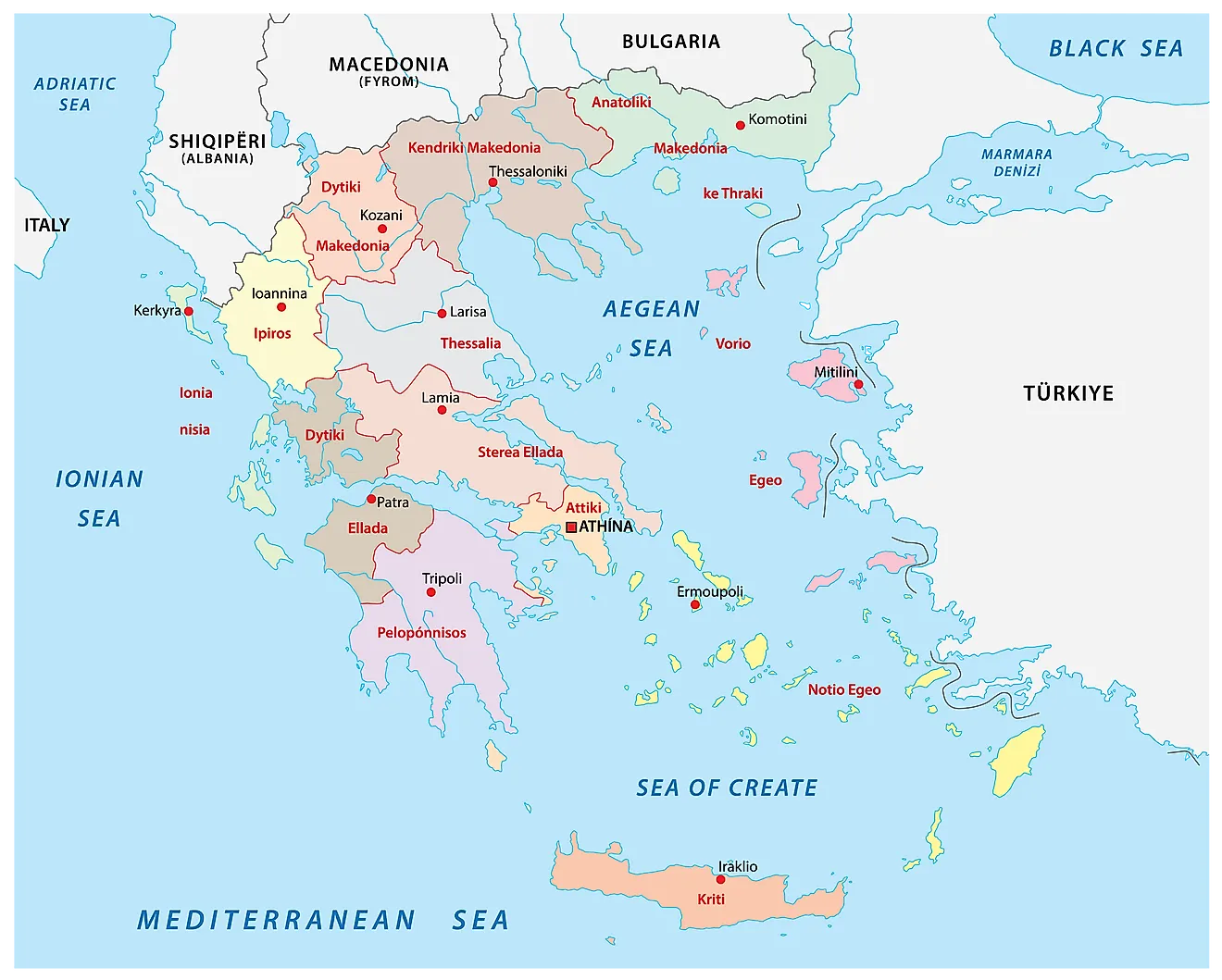
Greece (officially, the Hellenic Republic) is divided into 13 administrative regions (perifereies, singular - perifereia) and 1 autonomous monastic state(aftonomi monastiki politeia). In alphabetical order, the regions are: Anatoliki Makedonia kai Thraki (East Macedonia and Thrace), Attiki (Attica), Dytiki Ellada (West Greece), Dytiki Makedonia (West Macedonia), Ionia Nisia (Ionian Islands), Ipeiros (Epirus), Kentriki Makedonia (Central Macedonia), Kriti (Crete), Notio Aigaio (South Aegean), Peloponnisos (Peloponnese), Sterea Ellada (Central Greece), Thessalia (Thessaly) and Voreio Aigaio (North Aegean). Situated in north eastern Greece, Agion Oros (Mount Athos) is a monastic community and an autonomous region under Greek sovereignty.
Located in the Attica Region, on a peninsula that extends into the Aegean Sea is, Athens – the capital and the largest city in Greece. Athens is one of the oldest continuously inhabited cities in the world. Athens serves as the administrative, cultural, industrial and economic centers of Greece. It is also one of the biggest economic centers in South Eastern Europe. Port Piraeus in Athens is the 2nd largest port in the world and also the largest passenger port in Europe.
Where is Greece?
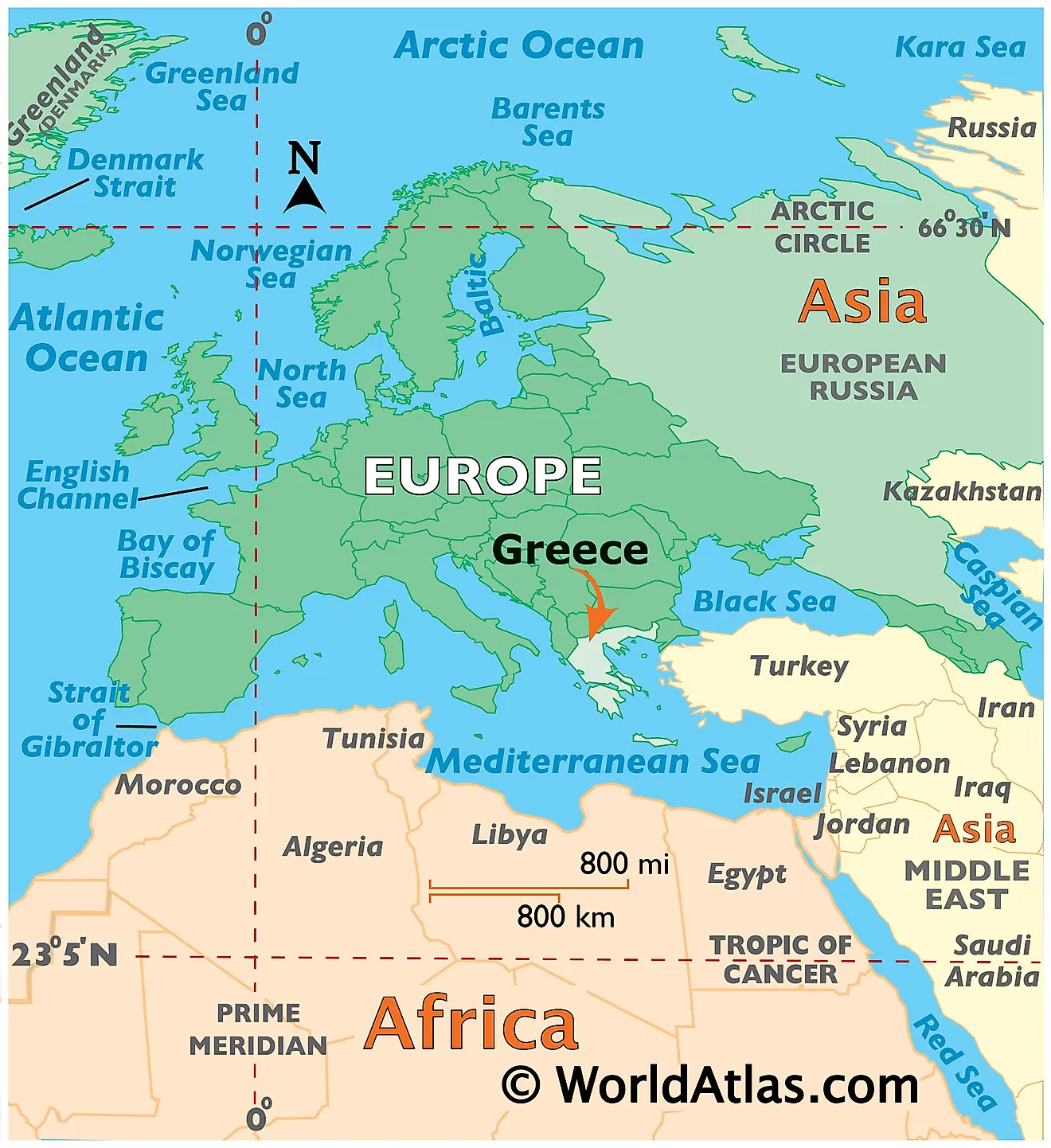
Greece is located in south eastern region of the European continent, on the far southern edge of the Balkan Peninsula. Greece lies at the juncture of the continents of Europe, Asia and Africa. It is positioned both in the Northern and Eastern hemispheres of the Earth. Greece is bordered by 4 Nations: by North Macedonia and Bulgaria in the north, Albania in the northwest, and Turkey in the northeast. It is also bounded by the Aegean Sea in the east, Ionian Sea in the west, the Cretan Sea and the Mediterranean Sea in the south.
Greece Bordering Countries: Albania, Macedonia, Turkey, Bulgaria.
Regional Maps: Map of Europe
Outline Map of Greece
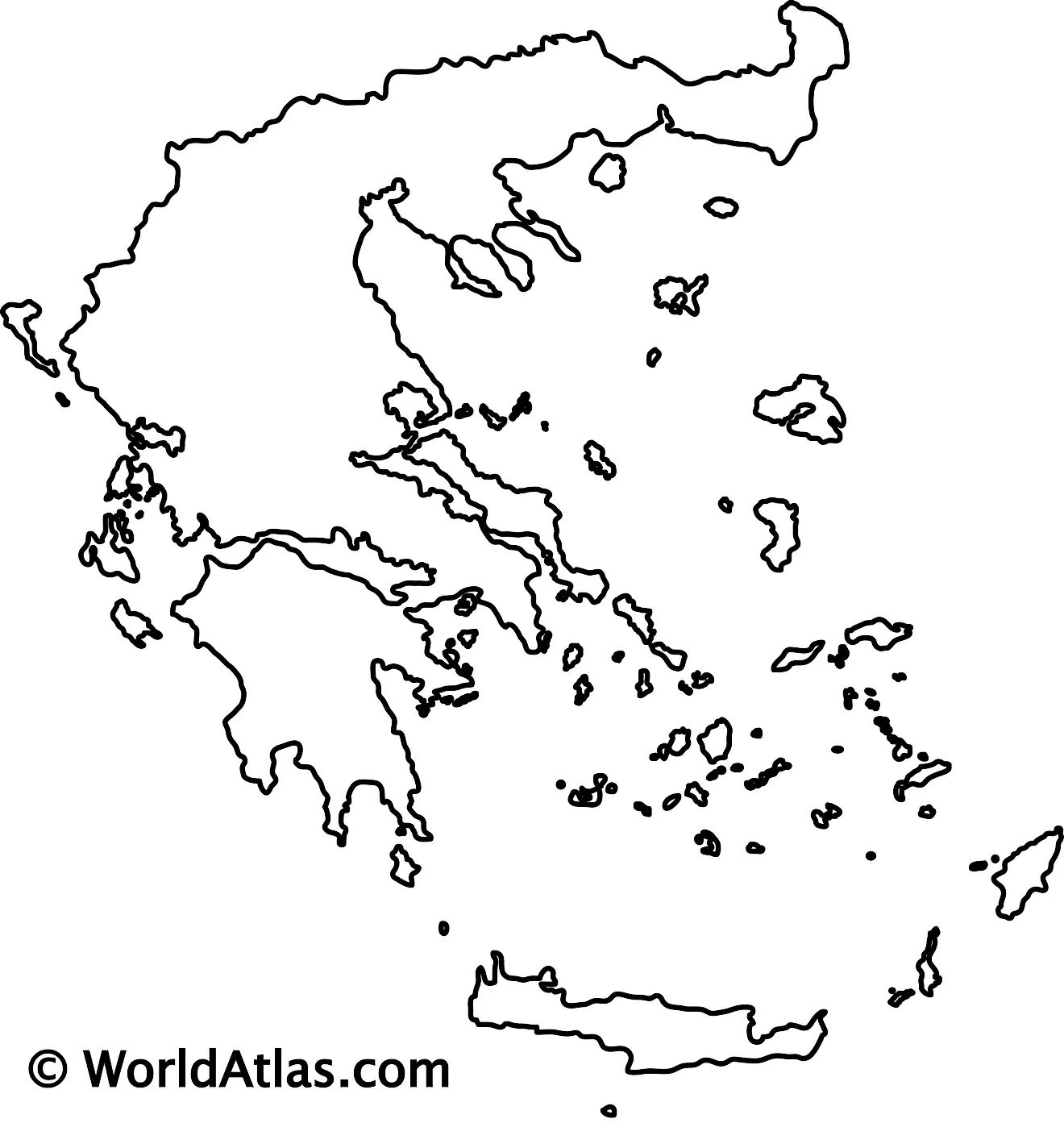
The blank outline map above is of the European Mediterranean nation of Greece and its many offshore islands. The map may be downloaded, printed, and used for coloring or educational work like map-pointing activities.
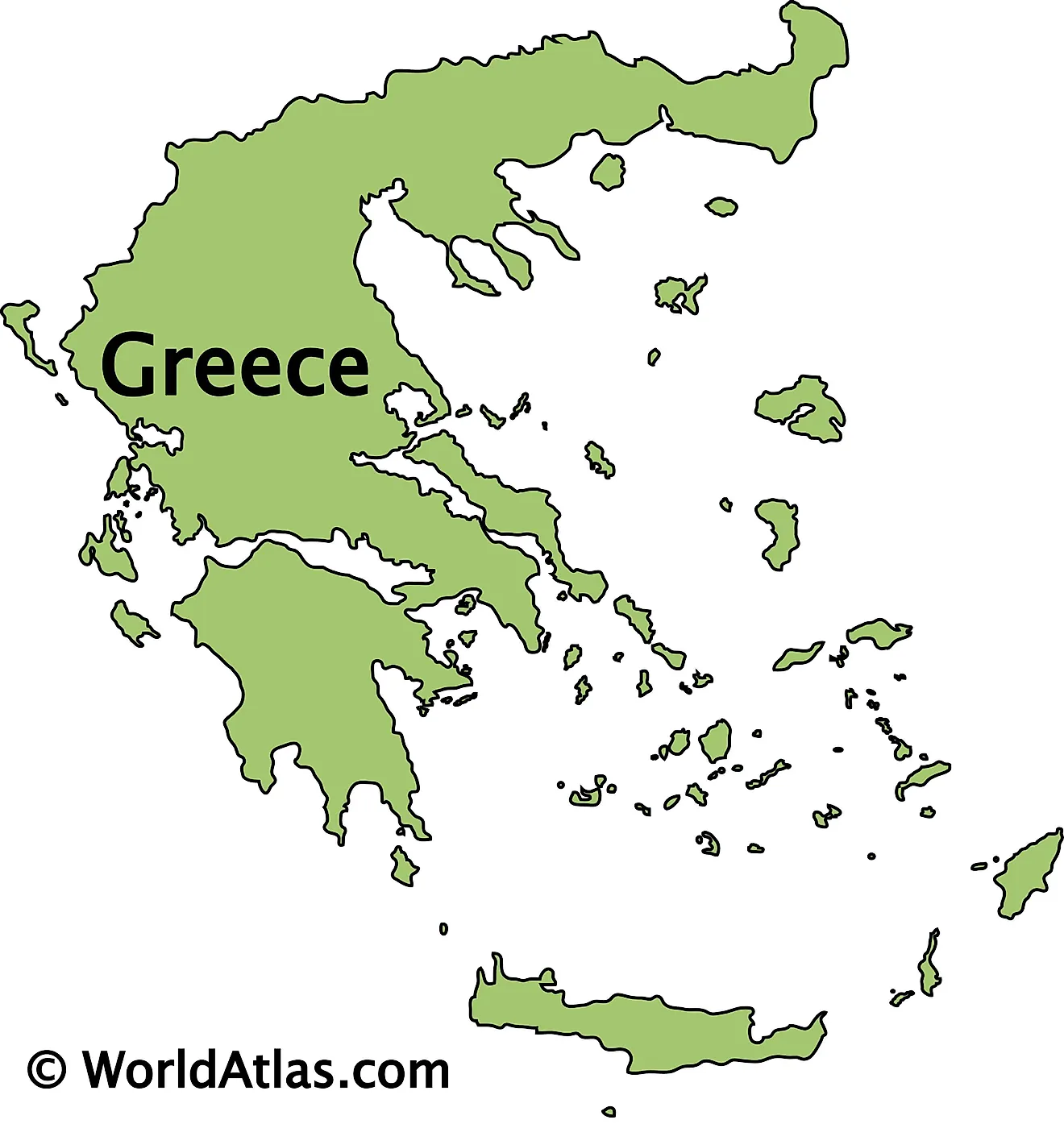
The outline map above represents the sovereign European nation of Greece. As observed on the map above, the country has a large territory and several smaller, scattered ones. The large part is mainland Greece that is part of mainland Europe. The smaller ones are offshore islands of Greece in the Mediterranean Sea.
Key Facts
| Legal Name | Hellenic Republic |
|---|---|
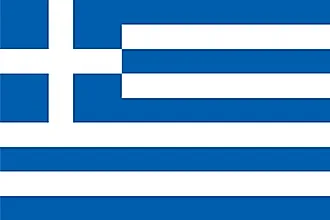
| Flag |
|
| Capital City | Athens |
| 37 59 N, 23 44 E | |
| Total Area | 131,957.00 km2 |
| Land Area | 130,647.00 km2 |
| Water Area | 1,310.00 km2 |
| Population | 10,716,322 |
| Major Cities |
|
| Currency | Euros (EUR) |
| GDP | $209.85 Billion |
| GDP Per Capita | $19,582.54 |
This page was last updated on February 24, 2021