Maps of Syria
Syria occupies an area of around 185,180 sq. km in the Arabian Peninsula.
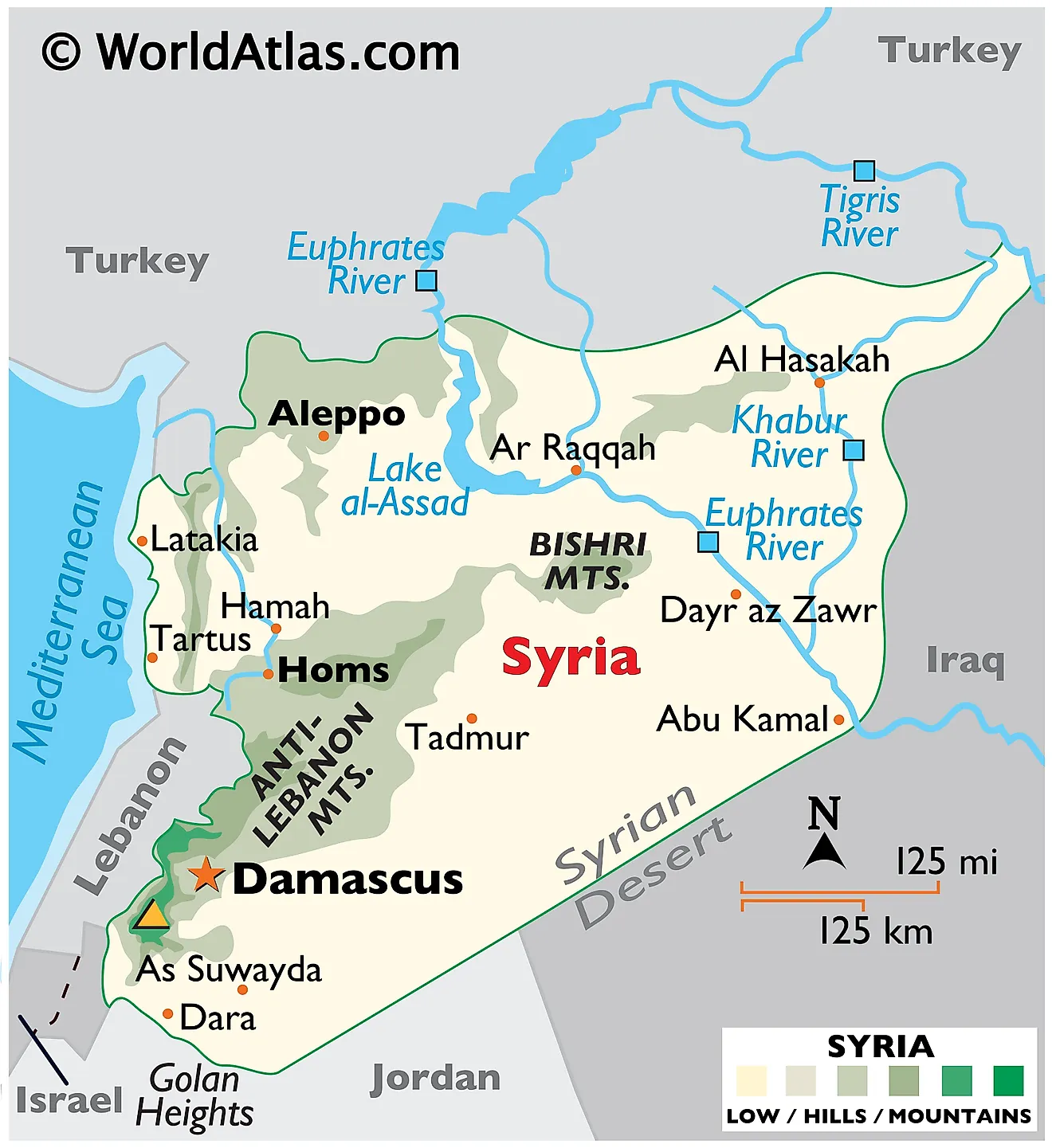
In general terms, Syria is a flat desert plateau, dissected by mountains with a narrow coastal plain to the west that fronts the Mediterranean Sea.
The coastline of Syria is around 180 km long and features sandy bays, low cliffs, and rocky headlands.
As observed on the map above, the landscape of the west-central and northern regions of Syria are dominated by the Anti-Lebanon and Bishri mountains. The former marks the country's boundary with Lebanon. The highest point, Mt Hermon, stands in the far southwest at 2,814 m. It has been marked with a yellow upright triangle. Several smaller mountains are scattered about Syria.
The rest of the country is covered by the undulating plains of the Syrian Desert where the elevation varies from 300 to 500m.
Significant bodies of water include Lake al-Assad (a man-made reservoir,) created by a dam on the Euphrates River.The Euphrates and its longest tributary, the Khabur, (both rising in the mountains of Turkey) are the major rivers. Dozens of much smaller rivers flow down into the central valleys.
Governorates of Syria Map
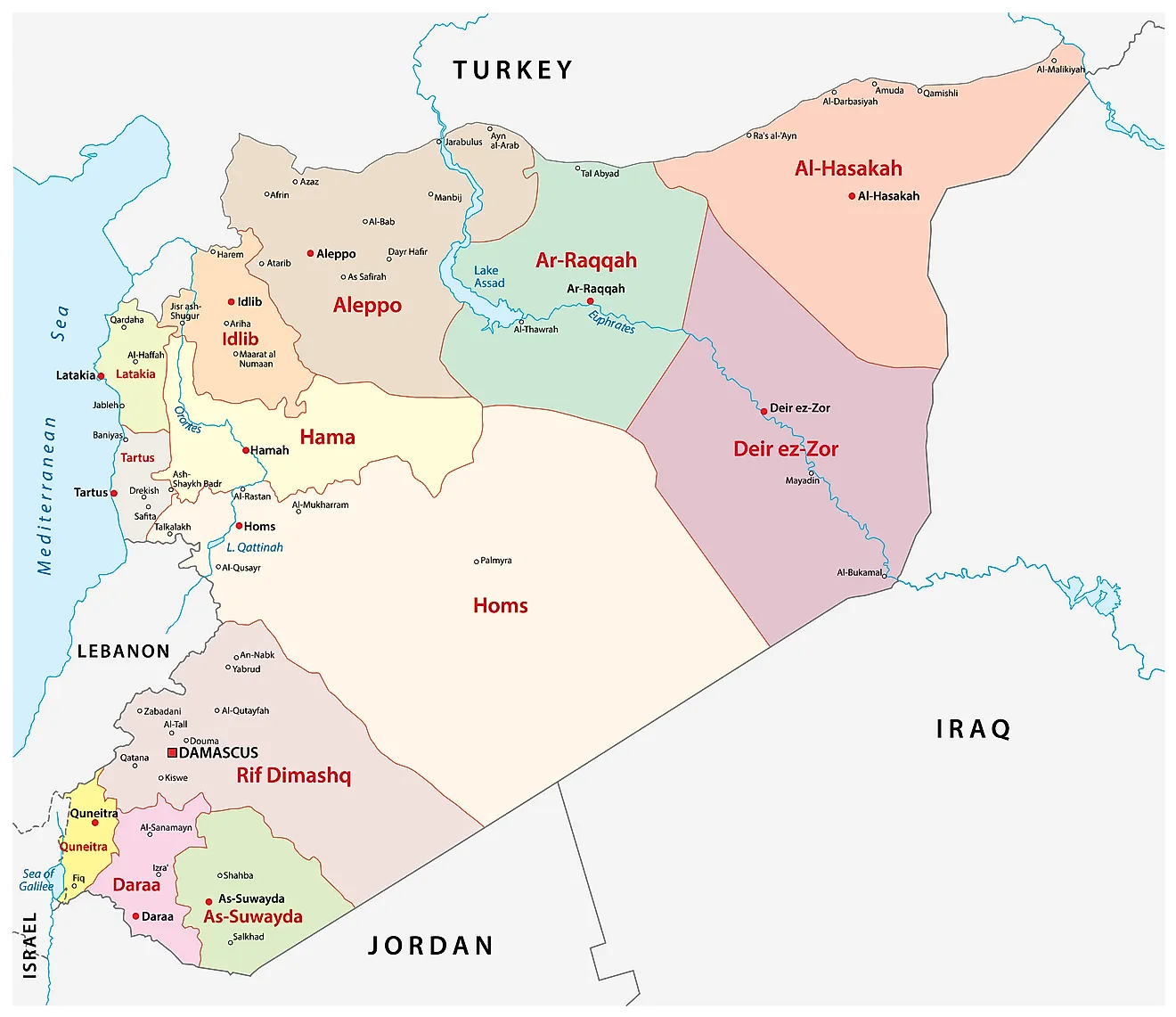
Syria (officially, Syrian Arab Republic) is a unitary republic divided into 14 governorates (sing. muhafazah). In alphabetical order these governorates are: Aleppo, Al-Hasakah, Al-Suwayda, Daraa, Damascus, Deirez-zor, Hama, Homs, Idlib, Latakia, Quneitra, Raqqa, Rifdimashq and Tartus. These governorates are subdivided into 61 districts (sing. mintaqah) which in turn have a number of sub-districts.
With an area of 42,223 sq.km, the Homs Governorate is the largest in the country while Aleppo is the most populous one.
Damascus, one of the world's oldest continuously inhabited cities, is the capital and the largest city of Syria. It is located in South-western Syria at the foothills of the Anti-Lebanon mountain range.
Where is Syria?
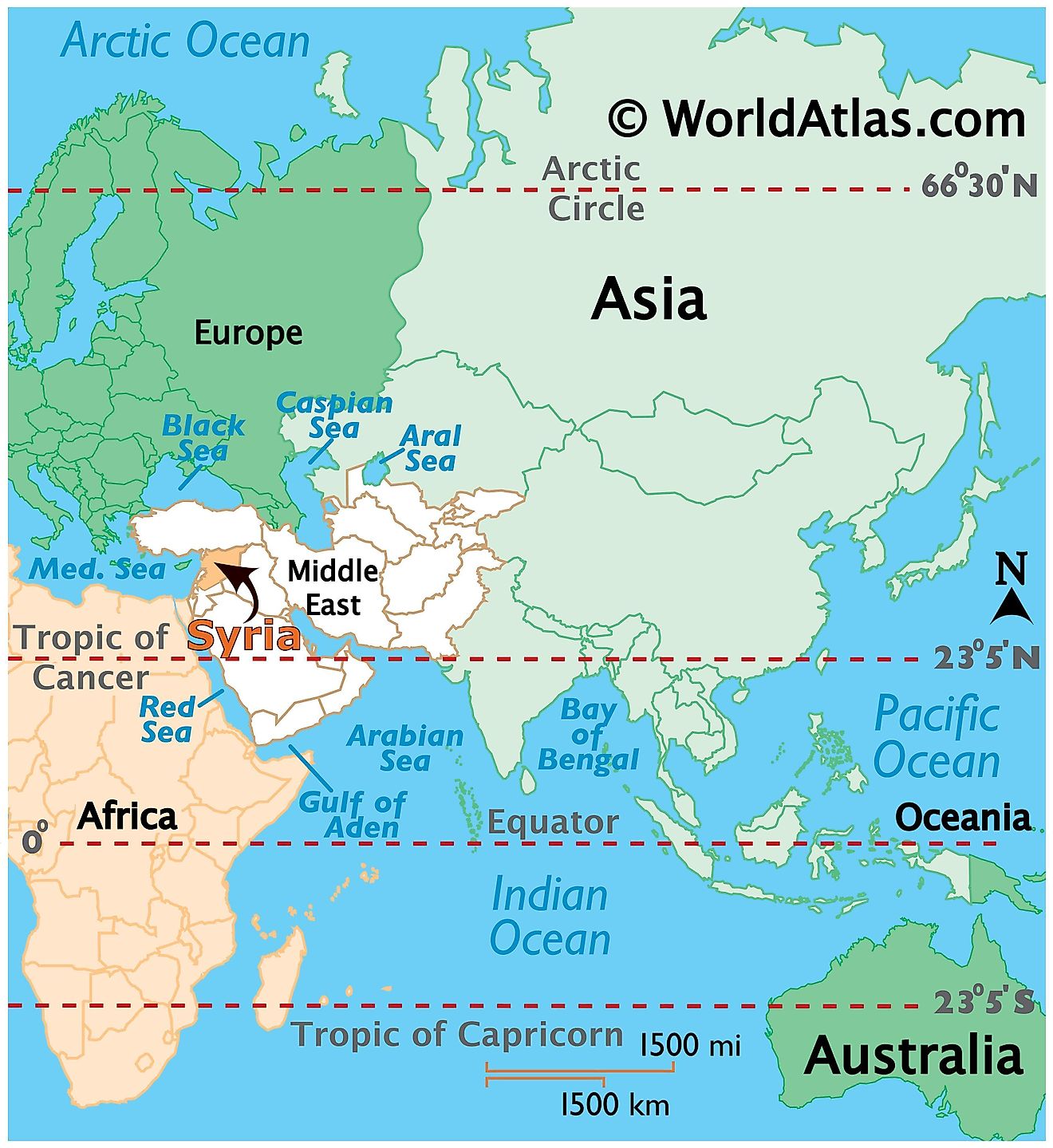
Syria is a Western Asian country located in Northern and Eastern hemispheres of the Earth. It is bordered by five Asian Nations: Turkey in the north, Lebanon in the west, Iraq in the east, Jordan in the south and Israel in the southwest. Located to the west is the Mediterranean Sea, which stretches along the entire Syrian coastline.
Syrian Arab Republic Bordering Countries: Iraq, Israel, Jordan, Lebanon, Turkey.
Regional Maps: Map of Asia
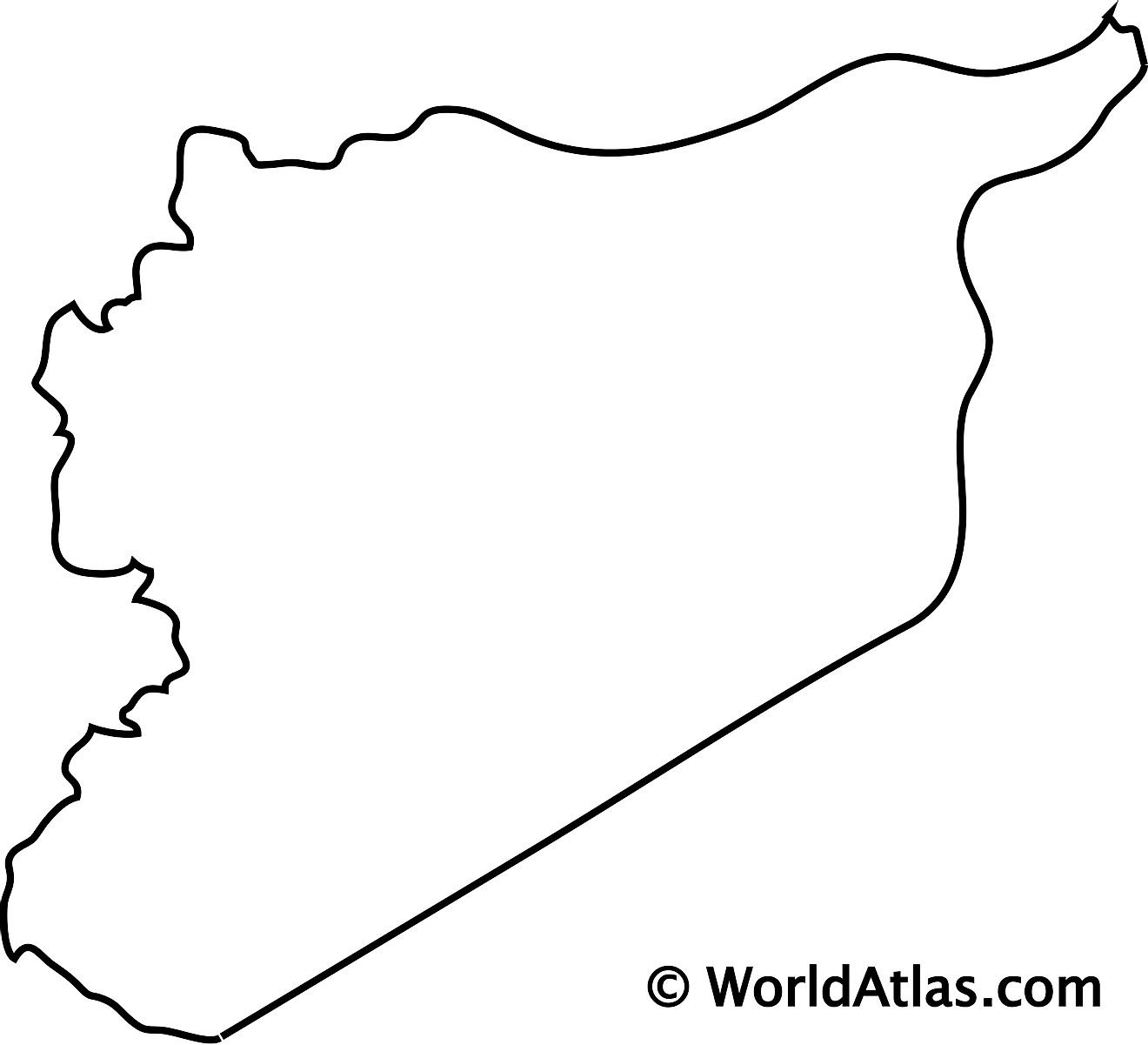
Outline Map of Syria
Key Facts
| Legal Name | Syrian Arab Republic |
|---|---|
| Flag |
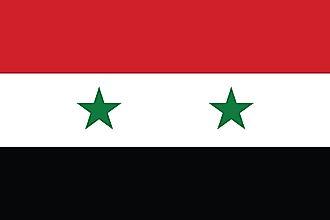
|
| Capital City | Damascus |
| 33 30 N, 36 18 E | |
| Total Area | 187,437.00 km2 |
| Land Area | 185,887.00 km2 |
| Water Area | 1,550.00 km2 |
| Population | 17,070,135 |
| Major Cities |
|
| Currency | Syrian pounds (SYP) |
This page was last updated on February 7, 2023