Maps of Cambodia
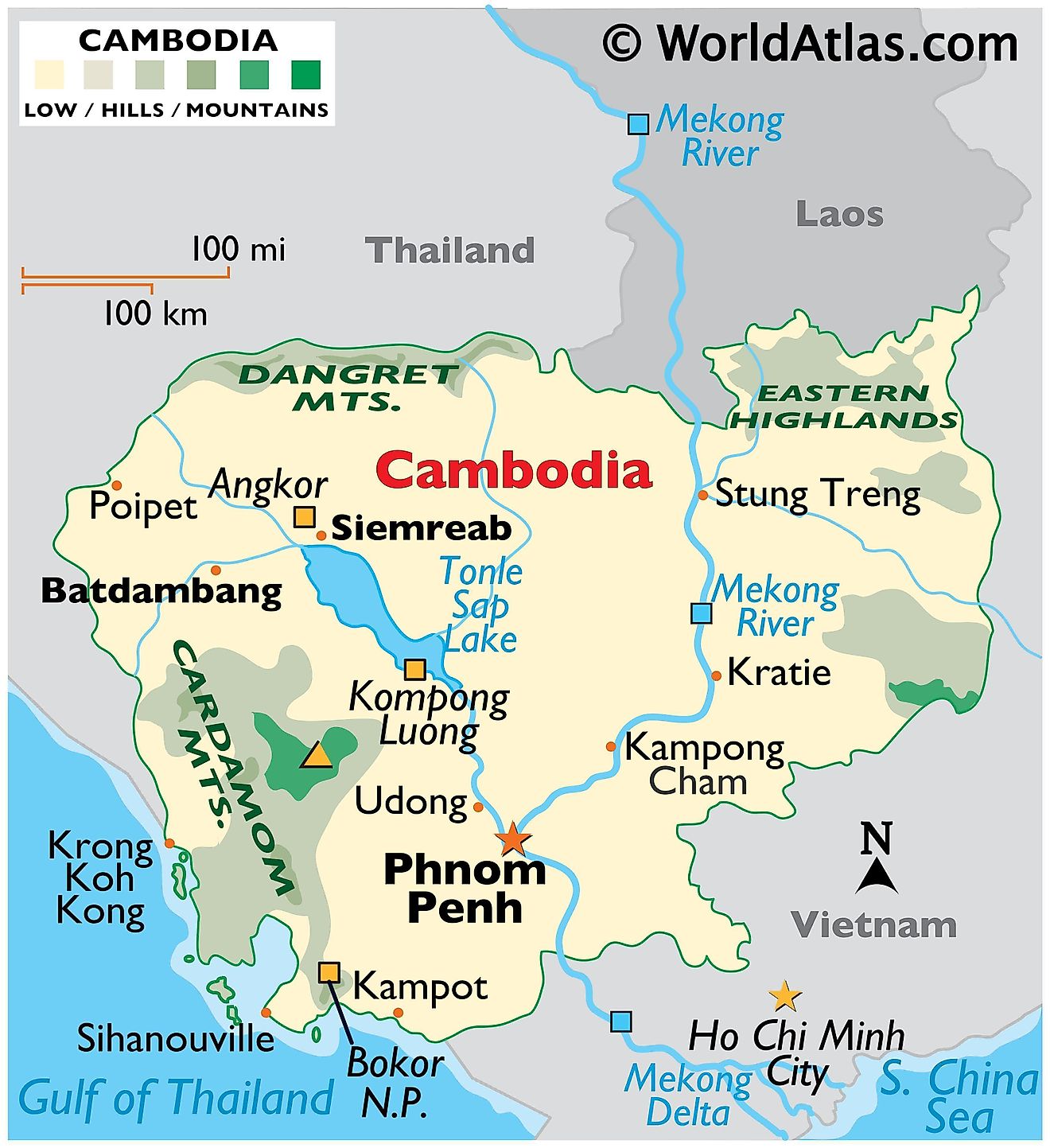
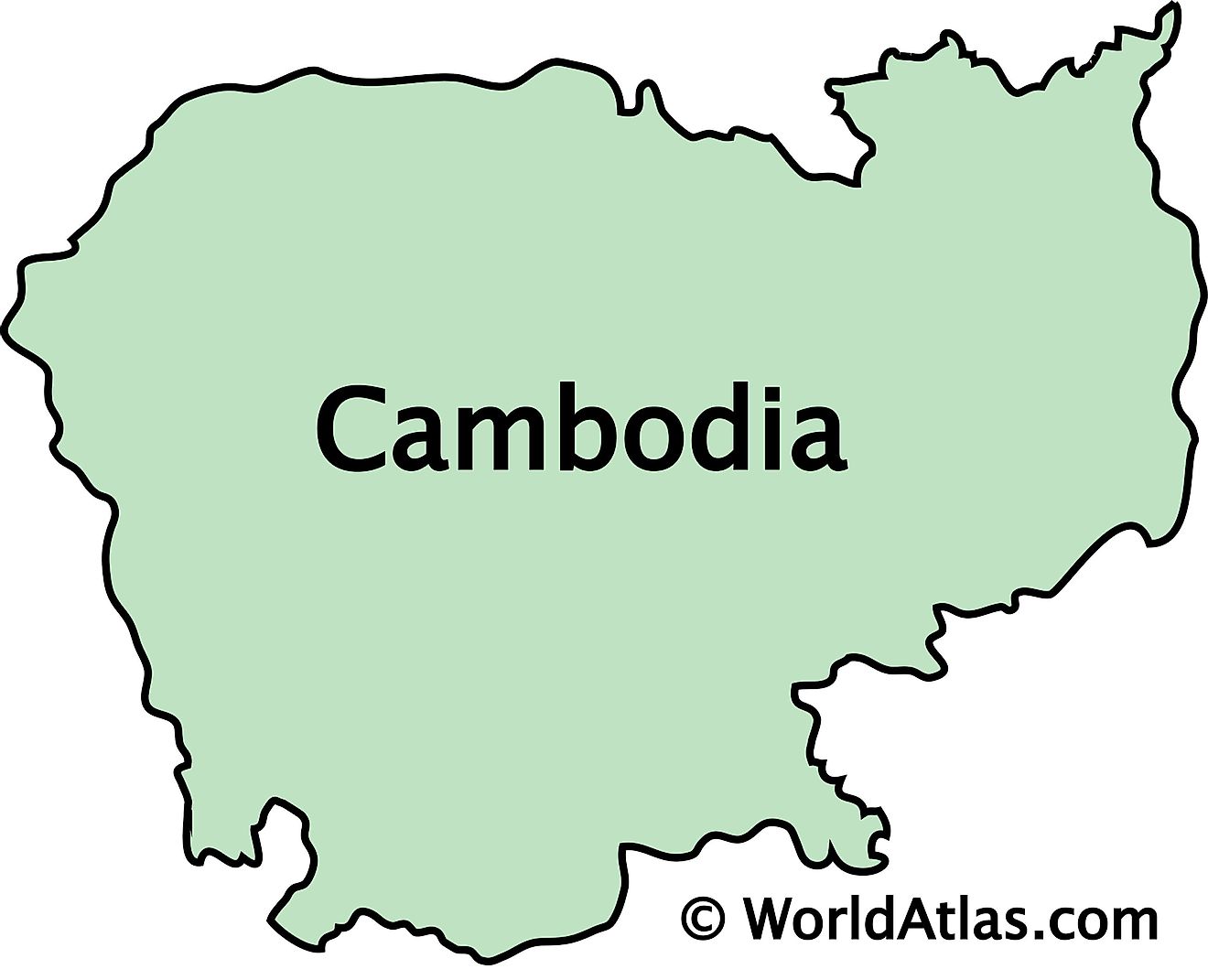
Cambodia occupies an area of 181,035 sq. km in mainland Southeast Asia.
As observed on the physical map above, Cambodia is primarily a low-lying country with the Central Plain occupying an extensive part of its area. The plain features the basin of the Tonle Sap Lake, the Bassac River plain, and the flood-plains of the lowest Mekong River.
The Tonlé Sap Lake is a large lake that is connected to the Mekong River by the 120 km long Tonlé Sap River.
Mountains and highlands are found around the Central Plain region. As observed on the map, the Cardamom Mountains are found to the west and southwest, Dangret Mountains and the Eastern Highlands occur to the north and northeast respectively.
Cambodia also features a 443 km long coast along the Gulf of Thailand to the south and south-west. Over 50 islands are located off the coast of Cambodia.
The highest point in Cambodia (marked by a yellow upright triangle on the map) is the 1,810 m (5,938 ft) high Phnom Aural. The Gulf of Cambodia is the lowest point at 0 m.
Provinces of Cambodia Map
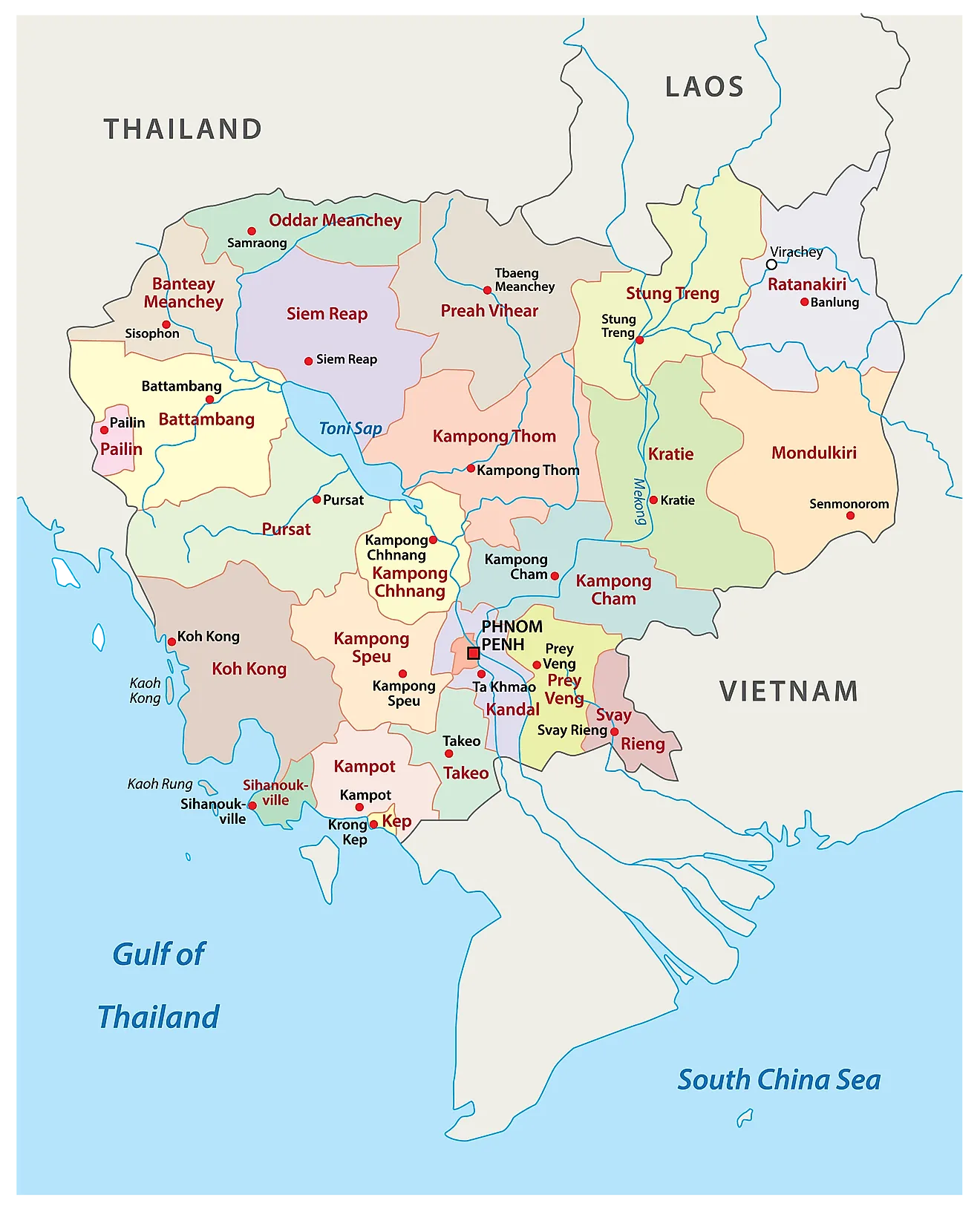
Cambodia (officially, Kingdom of Cambodia) is divided into 21 provinces (khett) and 1 autonomous municipality (krong). In alphabetical order, the provinces are: Banteay Meanchey, Battambang, Kampong Cham, Kampong Chhnang, Kampong Speu, Kampong Thom, Kampot, Kandal, Kep, Koh Kong, Kratie, Modol Kiri, Oddar Meanchey, Pailin, Preah Sihanouk, Preah Vihear, Prey Veng, Pursat, Ratanakiri, Siem Reap, Stung Treng, Svay Rieng, Takeo, Tbong Khmum. Phnom Penh is an autonomous municipality. These provinces are subdivided into 159 districts, 26 municipalities and further into smaller subdivisions.
With an area of 14,288 sq. km, Modol Kiri is the largest province by area and Phnom Penh is the most populous administrative division.
Located in south-central part of the country is Phnom Penh – the capital, the largest and the most populous city of Cambodia. Phnom Penh is also the country’s administrative, cultural, commercial and economic center.
Where is Cambodia?
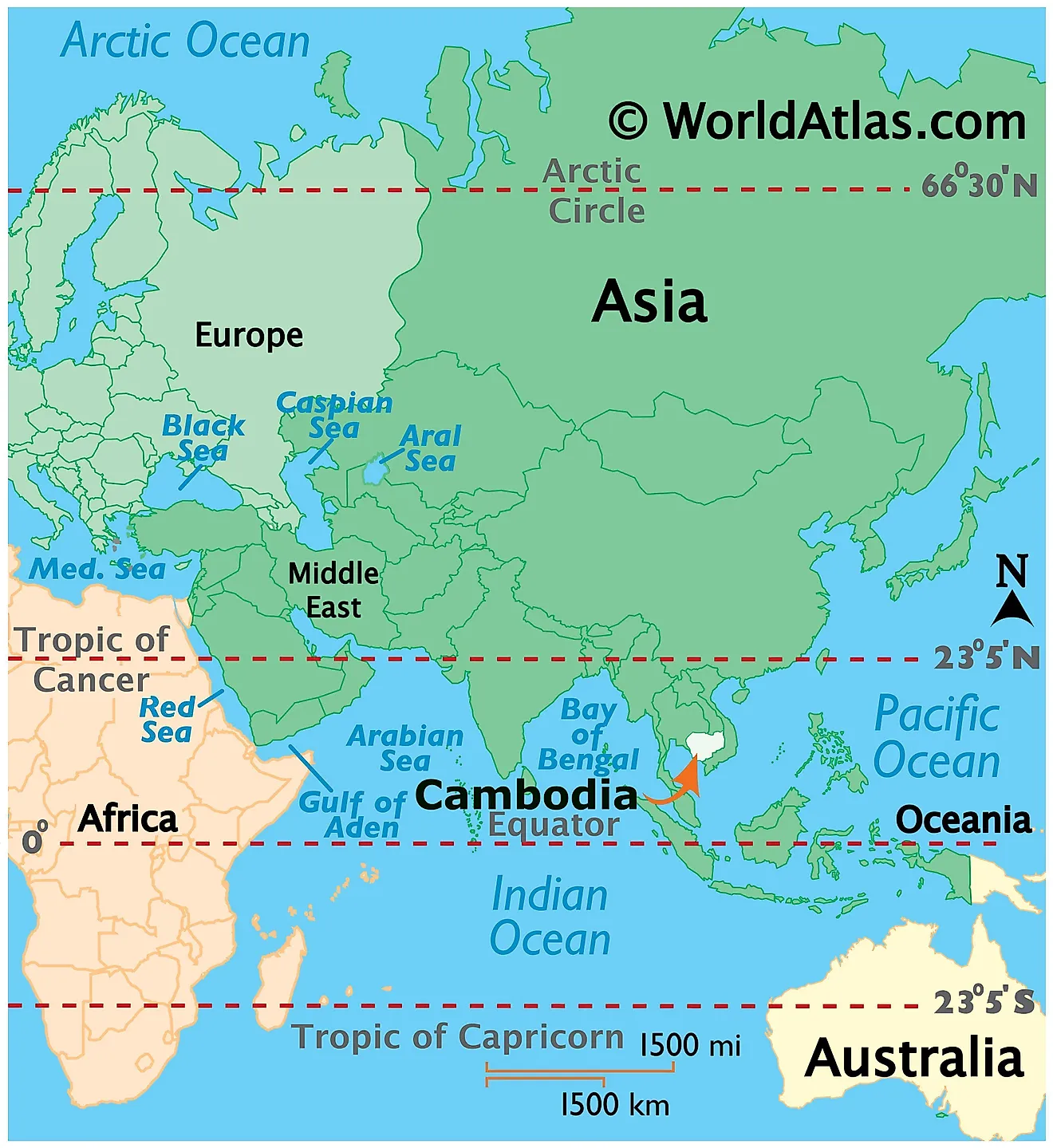
Cambodia is located in the southern portion of the Indo China Peninsula in Southeast Asia. It is situated both in the Northern and Eastern hemispheres of the Earth. Cambodia is bordered by three countries. It is bounded by Vietnam to the east and southeast; Laos to the northeast and Thailand to the northwest. Cambodia is bounded by the Gulf of Thailand to the southwest.
Cambodia Bordering Countries: Vietnam, Thailand, Laos.
Regional Maps: Map of Asia
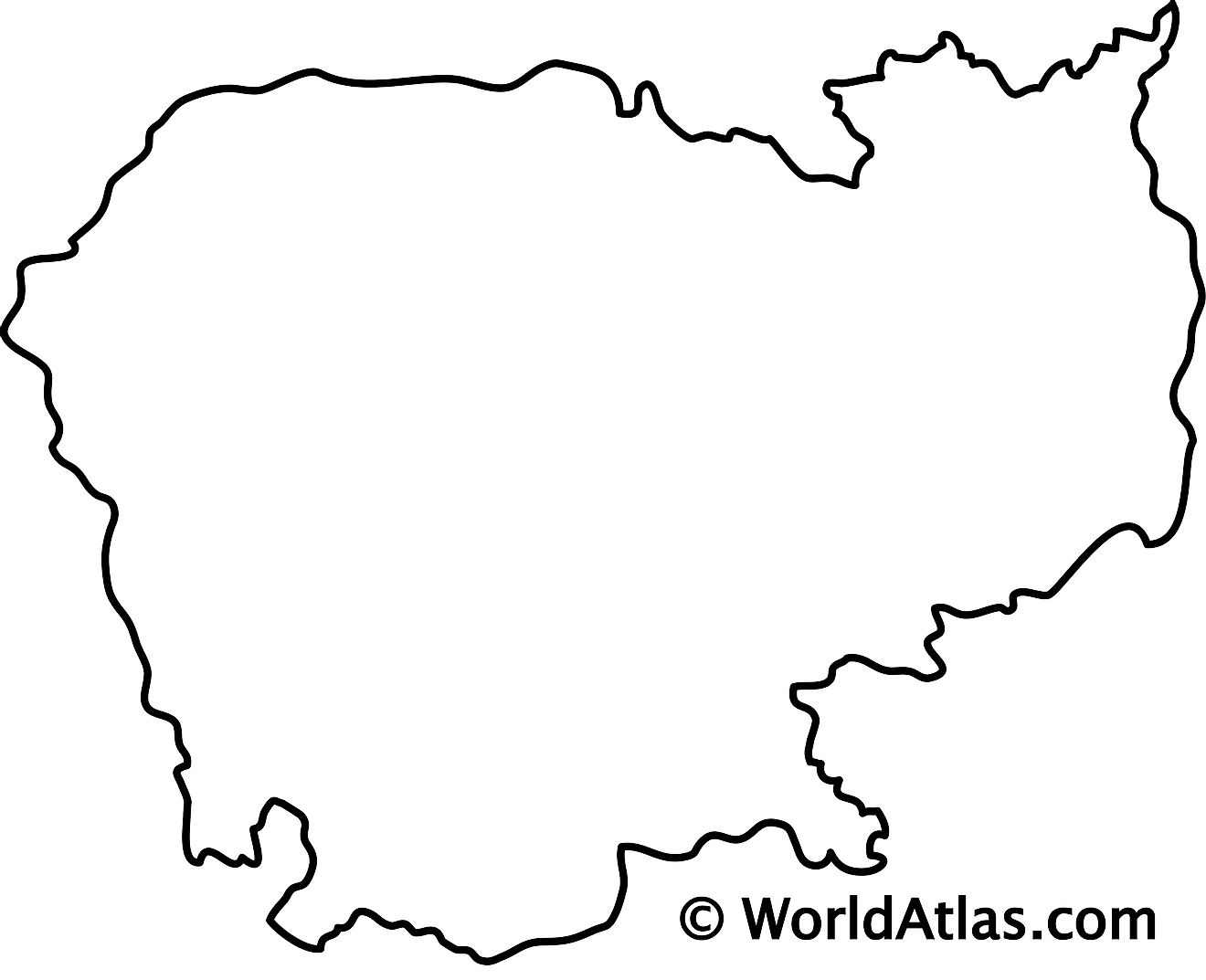
Outline Map of Cambodia
Key Facts
| Legal Name | Kingdom of Cambodia |
|---|---|
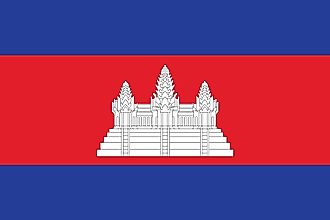
| Flag |
|
| Capital City | Phnom Penh |
| 11 33 N, 104 55 E | |
| Total Area | 181,035.00 km2 |
| Land Area | 176,515.00 km2 |
| Water Area | 4,520.00 km2 |
| Population | 17,230,333 |
| Largest City |
Phnum Pénh (Phnom Penh) (2,281,198) |
| Currency | Riels (KHR) |
| GDP | $46.35 Billion |
| GDP Per Capita | $2,690.20 |
This page was last updated on February 24, 2021