Maps of Equatorial Guinea
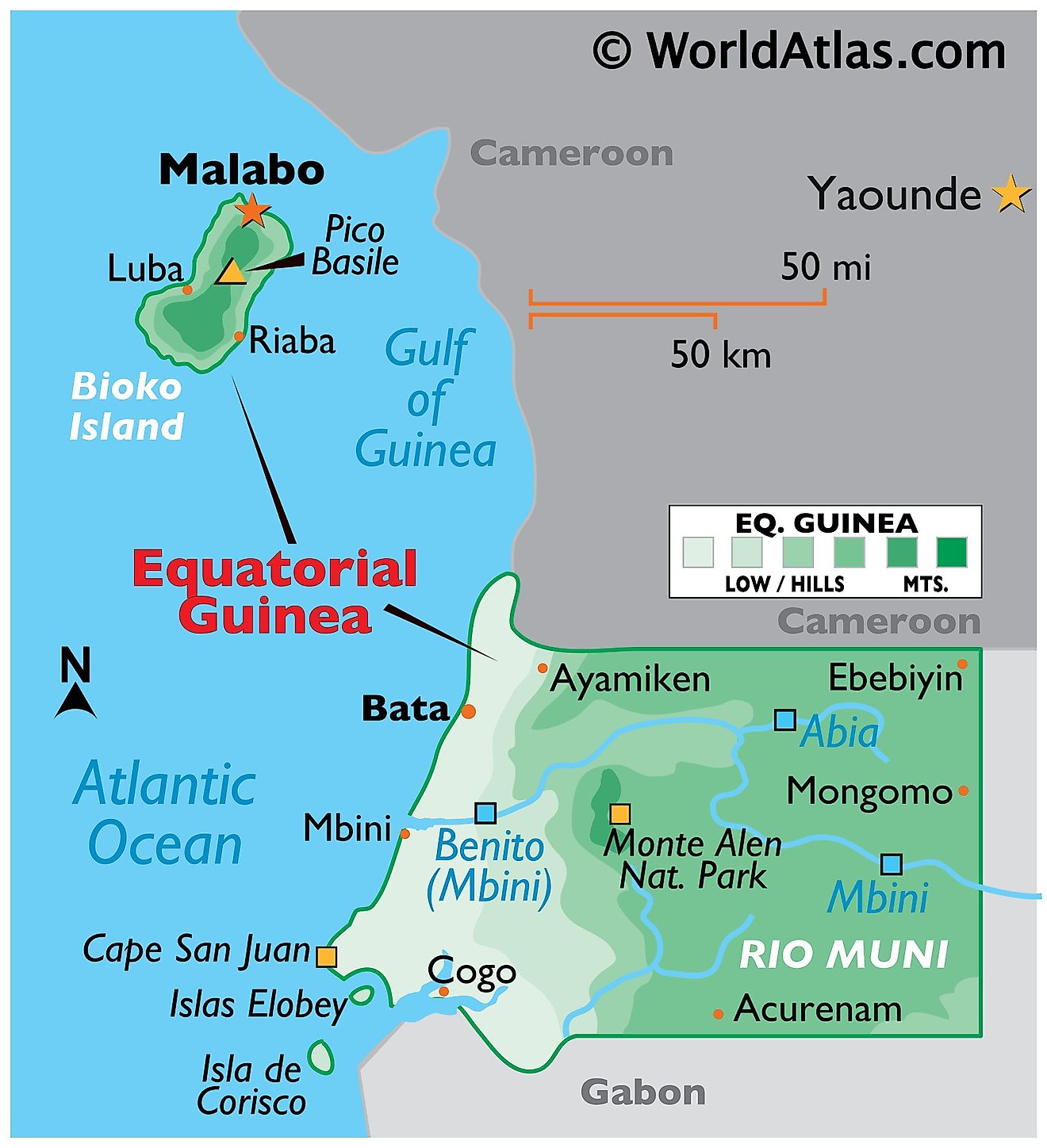
As observed on the physical map above, Equatorial Guinea in west-central Africa has two distinct regions, a mainland region, and an insular region. The country has a total land area of 28,051 sq. km.
The mainland of Equatorial Guinea begins on a narrow coastal plain, edged by mangrove swamps. From there, the land rises into an elevated plateau of thickly forested hills to its border with Gabon, reaching (in a few places) upwards of 1,219 m above sea level.
The major river, the Uola, snakes its way across the center of the country.
The offshore island of Bioko, volcanic in origin and very fertile, is dominated by three extinct volcanoes. Its coastline is steep and rugged south, but there are scenic beaches and harbors along the northern coast.
The highest point of Equatorial Guinea is Pico Basile at 3,008 m; the lowest point of the country is the Atlantic Ocean (0 m).
Regions and Provinces Map of Equatorial Guinea
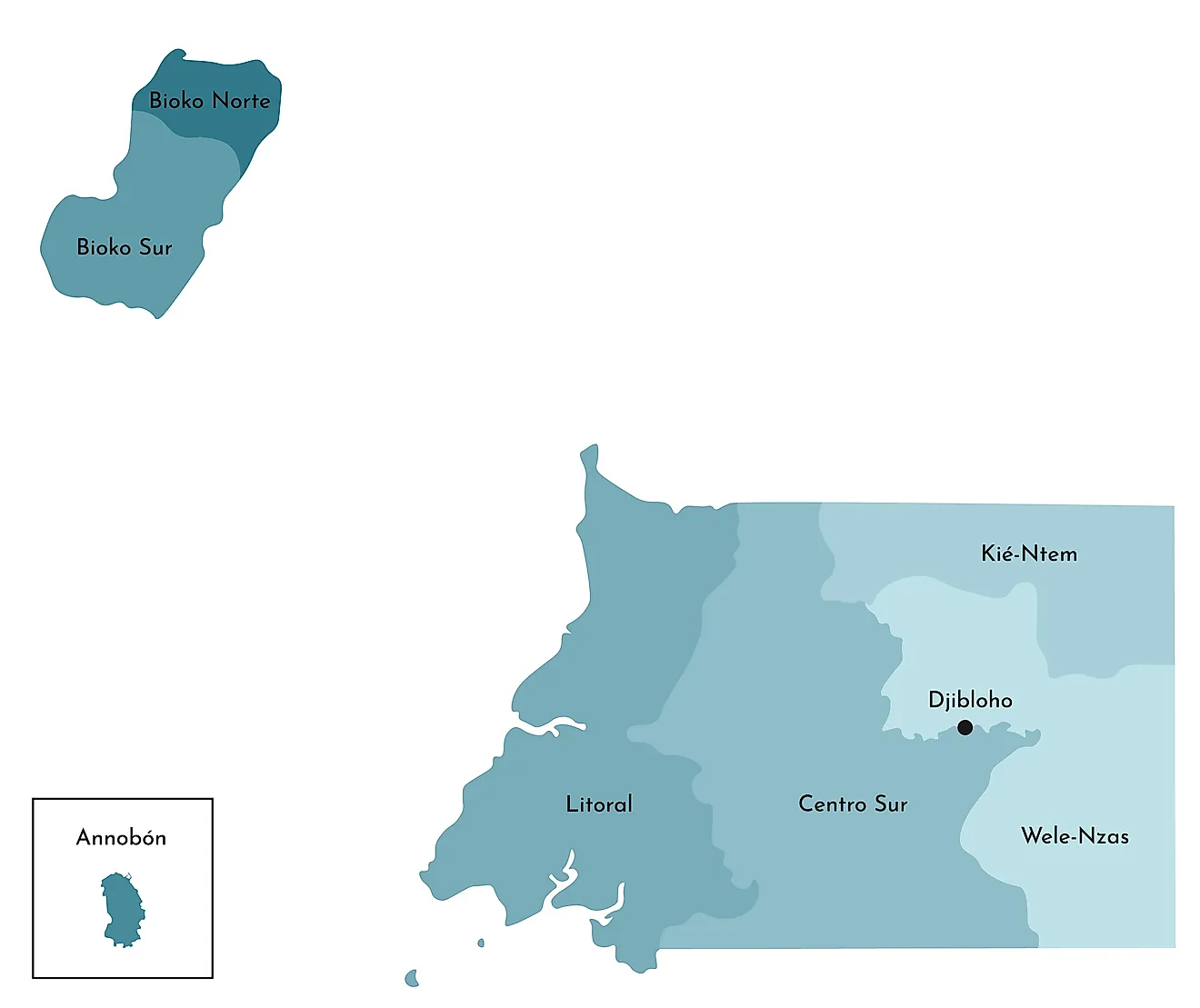
Equatorial Guinea has two regions, the mainland region of Río Muni with capital at Bata and the Insular Region with capital at Malabo. The regions are divided into 8 provinces which are as follows: Annobon, Bioko Norte, Bioko Sur, Centro Sur, Djibloho, Kie-Ntem, Litoral, and Wele-Nzas.
With an area of 9,931 sq. km, Centro Sur is the largest province by area and Litoral is the most populous one.
Where is Equatorial Guinea?
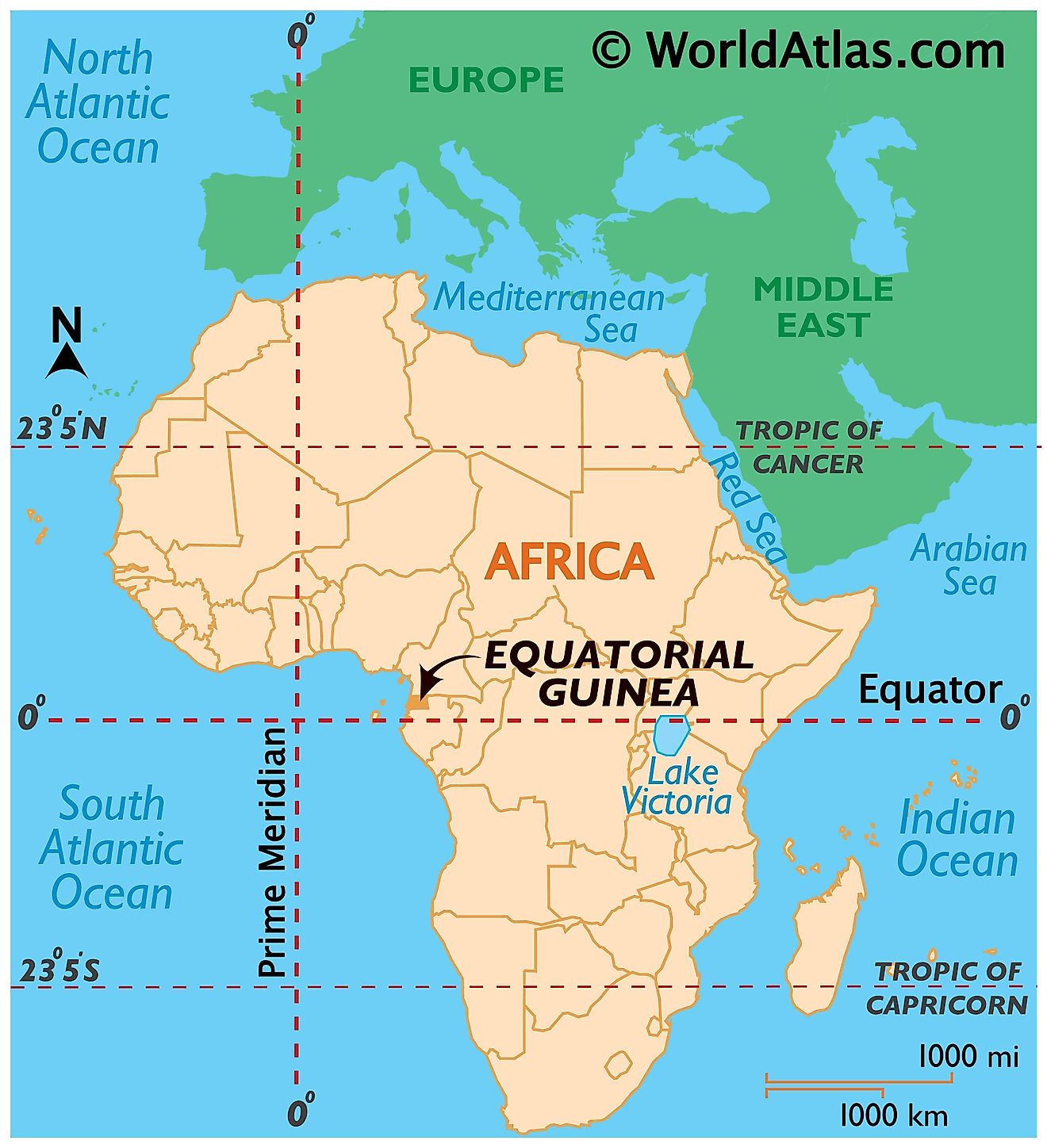
Located in Central Africa, Equatorial Guinea has two parts, a mainland region and an insular region. The latter comprises of the islands of Bioko (that hosts the country's capital of Malabo) and Annobón in the Gulf of Guinea. Between these two islands is the island nation of São Tomé and Príncipe. Mainland Equatorial Guinea or Río Muni is bordered by Gabon to the east and south, Cameroon to the north, and a coastline on the Gulf of Guinea.
Equatorial Guinea Bordering Countries: Gabon, Cameroon.
Regional Maps: Map of Africa
Outline Map of Equatorial Guinea
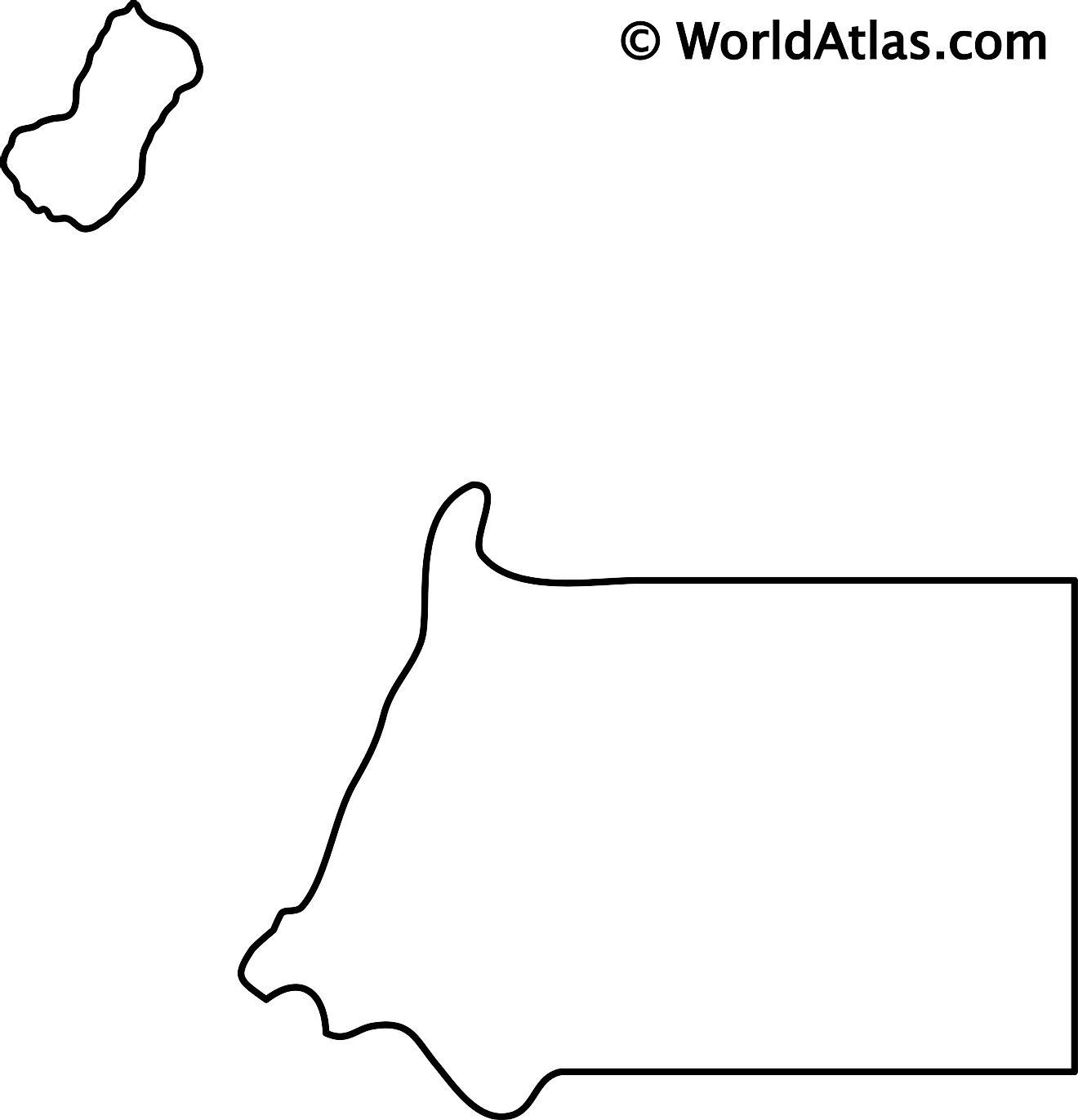
The blank outline map represents the country of Equatorial Guinea with its mainland and insular parts. The map can be downloaded for free, printed, and used for coloring or map-pointing activities.
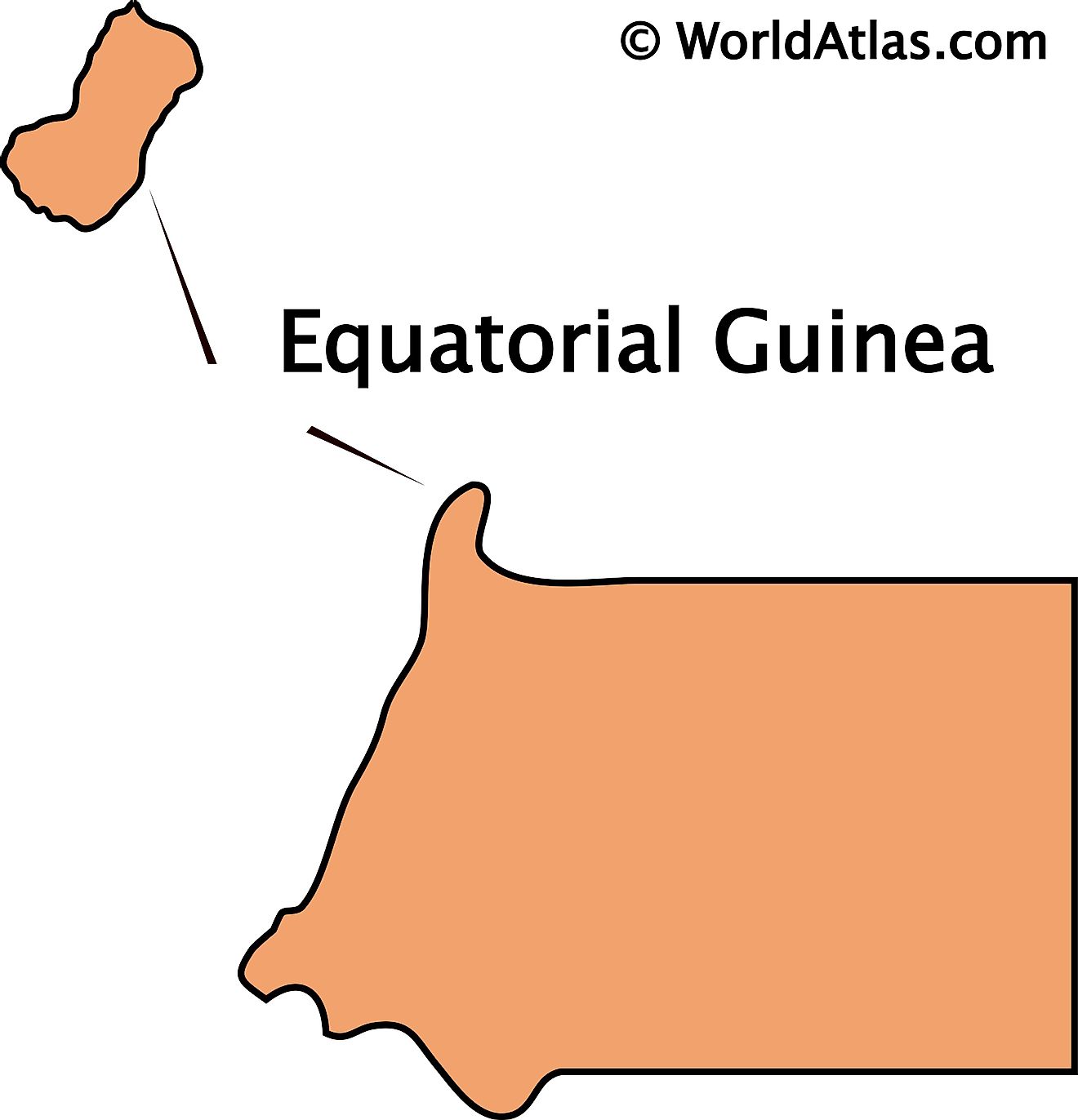
The outline map above shows the two parts (mainland and insular) of Equatorial Guinea, a country in Central Africa with a coastline on the Atlantic Ocean.
Key Facts
| Legal Name | Republic of Equatorial Guinea |
|---|---|
| Flag |
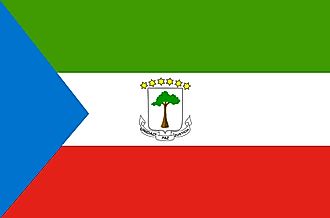
|
| Capital City | Malabo; note - a new capital of Oyala is being built on the mainland near Djibloho; Malabo is on the island of Bioko |
| 3 45 N, 8 47 E | |
| Total Area | 28,051.00 km2 |
| Land Area | 28,051.00 km2 |
| Water Area | N/A |
| Population | 1,355,986 |
| Largest City |
Bata (474,467) |
| Currency | Cooperation Financiere en Afrique Centrale francs (XAF) |
| GDP | $11.03 Billion |
| GDP Per Capita | $8,131.92 |
This page was last updated on February 24, 2021