Maps of Democratic Republic Of The Congo
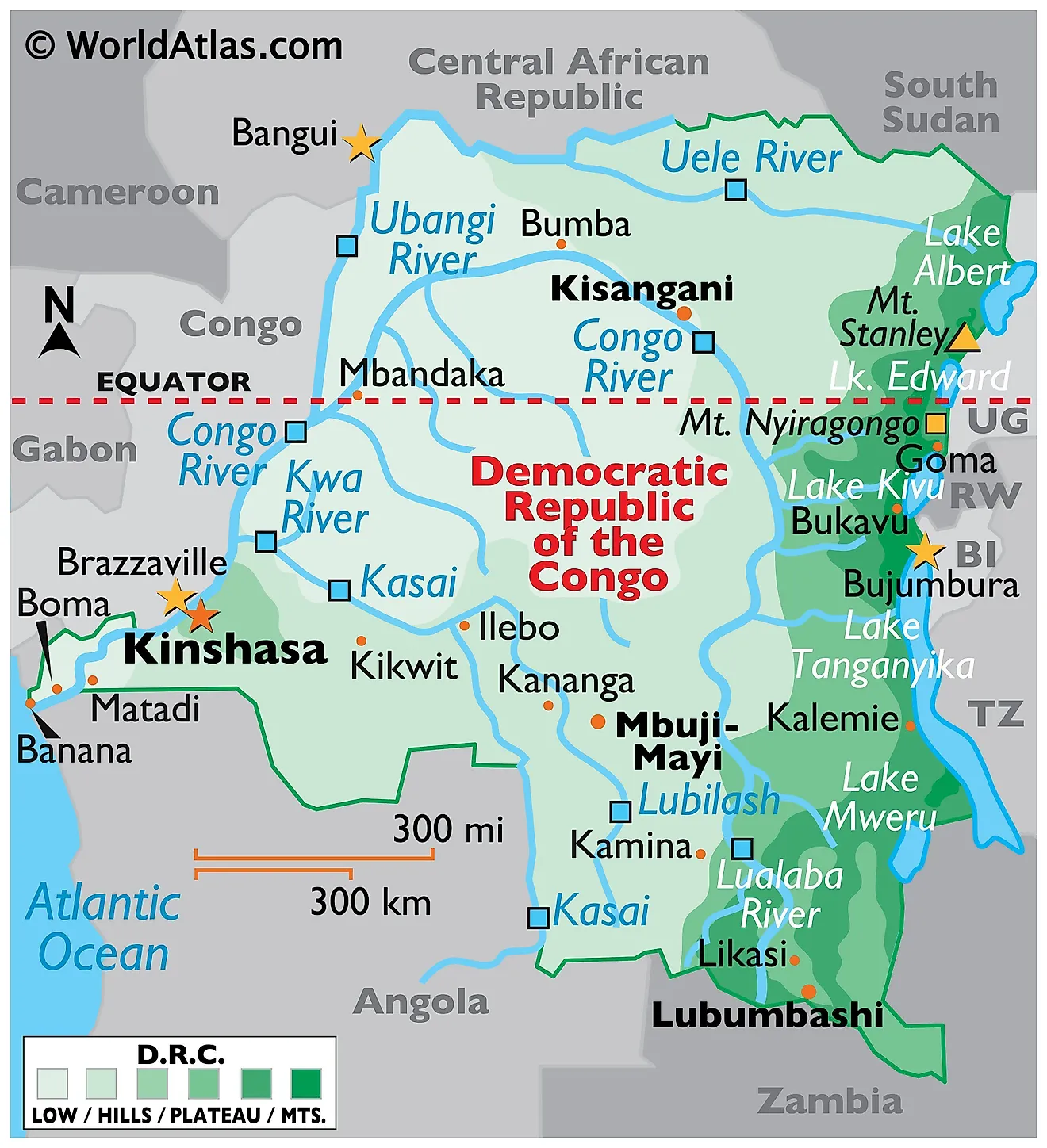
The Democratic Republic of the Congo occupies an area of 2,345,409 sq. km in Central Africa. It is the largest country in sub-Saharan Africa.
The physical map above illustrates the country of the Democratic Republic of Congo, with the massive expanse of the Congo Rainforest, the second-largest rainforest in the world after the Amazon. Most of the central and western parts of the country are part of the Congo River basin, The Congo River system is the second largest river in Africa. The Congo River is 4,398 km long. This area of the DRC is surrounded by plateaus merging into savannas in the south and southwest, by mountainous terraces in the west, and by dense grasslands extending beyond the Congo River in the north. In the east, the land rises into a plateau with heights over 1,524 m and then into the higher glaciated and volcanic mountains of the Great Rift Valley. Southeast, the land rises into the peaks of the Shaba Plateau.
The highest point of the Democratic Republic of the Congo has been marked on the map with an orange triangle. It is Mt. Stanley at 5,110 m; the lowest point of the country is the Atlantic Ocean (0 m).
As observed on the map, several lakes front the country's eastern borders, including lakes Albert, Edward, Kivu, Mweru, and Tanganyika.
Provinces Map of Democratic Republic Of The Congo
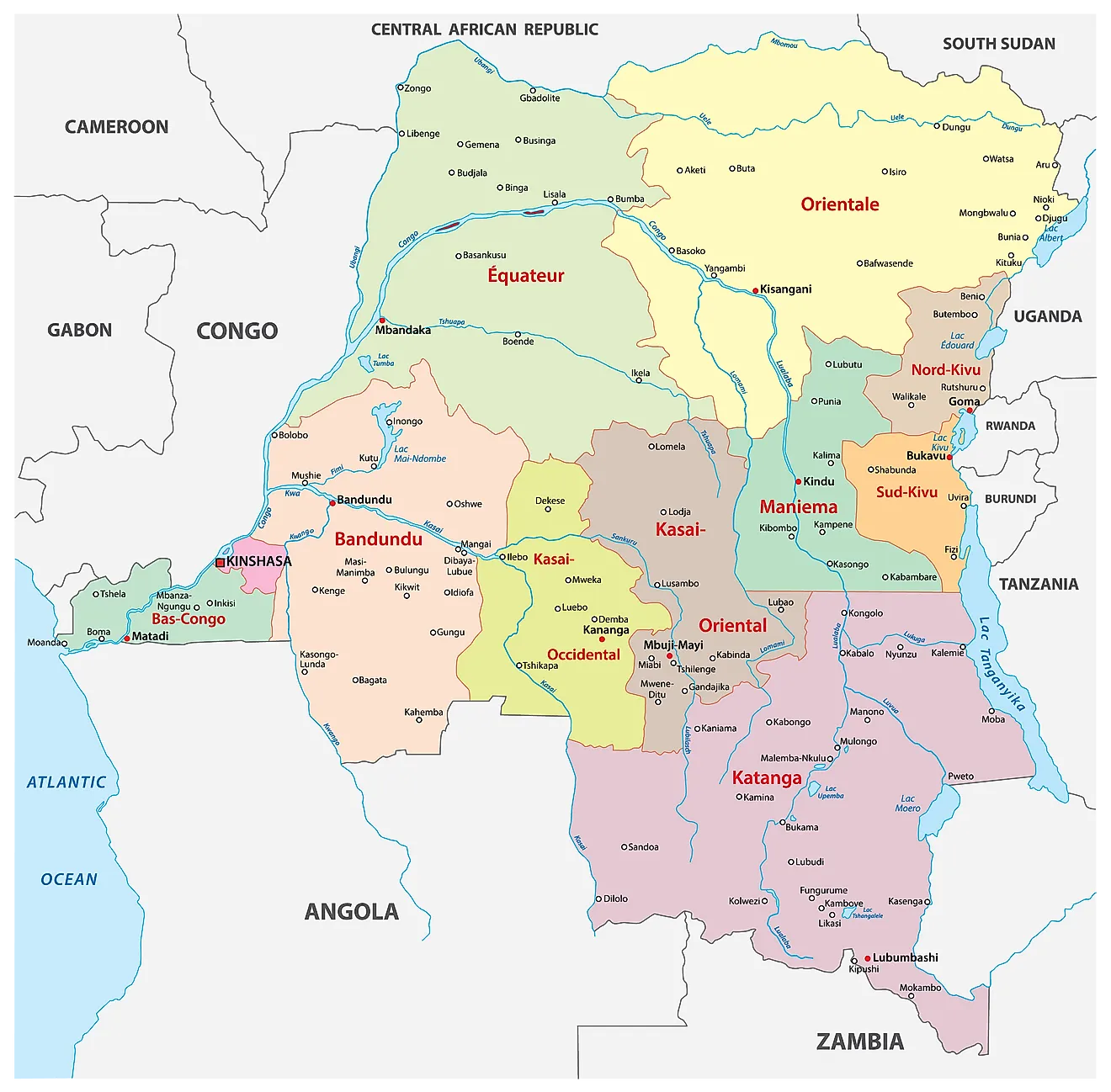
DRC is divided into 25 provinces. In addition, the capital city of Kinshasa is also treated as equivalent to a province. Thus, the 26 provinces of the country in alphabetical order are as follows: Bas-Uele (Lower Uele), Equateur, Haut-Katanga (Upper Katanga), Haut-Lomami (Upper Lomami), Haut-Uele (Upper Uele), Ituri, Kasai, Kasai-Central, Kasai-Oriental (East Kasai), Kinshasa, Kongo Central, Kwango, Kwilu, Lomami, Lualaba, Mai-Ndombe, Maniema, Mongala, Nord-Kivu (North Kivu), Nord-Ubangi (North Ubangi), Sankuru, Sud-Kivu (South Kivu), Sud-Ubangi (South Ubangi), Tanganyika, Tshopo, and Tshuapa.
With an area of 199,567 sq. km, Tshpo is the largest province by area while Kinshasa is the most populous one.
Where is Democratic Republic Of The Congo?
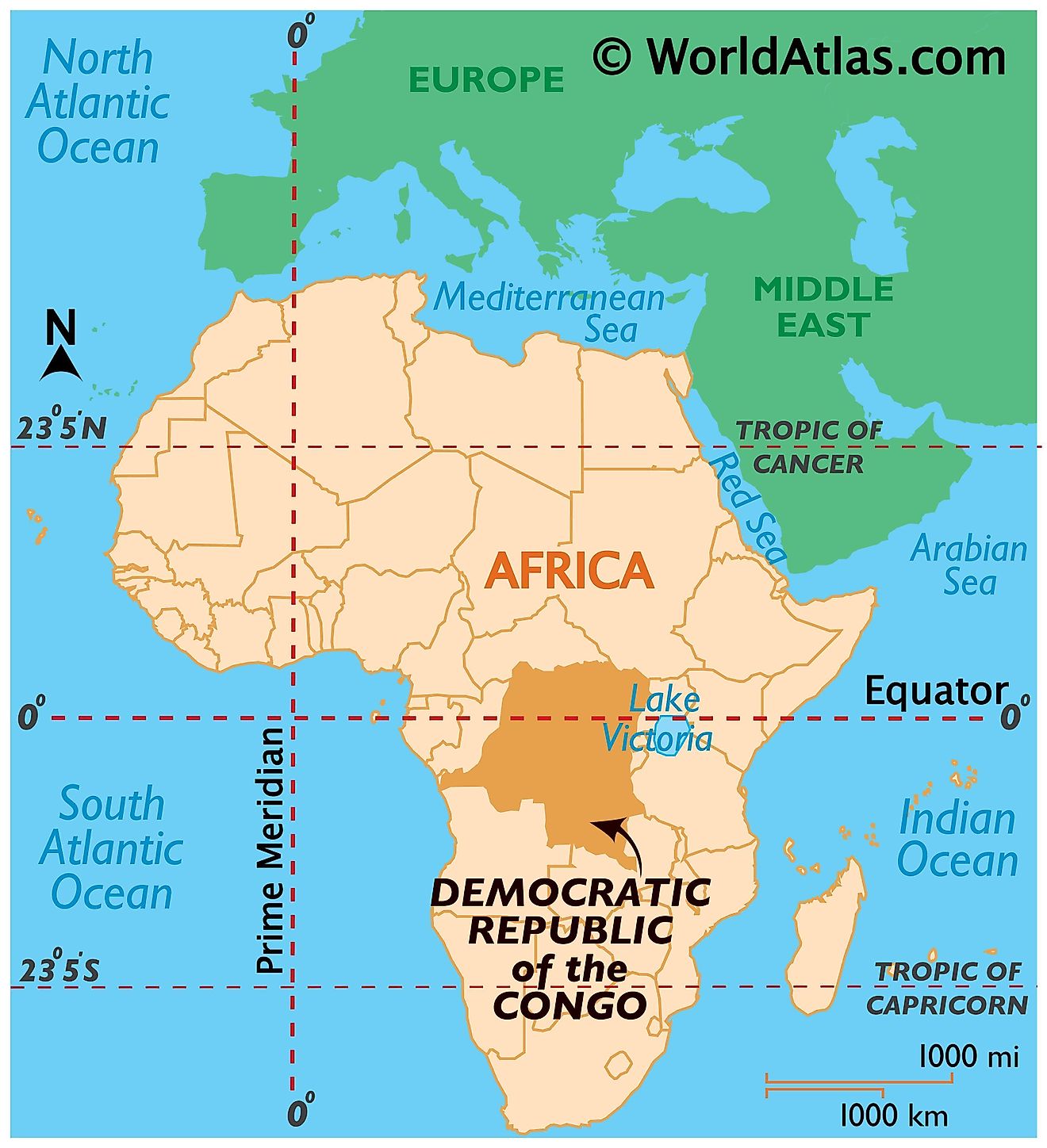
The Democratic Republic of the Congo (DRC) is located in Central Africa. As it straddles the Equator, it has territories in both the Northern and Southern Hemispheres. It is located to the east of the Prime Meridian in the Eastern Hemisphere. Nine countries border the DRC. These are the Republic of the Congo, Central African Republic, and South Sudan to the northwest, north, and northeast respectively. Burundi, Rwanda, and Uganda bound it to the east. Tanzania is located to the east across Lake Tanganyika. Zambia lies to the southeast and Angola to the southwest respectively. DRC also has a coastline on the Atlantic Ocean to the west. Angola's Cabinda exclave also borders DRC in this direction.
Democratic Republic Of The Congo Bordering Countries: The Central African Republic, Zambia, Angola, Burundi, The Congo, Rwanda, South Sudan, Uganda, Tanzania.
Regional Maps: Map of Africa
Outline Map of Democratic Republic Of The Congo
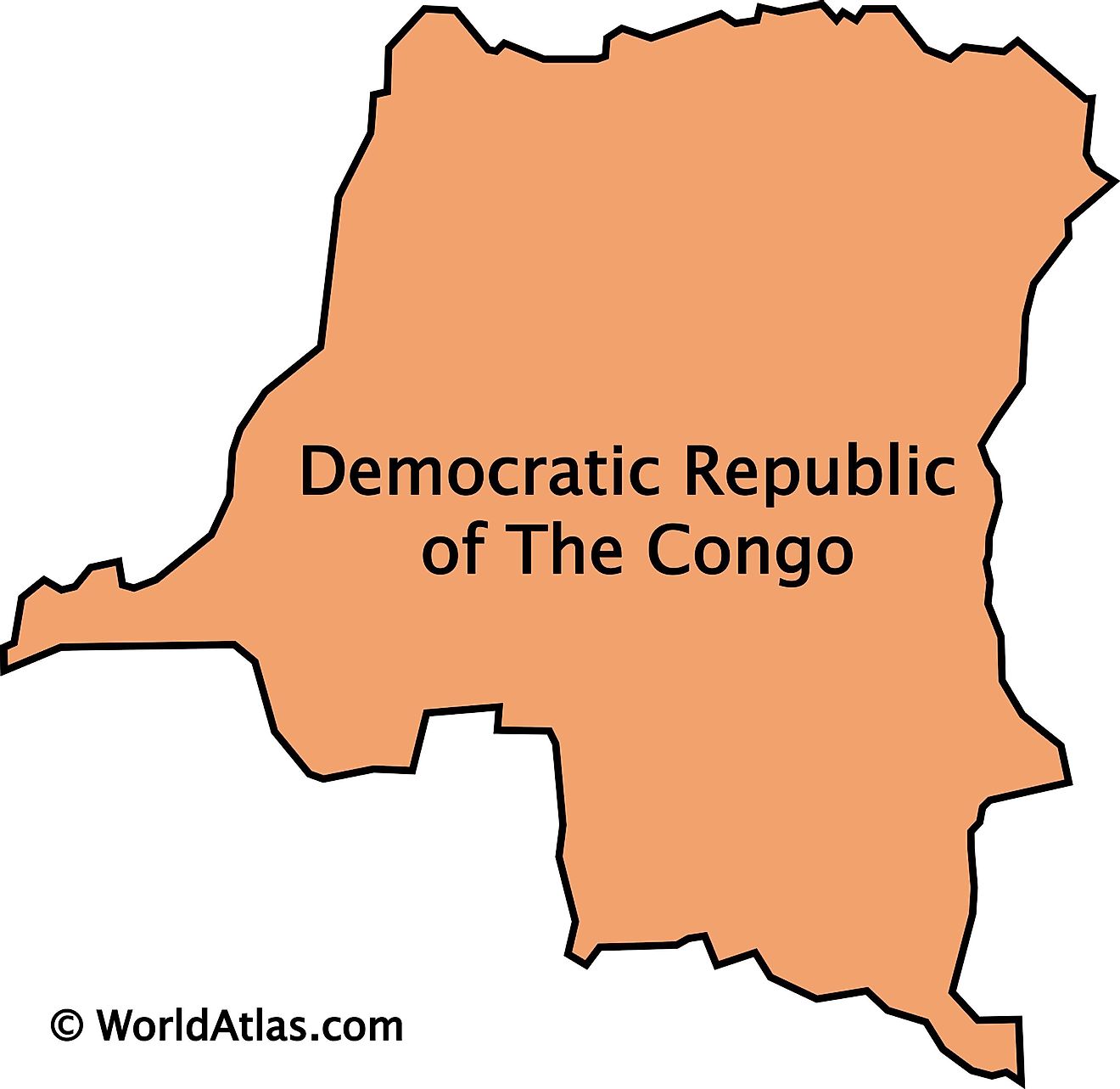
This outline map shows the country of the Democratic Republic of Congo. It is an equatorial country in Central Africa.
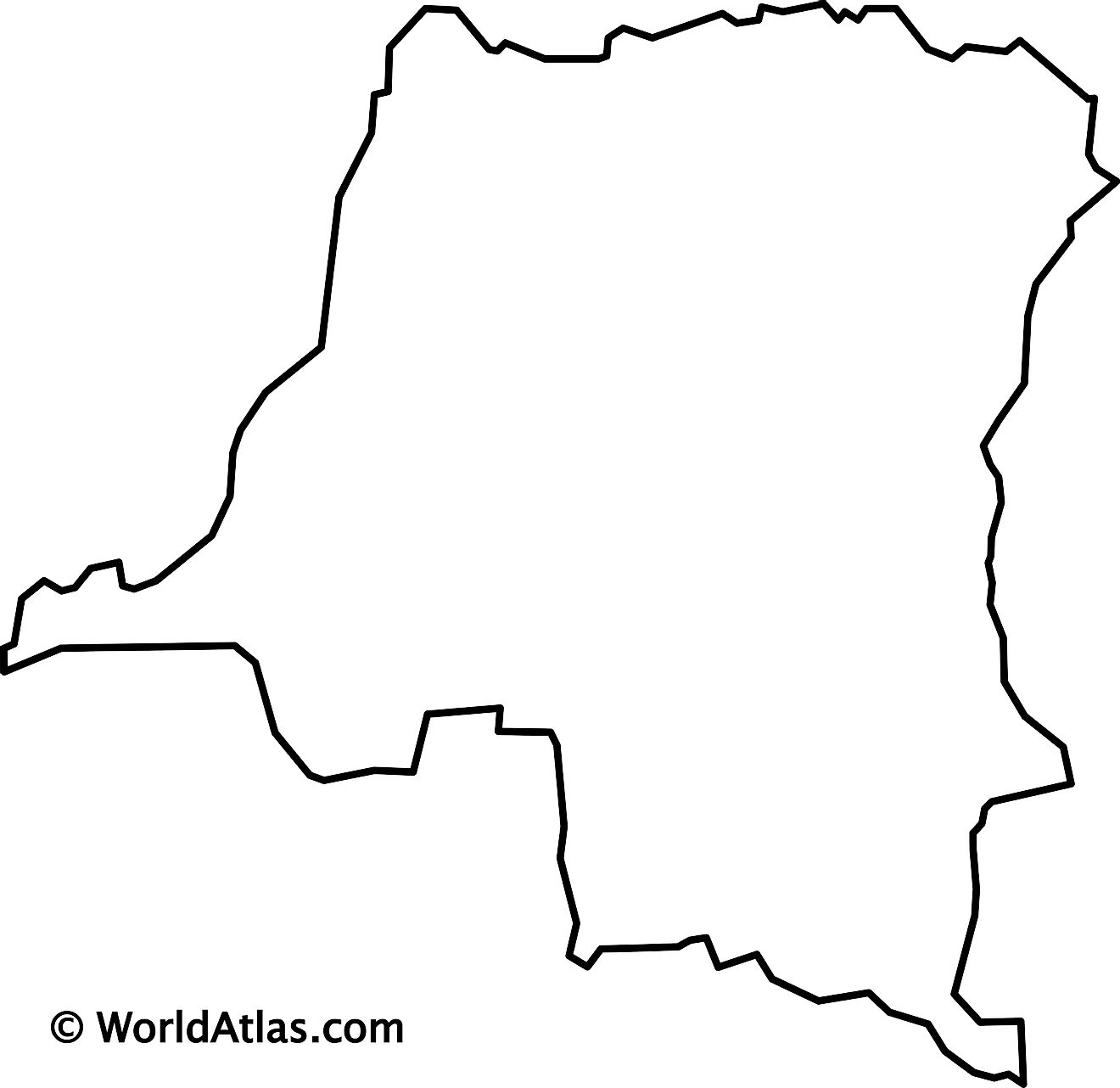
Blank outline map of the Central African country of the Democratic Republic of Congo. It can be downloaded for free and printed and used for coloring or for educational purposes like map-pointing activities.
Key Facts
| Legal Name | Democratic Republic of the Congo |
|---|---|
| Flag |
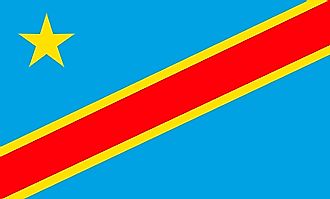
|
| Capital City | Kinshasa |
| 4 19 S, 15 18 E | |
| Total Area | 2,344,858.00 km2 |
| Land Area | 2,267,048.00 km2 |
| Water Area | 77,810.00 km2 |
| Population | 119,038,825 |
| Major Cities |
|
| Currency | Congolese francs (CDF) |
| GDP | $70.75 Billion |
| GDP Per Capita | $594.34 |
This page was last updated on February 24, 2021