Maps of Benin
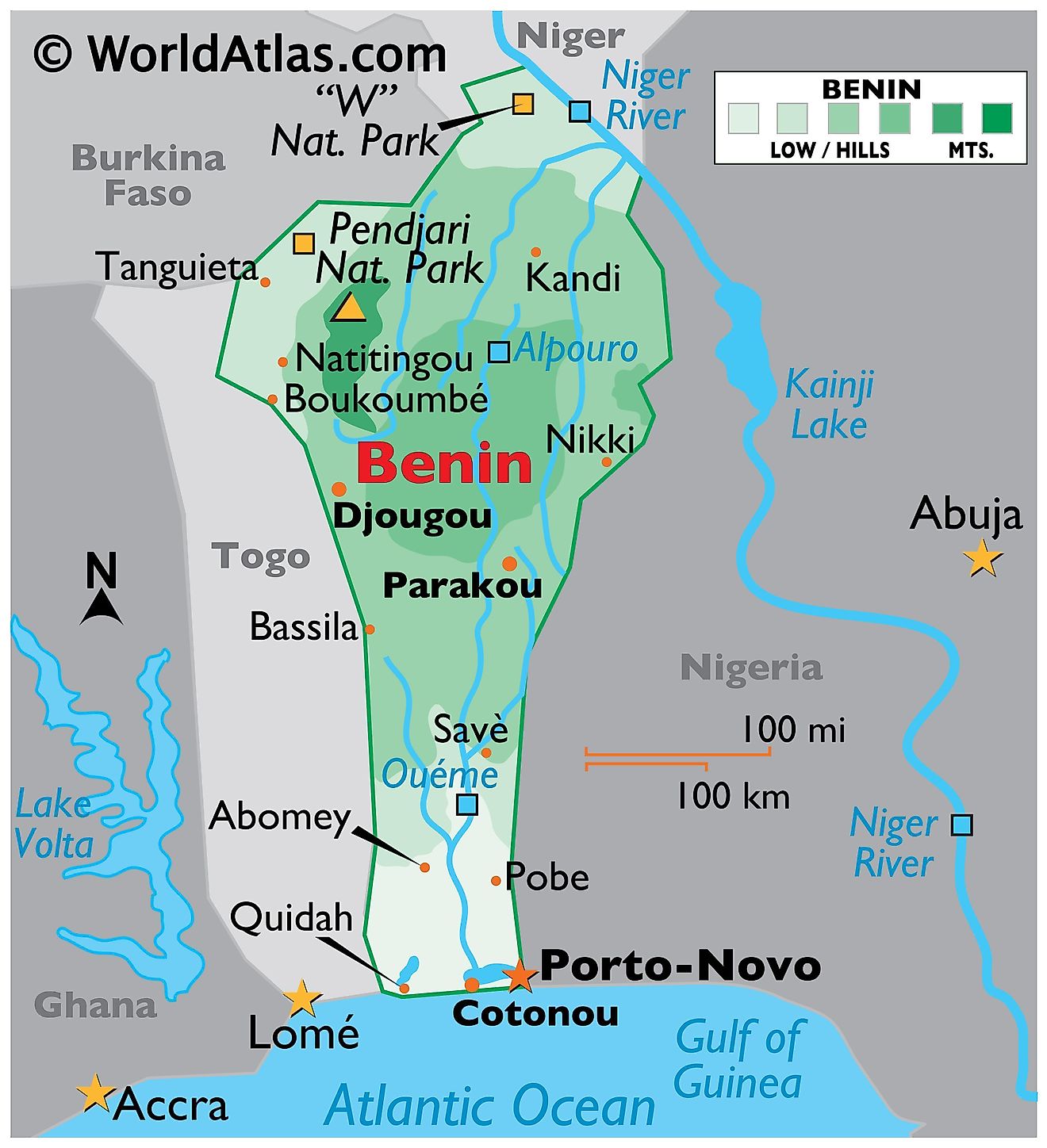
Benin is a country in West Africa that encompasses an area of 112,622 sq. km. It has a coastline of 121 km on the Atlantic Ocean to the south.
There is not much variation in elevation in Benin with the average elevation being 200m. The landscape transitions from a narrow and somewhat sandy coastal area to a marshy land with lagoons that rise into the La Terre de Barre Plateau. The wooded savannah of the plateau continues on into the foothills of the Atakora Mountains of the northwest, a branch of the Togo Mountains.
Benin's highest point is Mt. Sokbaro, which rises 658 m. It has been marked on the map by a yellow upright triangle. The lowest point of the country is the Atlantic Ocean at 0 m.
From the mountainous northwest, the land slopes down into a broad plain and on to the Niger River valley of the far northeast. The Niger and Ouémé are the country's major rivers.
Departments of Benin Map
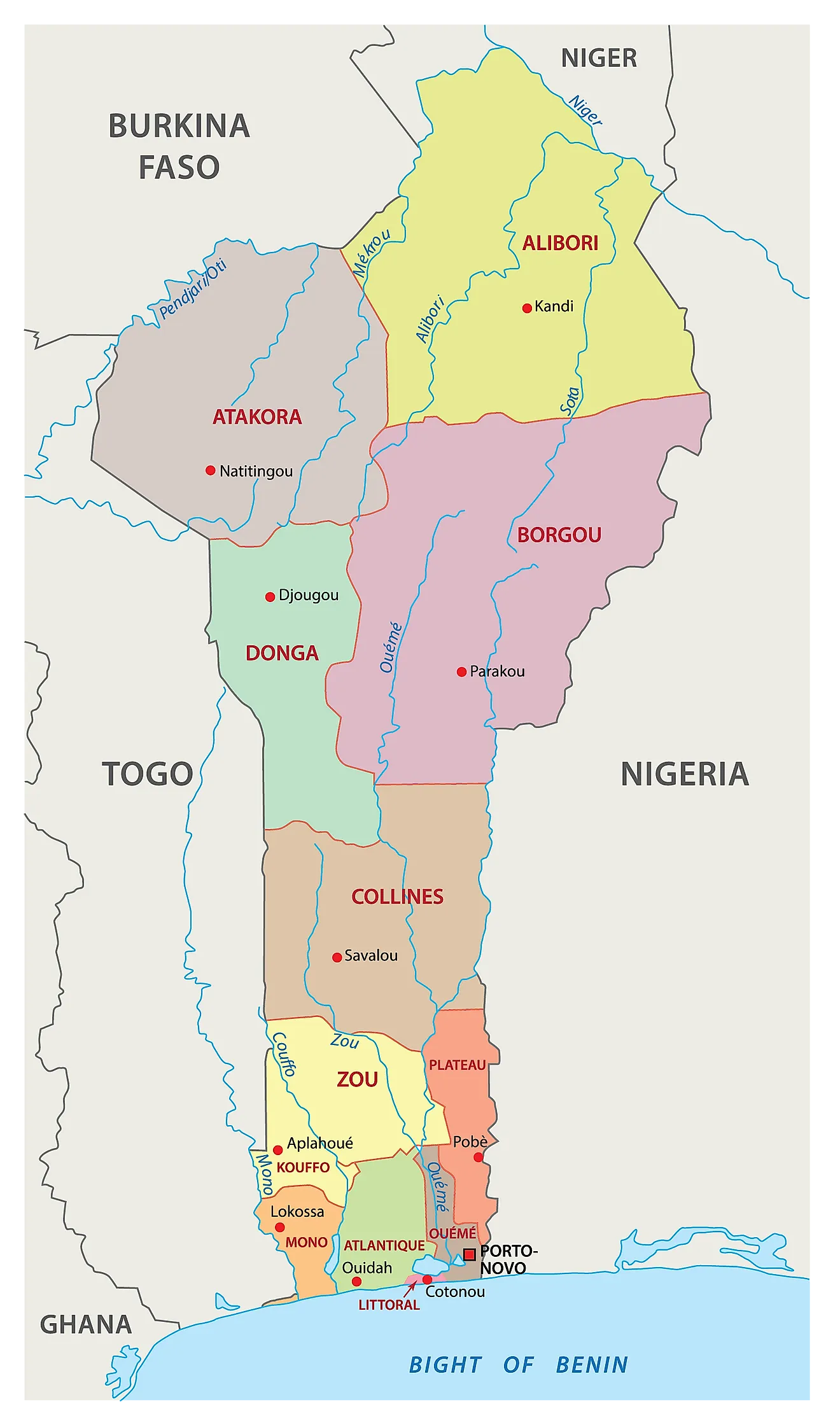
Benin has 12 departments which are divided into 77 communes which are further subdivided into arrondissements.
The 12 departments in alphabetical order are: Alibori, Atacora, Atlantique, Borgou, Collines, Couffo, Donga, Littoral, Mono, Oueme, Plateau, and Zou.
With an area of 26,242 sq. km, Alibori is the largest department by area and Atlantique is the most populous one.
Porto-Novo, the national capital of Benin, is located in the Ouémé Department.
Where is Benin?
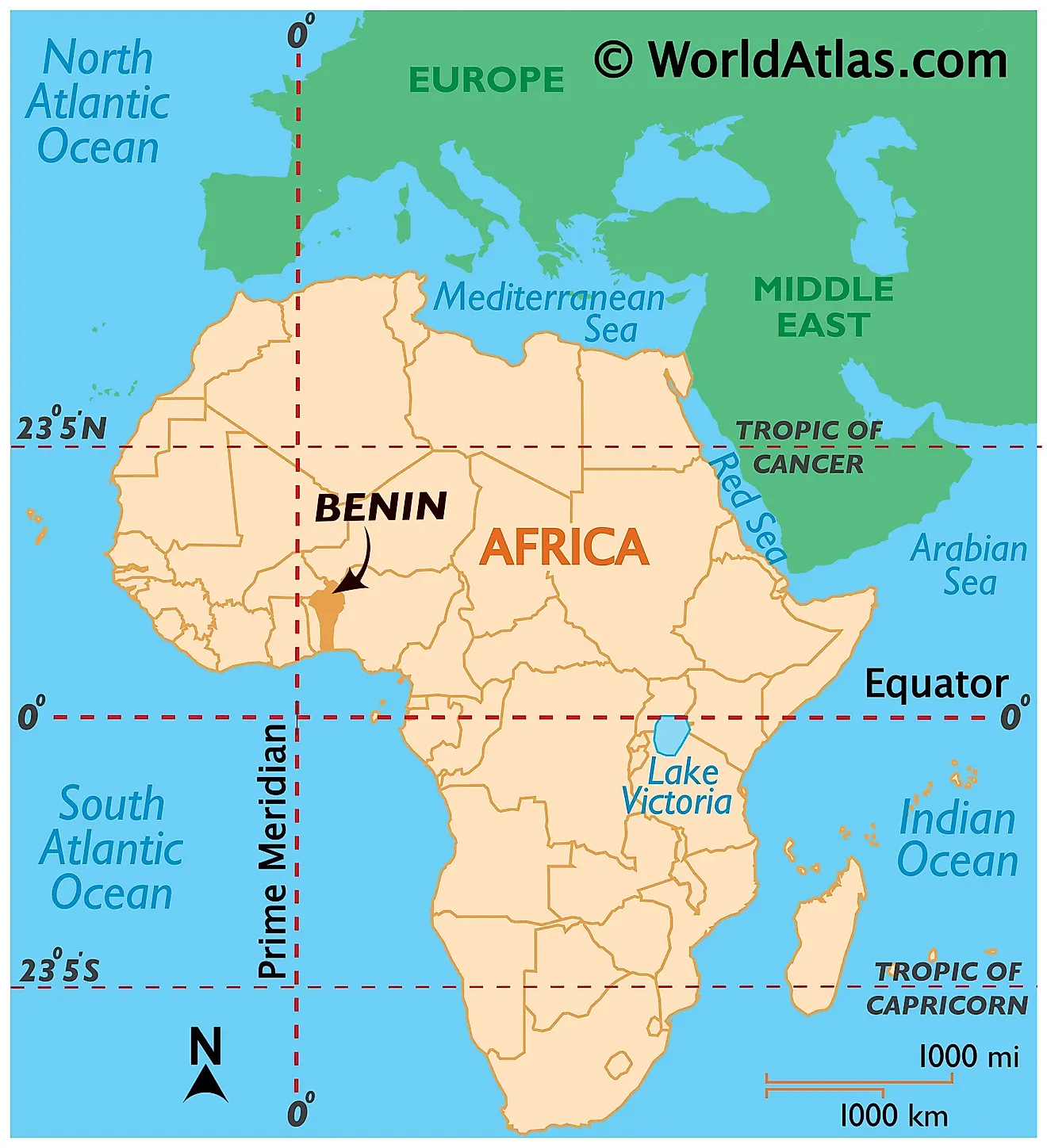
Benin is a country in West Africa located in the Northern and Eastern Hemispheres of the Earth. Four countries border Benin. These are Niger to the northeast, Nigeria to the east, Togo to the west, and Burkina Faso to the northeast. To the south, Benin has a small stretch of coastline on the Bight of Benin which is part of the Gulf of Guinea in the Atlantic Ocean.
Benin Bordering Countries: Nigeria, The Niger, Burkina Faso, Togo.
Regional Maps: Map of Africa
Outline Map of Benin
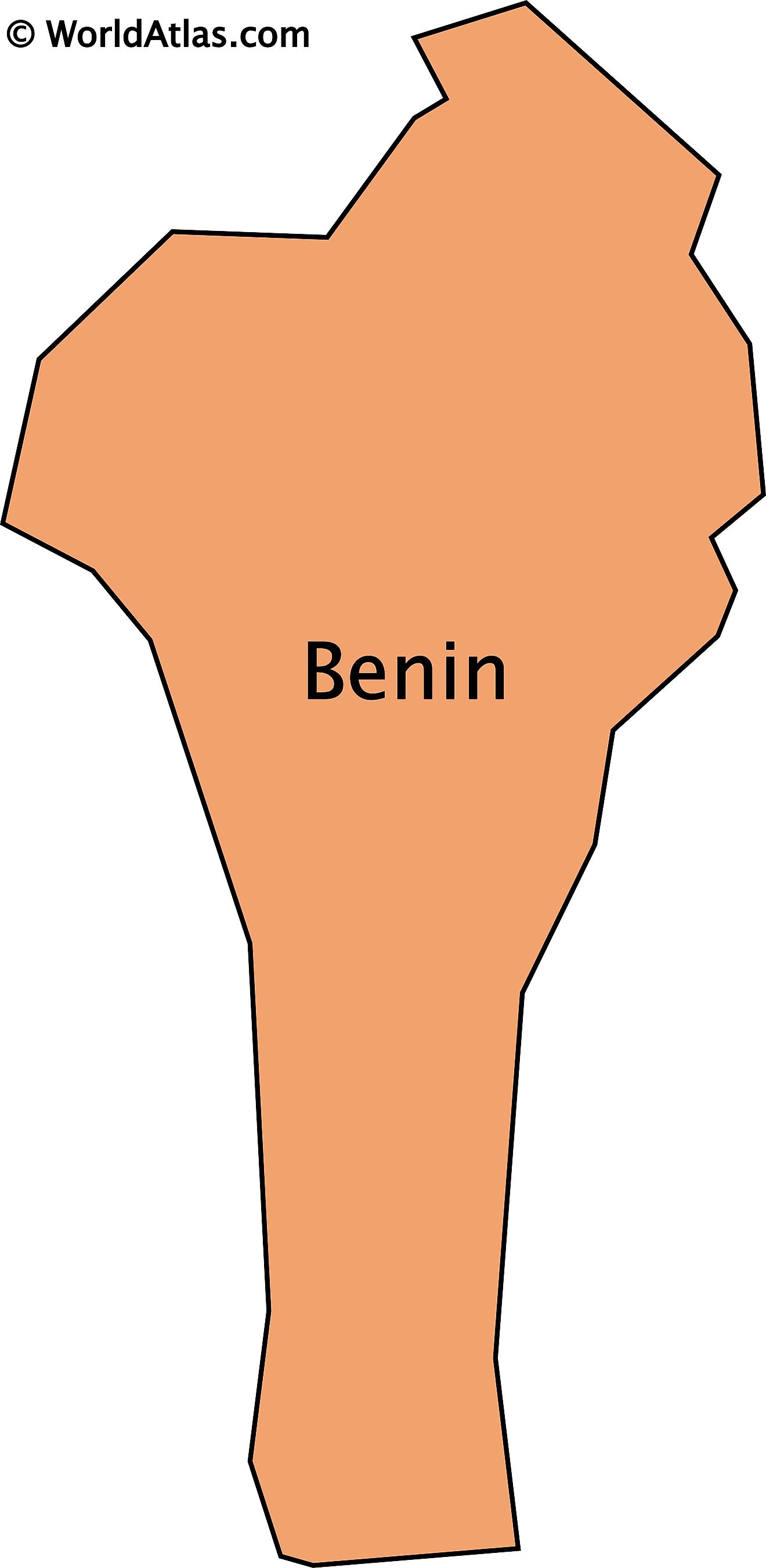
This outline map shows the country of Benin in West Africa. As observed on the map, the country is key-shaped and runs almost vertically from the Atlantic coast to the south to the north.
Blank outline map of the key-shaped country of Benin. Can be used for coloring or educational purposes. Free download and print out for use.
Key Facts
| Legal Name | Republic of Benin |
|---|---|
| Flag |
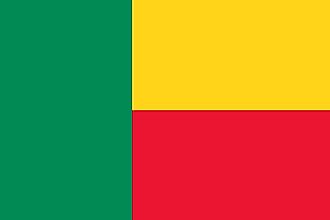
|
| Capital City | Porto-Novo (constitutional capital); Cotonou (seat of government) |
| 6 29 N, 2 37 E | |
| Total Area | 112,622.00 km2 |
| Land Area | 110,622.00 km2 |
| Water Area | 2,000.00 km2 |
| Population | 11,801,151 |
| Major Cities |
|
| Currency | Communaute Financiere Africaine francs (XOF) |
| GDP | $14.39 Billion |
| GDP Per Capita | $1,219.43 |
This page was last updated on February 24, 2021